Lunar Shabbats—Confusing the Holy Times
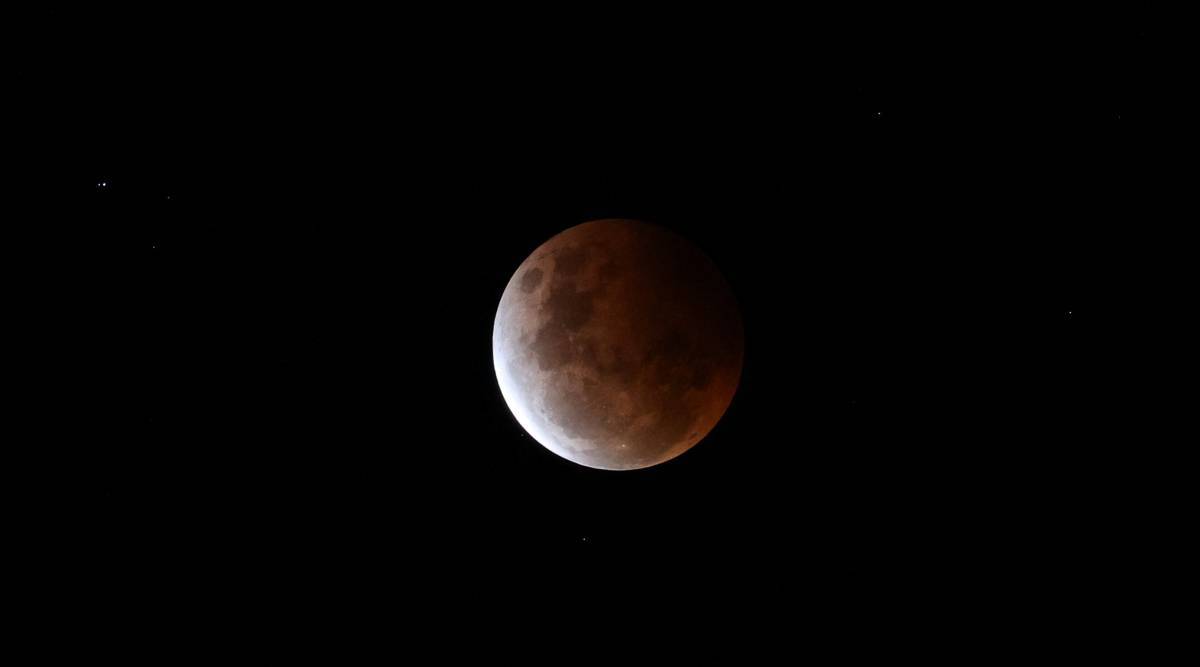
I was recently challenged to look into the subject of the Lunar Sabbaths. As I see the amount of material on these things, I see that calendar controversies rage as acclaimed scholars promote theories on different sides. The theory of a lunar-based calendar that not only sets the months, but the weeks of the month allows for non days when the moon is not visible. Each month the calendar is reset and the weekly cycle starts over. The Sabbaths are scheduled on the 7th, 14th, 21st, and 28th of the lunar month. One argument is put forth that the current Gregorian calendar has hidden the true weekly Sabbaths for many centuries and that those who keep these Sabbaths are keeping the wrong day.
So, have these Sabbaths that were kept through the ages been thrown off kilter, lost track of, or forgotten? What about the accuracy of the Bible? What about the erudite Jewish Sages and their tracking of the weekly calendar for thousands of years? Can we still trust the Bible or must we cast it aside as well? As valuable as the Dead Sea Scrolls are in tracking history, are they the be all and end all to teach us what the Bible is talking about?
I personally embrace the Bible as a solid foundation, especially when using the Hebrew in which the Tanakh was mostly written. Anything that lessens the validity of these scriptures or shakes our faith in them as the standard for all time must be observed as a device to lead away from the truth.
Now I realize that those promoting the Lunar Sabbaths and other extra-biblical systems of ordering the week claim to believe the Bible, but they assert that that the Bible does not prove anything in regard to these days. I don’t accept that reasoning because, in fact the Bible says a lot about it, if we just follow it through.
1. The Weekly Cycle started with the Creation Week:
The first point in favor of the Biblical Sabbath, and for me, one of the most conclusive is that the creation week sprang out of nothingness. There was no moon existent on the first day of creation to base the numbering of the days of the week. All that existed at the time of the creation according to Genesis 1:2 was תּהוּ בּה וּ tohu v vohoo (without form and void) which means nothing existed except the Creator himself. We might say that Creation was based solely upon the Creator making something from formless space and or formless matter…the Creator himself being all that marked the beginning of time as we know it. It was not until the 4th day of that first week that the sun, moon and stars appeared.
And G_d said, Let there be lights in the firmament of the heaven to divide the day from the night; and let them be for signs, and for seasons, and for days, and years: And let them be for lights in the firmament of the heaven to give light upon the earth: and it was so. And G_d made two great lights; the greater light to rule the day, and the lesser light to rule the night: he made the stars also. And G_d set them in the firmament of the heaven to give light upon the earth, And to rule over the day and over the night, and to divide the light from the darkness: and G_d saw that it was good.
(Gen 1:14-18)
A closer look at this passage shows the purpose of these lights which appeared on the fourth day. They were to be for signs, and for seasons, for days, and years and to be lights in the firmament of the heaven to give light upon the earth, and to rule over the day and over the night, and to divide the light from the darkness. Nothing is said about establishing the weekly cycle.
Their stated purpose was to be:
For signs: אות “oth” in Hebrew which signifies: “a signal (literally or figuratively), as a flag, beacon, monument, omen, prodigy, evidence, etc.: – mark, miracle, (en-) sign, token.” (Strong’s Concordance).
For Seasons:
מועד “
mo-ed” “properly an appointment, that is, a fixed time or season; specifically a festival; conventionally a year; by implication, an assembly (as convened for a definite purpose); technically the congregation; by extension, the place of meeting; also a signal (as appointed beforehand): – appointed (sign, time), (place of, solemn) assembly, congregation, (set, solemn) feast, (appointed, due) season, solemn (-ity), synagogue, (set) time (appointed).” (Strong’s Concordance).
These lights designated special appointments of YHVH’s feasts and holy convocations. It is noteworthy that these mo-edim or (appointed times) were set up from the very dawn of creation.
For days: The day, though beginning at the going down of the sun, is revealed by the latter half of the next rising of the sun. This includes usually the appearance of the moon, the lesser light.
For years: The definition of the year is also marked off by the lights of the heavens. The new moon marks the beginning of each month, a special set apart “mo-ed” holiday mentioned throughout the Scriptures. The first month of the year is specified in Exodus as beginning with the new moon of Aviv—or green ears (when the barley forms green ears). This ripening of the barley signals that the next new moon is the beginning of the new year.
“To give light upon the earth, To rule over the day and over the night, and to divide the light from the darkness.”
This is all it says.. There is no mention of the defining of weeks here. We must be careful not to suggest what we want the Bible to say.
2. The fourth day:
It is clear, then–is it not, that the purposes of the lights that appeared on the 4th day did not define the weekly cycle? Actually if we take this farther, we can see that to base the beginning of the week on the 4th day, or the creation of the sun, or moon or stars, would mean that those entities were the basis for the celebration of the Sabbath which would be to do obeisance to these signs in the heavens rather than the Creator of the world whose invested His light on the first day of the creation week.
Shall we then not observe the week as celebrating the One who created the world, from whom the creation was taken from nothingness? The entire system of weeks is based theologically upon the idea that before the Creator did his work, there was only emptiness. Just so in our lives of tohu v’bohoo, (without form and void). Without the work of the sanctifying work of obedience to the Torah and the Prophets, our lives amount to nothingness and a mere shadow that fades as the grass of the field.
“The Sabbath appears in Creation week on the seventh day. The Moon was created on the fourth day. There’s only three days from the creation of the moon till the creation of the Sabbath, not seven as the lunar concept calls for. Perhaps the Sabbath should have come on the 11th day? Someone might say, ‘Well, this is Creation, just the beginning but after that the Sabbath will always be seven days after the new moon.’ But without any clear, written indication in Scripture, they’re arguing from silence and against Scripture which states it’s every seventh day irrespective of the moon (Gen. 2:3; Ex. 20:8-11).” https://seedofabraham.net/SabbathLunar.html
Moon Cult?
The idea that the week is controlled by the sighting of the moon, if the above thought is fully understood, is simply moon worship—Allowing a created thing to be the basis for setting the cycle of worship. The Sabbath was to be a memorial of Creation, not a memorial of the moon. The Bible forbids that we go up to the housetops to worship the host of the heavens. In fact it says in Zeph 1:5 that those who go up to the housetops to worship the host of the heavens will be cut off in the great final consumption. Deut. 4:19 commands that we not worship the sun, moon or the stars.
Instability of the lunar cycle:
The moon is not a stable enough instrument in which to base a weekly cycle. Sky and Telescope Magazine showed a lunar calendar for March to June of 2007. The difference between the phases of the moon vary between 6 and 8 days. See the following graph:
EST
Mar. 07 03 06:17pm Full
11 11:54pm 1/4 8 days & 05:33 hrs
18 10:43pm NM 6 days & 22:49 hrs
25 02:16pm 1/4 6 days & 15:33 hrs
Apr. 02 01:15pm Full 7 days & 22:59 hrs
10 02:04pm 1/4 8 days & 00:49 hrs
17 07:36am NM 6 days & 14:20 hrs
24 02:36am 1/4 6 days & 19:00 hrs
May 02 06:06am Full 8 days & 03:33 hrs
10 12:27pm 1/4 7 days & 17:42 hrs
16 03:27pm NM 6 days & 15:54 hrs
23 05:03pm 1/4 7 days & 01:36 hrs
31 09:04pm Full 8 days & 04:01 hrs
June 08 04:43am 1/4 7 days & 07:39 hrs
14 08:13pm NM 6 days & 15:30 hrs
22 06:15am 1/4 7 days & 10:02 hrs
30 06:49am Full 8 days & 00:34 hrs
Full = Full Moon
¼ = Last Quarter Moon
NM = New Moon
¼ = First Quarter Moon, Taken from Sky & Telescope
How could an unstable calendar based on the variable moon be able to rule our weeks? How would weekly business appointments function? Yehova has set the moon to determine the months. This works well with the division of the months of the year, but it does not work with the organization of the weekly cycle. Especially since the Bible indicated that six days were for the business week. Ex 20:8-11. To see how difficult that would be, imagine what it would be like to hold a job in this world always asking for different days of worship; this month maybe Tuesday, next month perhaps Friday. The life would be utter chaos. And then what is done with the days where the moon is unstable?
New moons and Sabbaths are separate Holidays
Where ever both the new moon and the Sabbath are mentioned in the Bible, they are clearly separate entities. For example:
“And to offer all burnt sacrifices unto YHVH in the Sabbaths, in the new moons, and on the set feasts, by number, according to the order commanded unto them, continually before YHVH:” 1Ch 23:31
“Behold, I build a house to the name of YHVH my G_d, to dedicate it to him, and to burn before him sweet incense, and for the continual shewbread, and for the burnt offerings morning and evening, on the Sabbaths, and on the new moons, and on the solemn feasts of YHVH our G_d. This is an ordinance forever to Israel.” 2Ch 2:4
“Then Solomon offered burnt offerings unto YHVH on the altar of YHVH, which he had built before the porch, Even after a certain rate every day, offering according to the commandment of Moses, on the Sabbaths, and on the new moons, and on the solemn feasts, three times in the year, even in the feast of unleavened bread, and in the feast of weeks, and in the feast of tabernacles. 2 Ch 8:13
“And it shall be the prince’s part to give burnt offerings, and meat offerings, and drink offerings, in the feasts, and in the new moons, and in the Sabbaths, in all solemnities of the house of Israel: he shall prepare the sin offering, and the meat offering, and the burnt offering, and the peace offerings, to make reconciliation for the house of Israel.” Eze 45:17
“Likewise the people of the land shall worship at the door of this gate before YHVH in the Sabbaths and in the new moons.” Eze 46:3
“And it shall come to pass, that from one new moon to another, and from one Sabbath to another, shall all flesh come to worship before me, saith YHVH.” Isa 66:23
The Sabbath and the Passover:
According to the Bible the Passover was observed on the 14th day of the first month, but this day is NOT observed as a Sabbath. The Sabbath or Feast Day “Unleavened Bread” began on the 14th at even, the beginning the 15th day of the month. However, according to lunar reckoning, the 7th, 14th, 21st and 28th days of the month are Sabbaths and yet the 14th day in the Bible description is clearly NOT a Sabbath.
The Counting of the Omer
Possibly the biggest Biblical proof against the Lunar Sabbath reckoning is the counting of the Omer. The following paragraphs are taken from Avram Yehoshua (https://seedofabraham.net/SabbathLunar.html) The Sabbath and First Sheaf, ibid:
“Another major problem arises with First Sheaf for those who espouse a lunar Sabbath. There are two interpretations of Lev. 23:11, 15 for the time when the first sheaf of barley grain would be offered on the Altar by the High Priest. After that would be the subsequent counting of 50 days to Shavuot. The interpretations center around, ‘the day after the Shabbat’:”
Lev. 23:11: ‘And he shall wave the sheaf before YHVH for you to be accepted. On the day after the Shabbat the (High) Priest shall wave it.’
Lev. 23:15: ‘And from the day after the Shabbat, from the day on which you bring the sheaf of the elevation offering (the ‘first sheaf’ or ‘omer’ [the amount of barley grain to be sacrificed]), you shall count off seven weeks; they shall be seven complete Sabbaths (or weeks).’
“The reason why it’s not as simple as it seems is because v. 15 (and v. 16, also ‘seven complete Sabbaths’), can be interpreted as being seven complete weeks, with no mention of a literal seventh day Sabbath. The Hebrew word for Sabbath can also denote a full week, hence the two interpretations.”
“The ancient Pharisees believed ‘the day after the Sabbath’ meant the day after the Sabbath of the first day of Unleavened Bread. The first day of the Feast of Unleavened Bread comes on the 15th and is an annual Sabbath day. This meant that the counting would always begin on the next day, on the 16th of Aviv (or Nisan today among traditional Jews). The modern Orthodox Jew follows this rule of interpretation and so for them, Shavuot (Pentecost) is always on the 6th day of Sivan, the third Hebrew month.”
“The Sadducees interpreted ‘the day after the Sabbath’ to be the day after the weekly seventh day Sabbath that fell during the seven days of Unleavened Bread. In this understanding, one cannot know the date of either First Sheaf (and consequently Shavuot), until the new moon for the first month of that year is established. Fourteen days later, in ancient times, it’d be the day for the sacrifice of the Passover lamb with the eating of it in the evening of the 15th, which comes at the close or end of the 14th day. The 15th is the annual, first day Sabbath of Unleavened Bread. This day could fall on Monday, Tuesday, etc. and when Sunday would come around, that Sunday, the day after the weekly Sabbath, would be the day for offering up the barley, and the day that the counting would begin for Shavuot.”
“That Sunday could range in dates anywhere from the 16th to the 22nd of the month of Aviv. This is why one had to wait every year to find out when the new moon sighting for the first month was, in order to determine when the Feast of Unleavened Bread and First Sheaf would be. In the days of Yeshua (Jesus), this priestly or Sadducean interpretation was followed (according to New Testament records).”
“The Sadducean interpretation is biblically correct…. First Sheaf and Shavuot are the only two annual times when G_d doesn’t give any dates for it (unlike Passover which is the 14th of Aviv, or the first day of Unleavened Bread which is the 15th, or the Feast of Trumpets which is the first day of the seventh biblical month, etc.). If the Pharisees were correct, G_d would have given the date for the beginning of the counting of the omer (First Sheaf), and also Shavuot fifty days later. But G_d couldn’t give the date because it changes every year as the first day of Unleavened Bread (the 15th of Aviv), can come on any day of the week and so the Sunday date for the Feast of Unleavened Bread week changes every year. It’s not possible to give a date for First Sheaf and that’s how we know the Sadducees were right, and also how we know that a lunar Sabbath is wrong.”
“The same problem arises for a lunar sabbaterian who would try and interpret the ‘day after’ as the Sadducees did too. The ‘weekly’ Sabbath for them would be the 14th day of Aviv with ‘the day after’ being the 15th. This would not only be their First Sheaf, and subsequent day of beginning the 50 day count for Shavuot, but also the annual Sabbath for the first day of Unleavened Bread. As such, it would always give them the same dates for both First Sheaf and Shavuot. (And of course, if they chose to use the annual Sabbath for the seventh day of Unleavened Bread, or their lunar Sabbath of the 21st of Aviv, they’d have the same problem with those two times always coming on the same dates.)”
“It’s here that the lunar concept completely breaks down because it always predicts the date for both First Sheaf and Shavuot with its fixed Sabbaths of 7-14-21-28. In other words, whether they interpreted ‘the day after’ to mean the day after the Sabbath of the 14th, or the annual Sabbath of Unleavened Bread on the 15th or even the second annual Sabbath of the 21st, etc., they would always have the same date for it and for Shavuot. But G_d didn’t give any of those dates and so it’s certain that there’s no such thing as a biblical lunar Shabbat for the weekly Sabbaths.”
The Fourth Commandment
Remember the Sabbath day, to keep it holy. Six days shalt thou labour, and do all thy work: But the seventh day is the Sabbath of YHVH thy G_d: in it thou shalt not do any work, thou, nor thy son, nor thy daughter, thy manservant, nor thy maidservant, nor thy cattle, nor thy stranger that is within thy gates: For in six days YHVH made heaven and earth, the sea, and all that in them is, and rested the seventh day: wherefore YHVH blessed the Sabbath day, and hallowed it. Exo 20:8-11
It says “six days shalt thou labor…but the seventh day is the Sabbath.” It doesn’t say that the Sabbath is sometimes the 8th day or the 6th day, or that there is a non-day at the end of every month that must be reckoned. Where the Bible is silent, we must not add detail.
A Biblical warning:
“Add thou not unto his words, lest he reprove thee, and thou be found a liar.” Pro 30:6
Elements of Confusion:
If in the Messianic Age the nations will go up to Jerusalem to keep the Shabbat (Isa 66:22-23) and the new moon and the Torah shall go forth to educate the world from Jerusalem (Micah 4, Isa 2), then it would be almost impossible to teach anything about Shabbat or the New Moon if they were one and the same and if there was always a movable Sabbath and hidden days that do not count!
