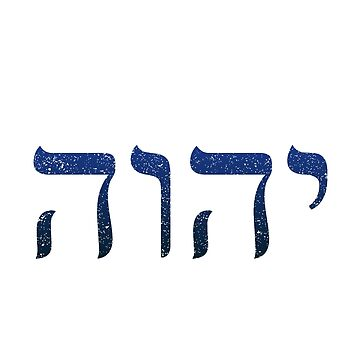
Many Jews pray to The ETERNAL in religious services addressing Him as Adonai. This is the Hebrew replacement for the Holy NAME in the Tetragrammaton יְהוָה. Where does this practice come from and does it have anything to do with the name, Adonis which was used by the Phoenicians, Greeks, Romans, etc? If so how did it come to be a respectful title for the Hebrew G-d? I want to clarify that there is one caveat and that is when the word for “my master” אדוני is actually used in the Hebrew text, but that often refers to rulers and prophets as well and is a title of position more than a name. The same thing is applicable to the word LORD which is used copiously by Christians to refer to Jesus. They write it as “LORD” in their “Old Testament” wherever the Hebrew uses the Tetragrammaton, and “Lord” in their New Testament to refer to Jesus.
ADONAI/Adon
“Etymology. From Hebrew אֲדֹנָי (ādônay, “My Lord”); used in place of the Tetragrammaton יְהוָה as a name of the God of the Hebrews during prayer recitation.”(see Wiktionary)
So, according to Wiktionary, Adonai is a replacement for יְהוָה. Why would we choose to replace the Holy name with something that sounds like the way the ancient pagans addressed their deities? What does the Torah say about using the names of other gods as a substitute?
Exo 23:13:
“Be on guard concerning all that I have told you. Make no mention of the names of other gods; they shall not be heard on your lips.”
Adonis comes from the ancient Phoenician, Greek, and Roman mythology and was adapted into Jewish and other religions. It is a way of saying “Master” or “Lord”.
“In the Bible the Israelite God, Yahweh is sometimes referred to as Adon, though the term is used as a title, not as the personal name of Yahweh. Eventually, the appellation “Adonai” (my Lord) became a substitution name for pronouncing in prayer the unutterable name Yahweh, which by the early rabbinical period (first and second centuries A.D.) had become too sacred to pronounce. To this day, when Jews encounter the consonants of “Yahweh’ (YHWH) in prayer, they pronounce it “Adonai.” They might be shocked to learn that this substitution word is related to the Phoenician “Adon” and the Greek Cypriot ‘Adonis.’” see: Phoenicia.org
A River in Lebanon and it’s History
“The Abraham River also known as Adonis River, is a small river in the Keserwan-Jbeil Governorate in Lebanon, with a length of about 14 mi. The river emerges from a huge cavern, the Afqa Grotto, nearly 5,000 ft above sea level before it drops steeply through a series of falls and passes through a sheer gorge through the mountains. It passes through the town of Nahr Ibrahim before emptying into the Mediterranean Sea. The city takes its name from the river. The ancient city of Byblos stood near its outlet and was a site for the veneration of Adonis, the god of love, rebirth and beauty in Phoenician Mythology. He was said to have been killed near the river by a boar sent by Ares, the god of war. According to the myth, Adonis’s blood flowed in the river, making the water reddish for centuries and spawning a carpet of scarlet buttercups along the river’s banks.” Wikipedia
History of Adonis:
Does ADONAI really refer to Adonis? And if so what was the influence that brought about the change to The Eternal’s name during a time when other nations used that to refer to their gods?
“Adonis is a young fertility god, a comely youth beloved by Astarte, and represents death and rebirth in an oriental vegetation cult. He is also known as the agricultural divinity named Eshmun.
Adonis is derived from the Canaanite title, Adon. It is the Semitic word for master or ‘lord’ and (the) i means ‘my’, therefore Adonai (Adonis is the Hellenized version of the same) translates as ‘my lord’; similarly the meaning of Baal, with whom he shares traits, is also ‘lord’ or ‘master’.” See Reference
According to the above article, the mythical god Adonis was also a name for Tammuz. During those times Adon became a way to address the pagan gods, meaning “master” and Adonai “my master,” We see masters referred to this way in the Hebrew Tanach as well. But knowing the history of how the title came into common usage for other gods, should we be using this title for the name of the ONE and only Eternal G-d?
According to another source, the title Adon and later Adonai has roots as early as the Canaanites, Greeks, Syrians, and Persians. The myth was around earlier in the Near East and throughout Mesopotamia but developed by the Greeks. The mythology apparently affected early Christianity’s dying and rising god, as well as other religions. See: World History/Adonai (Please click on either of these links to see the entire article.)
So does God listen to us when we call Him by the wrong name? The fact that something has been done for a long time, does that mean it makes it right and perfect? Perhaps we need to take another long look at where things come from!
The etymology of words is certainly important. We must keep in mind that Hebrew was to be a distinct language for a distinct and Holy People, SO why borrow titles for our DEITY from other nations’ pagan deities?
Deuteronomy 12:29-31:
“When יְהוָה your God has cut down before you the nations that you are about to enter and dispossess, and you have dispossessed them and settled in their land, beware of being lured into their ways after they have been wiped out before you! Do not inquire about their gods, saying, “How did those nations worship their gods? I too will follow those practices.”
You shall not act thus toward יְהוָה your God, for they perform for their gods every abhorrent act that יְהוָה detests; they even offer up their sons and daughters in fire to their gods.”
So why would we have a name for our G-D that is very similar to the way the ancient pagans called their gods? If we know that The Name of the Eternal is spelled with the Tetragramaton (יְהוָה), which some have pronounced “Yahweh” and others “Yehovah” then why would we use a title that others have used to exalt their pagan deity’s? Why would we even come close?
Some have said that since the word Adonai is used in the Holy Scriptures when addressing the Most High God, that it is correct and required that we do so, but if the word or even most of the word was a customary way of addressing pagan gods at the time (even part of the ancient languages), it is no more significant than today, using “Lord”, or “master”, or “Your Highness.”
What would happen if we should challenge ourselves to examine deeply what the Torah is actually saying–how words are used and what is the etymology of each word? What if we used our G-d-given intellect when studying these things, rather than follow a supposed correct practice that has been done from time immemorial?
There is an important verse in Ezekiel about knowing the right name…:
Eze 39:7 “I will make known my holy name among my people Israel. I will no longer let my holy name be profaned, and the nations will know that I יְהוָה am the Holy One in Israel.”
I pray that it is the reader’s desire to understand more fully the will of Him who gave us His Torah and acknowledge and use His sacred NAME!
Ariella Tiqvah