Elohim: Let US Make Man? Part 2

In my last article (see here), we discussed the singularity of God in the name Elohim. In Genesis 1:1, though Elohim is a plural word and can be plural in the case of judges or Kings, false gods or noblemen, in the case of creation the use of Elohim is singular shown clearly by the singular masculine verbs that accompany this name. 

However, when we get to Genesis 1:26, something seems to change in the fact that Elohim says, “let US make man in OUR image, after Our likeness.” How can this be? And what might this mean? For the previous acts of creation, the masculine singular is used for all the verbs that show God acting, showing that He acted as a singular person. So how do we suddenly switch from singular to plural?

Before we get into this discussion, let us look at Who actually performed the creation of mankind. Is this described in singular or plural. See Genesis 1:27-28:

“So God created man in his own image, in the image of God created he him; male and female created he them.”

“And God blessed them, and God said unto them…”

(In the above verses I have highlighted the English verbs and the possessive pronoun followed by a singular noun: “his own image” and will highlight them in the Hebrew as well.) 

27 וַיִּבְרָא אֱלֹהִים אֶת־הָאָדָם בְּצַלְמוֹ בְּצֶלֶם אֱלֹהִים בָּרָא אֹתוֹ 

זָכָר וּנְקֵבָה בָּרָא אֹתָם׃

The word בָּרָא is a verb signifying that the action was done by a singular masculine character. The word is used 3 times in verse 27 above. 

28 וַיְבָרֶךְ אֹתָם אֱלֹהִים וַיֹּאמֶר לָהֶם אֱלֹהִים

In verse 28 we see highlighted the verbs “and blessed” וַיְבָרֶךְ (singular masculine), “and said”וַיֹּאמֶר (singular masculine). We see בְּצַלְמוֹ בְּצֶלֶם  (in his own image) also used in masculine singular, even though in verse 26 it uses the plural “our image and likeness.” 

So the entire chapter is consistent in that one person is doing the actual creating, blessing and speaking. Yet verse 26 shows Elohim speaking to someone as if to include them in the creative process. How can this be? 

In my research, I have found answers such as: “He was speaking to the angels.” And yet man kind was not created in the image of the angels, though they do take part in working between Heaven and earth. We see them working with Balaam when he was instructed that he could not speak other than what God put in his mouth. There are many Biblical examples of angel messengers working for mankind. But to say that the angels helped at that moment in the creation of man is denied in the rest of Genesis 1, for God acted alone. 

So who was Elohim speaking to? And one more question that comes from thinking outside the box of right at that time. Could it be that the creation of man was not complete at the time when he was formed of the dust of the ground? Was there something more for which the angels would participate? Or was God speaking to the man he was creating? Now, I know this seems strange. How could a man participate in his own creation?

Could it be that God was referring to the choices Adam and Eve would have to make at a later time? We know that man’s character was not formed until given the choice of which of the two trees he would eat from. Obviously, by eating of the forbidden tree, man was now subject to live with temptation. If he had abstained, he would have not had this nature. So in a way, Adam chose the evil tree and figured the destiny and weaknesses of mankind. I think this is what the verse means. And the angels also have a part to play in our lives even today, though we usually do not sense them. 

Was God speaking to the dust from which He formed the man? Was the image of the ground part of what man was formed? That seems a bit odd, if we think about it, but it makes some sense, and if he created everything else in the creation by speaking, why would he not be able to speak our DNA into the dust that formed us. And asking the dust to cooperate, though that seems a little weird, might just factor in if we think about it. And speaking of dust, we do have an earthly nature so He could have been speaking to the dust as well. So I have given two possibilities, and before you wipe this idea away, give it some thought. Can God animate anything he wants to? Obviously, He did animate the dust, for out of it he created a living soul. Did He need to ask permission for cooperation? 

Just some thoughts to ponder, but you will not find that the name Elohim when used for the Creator is ever accompanied by plural verbs in the entire Tanakh. 

I am happy to read your comments if you want to submit them. Also please like and share, it helps to get the word out!

Ariella Golani
Elohim–God, or Gods? Part 1

And what about Human Mediation?

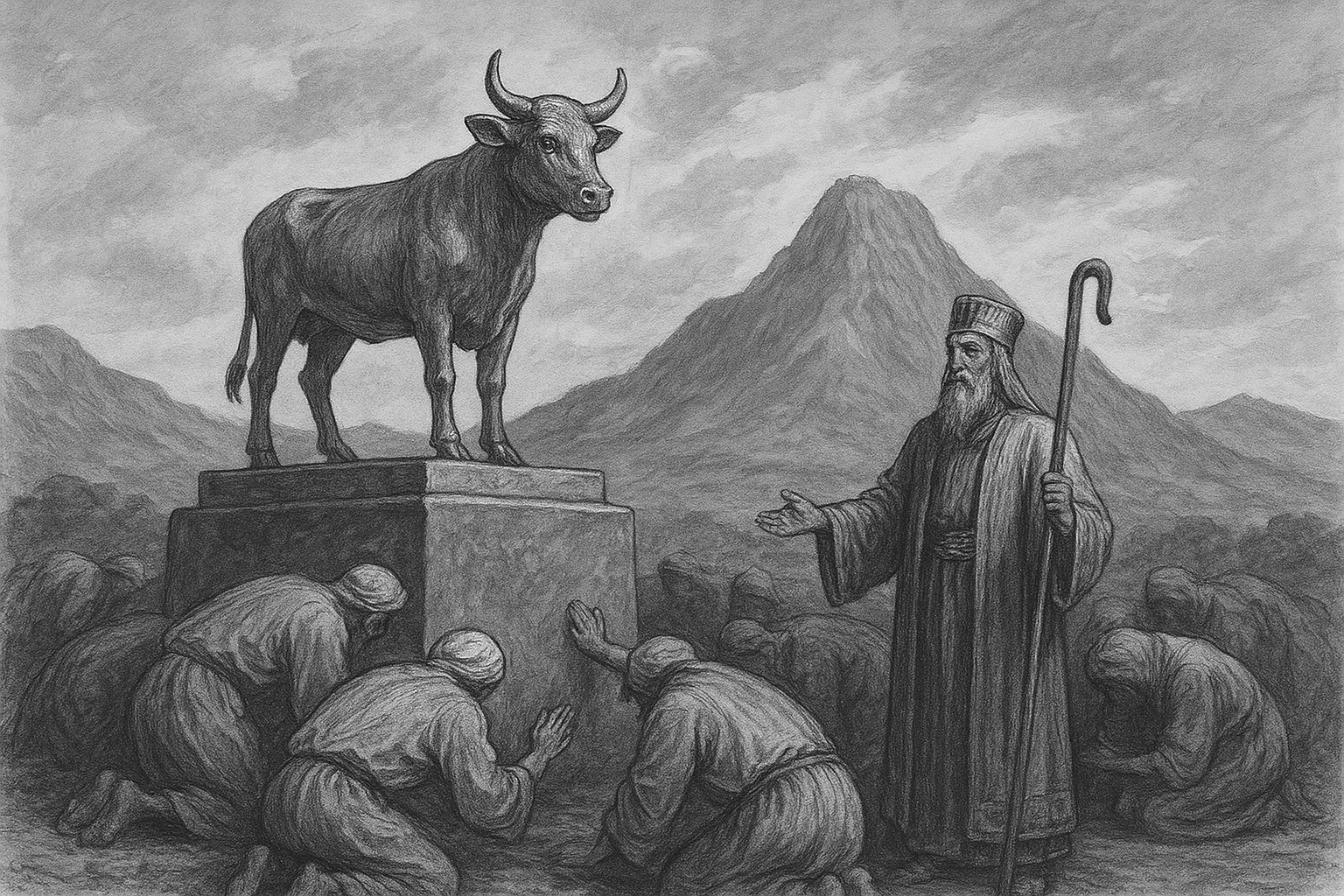
Created by ChatGPT

In Exodus 32 we find the children of Israel pleading with Aaron to make them “gods” to go before them. They had been waiting for Moses to come down from the Mountain of God (Sinai) for several weeks and had grown tired of waiting. Their faith in what they had experienced seeing the lightning and hearing the thunderous voice of God was now weak, and apparently they were accustomed to having a visible, tangible god that they could experience in human terms. We see the same humanistic need for a touchable, feel-able God today in many religions. The idea of a God that is beyond comprehension is outside the scope of people’s understanding, it always has been. I want to get back to this idea, but first let us examine something that most versions of the Bible have wrong to my understanding. 

In verse 4, in the passage where Aaron has made the requested golden calf, we see words that the majority of Bible translations claim to say: “These are your gods, O Israel, who brought you up from the land of Egypt.”

But it was not two or more calves. It was a single golden calf, so why is it referred to in the plural? Maybe a good look at the Hebrew will help us:

וַיִּקַּ֣ח מִיָּדָ֗ם וַיָּ֤צַר אֹתוֹ֙ בַּחֶ֔רֶט וַֽיַּעֲשֵׂ֖הוּ עֵ֣גֶל מַסֵּכָ֑ה וַיֹּ֣אמְר֔וּ אֵ֤לֶּה אֱלֹהֶ֙יךָ֙ יִשְׂרָאֵ֔ל אֲשֶׁ֥ר הֶעֱל֖וּךָ מֵאֶ֥רֶץ מִצְרָֽיִם׃

For those who do not read Hebrew, the highlighted words אֵ֤לֶּה אֱלֹהֶ֙יךָ֙ can be translated as singular or plural. The first word “ele” is a participle that defines the word that follows, and can mean either “these” or “this” in English. The world “Elohim” is plural and is rendered “Elohecha” in this case, which is still plural but shows possession by adding the “cha” on the end. But why would something that is clearly singular in nature (a golden calf) be called “gods” rather than “god”? This stems from the use of the word “Elohim” and a common misunderstanding of what it means. When used for the God of the Universe, it is often understood in Christianity to refer to the “Triune Godhead.” But in the case of the Golden Calf, it is clearly one object. So does this lead to the idea that the calf was really more than one calf? Or does it help us to understand that the Eternal YHVH who is also called Elohim is not several entities, but One Entity with many aspects? I won’t go into defining God here, He is beyond comprehension to our human minds. But we do know that He is everywhere, He is all knowing, No secrets can be hidden from Him. He hears, sees, speaks, loves, judges….just to specify a few aspects. 

It is true that in the Bible there are times when Elohim is used to indicate human judges, leaders, or false gods. But in the case of the golden calf, it is clearly used in the singular as well as in the case of the Creator and His dealings. By the way, in Genesis 1:1 Christians claim that Elohim was all three persons creating mankind. But if you understand Hebrew and do not go to the English for understanding, you will see the following:

בְּרֵאשִׁ֖ית בָּרָ֣א אֱלֹהִ֑ים אֵ֥ת הַשָּׁמַ֖יִם וְאֵ֥ת הָאָֽרֶץ׃

“In the beginning, Elohim (God) created the heavens and the earth.” 

(The words “in the beginning, are also misunderstood, but that is for another time since we need to focus on the highlighted words)

In Hebrew, biblical or modern, the words that accompany the noun, in this case “Elohim” must show whether it is expressed as singular or plural and feminine or masculine. In this instance, the word that precedes Elohim is bara בָּרָ֣א: “He created” or brought forth (masculine singular). 

To say that Jesus was in the beginning with God creating the universe, as is declared in John 1;1-3, does not fly when you look deeply into what is really said in the original Hebrew text of Genesis. 

If we look at other verses where Elohim is used in the plural, maybe we will see that the verbs, adjectives, participles, etc. verify the plurality of these verses. Here is one example: 

Psa 97:7 “Confounded be all they that serve graven images, that boast themselves of idols: worship him, all ye gods.” In Hebrew:

 יֵבֹשׁוּ כָּל־עֹבְדֵי פֶסֶל הַמִּתְהַלְלִים בָּאֱלִילִים הִשְׁתַּחֲווּ־לוֹ כָּל־אֱלֹהִים׃

The highlighted words say “worship him all ye elohim” referring to the false gods mentioned in the verse.  Note the obvious plural in the English rendition. (Above) And to help simplify the words הִשְׁתַּחֲווּ־לוֹ  where (Hishtavu), the masculine plural is used in qualifying the word “elohim” which is used for the idols or false gods.

There are several more examples in the Bible where Elohim is used for angels, leaders, judges, wicked or righteous leaders, etc. 

I promised in the first paragraph that we would touch on the unfathomable nature of the Divine. Really there are no words other than what the Bible itself says. When Moses asked Yehovah to reveal Himself, Elohim told him a few things about himself:

Exo 34:6-7: ” And YHVH passed by before him, and proclaimed, YHVH, YHVH, a God merciful and gracious, slow to anger, and abundant in loving-kindness and truth, 7 keeping loving-kindness for thousands, forgiving iniquity and transgression and sin; and that will by no means clear the guilty, visiting the iniquity of the fathers upon the children, and upon the children’s children, upon the third and upon the fourth generation.”

Basically that is all that was given for a definition as far a character goes. Perhaps that is enough for humanity other than knowing all the other things that describe the activity of the Almighty as revealed in Scripture. Can it be enough? It has to be!

Let us not raise another golden calf and claim that these be our god’s that have led us or saved us from the wrath of the Eternal! Or that these are the ones who deserve to lead us because they are like us, and we can understand them, and God forbid we claim that God needed a human to help him understand what people need! No! There is no one standing beside the Eternal in Heaven telling Him what humanity needs, nor is there (like some in Judaism claim) a famous Rabbi who has an office next to God in Heaven–someone who answers emails when we need instruction! 

May I ask what science people study that denies the Bibles clear instructions to not communicate with the dead? The belief in communication with the supernatural and out-of-body experiences comes from ancient pagan cults and is with us today in many religions including, sadly, some sects of Judaism. 

Kabbalah goes against much of what the Bible says, it includes spiritualistic practices including communication with the dead. See the following statement from Kabbalahexperience.com

“It has long been decided in Jewish law that talking with the dead (by oneself or through a medium) is only prohibited if you think that the dead body is in itself the conduit to the discussion. If one is communicating with the soul of the deceased, it is permissible.” But what does the Bible say?

Deu 18:10 “There shall not be found among you, he that makes his son or his daughter to pass through the fire, that uses divination, that uses auguries, or an enchanter, or a sorcerer, 11 or a charmer, or one that inquires of a spirit of Python, or a soothsayer, or one that consults the dead. 12 For every one that does these things is an abomination to Yehovah, and because of these abominations Yehovah thy God doth dispossess them (the nations) from before thee.”

If, as I am asserting, our Creator is all knowing and all compassionate, forgiving and just and does not allow evil into his Kingdom, then why do we need human mediation? After all, He is the one with the manufacturer’s warranty on the universe!

For an unshakable faith,

Ariella

Will You Wear this Crown?

Society today is an uncomfortable, if not outright frightening, atmosphere in which to find one’s bearings. Nearly everybody comes with the excuse of parents who were dysfunctional, and so we all were neglected. I do not say this tongue in cheek. I see the world spinning out of control, and all of us long for a safe place to grow and prosper. But growth is hard to find while constantly dodging emotional turmoil, either our own or others around us. Most likely both. It seems people have little opportunity to live in peace. The daily struggle just to survive is more than most can cope with, thus the field of psychology blooms and grows, but is psychology the answer? Cultivate yourself. Stop looking to others for love and approval. Well said, but there still is something lacking… 

Does anyone really get well doing that? Or do we produce a bunch of independent automatons? Needs are still there and nobody is filling them. We make mistakes as we live our lives, and family is the first to point the finger at how we have messed up. Children blame parents for their own difficulties and they are right, except when you look at the parenting that the parents had and left a vacant hole in their hearts which led them to be the way they were with their children. 

The Bible talks about the sins of the fathers passing down the to third and fourth generation, well that means everything has mounted up upon this generation to the point where we are fighting everything that we inherited and the animosity of those in our world who also carry the same burden and perhaps blame us for their own discomfort. Is there any hope? I hear people say, if only I had a million dollars so I could live comfortably and not need people! If money could fix the problem, we would have a lot of well-adjusted millionaires, but we see people like Howard Hughes locking himself up in his ivory tower suite! The quest for money is similar to the addiction to  alcohol, drugs or any other addiction. It feels good to succumb  for the moment but then you must pay dearly in emotional backwash! And the money game is about being on the hamster wheel, never having enough!

Someone I knew once asked me if I could be happy living off the interest from a well invested million dollars. At the time, it came to over $50,000 per year. That is the interesting question. And no, apparently money does not satisfy because it often leads to endless chasing after more and more. 

At this time of chaos, where is our Creator? It feels to some that He has gone away and left us to our own devices. Surely not! If we don’t find Him, maybe it is because we are not taking the time to connect with Him? If we never call out to Him, there is no way he will impose on us. He respects our free will. Can we believe that when all hell breaks loose? Do we blame him for the chaos in the world? Or can we be happy even if life does not go as planned? –That sometimes bad things come to us regardless of whether our Maker is in the picture or not, but having Someone to help shoulder the burden just might make it possible to endure. Right? 

When Moses spoke his last words to Israel before they crossed the Jordan, he told them:

Deu 31: “6 Be strong and of good courage, fear not, nor be affrighted at them: for YHVH thy God, he it is that doth go with thee; he will not fail thee, nor forsake thee.” After 3000 plus years, is this still true? 

Mal 3: “6 For I, YHVH, change not; therefore ye, O sons of Jacob, are not consumed.”

But how do we disentangle ourselves from looking to people and from our sick dependence upon close relatives, (wives, husbands, children, parents, siblings). When we observe others carefully, we realize that  they are as broken or more so than we are and if they don’t know God, they won’t be able to give us a thing other than a temporary fix. But there are always consequences of getting a quick fix. When they give, they expect something in return—maybe more than we can give them. And then we may all find ourselves blaming one another.  Blame is not a game that works because it always comes back to accuse us. If we place the ball in the right court, so to speak-our happiness in Heaven’s court, then we will make it through. 

Psalm 138: 8: “YHVH will perfect that which concerns me, Your mercy, O YHVH endures forever; Do not forsake the works of Your hands.” 

Zechariah 3 speaks of  Joshua the high priest, a historical figure at the time of the return from Babylon. I believe there is a message beyond the history of those times. Joshua stands before the Eternal as awaiting judgment. We see the Satan standing at his right side to accuse him. YHWH tells the attendants to take away Joshua’s filthy garments. I believe these garments represent the faults and mistakes that  we have committed over our lives and that continually dog our steps, the adversary (whether this be close friends, or relatives or our reputation in society) is quick to accuse us. But, in the text, the guilty garments are removed. Verse 4 says Joshua’s “guilt” is removed–the guilt of Joshua’s past failures. Does this mean that none can accuse him now? Probably not, but perhaps this is about restoration of Joshua’s self-image, which comes with the realization of God’s forgiveness! 

Proverbs 28:13: “He that covers his sins shall not prosper; but whoso confesses and forsakes them shall obtain mercy.”

So then what happens to Joshua? After the filthy garments (his sins and mistakes) are removed, his heavenly attendants cloth him in priestly garments and place a royal crown  on his head. He is commissioned to keep God’s charge and if he does, he will rule over the House of God and move among the other priests which he sees sitting before him. This is only a part of the Biblical story, but there is an application to this story for each of us today.  

When we realize that our filthy garments are removed, then we will be  immune to the accusations of others. That does not mean we can lean on them ever again for approval. If we have God’s approval, we need nothing more! We may not rule the courts of the Most High, but we can rule our own lives without regrets. 


Hab 3: “17 For though the fig-tree shall not flourish, Neither shall fruit be in the vines; The labor of the olive shall fail, And the fields shall yield no food; The flock shall be cut off from the fold, And there shall be no herd in the stalls:  18 Yet I will rejoice in YHVH, I will joy in the God of my salvation.  19 YHVH, the Lord, is my strength; And he makes my feet like hinds’ feet, And will make me to walk upon my high places. “

Ariella