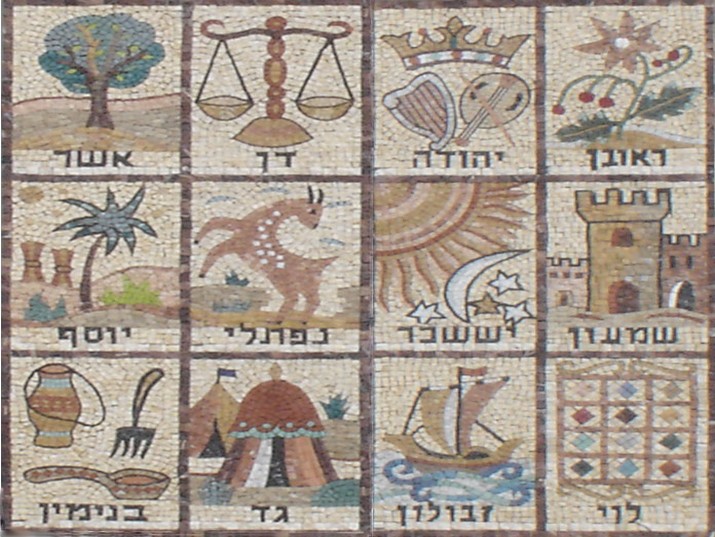
There are historians who claim that the story of the scattering of the Northern tribes of Israel was a myth. Others say or that it was somehow written into the Biblical account in the Tanakh. But I think, there is far too much prophecy that must be taken into account to dismiss the idea of 10 Lost Tribes.
When I have spoken to other Jews about them, some express the opinion that these tribes are all represented today among the Jews, or that they became Gentiles and are permanently lost. Or that yes, they are important, but they are in places like India and Ethiopia, Evidence of the Silk Road Jews in India and China are well known but most of them have relatively recent history such as from about 800 CE to around 1100 CE, but there are others there who apparently have been there much longer and still observe much of the ancient Israelite religion. These are themselves the Bene Menashe and what they claim provides what I would claim as evidence that they are of the tribe of Manasseh.
“… the Bnei Menashe have come to believe that the legendary Hmar ancestor Manmasi[6] was the Hebrew Menasseh, son of Joseph.” These people struggled to be recognized by Israel for around 50 years until finally they were accepted by the Chief Rabbinate of Israel to make Aliyah in 2005, provided they complete a ritual conversion. Link
Of the Falasha people in Ethiopia, some claim to descend from Solomon and the Queen of Sheba, but the general belief among them is that a group from the tribe of Dan fled to Ethiopia (the land of Cush) during the 10th century BCE. (See Link) How can we prove any of this? Is it mere hearsay, or does it follow what the Bible says? These may be facts that have been ignored and Israel has continually held anyone who claims to be of the 10 Tribes at arm’s length, doubting their origins. Notice the verse in Isaiah 11:11, highlighted below. Cush is known in the Bible as Ethiopia. And what about all the other tribes, where are they?
Isa 11:11-14 -“11 And it shall come to pass in that day, that YHVH shall set his hand again the second time to recover the remnant of his people, which shall be left, from Assyria, and from Egypt, and from Pathros, and from Cush, and from Elam, and from Shinar, and from Hamath, and from the islands of the sea. 12 And he shall set up an ensign for the nations, and shall assemble the outcasts of Israel, and gather together the dispersed of Judah from the four corners of the earth. – 13 The envy also of Ephraim shall depart, and they that vex Judah shall be cut off: Ephraim shall not envy Judah, and Judah shall not vex Ephraim. 14 And they shall fly down upon the shoulder of the Philistines on the west; together shall they despoil the children of the east: they shall put forth their hand upon Edom and Moab; and the children of Ammon shall obey them.”
And what can we say about the Samaritans who claim to be a remnant of what was left in the land of Israel at the time of the captivity? There are Cohanim (Levites) among these Samaritans who actually can prove their lineage. We remember that the Levites were assigned to cities across Israel in the days of Joshua after the conquest of the land. See the command for this in Numbers 35 and Joshua 21. It is interesting that Jeremiah was a Levite but lived in Anathoth (his birthplace) which was a Benjamite city. Perhaps antipathy towards the Samaritans’ assertion that they are from the original tribes has been fostered through works such as those of Josephus and even the Christian Bible’s story of the woman at the well and the Good Samaritan where the Samaritans are not seen as Jewish. And yet when we look at who were actually exiled among those captured by Assyria, we see that not everyone was taken. The artisans and the wealthy who could help establish the economy of Assyria were taken but the humble people were left in the land to care for it. How many were left is another question, but if we see that only the elite were taken, we may get they idea that many were left in the land.
According to Wikipedia: “Around 720 BCE, Israel was conquered by the Neo-Assyrian Empire.[4] The records of Assyrian king Sargon II indicate that he deported 27,290 Israelites to Mesopotamia.[5][6] This deportation resulted in the loss of one-fifth of the kingdom’s population and is known as the Assyrian captivity, which gave rise to the notion of the Ten Lost Tribes.”
27 thousand, if the above quote included all of them, “a fifth of the population” would leave a lot of the tribes in the land. The big question is, where did they go later? We know that some fled to Judah but when later explorers found Israel to be almost depopulated (people like Mark Twain), the question arises: Where were they hiding? Is it possible that they had gone to surrounding Arab nations? There are many myths of the ten tribes, including the American Indians, the English, the Irish. Silk Road discoveries found Jewish evidence even in China. Link
What I have found in the bible distinctly separates the tribes from the North of Israel (often referred to as Ephraim) who were first conquered and exiled by Assyria ( from the Jews who were later taken to Babylon. Bible students know the details of the separation of these tribes from Judah when Rehoboam, son of Solomon imposed unfair taxes upon them and the kingdom was divided around 930 BCE. (Link)
The two groups of Israelites that went astray and were taken into captivity were the northern tribes by Assyria in 720 BCE and later Judah to Babylon in 587 BCE: The prophet Jeremiah describes both Israel and Judah’s unfaithfulness in chapter 3. See link.
Prophecies speak of a people who were, for all extents and purposes, lost. And yet there is the indication that YHVH never forgot them and will bring back a remnant to the land of Israel. It is obvious from the writings of the prophets that there will be a remnant that returns from the nations. They may not even know who they are.
During the past couple of years since Hamas invaded Israel in the ensuing war since the October 7 massacre, I have seen many people across the globe take at least a verbal stand in support of Israel. This war seems to have created a dividing line between those who love Israel and its values and those who support the corruption of the terrorist regimes which threaten to annihilate not only Israel but all of Western Society.
Maybe I am thinking too far outside the box, but I believe there is a spark of Israel in everyone that stands with Israel. It is as if the blood of the descendants cries out against the evil onslaught against their brethren. Could these be those of the ten lost tribes, just beginning to recognize something that has been hidden ever since they went astray? Who is this remnant, and how will Israel recognize their lost brethren? Israel is not an easy place to immigrate to. What will change this? Perhaps we need a Messiah with Divine insight, or at least a Movement that opens the doors to all who support Israel and are willing to take their lot among the Jews of this nation.
Many of those who love Israel are found within the Christian Church. Some have converted to Judaism, maybe not because they see it as a pure religion, but because something inside them cries out to be with their brethren. But whether their religion is Judaism or not, these people stand with Israel. And it is interesting to note that, apparently according to the Bible the ingathering happens before these lost brethren wake up to some of their mistaken beliefs. Hosea speaks of this:
Hos 14:1-2, 4-9 – “Hos 14:1-2 “1 O Israel, return unto YHVH thy God; for thou hast fallen by thine iniquity. 2 Take with you words, and return unto YHVH: say unto him, take away all iniquity, and accept that which is good: so will we render as bullocks the offering of our lips.”4 I will heal their backsliding, I will love them freely: for mine anger is turned away from him. 5 I will be as the dew unto Israel: he shall grow as the lily, and cast forth his roots as Lebanon. 6 His branches shall spread, and his beauty shall be as the olive tree, and his smell as Lebanon. 7 They that dwell under his shadow shall return; they shall revive as the corn, and grow as the vine: the scent thereof shall be as the wine of Lebanon. 8 Ephraim shall say, What have I to do any more with idols? I have heard him, and observed him: I am like a green fir tree. From me is thy fruit found. 9 Who is wise, and he shall understand these things? prudent, and he shall know them? for the ways of YHVH are right, and the just shall walk in them: but the transgressors shall fall therein.”
Below are a sampling of texts on the subject of the lost tribes and their return. There is still much to be discovered and as many others believe, I also am of the opinion that with or without a particular Messiah figure, these lost exiles will return. Whether it be a universal movement or an actual human figure that brings these things about, we will have to wait and see.
Isa 43:1, 5-6 “1 But now thus saith YHVH that created thee, O Jacob, and he that formed thee, O Israel, Fear not: for I have redeemed thee, I have called thee by thy name; thou art mine. … 5 Fear not: for I am with thee: I will bring thy seed from the east, and gather thee from the west; 6 I will say to the north, Give up; and to the south, Keep not back: bring my sons from far, and my daughters from the ends of the earth;”
Jer 31:7-11- “7 For thus saith YHVH; Sing with gladness for Jacob, and shout among the chief of the nations: publish ye, praise ye, and say, O YHVH, save thy people, the remnant of Israel. 8 Behold, I will bring them from the north country, and gather them from the coasts of the earth, and with them the blind and the lame, the woman with child and her that travails with child together: a great company shall return thither. 9 They shall come with weeping, and with supplications will I lead them: I will cause them to walk by the rivers of waters in a straight way, wherein they shall not stumble: for I am a father to Israel, and Ephraim is my firstborn. 10 Hear the word of YHVH, O ye nations, and declare it in the isles afar off, and say, He that scattered Israel will gather him, and keep him, as a shepherd doth his flock. 11 For YHVH hath redeemed Jacob, and ransomed him from the hand of him that was stronger than he.”
Eze 11:16-17:
“16 Therefore say, Thus saith YHVH GOD; Although I have cast them far off among the heathen, and although I have scattered them among the countries, yet will I be to them as a little sanctuary in the countries where they shall come. 17 Therefore say, Thus saith YHVH GOD; I will even gather you from the people, and assemble you out of the countries where ye have been scattered, and I will give you the land of Israel.”
Eze 28:25-26 – “25 Thus saith YHVH GOD; When I shall have gathered the house of Israel from the people among whom they are scattered, and shall be sanctified in them in the sight of the heathen, then shall they dwell in their land that I have given to my servant Jacob. 26 And they shall dwell safely therein, and shall build houses, and plant vineyards; yea, they shall dwell with confidence, when I have executed judgments upon all those that despise them round about them; and they shall know that I am YHVH their God.”
Eze 37: 11-23: “And thou, son of man, take thee one stick, and write upon it, For Judah, and for the children of Israel his companions: then take another stick, and write upon it, For Joseph, the stick of Ephraim, and for all the house of Israel his companions: 17 and join them for thee one to another into one stick, that they may become one in thy hand.” (Link to whole passage)
Eze 45:8 – “8 In the land shall be his possession in Israel: and my princes shall no more oppress my people; and the rest of the land shall they give to the house of Israel according to their tribes.”
I for one am waiting with baited breath for the return of our lost brethren. May it be within my lifetime. And let me say that as I see Israel pushing back the borders and taking back land that was once given to them, I see this all unraveling. As it says in Isaiah 54:
Isa 54:1-3 – “1 Sing, O barren, thou that didst not bear; break forth into singing, and cry aloud, thou that didst not travail with child: for more are the children of the desolate than the children of the married wife, saith YHVH. 2 Enlarge the place of thy tent, and let them stretch forth the curtains of thy habitations; spare not: lengthen thy cords, and strengthen thy stakes. 3 For thou shalt spread abroad on the right hand and on the left; and thy seed shall possess the nations, and make the desolate cities to be inhabited.”
Ariella Golani
If you enjoyed this article, please like, comment, share and or subscribe! Thanks for your help!