Parsha Ve-Etchanan-Deut. 3:23-7:11

By Ariella Casey

Laws for Israel in The Land, and How Big is The Land?
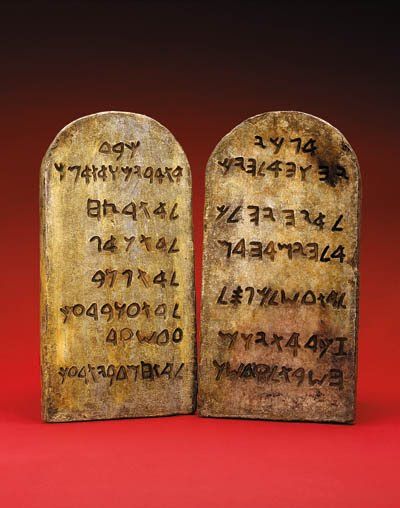
Moses, near the end of his life, speaks his final words to Israel while near the borders of the Promised Land.  He tells them several times that the laws that YHWH gave to him on Sinai, the laws other than the ten commandments, were given for when they entered The Land. 

So why have the Jews continued the tithing laws which were given for the Leviim and Cohenim  (Levites and Priests) and the Temple when there is no Temple? Why do Jews in Europe and America build Sukkot along the streets of foreign cities when the Feast of Tabernacles was to be observed “in The Land” as a memorial of the 40 years they spent outside  in the wilderness? Aren’t Jews outside of Israel, still in the wilderness? And why are synagogues built and dedicated as holy places, when the only true Holy Place was set apart by YHWH on the Sacred Mount in Israel? And, in case we don’t know, the Second Temple on Har HaBayit was desolated by the betrayal of the Jewish people, giving Jerusalem to Rome 2000 years ago! Har HaBayit is even now in the news, with the Israeli government siding with the nations to prevent Jews from praying there. Please stay abreast of what is happening! Keep praying!

The history of the Israelites over the last 3000 years has been, not what God had planned for us, but what our forefathers chose to do. Israel has been in and out of The Land; taken captive several times and then during prolonged captivity, they formulated new laws which would allow them to be able to remain a separate people and still remain in the nations to which they were scattered. But, these new laws were invented by their rabbis and now referred to as the “Oral Law.” These were anything BUT the original laws given to them through the hand of Moses.  

The laws given by the hand of Moses, which are claimed to be the basis for the “Oral Torah” were to be kept solely “in The Land.” Moses gave his final words with several references to this. At this time they were at the end of the 40 years wilderness sojourn. They had, most certainly, been practicing some of these laws, but they were laws that Moses clearly specified for when they were in The Land. Let’s view some of the verses that say this:

“And Jehovah spoke to you from the midst of the fire: ye heard the voice of the words, but ye saw no form; only ye heard a voice. And he declared to you his covenant, which he commanded you to do, the ten words; and he wrote them on two tables of stone. And Jehovah commanded me at that time to teach you statutes and ordinances, that ye might do them in The Land whither ye are passing over to possess it.” (Deu 4:12-14).

And Moses reminds the children of Israel that at Sinai they had asked that YHWH not speak to them, but that Moses should go and receive the laws from YHWH and then teach them. 

So he continues reminding them…

“And now, why should we die? for this great fire will consume us. If we hear the voice of Jehovah our God any more, we shall die. For who is there of all flesh, that has heard the voice of the living God speaking from the midst of the fire, as we, and has lived? Come thou near, and hear all that Jehovah our God will say; and speak thou to us all that Jehovah our God will speak to thee; and we will hear it, and do it. And Jehovah heard the voice of your words, when ye spoke to me; and Jehovah said unto me, I have heard the voice of the words of this people that have spoken to thee: they have well spoken all that they have spoken. Oh that there were such a heart in them, that they would fear me, and keep all my commandments continually, that it might be well with them and with their sons for ever! Go, say unto them, Get you into your tents again. But as for thee, stand thou here by me, and I will speak unto thee all the commandments, and the statutes, and the ordinances, which thou shalt teach them, that they may do them in The Land which I give them to possess it. Take heed then to do as Jehovah your God hath commanded you: turn not aside to the right hand or to the left. In all the way that Jehovah your God hath commanded you shall ye walk, that ye may live, and that it may be well with you, and that ye may prolong your days in The Land which ye shall possess.” (Deu 5:25-33).

Again we see that these laws were for “in The Land.”

“And these are the commandments, the statutes, and the ordinances, which Jehovah your God commanded to teach you, that ye may do them in The Land whereunto ye pass over to possess it, that thou may fear Jehovah thy God, to keep all his statutes and his commandments which I command thee, thou, and thy son, and thy son’s son, all the days of thy life; and that thy days may be prolonged. And thou shalt hear, Israel, and take heed to do them; that it may be well with thee, and that ye may increase greatly, as Jehovah the God of thy fathers hath said unto thee, in a land flowing with milk and honey.” (Deu 6:1-3).

Then Moses teaches the Shema, the laws referring to Mezuzot (writing the laws on the doorposts), and then the binding of the arm and the head-Tefillin (which refer symbolically to controlling our thoughts and actions). He goes on to challenge the Israelites to remain faithful and to not allow idolaters to live in The Land–that they not be seduced into idol worship. 

These instructions about keeping certain laws “in The Land” where Israel was to dwell from then onward were so that they would prosper and have long life on The Land and that The Land would flow with milk and honey. 

Alas, our history shows something else and we now await a full second Exodus by our exiles who desire to return and be among the people of Israel. 

May our brothers and sisters strive with all their strength to be among that group that come to settle The Land and push back the borders that all may inhabit The Land that was once promised to our father Abraham!

Here is our challenge! May we return and possess The Land in it’s fullness!

“Jehovah our God spoke unto us in Horeb, saying, Ye have stayed long enough in this mountain. Turn and take your journey, and go to the hill-country of the Amorites, and unto all the neighboring places in the plain, in the mountain, and in the lowland, and in the south, and by the seaside, The Land of the Canaanites, and Lebanon, unto the great river, the river Euphrates. Behold, I have set The Land before you: go in and possess The Land which Jehovah swore unto your fathers, to Abraham, to Isaac, and to Jacob, to give unto them and to their seed after them.” (Deu 1:6-8)

Thanks for reading. Please share, comment and follow!
Follow Take Hold the Tzitzit on WordPress.com

Parshat Balak,  July 20, 2024

The Blessings and Curses of Balaam–A Magician with a Divided Heart

By Ariella Casey

Parshat Balak is chock-full of ideas and truths from which can be extracted important lessons. Here we will look at a few blessings and the wayward Balaam. 

Balaam

We have a pagan magician, Balaam, who apparently realizes that Israel’s God must be consulted before he can get away with pocketing the money from a bribe offered for cursing the people who have passed into the land of Moab. We note that Balak, the Midianite king, sends all the way to the Euphrates river to find Balaam and bring him to solve his problem–the problem of the Israelites (Hebrews at that time) who were in his land. Balaam was obviously a well known prophet, for the passage claims that he had fame of success in cursing or blessing whomever he wished. See Numbers 22:6.

But, realizing he could do nothing without some kind of spiritual permission, Balaam asks the messengers of Balak to wait until he spoke to God about it. At this time Balaam does the right thing, and we see him refuse the visitors and send them off the next morning. Balak sends other more important messengers with promises of riches and glory. This time he wavers, though he says he must ask permission, he already knows the answer, but he insists on asking Elohim for the right to go with the men. We see how greed works on his resolution to do what the Eternal told him at the beginning. 

Here is a fine example of when people rationalize that what God said really isn’t what He meant–That we can change things by excusing ourselves to Him.

 “Could I just have a little change in the rules? After all you know how I like those things!” Take a look at Lot after the destruction of Sodom when he pled with the Almighty to let him go to the small town of Zoar even though the instruction was to flee clear out of there. Lot ended up in a cave with his two daughters, and this is what engendered the people of Moab–the same ones we are talking about here. So Balaam made excuses so that he might find a way to get the money and fame. He became hardened in his path, playing both sides of the coin. And we see it as the story develops. 

Next is the episode of the ass and the angel. Balaam makes excuses to the Angel that he finally sees standing over him–excuses about beating his donkey. The beast was keeping him from going on to collect his reward. He is sternly warned by the Angel, but he continues in the way of his already corrupted heart. 

When he finds Balak, he tells him he can only say what is placed in his mouth. Numbers 22:38. Another excuse. In other words, “You see, I have come all this way and I really want to do this for you, but there is a Power greater than me that will not let me out of his control. I will do my best to please you!”

After eating a sumptuous steak dinner from the sacrifices Balak offers to his gods, Balaam goes to different places at the suggestion of Balak, thinking perhaps that the location may be hidden from the Eternal, and he can get away with cursing Israel. YHVH makes him into a laughingstock time after time because of his greed and unwillingness to walk away from temptation. After several sacrifices of seven bullocks and seven rams and efforts to curse Israel from different places, Balaam ends up blessing Israel to the extent that Balak orders him to go home! All he accomplished was to bless, which was the opposite of what was asked of him. 

Blessings

There were several significant blessings that Balaam pronounced upon Israel. And finally, a promise of a Redeemer that should arise at end times as a deliverer. 

Balaam said to Balak: How shall I curse whom God hath not cursed? or how shall I denounce whom YHVH doth not denounce? For from the top of the rocks I see him, and from the hills I behold him:”
“Lo, it is a people that shall dwell alone and shall not be reckoned among the nations.”

This utterance was given as advice for Israel, advice which has rarely been followed: “not to be reckoned among the nations”. And we see the result time after time when Israel compromises to keep peace with the nations. We see it even now!

See (Num 23:5-12)

The next set of blessings were even stronger, and we think how wonderful it would have been if we had remained true to our covenant!

“He hath not beheld iniquity in Jacob, neither hath he seen wrong in Israel; YHVH his God is with him, and the shout of a king is in his midst. God brought him out of Egypt; he hath as it were the strength of a buffalo. For there is no enchantment against Jacob, neither is there any divination against Israel. At this time it shall be said of Jacob and of Israel, What hath God wrought! Lo, the people will rise up as a lioness, and lift himself up as a lion. He shall not lie down until he have eaten the prey and drunk the blood of the slain.” (Num 23:21-24)

And:

“How goodly are thy tents, Jacob, and thy tabernacles, Israel! Like valleys are they spread forth, like gardens by the riverside, Like aloe-trees whichYHVH hath planted, like cedars beside the waters. Water shall flow out of his buckets, and his seed shall be in great waters, And his king shall be higher than Agag, and his kingdom shall be exalted. God brought him out of Egypt; he hath as it were the strength of a buffalo. He shall consume the nations his enemies, and break their bones, and with his arrows shall smite them in pieces. He stooped, he lay down like a lion, and like a lioness: who will stir him up? Blessed is he that blesseth thee, and cursed is he that curseth thee.” (Num 24:5-9)

So Balak becomes angry and orders Balaam to leave.

“And Balaam said to Balak, Did I not also speak to thy messengers whom thou sentest to me, saying, If Balak gave me his house full of silver and gold, I could not go beyond the commandment of YHVH to do good or bad out of my heart: what YHVH shall say, that will I speak?” (Num 24:12-13)

Before Balaam leaves, he asks for Balak to listen one more time as he gives an end-time prophecy about Israel, one that we also should take to heart! Listen:

“I shall see him, but not now; I shall behold him, but not nigh: There cometh a Star out of Jacob, and a Sceptre shall rise out of Israel, and he shall cut in pieces the corners of Moab, and destroy all the sons of tumult. And Edom shall be a possession, and Seir a possession, — they, his enemies; but Israel will do valiantly. And one out of Jacob shall have dominion, and will destroy out of the city what remaineth. And he saw Amalek, and took up his parable, and said, Amalek is the first of the nations, but his latter end shall be for destruction. And he saw the Kenites, and took up his parable, and said, Firm is thy dwelling-place, and thy nest fixed in the rock; But the Kenite shall be consumed, until Asshur shall carry thee away captive. And he took up his parable, and said, Alas! Who shall live when God doeth this? And ships shall come from the coast of Chittim, and afflict Asshur, and afflict Eber, and he also shall be for destruction.” (Num 24:17-24).

In Summary, it appears that Balaam was of a divided heart. He wanted money and fame, but at the same time he was swayed by the words of Elohim. When under the power of Elohim, he did well, but when the Spirit was lifted from him, he was another person all together. 

After that, even though Balaam is not mentioned in the connecting story, it was he who suggested that the Midianite girls go into the camp of Israel to seduce the men and induce them to worship their gods. This is born out later in the battle against Midian when Moses declared:

“Lo, these, through the counsel of Balaam, caused the children of Israel to commit sin against YHVH in the matter of Peor, and there was a plague on the assembly of YHVH.” (Num 31:16)

I can imagine that Balaam got his money after all! But the reward did not last long, for he was killed in the ensuing battle with Midian. 

Stay tuned! Next week we shall learn about Pinchas who killed a tribal leader who took one of these girls into a tent!

Parashat Chukat

Introduction by Ariella Casey

In the following articles, we focus on the Red Heifer of Parsha Chukat, Numbers 19:1-22:1. The first article explores some of the studied beliefs of Jewish sages, as well as gives over some of the thoughts of our guest author. The second article, also from Serafini’s research, is strictly Karaite. Your comments are appreciated.

By Guest author Nathanael Serafini

Parashat Chukat begins with the laws of the *parah adumah* – the red heifer – including the process necessary for preparing the waters of purification and the purification ritual itself. The Torah introduces the topic in this way: “This is the law of the Torah” (Numbers 19:2).

These words evoke an obvious exegetical question: why did the Torah not say “This is the law of the red heifer”? After all, the subject that follows consists of the laws of the red heifer, not the entirety of the Torah’s laws.

Additionally, if a person touches a dead human body, they are considered *tamei met* (impure from death) for seven days. During this period, such a person cannot enter the Beit Hamikdash (Holy Temple), and it goes without saying that they cannot participate in the sacrifices offered there. The person is purified again when they are sprinkled with water mixed with the ashes of the red heifer on the third and seventh days of their impurity.

The red heifer had to be of a very rare color, completely red and free of black (or white) hairs. Furthermore, no yoke was to have been placed upon the animal. This was no small feat in a country where cows were among the most used animals for fieldwork. Finding such a cow was evidently an arduous task, and when it was found, its price soared. Our Sages tell us that over the hundreds of years during which our nation lived on its land, the red heifer was discovered only a few times, after which it was slaughtered so that the ashes could be prepared.

Anyone reading this passage for the first time must find it perplexing. And even those who read it year after year may feel uneasy trying to interpret this law. What is this law supposed to be? Why ashes? Why a cow? And why did it have to be red?

We should not feel uneasy if we have never succeeded in understanding how – or why – this works. It is one of the most peculiar laws of the Torah, and even our Sages testified that it is a decree made by God Himself, a decree that surpasses human understanding. Nevertheless, we will try to make sense of it all and evaluate what lies behind this enigmatic subject.

Two teachings will help us understand the topic.

In one of these teachings, we can ask the following question: “Why were all the sacrifices male sheep or goats, while this one was a female cow?” In the Scriptures, the responsibility of motherhood is often associated with the faults of their children, for example in the case of Hagar with her son Ishmael (Genesis 21:10), and other matriarchs like Leah and Rachel held the same responsibility regarding their sons (Genesis 30:16). Although we Karaites have faith only in the Miqra (Tanakh), it is interesting to read for informational purposes the opinions of the midrashim that sometimes illustrate Torah concepts. In this regard, we find: “Let the cow come and atone for the sin of the calf” (Bamidbar Rabba 19:8).

It would therefore be appropriate to understand that the burning of the red heifer is symbolically on the same level as the sin of the golden calf and the impurity it produced, and we now ask the cow to wipe it away, in the sense of erasing, of making *teshuvah*. How do we do that? And what is the connection between these two things?

Why could the red heifer atone for the sin committed with the golden calf? Isn’t this sin scarlet red? Aren’t all sins scarlet red? So it is this symbolic red color of sin that gives the desired dimension to this “red” heifer. Life is found in the blood (Leviticus 17:11) and is carried by the blood, which is its home; it is the bearer of life but also an indicator of death, which comes to an individual who has played with life (Genesis 4:10). And when the ashes of the heifer are burned, they become white, as it is said: “Though your sins are like scarlet, they shall be as white as snow” (Isaiah 1:18).

These two symbols point us in the same direction: the sin of the golden calf is the most significant of all sins, especially since it was the first sin committed after the Torah was given at Mount Sinai. It serves as a model for other human failings. The essence of this failure is people’s attachment to a material and sensory world: in showing the golden calf, the people exclaimed: “These are your gods, O Israel” (Exodus 32:4).

The desire to cling to materialism has led us to imagine that material objects are what truly matter, while spirituality and the living soul are merely ephemeral phenomena. A confrontation with death could intensify this feeling: faced with death, man feels how ephemeral and arbitrary the physical world is.

Man might, unfortunately, come to think that material life is the foundation of our existence in the world, and that without the physical component, the world has no meaning. The feeling of emptiness one feels in the face of death is what the Torah calls *tumah* – impurity – and this is what the Torah attempts to eradicate. The red heifer reminds us that decay in the world is the product of sin.

What is eternal in man is shaped by his morality and by the model or image of the Creator that exists in each of us. By burning the red and turning it white, we are reminded that a person can correct their failures. Although these corrections are not enough to save a person’s life, the spiritual and moral aspects derived from the Creator are immortal.

This is why the section begins with the words “This is the law of the Torah.” This verse does not only address the laws of the red heifer. The true subject we are discussing is the essence of human life.

This life, do we place it under the control of the “red,” that is, of the materialistic, individualistic world, without faith or law? Or does each person understand that they have a vested interest in knowing what to do with the time allotted to them? Time that belongs to the timeless values of the Torah and the eternal divine spirit of the Creator, which is rooted in every human being He created and to whom He asks for an account, as a Judge full of mercy.


Nathanaël Serafini

The following article, also submitted by Nathanael Serafini, expresses a Karaite View from the Firkovich collection of Karaites of St. Petersburg 1876.

The Logic of the Red Heifer

Impurity is the consequence of the encounter between a living human and death. A stone cannot become impure because it has never known life. Death is the opposite of life, and the shock caused by encountering it shakes life. An Israelite is more impure than a non-Jew. Similarly, a woman who gives birth to a boy is impure for seven days because she carried a living body within her. When she gives birth to a girl, she is impure for two weeks because the girl herself has the potential to carry life. Her impurity is thus doubled.
The purification from the impurity of death is achieved through the red heifer by “resurrection.”
The Torah says: Warn the children of Israel to choose a heifer for you: A heifer – a female – a symbol of fertility, not a bull. The heifer gives life.
Red: the color of life.
Unblemished: perfect vitality.
Which has not yet borne the yoke: whose vitality has not been diminished.
You will give it to the priest Eleazar… it shall be slaughtered: the slaughtering is the annulment of life.
It is burned entirely: its skin, flesh, and blood, along with its dung, are burned. Absolutely everything.
Outside the camp: outside the place of life, where it is reduced to ashes. Ashes, unlike dust, do not coalesce and are not fertile. It is the absolute division.
Death also dominates the plant world. The largest tree is the cedar. The smallest is the hyssop. He shall take cedarwood, hyssop, and scarlet, and cast them into the fire burning the heifer (Num. 19:6). These are the extremes of the plant world. The heifer and the scarlet represent the extremes of the animal kingdom. The worm is what remains of man.
The maximum of life is reduced to the pinnacle of death.
A human being consists of a body and a soul. The body is like an earthen vessel, opaque. The soul is like a flow of living water. Man is a vessel containing living water.
We take the ashes, the trace of death, and resurrect them with living water – like the soul, in a vessel – like the body. That is why this water is used to purify from the impurity of death.
The mystery of the red heifer is elucidated.
If it is so simple, why did Solomon say: “I said, ‘I will be wise,’ but it was far from me” (Ecclesiastes 7:23), alluding to the mystery of the red heifer? It is because the key to the mystery is still distant. The transition from life to death and from death to life remains a mystery, as does the mystery of life within matter, as our sages, the Hakhamim, said: “Prodigious in action (creator) – who binds the spiritual to the material.”

Follow Take Hold the Tzitzit on WordPress.com

Parsha Korach — 6 July 2024

The Rebellion of Korach (Numbers 16:1-18:32)

The book of Numbers, whether it reveals events given in actual sequence or not, reveals several rebellions of the people of Israel while still in the desert. There is the complaining about lack of water, then murmuring for “substantial” food other than the manna; there is Miriam’s doubting of Moses’ authority and her subsequent seven-day separation from the camp. There is the man who clearly gathered wood to build a fire on the Sabbath. Then follows the story of the evil report of the 10 spies and the consequent rebellion. Now we see another catastrophic uprising and revolt. Several Levites, cousins of Aaron’s sons, are offended that they should be excluded from the priesthood, and we see how this again stirs up the entire people of Israel. We see the way YHWH handles the rebellion, completely destroying those who instigated the chaos and their followers; Korach, Dathan and Abiram and 250 more who were leading men of the congregation. Afterward, a plague starts among the people and 14,700 more are destroyed. 

As I examine the accounts of these rebellions written one after the other, I see that Israel has a problem following their divinely-appointed leadership. One would wonder how any could become involved in revolt after so many years of slavery in Egypt, where under the whip, they took orders from evil task masters, and followed them precisely? Where, if they disobeyed, the result was death?  When, after a miraculous salvation from the hand of Pharaoh, they relax in an atmosphere of God’s mercy and protection and are led by His designated leader, Moses, who himself was willing to die for the people, they take on the attitude of spoiled, entitled children (much like society today) and rebel at whatever they assume has trampled their rights. They now refuse discipline, they are a stiff-necked people. What has made them this way is a mystery and continues in our world today. Why would anyone rebel when you have everything going for you? You were delivered from Pharaoh at the Sea of Reeds, you have food provided daily, you have protection from the sun and the cold by a cloud that follows you on your travels, you have a ready-made place of worship. You are given protection from Egypt and the other nations. Perhaps the only thing you do not have is hard labor. Maybe that is the problem or part of it. When they were slaves, they had no time to think, no time to grumble and complain. Maybe this is the reason for the Sabbath commandment that declares: “six days you shall labor,” which may be the secret of real rest. They had too much time on their hands and spent that time in doubting and complaining rather than building up their society. Bad choices lead to disaster. 

In today’s story, Korach a cousin of Aaron, and his two friends, Dathan and Abiram and On who were Reubenites, rebel.

“Now Korach, the son of Izhar, the son of Kohath, the son of Levi, and Dathan and Abiram, the sons of Eliab, and On, the son of Peleth, sons of Reuben, took men: And they rose up before Moses, with certain of the children of Israel, two hundred and fifty princes of the assembly, famous in the congregation, men of renown:” (Num 16:1-2)

“And they gathered themselves together against Moses and against Aaron, and said unto them, Ye take too much upon you, seeing all the congregation are holy, every one of them, and YHWH is among them: wherefore then lift ye up yourselves above the congregation of YHWH? And when Moses heard it, he fell upon his face:” (Num 16:3-4)

The rebellion is swiftly dealt with, resulting in the death of not only Korach and his two friends, but the 250 others who were ordered to burn incense in fire pans. The ground itself opened up and swallowed the three ringleaders and all that they owned, including wives,, children and belongings. The 250 supporters were consumed by a fire from YHWH. 

It is easy to say that maybe the punishment was too harsh. How would we deal with it today, when almost every country has done away with the death penalty? Treason used to carry the death penalty. Maybe this is why the world has gone mad today! Let’s be kind to those who rebel, after all, their feelings matter too! But this was not the way God handled things–perhaps we’ve wandered a long way from God’s ways of dealing in this world. 

What really is surprising about this story, is that the rest of the people, with their history of rebelling, i.e., the manna, the report of the spies, and the rebellion of Korach, they staged a revolt, claiming that Moses and Aaron had killed the people of YHWH. 

“But on the morrow all the congregation of the children of Israel murmured against Moses and against Aaron, saying, Ye have killed the people of YHWH. And it came to pass, when the congregation was gathered against Moses and against Aaron, that they looked toward the tabernacle of the congregation: and, behold, the cloud covered it, and the glory of YHWH appeared.” (Num 16:41-42)

How could anyone believe that the killing of the three ringleaders and their 250 cohorts was a maneuver trumped-up by Moses and Aaron to maintain their leadership? Were the people completely mad? How would Moses have made the ground open and swallow these ringleaders? How about the fire that came and burned up the 250? Where did that come from? Did they think Moses was a magician and that by rebelling they could get what they wanted and replace him? 

At this point, a plague began among the people and Moses commanded Aaron to intervene, going out among the people with his fire pan and incense. And the plague stopped after 14,700 had died. 

To finally show the leadership of Aaron the Cohen Gadol and his direct descendants, YHWH gives a sign. He tells Moses:

“Speak unto the children of Israel, and take of every one of them a rod according to the house of their fathers, of all their princes according to the house of their fathers twelve rods: write thou every man’s name upon his rod. And thou shalt write Aaron’s name upon the rod of Levi: for one rod shall be for the head of the house of their fathers. And thou shalt lay them up in the tabernacle of the congregation before the testimony, where I will meet with you. And it shall come to pass, that the man’s rod, whom I shall choose, shall blossom: and I will make to cease from me the murmurings of the children of Israel, whereby they murmur against you.” (Num 17:2-5)

“And it came to pass, that on the morrow Moses went into the tabernacle of witness; and, behold, the rod of Aaron for the house of Levi was budded, and brought forth buds, and bloomed blossoms, and yielded almonds. … And the LORD said unto Moses, Bring Aaron’s rod again before the testimony, to be kept for a token against the rebels; and thou shalt quite take away their murmurings from me, that they die not.” (Num 17: 8, 10).

But what do we see today? We have no holy temple, we have only synagogues. The majority of religious Jews have not truly accepted the Torah of Moses, but rather their own substitution, which they call Torah. Is this not again a Korach like movement to dethrone Moses and the God of the Universe? I believe the whole case of persecution of Jews ever since the destruction of the Temple has to do with a Babylonian learned Oral Torah and a rejection of the one true religion established at Sinai. But few know about what happened in Babylon and few, if any, care. Perhaps we need some earthquakes to open the ground again!

Parsha Shelach

Shabbat 30 June 2024

Numbers 13:1-15:41

Parsha Shelach starts with a command from YHWH to Moses to send out leaders of the tribes to spy out the land of Canaan. We note that these are leaders of the people of Israel. The names of these tribal leaders are given. These include Caleb, son of Jephunah and Hosea son of Nun. I mention these two because of their importance in what happens in the story after the 40 days in Canaan. Before they leave on their journey, Moses changes the name of Hosea to Yehoshua. 

This detail is important. With the new name, the meaning changes from “salvation” to “YHWH saves”.

Why was Hosea’s name changed at this time? 

*Hosea had been a lad under Moses care, and it was time for him to grow up. 

*The significance of the change of name clearly put the responsibility for salvation on YHWH, and not on Yehoshua.

*It appears that Yehoshua was Moses personal emissary, YHWH wanted to single him out as leader and to use his name as a message to Israel.

After 40 days, the spies returned, carrying a huge Eshcol (Cluster) of grapes that was so heavy it had to be carried on a pole between two of the men. But all is not as expected. Ten of the 12 carry an alarming report. Their report stirs up the people about the giants in the land. They claim that they appeared as “grasshoppers” to themselves and to those who lived in the land. This declaration shows their lack of faith in the One who sent them. It shows their idea that they themselves were in charge and that God was not a part of this trip. If their leader was named Yehoshua (YHWH saves), then what were they afraid of? 

At this point Yehoshua and Caleb stood up, trying to stop the madness.

“And Yehoshua the son of Nun and Caleb the son of Jephunneh, who were of them that spied out the land, rent their clothes: and they spake unto all the congregation of the children of Israel, saying, The land, which we passed through to spy it out, is an exceeding good land. If YHWH delight in us, then he will bring us into this land, and give it unto us; a land which flows with milk and honey. Only rebel not against YHWH, neither fear ye the people of the land; for they are bread for us: their defense is removed from over them, and YHWH is with us: fear them not.” (Num 14:6-9).

Notice that Yehoshua declared that the defense (protection) of those enemies, (the Canaanites, the Anakim, the Nephilim, etc), had been removed from them.

In fact, why are we afraid today when descendants of these same people try to destroy us? Where is Yehoshua? Do we not have a promise that will keep us safe? Are we the Covenant People or not? When we see fires that come but do not touch us, when we see bombs that land in open fields and so few have actually been killed, why can we not believe that the Defense of Hamas and Hezbollah has been removed from them?

We know that the people believed the 10 spies evil report and were ready to stone Yehoshua and Caleb. Suddenly, the presence of God descended upon the Mishkan to show His disapproval of their lack of faith and the people’s desire to kill those who stood in faith for the mission which their God had ordained! And the ten ringleaders of the rebellion, the spies who carried an evil report, were smitten by a plague from YHWH. Let’s remember that these were the esteemed leaders of the tribes. Only Yehoshua and Caleb were spared. As to the rest of the people who murmured and complained, they were destined to die in the wilderness, only their young children under 20 years of age would go up to possess the land. 

And again, after Moses told them it was futile, a group of them rebelled and headed off to the land of Canaan and were summarily wiped out by the Amalakites.

The Parsha continues with offerings for different things, which we will not discuss here, but then speaks of blasphemy and rebellion (chapter15:30-31) which is punishable by death, and then presents the example of the man who gathered sticks on the Sabbath. If it is seen in context, the reason for the stoning was not an accidental work that someone did, it has to do with rebellion against what the man knew was forbidden. He was taken out and stoned according to the word of YHWH. Many times Bible students do not look at context. In this case it was clearly an act of rebellion, for it follows the command to put to death those who blaspheme and rebel. 

The last few verses of the Parsha end with the command to wear Tzitzit, a strand of blue on the corners of the garment. They have to do with learning to follow YHWH and not the intentions of the heart:

“Speak unto the children of Israel, and bid them that they make them fringes in the borders of their garments throughout their generations, and that they put upon the fringe of each border a cord of blue: and it shall be unto you for a fringe, that ye may look upon it, and remember all the commandments of YHWH, and do them; and that ye follow not after your own heart and your own eyes, after which ye use to play the harlot; that ye may remember and do all my commandments, and be holy unto your God.” (Num 15:38-40)