The Evil Inclination–How to catch a Snake before it Bites

The Power of Choice

Among religions that embrace the Bible as God’s word, there are two approaches that attempt to explain the nature of man. Christians for the most part embrace Original Sin and this belief is backed by the current understanding which comes from the writings of the New Testament. Jews however do not embrace this theory, as the belief put forth in the Old Testament or Tanakh does not support it. We call what came upon humanity after eating of the tree in the Garden, the Evil Inclination. In this paper, I want to open discussion of these two beliefs and their effects on humanity.

So first off, what is Original Sin, and when was this doctrine formalized in Christianity?

The following quotes cite what is generally believed to be timing for the development and the definition of Original Sin:

“While the Genesis story lays the foundation for the concept of the Fall, St. Augustine was the first to use the term “original sin” and articulate its transmission through human reproduction. The Roman Catholic Church later formalized the doctrine at the Council of Trent, while figures like Martin Luther and John Calvin contributed to its development and spread, especially during the Protestant Reformation.” (See Reference here).

“The doctrine of original sin was developed by Saint Augustine in the 4th and 5th centuries and gained official acceptance in the Western Church at the Council of Carthage in 418 CE, leading to its incorporation into Roman Catholic doctrine. The doctrine was then formalized further by the Councils of Trent in the 16th century.” (Web Reference here).

“Original sin is an Augustine Christian doctrine that says that everyone is born sinful. This means that they are born with a built-in urge to do bad things and to disobey God. It is an important doctrine within the Roman Catholic Church. The concept of Original Sin was explained in depth by St Augustine and formalized as part of Roman Catholic doctrine by the Councils of Trent in the 16th Century. Original sin is not just this inherited spiritual disease or defect in human nature; it’s also the ‘condemnation’ that goes with that fault.” (Reference)

But is this an acceptable approach in the process of salvation?

I would guess that the majority of Christians accept the doctrine of Original Sin as undeniable truth.  I am uncomfortable with it.
The belief that Adam and Eve, by choosing to eat of the forbidden tree, now had no alternative but to receive a fallen nature– inherently sinful for their descendants from birth. It continues that all of humanity has carried this curse from that moment in the garden until this day. This obviously demands interference from Heaven in providing a substitute who cleans up the record of whomever will accept it. However, if we think through this theory and what it actually reveals, we will see things that do not fit the picture.

Sins that pass down:

There is the verse given in Exodus 20 in the command to abstain from idol worship which claims that the sins of the fathers pass down.

Exo 20: “5 Thou shalt not bow down thyself to them, nor serve them: for I YHVH, thy God am a jealous God, visiting the iniquity of the fathers upon the children unto the third and fourth generation of them that hate me;” Note that these are passed down from those who hate God.

So how do we fit that into our views? We know that an alcoholic or drug addict often passes down tendencies toward addictions to his or her children. We see it all the time. And a mother or father who justifies lying in their own life will see the same trend in the lives of their children. Is this a genetic weakness? Or is it learned behavior? If it is not genetic, then why do children who are adopted out as infants to different home often have the same traits? It is almost like hereditary weaknesses to disease. But regardless of our parents weaknesses and actual sins, we are challenged to overcome these things, no matter how difficult.

There is the question of why the Eternal would even place that tree in the garden and allow Eve to be seduced and lied to in her status of innocence. This creates a picture of a cruel and unjust God who purposely created mankind to fail. It also leads to a need for another substitute god who understands mankind by taking on human flesh and is able to present them to this angry God and justify them by his own blood.  But I cannot accept this theory because of what it does to distort the character of the God of the Universe!

If my last two articles are correct (See Here and Here), when the Creator said, Let US make man in Our image, after Our likeness, He was speaking to the man who would play a part by his own choice of which nature would dominate him. It also indicates that mankind, though created by the hand of God, was still made from the dust of the earth, which meant that he was created to be human and not in the image of the angels. His choices would decide if he would reflect the divine image, or if he would merely be as the beasts that perish. 

Those who strive for the divine image struggle with difficulties placed upon their nature by the choices their first parents made at the forbidden tree. Is this struggle all bad? It surely would have been easier for humans to live here on earth in luxury, not having to work, having everything they want bestowed upon them without a struggle on their part, but was that the divine plan?

So what actually happened at the tree? Is it possible that rather than God being harsh and exacting, He was planning through the cooperation of mankind after the fall to become the strongest race of beings that were ever created? Was the Yetzer Hara (Evil Inclination) really a condemnation of doom to the human race, or was it actually a test and process for the creation of man in the image of God? A program for the creation of people who would be trusted to rule the world and maybe even part of the universe?

A case was made by the serpent to doubt God’s word and His very character. Eve chose to offer the same temptation to Adam, who might have resisted but for her insistence, joined her in disobedience. At this point they opted for the right to choose for themselves against the instructions of the Creator. Was it right to choose for themselves at this point in their time on earth? I can’t answer that. The choice they made was clearly based on doubt towards their Creator and desire for something new and exciting. Isn’t this what is behind nearly every bad choice that humans make?  If we think of the sins that usually tempt us, most of them are irrational based on good judgment. Sins of lust, exploitation, self gratification, murder, thievery, abuse of drugs and every other temptation.

Judaism claims that the Yetzer Hara came into being when the couple chose to eat of the fruit. But how is the Evil Inclination different from Original Sin? 

So what is the difference in the two views?

Original sin is a burden mankind cannot deal with unless he has a substitute. He is born with a sinful nature and cannot be righteous by his own choices nor by suppression of his evil nature, nor of locking oneself in monasteries where self chastisement is practiced. 
The Evil Inclination, is an inherited tendency to obey one’s passions and lusts, that is, like Original Sin passed down from generation to generation, but contrary to the view of the helpless condition of mankind under Original Sin, the evil inclination can be suppressed by obedience to the Torah and humbly seeking help from the Almighty. So the Yetzer Hara can actually be a testing agent to prepare us for greater things. We think of kings who sent their young sons to learn sword fighting in past ages. They had to become strong and clever to be able to fight the wars that they must win when they became king themselves.

From Sefaria (a Jewish Reference website), the Way of God by the RaMCHal:
“Man is the creature created for the purpose of being drawn close to God. He is placed between perfection and deficiency, with the power to earn perfection. Man must earn this perfection, however, through his own free will…Man’s inclinations are therefore balanced between good [Yetzer Hatov] and evil [Yetzer Hara], and he is not compelled toward either of them. He has the power of choice and is able to choose either side knowingly and willingly...” Reference

There is a proof text for the idea that sin can be overcome before the evil inclination is acted upon in Genesis, where God interrupted Cain before he slew his brother:

Gen 4:”5 but on Cain and his offering he did not look with favor. So Cain was very angry, and his face was downcast. 6 Then the YHVH said to Cain, “Why are you angry? Why is your face downcast? 7 If you do what is right, will you not be accepted? But if you do not do what is right, sin is crouching at your door; it desires to have you, but you must rule over it.”

So before Cain acted on his anger, he was told that he could and must rule over it. This does not sound like Original Sin, of which it is claimed that humanly we can do nothing about it and that is the reason for the need of a substitute to overcome for us.

Very early on in the history of the world, God Himself tells Cain that he can “do what is right”: and if he does, he will “be accepted”. Note that he is not condemned for his anger. This is that evil inclination that he received from his parents genetically. But Elohim continued:”you must rule over it.” Can we as humans rule over our passions? Christianity says we cannot without a substitute. The Bible says we can do it with God’s help and our own determination. This is how righteous men and women of old were formed–man rising above the dust of the earth to reflect in himself the divine image!

Before the flood, there were two distinct classes of people. The righteous Sons of God who exercised control over their passions and submitted to God’s leading, and the wicked rabble –those who chose to follow their passions. The world came to an end at that time for all but eight people. 

Are there other examples?  Does God offer strength to overcome?

So how do we explain Psalms 51:5?

“5 Behold, I was brought forth in iniquity; And in sin did my mother conceive me.” 

This verse is used to support the doctrine of Original Sin, yet, the Evil Inclination, (the desire to do evil) is also passed down from generation to generation. So what is David saying? That the temptation was overwhelming and he blew it. That it was natural for him to be tempted and though he does not excuse it, he reminds the Creator of this as if reminding Him of his human weakness, but David goes on to express his gratitude for God’s mercy. In a way, he blames his parentage for passing this temptation down to him. But in the words that follow, he takes the entire blame. 

Psa 51:”3 For I know my transgressions; And my sin is ever before me.  … 7 Purify me with hyssop, and I shall be clean: Wash me, and I shall be whiter than snow.  8 Make me to hear joy and gladness, That the bones which thou hast broken may rejoice.  9 Hide thy face from my sins, And blot out all mine iniquities.  10 Create in me a clean heart, O God; And renew a right spirit within me.  11 Cast me not away from thy presence; And take not thy Holy Spirit from me.  12 Restore unto me the joy of thy salvation; And uphold me with a willing spirit. “14 Deliver me from the guilt of bloodshed, O God, you who are God my Savior, and my tongue will sing of your righteousness. 15 Open my lips, Lord, and my mouth will declare your praise. 16 For you do not delight in sacrifice; else would I give it: Thou hast no pleasure in burnt-offering. “

It is interesting that while David pleads with God to forgive him and to restore to him a clean heart, he shows it has nothing to do with a blood sacrifice. This shows the trusting human response to God when after we have sinned. And the truly righteous God we serve who needs no middle man to stand for us as an advocate. Our Creator Himself is our Savior and the only one who can forgive sin. 

Mic 7: “18 Who is a God like you, who pardons sin and forgives the transgression of the remnant of his inheritance? You do not stay angry forever but delight to show mercy. 19 You will again have compassion on us; you will tread our sins underfoot and hurl all our iniquities into the depths of the sea.”

Leave a Reply

Your email address will not be published. Required fields are marked *

Nineveh: In the story of Jonah, the people of Nineveh put on sackcloth and repented from their sins after Jonah told them of the forthcoming destruction of their city. Then God repented of the wrath that he had towards them and forgave them, though it angered Jonah:

Jon 3: “6 When Jonah’s warning reached the king of Nineveh, he rose from his throne, took off his royal robes, covered himself with sackcloth and sat down in the dust. 7 This is the proclamation he issued in Nineveh: “By the decree of the king and his nobles: Do not let people or animals, herds or flocks, taste anything; do not let them eat or drink. 8 But let people and animals be covered with sackcloth. Let everyone call urgently on God. Let them give up their evil ways and their violence. 9 Who knows? God may yet relent and with compassion turn from his fierce anger so that we will not perish.” 10 When God saw what they did and how they turned from their evil ways, he relented and did not bring on them the destruction he had threatened.”

Jon 4:”1 But it displeased Jonah exceedingly, and he was very angry. 2 And he prayed unto YHVH, and said, I pray thee, O YHVH, was not this my saying, when I was yet in my country? Therefore I fled before unto Tarshish: for I knew that thou art a gracious God, and merciful, slow to anger, and of great kindness, and repentest thee of the evil.”

Are babies born sinners?

This belief, one of the most damning of them all, places sin in the genetics which cannot be overcome. It takes sin out of the realm of acting and places it in our flesh. In the case of Cain, above, when Elohim spoke to him, he was already angry and ready to kill his brother. But that thought and attitude was not sin, he was reminded to overcome the tendency to do evil. When we blame ourselves or others for what we or they think, then we are missing the entire picture. Sin is what happens after the temptation. 

How to stop smoking! Just do it? 

One desires to stop smoking (I am not referring to smoking here as sin). 

The urge is extreme. “Just let me have that next cigarette.” But you resist it this time. The urge gets stronger, You stop for two weeks, then someone lights up and offers you a rolled cigarette. This time you light up and enjoy it, but then you feel ashamed, but you don’t give up. You try again. Two months later the same thing happens, and you hate yourself for your weakness, but you determine to try again. Two years later the urge is a little less though still desirable, and you have learned to stay away from people at work who are taking a smoke break. Avoidance.

Ten years later, the smell of tobacco still affects you, but you have learned to resist and to avoid it. And now you are no longer a smoker. So good for you! Some people never muster up the courage to quit, and some don’t want to quit. But this is about choices and change. You can do anything, almost, that you set your mind to do!

What about words? What about an angry temper and cussing? If words unjustly hurt people, are they classified as sin? If cussing makes us look weak and evil, with no self-control, then maybe start a cuss jar. Put money into it each time. When it adds up, give it to charity. Turn something bad into something good, and if it hurts enough, maybe you will see a change. 

So, I believe that the evil inclination–the temptation to do things that are wrong, is not sin. It is what you do with it. And as to Original Sin, no baby is destined to hellfire without sprinkling. We die for our sins, not for our tendencies! 

May your path to the Divine Image be successful,

Ariella Golani
Elohim–God, or Gods? Part 1

And what about Human Mediation?

Created by ChatGPT

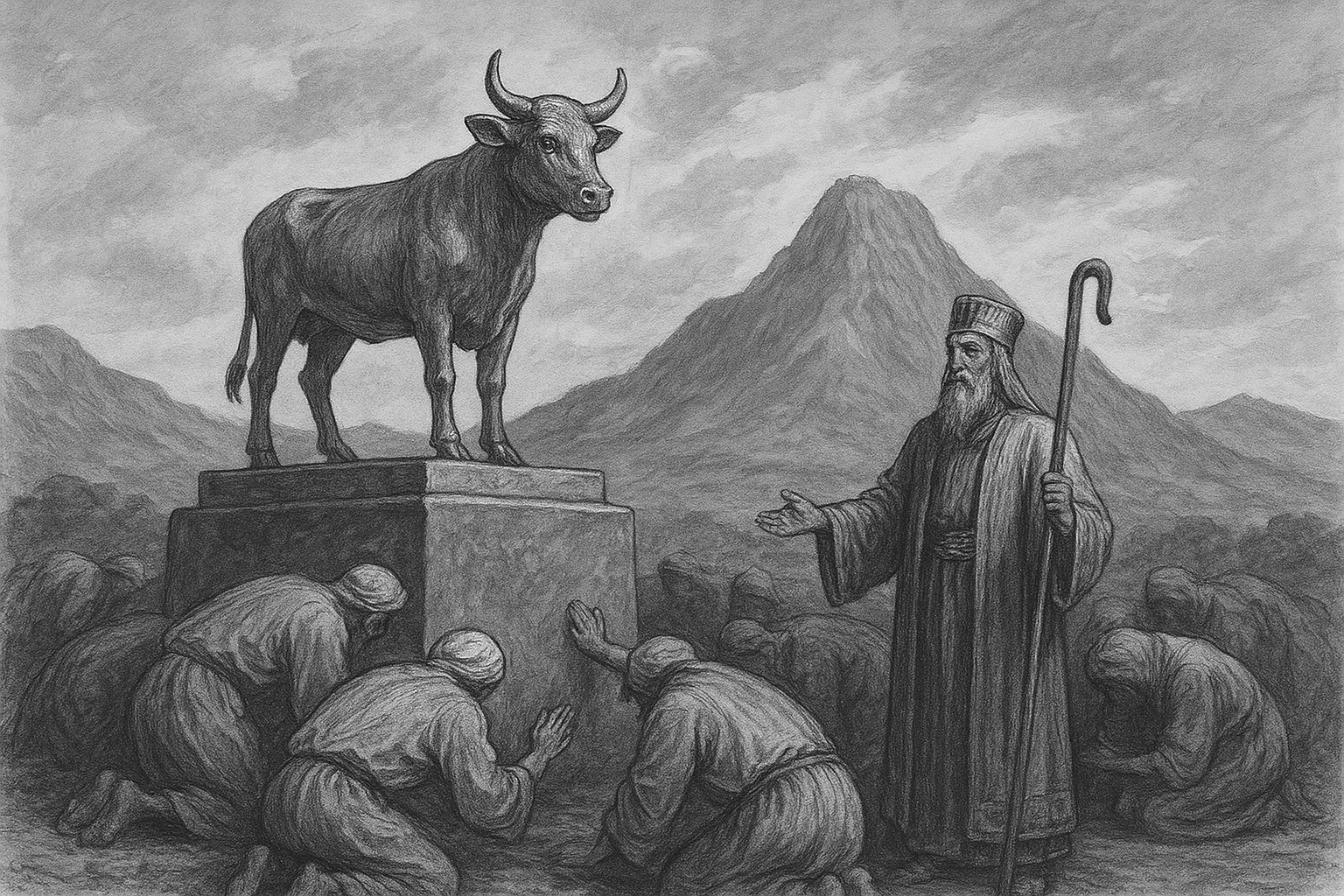
In Exodus 32 we find the children of Israel pleading with Aaron to make them “gods” to go before them. They had been waiting for Moses to come down from the Mountain of God (Sinai) for several weeks and had grown tired of waiting. Their faith in what they had experienced seeing the lightning and hearing the thunderous voice of God was now weak, and apparently they were accustomed to having a visible, tangible god that they could experience in human terms. We see the same humanistic need for a touchable, feel-able God today in many religions. The idea of a God that is beyond comprehension is outside the scope of people’s understanding, it always has been. I want to get back to this idea, but first let us examine something that most versions of the Bible have wrong to my understanding. 

In verse 4, in the passage where Aaron has made the requested golden calf, we see words that the majority of Bible translations claim to say: “These are your gods, O Israel, who brought you up from the land of Egypt.”

But it was not two or more calves. It was a single golden calf, so why is it referred to in the plural? Maybe a good look at the Hebrew will help us:

וַיִּקַּ֣ח מִיָּדָ֗ם וַיָּ֤צַר אֹתוֹ֙ בַּחֶ֔רֶט וַֽיַּעֲשֵׂ֖הוּ עֵ֣גֶל מַסֵּכָ֑ה וַיֹּ֣אמְר֔וּ אֵ֤לֶּה אֱלֹהֶ֙יךָ֙ יִשְׂרָאֵ֔ל אֲשֶׁ֥ר הֶעֱל֖וּךָ מֵאֶ֥רֶץ מִצְרָֽיִם׃

For those who do not read Hebrew, the highlighted words אֵ֤לֶּה אֱלֹהֶ֙יךָ֙ can be translated as singular or plural. The first word “ele” is a participle that defines the word that follows, and can mean either “these” or “this” in English. The world “Elohim” is plural and is rendered “Elohecha” in this case, which is still plural but shows possession by adding the “cha” on the end. But why would something that is clearly singular in nature (a golden calf) be called “gods” rather than “god”? This stems from the use of the word “Elohim” and a common misunderstanding of what it means. When used for the God of the Universe, it is often understood in Christianity to refer to the “Triune Godhead.” But in the case of the Golden Calf, it is clearly one object. So does this lead to the idea that the calf was really more than one calf? Or does it help us to understand that the Eternal YHVH who is also called Elohim is not several entities, but One Entity with many aspects? I won’t go into defining God here, He is beyond comprehension to our human minds. But we do know that He is everywhere, He is all knowing, No secrets can be hidden from Him. He hears, sees, speaks, loves, judges….just to specify a few aspects. 

It is true that in the Bible there are times when Elohim is used to indicate human judges, leaders, or false gods. But in the case of the golden calf, it is clearly used in the singular as well as in the case of the Creator and His dealings. By the way, in Genesis 1:1 Christians claim that Elohim was all three persons creating mankind. But if you understand Hebrew and do not go to the English for understanding, you will see the following:

בְּרֵאשִׁ֖ית בָּרָ֣א אֱלֹהִ֑ים אֵ֥ת הַשָּׁמַ֖יִם וְאֵ֥ת הָאָֽרֶץ׃

“In the beginning, Elohim (God) created the heavens and the earth.” 

(The words “in the beginning, are also misunderstood, but that is for another time since we need to focus on the highlighted words)

In Hebrew, biblical or modern, the words that accompany the noun, in this case “Elohim” must show whether it is expressed as singular or plural and feminine or masculine. In this instance, the word that precedes Elohim is bara בָּרָ֣א: “He created” or brought forth (masculine singular). 

To say that Jesus was in the beginning with God creating the universe, as is declared in John 1;1-3, does not fly when you look deeply into what is really said in the original Hebrew text of Genesis. 

If we look at other verses where Elohim is used in the plural, maybe we will see that the verbs, adjectives, participles, etc. verify the plurality of these verses. Here is one example: 

Psa 97:7 “Confounded be all they that serve graven images, that boast themselves of idols: worship him, all ye gods.” In Hebrew:

 יֵבֹשׁוּ כָּל־עֹבְדֵי פֶסֶל הַמִּתְהַלְלִים בָּאֱלִילִים הִשְׁתַּחֲווּ־לוֹ כָּל־אֱלֹהִים׃

The highlighted words say “worship him all ye elohim” referring to the false gods mentioned in the verse.  Note the obvious plural in the English rendition. (Above) And to help simplify the words הִשְׁתַּחֲווּ־לוֹ  where (Hishtavu), the masculine plural is used in qualifying the word “elohim” which is used for the idols or false gods.

There are several more examples in the Bible where Elohim is used for angels, leaders, judges, wicked or righteous leaders, etc. 

I promised in the first paragraph that we would touch on the unfathomable nature of the Divine. Really there are no words other than what the Bible itself says. When Moses asked Yehovah to reveal Himself, Elohim told him a few things about himself:

Exo 34:6-7: ” And YHVH passed by before him, and proclaimed, YHVH, YHVH, a God merciful and gracious, slow to anger, and abundant in loving-kindness and truth, 7 keeping loving-kindness for thousands, forgiving iniquity and transgression and sin; and that will by no means clear the guilty, visiting the iniquity of the fathers upon the children, and upon the children’s children, upon the third and upon the fourth generation.”

Basically that is all that was given for a definition as far a character goes. Perhaps that is enough for humanity other than knowing all the other things that describe the activity of the Almighty as revealed in Scripture. Can it be enough? It has to be!

Let us not raise another golden calf and claim that these be our god’s that have led us or saved us from the wrath of the Eternal! Or that these are the ones who deserve to lead us because they are like us, and we can understand them, and God forbid we claim that God needed a human to help him understand what people need! No! There is no one standing beside the Eternal in Heaven telling Him what humanity needs, nor is there (like some in Judaism claim) a famous Rabbi who has an office next to God in Heaven–someone who answers emails when we need instruction! 

May I ask what science people study that denies the Bibles clear instructions to not communicate with the dead? The belief in communication with the supernatural and out-of-body experiences comes from ancient pagan cults and is with us today in many religions including, sadly, some sects of Judaism. 

Kabbalah goes against much of what the Bible says, it includes spiritualistic practices including communication with the dead. See the following statement from Kabbalahexperience.com

“It has long been decided in Jewish law that talking with the dead (by oneself or through a medium) is only prohibited if you think that the dead body is in itself the conduit to the discussion. If one is communicating with the soul of the deceased, it is permissible.” But what does the Bible say?

Deu 18:10 “There shall not be found among you, he that makes his son or his daughter to pass through the fire, that uses divination, that uses auguries, or an enchanter, or a sorcerer, 11 or a charmer, or one that inquires of a spirit of Python, or a soothsayer, or one that consults the dead. 12 For every one that does these things is an abomination to Yehovah, and because of these abominations Yehovah thy God doth dispossess them (the nations) from before thee.”

If, as I am asserting, our Creator is all knowing and all compassionate, forgiving and just and does not allow evil into his Kingdom, then why do we need human mediation? After all, He is the one with the manufacturer’s warranty on the universe!

For an unshakable faith,

Ariella

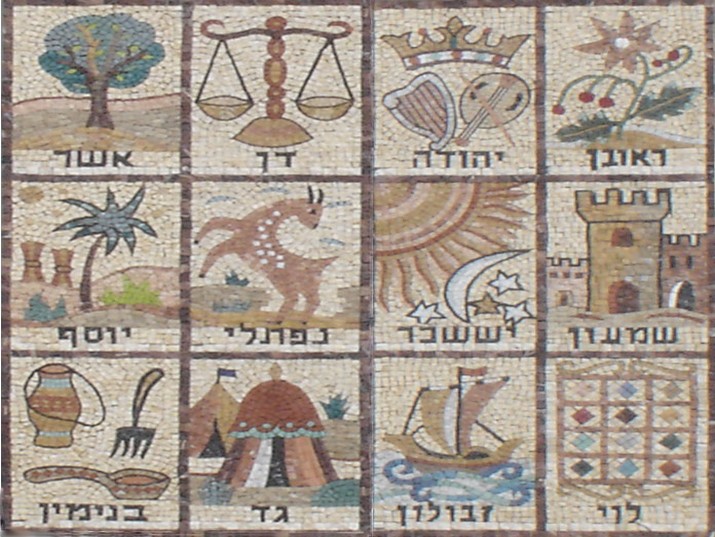
Modern Descendants of the 10 Lost Tribes: Who Are They?

There are historians who claim that the story of the scattering of the Northern tribes of Israel was a myth. Others say or that it was somehow written into the Biblical account in the Tanakh. But I think, there is far too much prophecy that must be taken into account to dismiss the idea of 10 Lost Tribes. 

When I have spoken to other Jews about them, some express the opinion that these tribes are all represented today among the Jews, or that they became Gentiles and are permanently lost. Or that yes, they are important, but they are in places like India and Ethiopia, Evidence of the Silk Road Jews in India and China are well known but most of them have relatively recent history such as from about 800 CE to around 1100 CE, but there are others there who apparently have been there much longer and still observe much of the ancient Israelite religion. These are themselves the Bene Menashe and what they claim provides what I would claim as evidence that they are of the tribe of Manasseh.

“… the Bnei Menashe have come to believe that the legendary Hmar ancestor Manmasi[6] was the Hebrew Menasseh, son of Joseph.” These people struggled to be recognized by Israel for around 50 years until finally they were accepted by the Chief Rabbinate of Israel to make Aliyah in 2005, provided they complete a ritual conversion. Link

Of the Falasha people in Ethiopia, some claim to descend from Solomon and the Queen of Sheba, but the general belief among them is that a group from the tribe of Dan fled to Ethiopia (the land of Cush) during the 10th century BCE. (See Link) How can we prove any of this? Is it mere hearsay, or does it follow what the Bible says? These may be facts that have been ignored and Israel has continually held anyone who claims to be of the 10 Tribes  at arm’s length, doubting their origins. Notice the verse in Isaiah 11:11, highlighted below. Cush is known in the Bible as Ethiopia. And what about all the other tribes, where are they?

Isa 11:11-14 -“11 And it shall come to pass in that day, that YHVH shall set his hand again the second time to recover the remnant of his people, which shall be left, from Assyria, and from Egypt, and from Pathros, and from Cush, and from Elam, and from Shinar, and from Hamath, and from the islands of the sea. 12 And he shall set up an ensign for the nations, and shall assemble the outcasts of Israel, and gather together the dispersed of Judah from the four corners of the earth. – 13 The envy also of Ephraim shall depart, and they that vex Judah shall be cut off: Ephraim shall not envy Judah, and Judah shall not vex Ephraim. 14 And they shall fly down upon the shoulder of the Philistines on the west; together shall they despoil the children of the east: they shall put forth their hand upon Edom and Moab; and the children of Ammon shall obey them.”

And what can we say about the Samaritans who claim to be a remnant of what was left in the land of Israel at the time of the captivity? There are Cohanim (Levites) among these Samaritans who actually can prove their lineage. We remember that the Levites were assigned to cities across Israel in the days of Joshua after the conquest of the land. See the command for this in Numbers 35 and Joshua 21. It is interesting that Jeremiah was a Levite but lived in Anathoth (his birthplace) which was a Benjamite city. Perhaps antipathy towards the Samaritans’ assertion that they are from the original tribes has been fostered through works such as those of Josephus and even the Christian Bible’s story of the woman at the well and the Good Samaritan where the Samaritans are not seen as Jewish. And yet when we look at who were actually exiled among those captured by Assyria, we see that not everyone was taken. The artisans and the wealthy who could help establish the economy of Assyria were taken but the humble people were left in the land to care for it. How many were left is another question, but if we see that only the elite were taken, we may get they idea that many were left in the land. 

According to Wikipedia: “Around 720 BCE, Israel was conquered by the Neo-Assyrian Empire.[4] The records of Assyrian king Sargon II indicate that he deported 27,290 Israelites to Mesopotamia.[5][6] This deportation resulted in the loss of one-fifth of the kingdom’s population and is known as the Assyrian captivity, which gave rise to the notion of the Ten Lost Tribes.” 

27 thousand, if the above quote included all of them, “a fifth of the population” would leave a lot of the tribes in the land. The big question is, where did they go later? We know that some fled to Judah but when later explorers found Israel to be almost depopulated (people like Mark Twain), the question arises: Where were they hiding? Is it possible that they had gone to surrounding Arab nations? There are many myths of the ten tribes, including the American Indians, the English, the Irish. Silk Road discoveries found Jewish evidence even in China. Link

What I have found in the bible distinctly separates the tribes from the North of Israel (often referred to as Ephraim) who were first conquered and exiled by Assyria ( from the Jews who were later taken to Babylon. Bible students know the details of the separation of these tribes from Judah when Rehoboam, son of Solomon imposed unfair taxes upon them and the kingdom was divided around 930 BCE. (Link)

The two groups of Israelites that went astray and were taken into captivity were the northern tribes by Assyria in 720 BCE and later Judah to Babylon in 587 BCE: The prophet Jeremiah describes both Israel and Judah’s unfaithfulness in chapter 3. See link.

Prophecies speak of a people who were, for all extents and purposes, lost. And yet there is the indication that YHVH never forgot them and will bring back a remnant to the land of Israel. It is obvious from the writings of the prophets that there will be a remnant that returns from the nations. They may not even know who they are.


During the past couple of years since Hamas invaded Israel in the ensuing war since the October 7 massacre, I have seen many people across the globe take at least a verbal stand in support of Israel. This war seems to have created a dividing line between those who love Israel and its values and those who support the corruption of the terrorist regimes which threaten to annihilate not only Israel but all of Western Society.

Maybe I am thinking too far outside the box, but I believe there is a spark of Israel in everyone that stands with Israel. It is as if the blood of the descendants cries out against the evil onslaught against their brethren. Could these be those of the ten lost tribes, just beginning to recognize something that has been hidden ever since they went astray? Who is this remnant, and how will Israel recognize their lost brethren? Israel is not an easy place to immigrate to. What will change this? Perhaps we need a Messiah with Divine insight, or at least a Movement that opens the doors to all who support Israel and are willing to take their lot among the Jews of this nation.

Many of those who love Israel are found within the Christian Church. Some have converted to Judaism, maybe not because they see it as a pure religion, but because something inside them cries out to be with their brethren. But whether their religion is Judaism or not, these people stand with Israel. And it is interesting to note that, apparently according to the Bible the ingathering happens before these lost brethren wake up to some of their mistaken beliefs. Hosea speaks of this:

Hos 14:1-2, 4-9 – “Hos 14:1-2 “1 O Israel, return unto YHVH thy God; for thou hast fallen by thine iniquity. 2 Take with you words, and return unto YHVH: say unto him, take away all iniquity, and accept that which is good: so will we render as bullocks the offering of our lips.”4 I will heal their backsliding, I will love them freely: for mine anger is turned away from him. 5 I will be as the dew unto Israel: he shall grow as the lily, and cast forth his roots as Lebanon. 6 His branches shall spread, and his beauty shall be as the olive tree, and his smell as Lebanon. 7 They that dwell under his shadow shall return; they shall revive as the corn, and grow as the vine: the scent thereof shall be as the wine of Lebanon. 8 Ephraim shall say, What have I to do any more with idols? I have heard him, and observed him: I am like a green fir tree. From me is thy fruit found. 9 Who is wise, and he shall understand these things? prudent, and he shall know them? for the ways of YHVH are right, and the just shall walk in them: but the transgressors shall fall therein.”

Below are a sampling of texts on the subject of the lost tribes and their return. There is still much to be discovered and as many others believe, I also am of the opinion that with or without a particular Messiah figure, these lost exiles will return. Whether it be a universal movement or an actual human figure that brings these things about, we will have to wait and see.

Isa 43:1, 5-6 “1 But now thus saith YHVH that created thee, O Jacob, and he that formed thee, O Israel, Fear not: for I have redeemed thee, I have called thee by thy name; thou art mine. … 5 Fear not: for I am with thee: I will bring thy seed from the east, and gather thee from the west; 6 I will say to the north, Give up; and to the south, Keep not back: bring my sons from far, and my daughters from the ends of the earth;”

Jer 31:7-11- “7 For thus saith YHVH; Sing with gladness for Jacob, and shout among the chief of the nations: publish ye, praise ye, and say, O YHVH, save thy people, the remnant of Israel. 8 Behold, I will bring them from the north country, and gather them from the coasts of the earth, and with them the blind and the lame, the woman with child and her that travails with child together: a great company shall return thither. 9 They shall come with weeping, and with supplications will I lead them: I will cause them to walk by the rivers of waters in a straight way, wherein they shall not stumble: for I am a father to Israel, and Ephraim is my firstborn. 10 Hear the word of YHVH, O ye nations, and declare it in the isles afar off, and say, He that scattered Israel will gather him, and keep him, as a shepherd doth his flock. 11 For YHVH hath redeemed Jacob, and ransomed him from the hand of him that was stronger than he.”

Eze 11:16-17:
“16 Therefore say, Thus saith YHVH GOD; Although I have cast them far off among the heathen, and although I have scattered them among the countries, yet will I be to them as a little sanctuary in the countries where they shall come. 17 Therefore say, Thus saith YHVH GOD; I will even gather you from the people, and assemble you out of the countries where ye have been scattered, and I will give you the land of Israel.”


Eze 28:25-26 – “25 Thus saith YHVH GOD; When I shall have gathered the house of Israel from the people among whom they are scattered, and shall be sanctified in them in the sight of the heathen, then shall they dwell in their land that I have given to my servant Jacob. 26 And they shall dwell safely therein, and shall build houses, and plant vineyards; yea, they shall dwell with confidence, when I have executed judgments upon all those that despise them round about them; and they shall know that I am YHVH their God.”

Eze 37: 11-23:  “And thou, son of man, take thee one stick, and write upon it, For Judah, and for the children of Israel his companions: then take another stick, and write upon it, For Joseph, the stick of Ephraim, and for all the house of Israel his companions: 17 and join them for thee one to another into one stick, that they may become one in thy hand.” (Link to whole passage)

Eze 45:8 – “8 In the land shall be his possession in Israel: and my princes shall no more oppress my people; and the rest of the land shall they give to the house of Israel according to their tribes.”


I for one am waiting with baited breath for the return of our lost brethren. May it be within my lifetime. And let me say that as I see Israel pushing back the borders and taking back land that was once given to them, I see this all unraveling. As it says in Isaiah 54:


Isa 54:1-3 – “1 Sing, O barren, thou that didst not bear; break forth into singing, and cry aloud, thou that didst not travail with child: for more are the children of the desolate than the children of the married wife, saith YHVH. 2 Enlarge the place of thy tent, and let them stretch forth the curtains of thy habitations; spare not: lengthen thy cords, and strengthen thy stakes. 3 For thou shalt spread abroad on the right hand and on the left; and thy seed shall possess the nations, and make the desolate cities to be inhabited.”

Ariella Golani

If you enjoyed this article, please like, comment, share and or subscribe! Thanks for your help!

What about the Bible? 

Some say the Bible has been tampered with. Lots of voices are saying this. But let me quote something from the Bible itself:

“If the foundations be destroyed, what can the righteous do?” Psalm 11:3

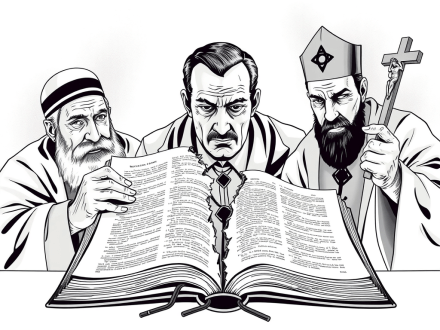
This is a deep concern. I get emails from New Zealand by a couple of Noahides who are taking apart everything but the Moses Scroll (Shapira Scroll), which means that they hold none of Torah or Tenakh as valid, except, what was written by the hand of Moses. (I think I will unsubscribe). There is a book out there called “Who Wrote the Bible” which does the same thing. And it is not just these sources that are trying to rattle the foundations! Sometimes it is more subtle and has been around for a long time!

There are voices everywhere discrediting everything from the Bible. This is what is happening on one side. And among those who profess belief in the Bible, we hear rabbis stating that the only way to understand the Bible is to let them interpret it for you. Where have we heard this before? 

In my relationship with my Jewish friends, I rarely find someone who has read the entire Tenakh, other than listening to Torah readers at Synagogue in Hebrew read the current Portion so quickly, they are virtually not understandable.

On another side of the religious world, Catholics (especially in Spanish-speaking countries) have told me that since the mass is done in Latin, that only the priest can be trusted to know what God wants of them.  How much difference is there in what has been accepted in Judaism for thousands of years? Similarly, only a rabbi can interpret Torah. Really! And why does individual study of the Bible get so little attention? 

So we have our traditions, and often the Minhagim are fine and acceptable if one is really led to be more spiritual and more connected to the Source of all things. But, that being said, the question arises by critics in religious circles, “who can trust where these things came from?” 

And I will ask who can trust academics? We have seen how the colleges of today have gone down the woke path. I saw it beginning in secular colleges in the 90s. I could not believe how things had changed since I first attended college in the mid 70s. If things can change through academics in the political and educational fields, why would they not be influenced by hundreds of generations of teachers, (rabbis or preachers) who claim to know, but that were taught by others who claim to know, and so on ad infinitum, back for a couple of thousand years? Ever played telephone? Ever see how the message changes so much that when the last person receives the whispered sentence, it has nothing to do with the first person’s idea? And that is exactly how the chain of transmission has gone. There are some things that are so far from what the Torah says that you cannot recognize where they came from! So a young man goes to Yeshiva and everyone says “Wow”! And he graduates more confused than ever before. There are always arguments and debates on what the ancient Sages taught, who was right and whom does this would be “rabbi” choose to follow in his future career. Ever think of studying for one’self? Especially if you can learn Biblical Hebrew? 

But perhaps as in the first instance, the most dangerous trend out there is to discredit the Bible entirely, as many have been doing in recent years! As the Psalm says, “what can the righteous do if the foundations are destroyed?” So if we have to throw out the majority of the Tenakh because parts of it were somehow rewritten, then what are we going to use to guide our lives? Is there nothing? Perhaps a somewhat tarnished instrument is better than no instrument at all!

As to the evolutionary theory, I never bought into the idea that man descended from a monkey and such chaos. Perhaps if atheists could experience a living God who created the Universe, One who works in individual lives to bless, guide and strengthen, maybe, just maybe, we would see a different trend in the world. 

But then, there have always been haters of God, defiant of His leadership and law. 

We have several monsters raising their heads in the religious world. Beware of following them!

I would say in conclusion, let’s not “Throw out the Baby with the Bathwater!” 

What could be wrong with thinking for ourselves?

Ariella

Zion, the Land of Seeing

Stop importing the Diaspora!
by Ariella Casey

For nearly 2000 years God’s people were scattered to all nations. We can blame Rome as chiefly the cause of this and much of the subsequent persecution that came about, but why did Hashem apparently walk away? And though this scattering was prophesied and given as a warning (Leviticus 24:14-33), the tragic history continues to sadden the hearts of those who try to return to the path of the righteous. But how will we know the way back? And where is back, anyway? What was it that originally led to this tragic history? Is it that God somehow forgot about us? Did we choose to stop following the light? It seems from reading the Bible that we ‘changed horses in the middle of the stream’, but how and when? And how do we get back to where we need to be? When did rabbis replace prophets? 

For more than 2000 years we have not had a genuine prophet. Some may argue, but when we apply the Biblical standard for prophets (Deut. 18:22), we see that none who have been held up as having the gift of prophecy actually qualify. I would say to anyone who thinks otherwise, show me the evidence that they did not add to nor subtract from the original Torah. Miracles aside, and fulfilled prophecy aside, if they change even one principle of Torah they do not qualify. 

But regardless of the horrific past suffering, there is hope today. But this hope is available only in the land of Israel. How so? Take a look at what Isaiah, one of the latter prophets, says about hope and restoration in the land:

“The wilderness and the arid land shall be glad; and the desert shall rejoice, and blossom like the tulip. It shall blossom abundantly, and rejoice even with joy and singing: the glory of the Lebanon shall be given to it, the excellency of the Carmel and the Sharon, they shall see the glory of YHVH, and the excellency of our God. 

Strengthen the weak hands, and confirm the feeble knees. Say to them that are of a fearful heart, Be strong, fear not: behold, your God will come with vengeance, even with a divine recompense; he will come and save you.

Then the eyes of the blind shall be opened, and the ears of the deaf shall be unstopped.

Then shall the lame man leap as a hart and the tongue of the dumb sing: for in the wilderness shall waters break out, and streams in the desert.

And the parched ground shall become a pool, and the thirsty land springs of water: the habitation of jackals shall become a pasture for cattle, an enclosure of reeds and rushes.

And a highway shall be there, and a way, and it shall be called The way of holiness: the unclean shall not pass over it; and he shall be to them a guide, and fools shall not err in it.

No lion shall be there, nor any ravenous beast shall go up on it, they shall not be found there; but the redeemed shall walk there: and the ransomed of YHVH shall return, and come to Zion with songs and everlasting joy upon their heads: they shall obtain joy and gladness, and sorrow and sighing shall flee away.” (Isa 35:1-10 Koren Bible)

So is there any hope? There is in Zion. Can there be hope anywhere else? Who will come home to the land? Those who are ransomed by the Almighty YHVH who remembers his covenant with Israel and the Jewish people. Can there be a fulfillment of this promise outside the land? There is only one place of safety for the Jews. 

So in the land of Israel the eyes of the blind will be opened according to Isaiah 35:5. The eyes of the blind? Are we all blind? Most of us are not physically blind, but almost all of us have been spiritually blind. We have thought that God has left us, or that we are not following Halakha closely enough and that once we get it right, we would have a connection to the divine. Little do we know that what we have followed among the nations is not required in the land of Israel. Much of what was followed by Jews in other lands was invented by rabbis to safeguard their congregants from assimilation. But, in creating new laws, they often went too far, far beyond what was specified in the Torah. And that now being irrelevant for Israel, it needs to be laid aside as we learn first-hand from the ONE who is there to instruct us. We may need to have everything stripped away before we can see for the first time. The blindfolds of our former lifestyle must be removed before we will be able to see. 

But what about those who have not yet come to Israel? What about the ten tribes that still float around in the nations? This is not to condemn those who have not yet come. The redeeming process is ongoing. But, one day, all must come if they want to really see. 

But, I must tell you that Israel is not a place of comfort. It is a place of trial, a place of breaking down, or stripping off, of learning dependence upon the Hand that led us here. Do we have even a little bit of trust in the Eternal? 

Israelis who were born in the land probably were offspring of those who fought to establish a home for the Jewish people. Many of these people are not observant in the Orthodox sense. But they are real people. They love the land. They go out of their way to help you when you are down. And they are wild and reckless much of the time. And they may not tolerate your diasporic nonsense. They will borrow your parking place and stop and talk to a friend in the middle of the road when others are impatient to get by. And they will hoot at you or flash their lights if you are merely going the speed limit, and they want to get around. But they are all heart, and that is something many of us have lost while living abroad. How did this culture develop? By fighting for the right to exist. By fighting for the land that was given to the forefathers. Many gave their blood for this land and are unwilling to give up even an inch of what their compatriots gave their blood for. 

The land of Israel is pure light. How so? It is almost as if nothing we do here is hidden, no not from God and not from anyone. Everything comes under Divine scrutiny, and the conscience is quickened as our faults are revealed to us. It is the place of learning to walk, learning to see, learning to hear. Once here for a while, there is no going back. 

But Israel is not for everyone, many have come and do not make it here. Many have tried to live strict Halakha while living in the land and have left. Others want the comforts of their diaspora lifestyle, big games and shows and lovely heated homes and backyards. They soon go back to their communities, to reestablish themselves in the comfort they were accustomed to. And rightly so, Israel is not about that. It is about learning and growing and being the people of the Book. And we all come with a desire for the old and familiar, the leeks and the onions of Egypt. But when we learn that the leeks are much bigger, the fruit is sweeter, and pomegranates and grapefruits less bitter, we realize the taste of the land of milk and honey. 

And others have developed communities in the most “Holy” cities of the land. These places are full of these Diaspora Jews. They have recreated communities for the blind, following that which they feel is the will of God. But many of us stay away from these cities. We somehow do not fit in. 

If I have anything to stress in this publication, it is the emphasis that Zion is not just any country. It is a magical land that hugs its children but spews out those that do not belong here. That the war of October 7 was a response from the dark to block the call for the Jews to return to the land. Many have made their way to Israel during this time. The fear of war did not drive them away. This was one of our many tests. People came anyway. I say Kol HaKavod! Many read the handwriting on the wall that the nations would come against them if they did not come home. 

It is indeed time to come home, my friends! The land awaits us like a mother with outstretched arms.

Will you come?

Follow Take Hold the Tzitzit on WordPress.com