President Trump has been nominated by Netanyahu for the Nobel Peace Prize, hmmm!– but should all the hullabaloo really be about Trump? Is there no God in Israel? Are we courting the nations again?
For some, Trump holds a position almost as if he is a Messiah. I don’t argue that it was an awesome thing to come alongside and help Israel slow down Iran’s nuclear development, but what else is on the back burner? We hear creeping suggestions of ceasefire and some even voice ideas that a two-state solution might be waiting in the wings, Really? Right when Israel is set to regain sovereignty over the black holes (those places that for time immemorial have fomented hatred for Jews, continually attacking and killing us while chanting “Palestine will be free, from the river to the sea”–the slogan behind pushing us into the Mediterranean!
But lest we get terribly stressed at what is going on in the political world, let’s ask our selves something. Do we not know what the Bible says? — That YHVH raises up kings to do His will, and when they no longer do that will they fade from view. Let’s take a look at the verse:
“20 … Blessed be the name of God for ever and ever; for wisdom and might are his. 21 And he changes the times and the seasons; he removes kings, and sets up kings; he gives wisdom unto the wise, and knowledge to them that have understanding;” Dan 2:20-21.
Are we truly in God’s mind? Sometimes it doesn’t seem like it, but Inspiration says: “He who keeps Israel will neither slumber nor sleep.” Psa 121:4.
Maybe we will be surprised if we see things happen that take away some of Trump’s pomposity. King Nebuchadnezzar of ancient history, succeeded until he came to the point of boasting about all that he had done, shortly afterward he was found wandering around eating grass like a beast.
“30 The king spake and said, Is not this great Babylon, which I have built for the royal dwelling-place, by the might of my power and for the glory of my majesty? 31 While the word was in the king’s mouth, there fell a voice from heaven, saying, O king Nebuchadnezzar, to thee it is spoken: The kingdom is departed from thee: 32 and thou shalt be driven from men; and thy dwelling shall be with the beasts of the field; thou shalt be made to eat grass as oxen; and seven times shall pass over thee; until thou know that the Most High rules in the kingdom of men, and gives it to whomsoever he will.”
Dan 4:30-32.
In Parshat Balak we have the prophecy of Balaam who endeavors to curse Israel. Balaam’s donkey speaks to him which he strangely doesn’t find odd. Balaam’s was warned by the Angel of YHVH that he must speak only what he is given, and he stubbornly continues on his journey. He was not able to curse Israel even after three attempts, each time blessing them instead. In his final attempt, the Spirit of God spoke through him about Israel in end times.
“17 I see him, but not now; I behold him, but not nigh: a star shall come forth out of Jacob, and a scepter shall rise out of Israel; it shall crush the forehead of Moab, and break down all the sons of Sheth. 18 Edom shall be dispossessed, Seir also, his enemies, shall be dispossessed, while Israel does valiantly. 19 By Jacob shall dominion be exercised, and the survivors of cities be destroyed!” 20 Then he looked on Amalek, and took up his discourse, and said, “Amalek was the first of the nations, but in the end he shall come to destruction.” Num 24:17-20
Does the Eternal have a hand in what is going on right now? What are the signs? Has Israel become like a lion, as it says in verses 8- 9:
“8 God brings him out of Egypt; he has as it were the horns of the wild ox, he shall eat up the nations his adversaries, and shall break their bones in pieces, and pierce them through with his arrows. 9 He couched, he lay down like a lion, and like a lioness; who will rouse him up? Blessed be every one who blesses you, and cursed be every one who curses you.” Num 24:8-9.
So, the secret of our strength is not about alliances with Nobel Prize candidates, but in humbling ourselves under the direction of the mighty God of Abraham Isaac and Jacob. No man should be held up as Savior of Israel.
YHVH made Balaam do his will and say what he wanted to be said. The same will happen today. Just let us place our focus where it should be! This is the point of the Parsha, that none can curse or bless Israel unless they are given the power to do so. Our destiny lies in the hands of YHVH, the Eternal God of His people!
When we are tempted to complain about what’s going on, maybe there is something behind the scenes that will soon come into focus! I have to believe that, for God does not lie, and He keeps covenant with His people even when they fall short.
Let’s keep hanging on! Despite all the craziness going on, it will all work out in the end!
Take a deep breath and hang on to your seats while we dive into last week’s Parsha (Numbers 16 – 18.)
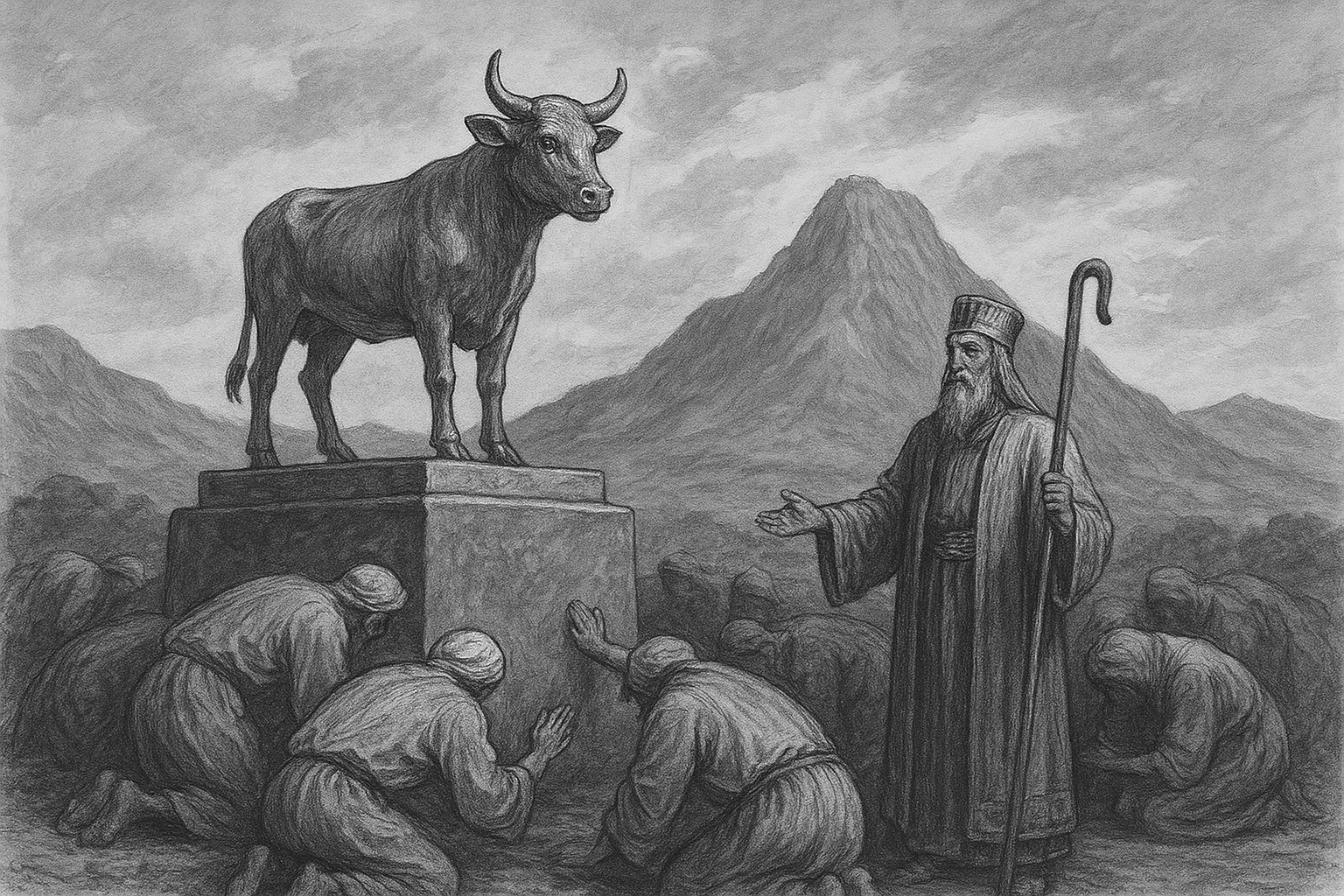
Parsha Korah is about defiance of law and order–Divinely appointed law and order and the historic results. This event, compared to today’s violent protests, seems to bring to the forefront the seed of human dissatisfaction with leadership and for the first time in Biblical history, the description of public efforts to take down a monarchy, a rulership or God forbid, an entire government. But, perhaps modern movements are not necessarily evil, nor, on the other hand, led by holy purposes. And since world governments at this time do not fall under the classification of Divine Order nor Divine Appointment, per se, then they cannot be judged by the same laws that were set up for the People of YHVH at Sinai. Nothing today resembles the Nation of Israel when it was set up through Moses.
The United States was founded on the constitutional principle of “a government by the people and for the people.” Noble and praiseworthy, as it was founded to be, it was never and still is not what was established at Sinai. The Sinai government, although idealistically perfect, also falls short of its ideal when men are no longer connected to the Source of Holiness. And we see the results today. But at the time of Moses and Aaron, things were of a different order.
What happened in Numbers 16 and 17 and why? How was it wrong then for the common people to rise up and take over that government?
It was clear from the start of the Exodus from Egypt that Moses and Aaron were in charge by Divine appointment. As always happens even in modern times, when people become disgruntled about being governed, they rise up, protest, create anarchy, and sometimes succeed in an overthrow.
Klal Israel, while in Egypt, had been under oppressive tyrannical rule, made into slaves, yes-men, if you will, and not given the opportunity to think for themselves. When they were given freedom, they swung to the opposite extreme. Now they became rebellious, complaining was the agenda for anything that went wrong, and blame was placed on anyone who came between them and their comfort zone. And because Moses was the specified leader, he was caught trying to bring order out of chaos, As we well know, this bit of complaining about leadership is a typical human problem. Will humanity ever get it that righteous leadership is not the same as oppressive tyrannical governments?
So they were hungry, or at least didn’t see where they would find food in the near future while camped in the desert! The water was about gone and based on what they could see, they would surely die of thirst! This showed they were not ready to trust God, nor His leadership. A people of slaves, when set free, becomes a narcissistic group of complainers. Do it my way or else! Haven’t we seen this elsewhere in the world? Slaves, who are set free, now demand that their governments do everything for them?
So, in Parsha Korah, we see a disgruntled Levite of the lineage of Kohath, son of Levi, organize a group to defy the authority of Moses and Aaron and perhaps bring about a coup d’etat. He and two Rubenites: Dathan and Abiram, plus 250 leaders of the community join him to question the authority of Moses and Aaron, asserting that since the entire nation is holy, basically then, anyone may serve in the office of priesthood in the Tabernacle. Thus, a seething rebellion against Moses and Aaron and Aaron’s son, Eliezer was fomenting and must be dealt with.
Moses asked Korah directly if he was seeking the priesthood, since his duties, though set apart as a Levite, were to serve the Tabernacle and minister to the people in a different role. He felt cheated because he was not allowed the highest and holiest order. His narcissistic views led to open rebellion and many lost their lives because of it.
The story goes that the 250 were told to bring fire pans to burn incense and there would be a Divine selection of whom God chose to serve. Korah, Dathan and Abiram and the 250 were to present themselves before the LORD at the Tabernacle the next morning, Korah and his rabble showed up but Dathan and Abiram refused.
The upshot of the story is that the people were to move away from the tents of these three. The ground opened up and swallowed them their children and all their belongings. The 250 who offered incense in their fire pans were consumed by a fire that came out from YHVH. Then Eliezer, Aaron’s successor, was told to collect the pans and pound them out for a covering for the altar:
“The censers of these sinners against their own souls, let them make them broad plates for a covering of the altar: for they offered them before YHVH, therefore they are hallowed: and they shall be a sign unto the children of Israel. And Eleazar the priest took the brazen censers, wherewith they that were burnt had offered; and they were made broad plates for a covering of the altar: To be a memorial unto the children of Israel, that no stranger, which is not of the seed of Aaron, come near to offer incense before the LORD; that he be not as Korah, and as his company: as YHVH said to him by the hand of Moses.” – Num 16:38-40.
But as if this were not enough to get their attention:
41 But on the morrow all the congregation of the children of Israel murmured against Moses and against Aaron, saying, Ye have killed the people of YHVH. 42 And it came to pass, when the congregation was gathered against Moses and against Aaron, that they looked toward the tabernacle of the congregation: and, behold, the cloud covered it, and the glory of YHVH appeared.” Num 16:41-42.
You know, it almost seems that the people thought that Moses and Aaron had some kind of magical powers and that they really were not dealing with the God of the Universe. How could they not reverence the Eternal when they had seen His direct leading? When they had witnessed His power and glory?
So then after still maintaining that Moses and Aaron had killed the people of God, we see the miracle of Aaron’s rod budding and the people fearing to even come near to the Tabernacle.
But, there is something important here, the brazen fire pans were pounded out and used to cover the altar, not the golden altar of incense, but the altar of sacrifice, located in the courtyard. This clearly signifies that the courtyard is the place available to the common people for all time. The priests were the only ones allowed in the Holy Places of the Tabernacle. And only the High Priest, a direct descendant of Aaron, was allowed in the Most Holy place.
Is it any different now? If and when we build a third temple, will religious leaders be smitten before YHVH for pretending to have the right to serve as priests, when their qualification for religious leadership comes from certificated Yeshiva education? Are they Levites by blood? And even if they are Levites, are they truly Kohanim? (Descendants of Aaron)?
Have things changed with Heaven’s order for the worship of the Temple just because we live in modern times and do not follow the Torah’s clear instructions in this regard? Is it really true that scholastic institutions can train students to think like Moses and guarantee the mantle of Heaven? Maybe this needs a hard look in light of where we are today.
If we no longer hear a Voice from Heaven, how can we get back on track?
Earth’s ancient history tells that there were feminine and masculine gods worshiped by many different peoples. Mythology cites the stories of the wars and affairs of these powerful gods, or at least the beliefs that held their worshipers spellbound or shaking in fear. These deities were so revered that parents would sacrifice their own children to them to assure them favor with these gods. In the Bible, the prophets warned Israel about these gods and those who followed them. These people were to be eradicated from the land of Israel. It was Divinely mandated ethnic cleansing, if you will. Of course, none in the liberal “free world” today support ethnic cleansing especially not if you are speaking of the Jewish right to possess the land of Israel. In many Middle Eastern and North African countries, parents train and send out their children to die as martyrs as they cleanse the world of Jews and Christians. These religions are death cults, just as in the ancient past when babies were burned in the arms of their gods, Astarte and Molech.
What I want to examine today is a subject that has bothered me for some time–the worship of the Queen of Heaven mentioned by the prophet Jeremiah. Who was she, and what customs were common in those who worshiped her? And are there roots of these customs in today’s major religions? The Israelites were originally exiled because of their worship of false gods. Can there be any evidence that has survived from these pagan practices today?
Of course, there is Mary worship (often called the Queen of Heaven by dedicated Catholics), which is just an extension of the ancient pagan worship of female fertility goddesses such as Ashtoreth, Isis, Ishtar, or Semiramis, just to mention a few.
But what about the customs of the Chosen People–the practices of Judaism? Is there anything that would suggest that we have remnants of pagan worship practices relating to the female goddess (Ashtoreth), mentioned in 1 Kings and Jeremiah?
1Ki 11:5, 33: “5 For Solomon went after Ashtoreth the goddess of the Zidonians, and after Milcom the abomination of the Ammonites. … 33 Because that they have forsaken me, and have worshiped Ashtoreth the goddess of the Zidonians, Chemosh the god of the Moabites, and Milcom the god of the children of Ammon, and have not walked in my ways, to do that which is right in mine eyes, and to keep my statutes and my judgments, as did David his father.”
Jer. 44:”17 But we will certainly perform every word that is gone forth out of our mouth, to burn incense unto the queen of heaven, and to pour out drink-offerings unto her, as we have done, we and our fathers, our kings and our princes, in the cities of Judah, and in the streets of Jerusalem; for then had we plenty of victuals, and were well, and saw no evil. 18 But since we left off burning incense to the queen of heaven, and pouring out drink-offerings unto her, we have wanted all things, and have been consumed by the sword and by the famine. … 21 The incense that ye burned in the cities of Judah, and in the streets of Jerusalem, ye and your fathers, your kings and your princes, and the people of the land, did not YHVH remember them, and came it not into his mind?”
So, without further ado! Where does the lighting of candles for many things in Jewish practice come from? What about lighting Shabbat candles? Many of us question the claim that the Eternal commanded this mitzvah. Here is the English version of the candle blessing:.
“Blessed are You, oh Lord our God, who has sanctified us by His commandments and has commanded us to kindle the light of Shabbat.”
This is blessing is not found anywhere in Tanakh. Nor in the written Torah. It is clearly a command created by the rabbis. What else is wrong here? The sages claimed there was a curse that would come upon women who didn’t fulfill it. The following quote is From Mishna Shabbat 2:6
“On [account of] three transgressions women die in childbirth: because they are not careful with nidda, with challah, or with candle-lighting.” Below is the Hebrew from Sefaria:
“על שלש עברות נשים מתות בשעת לדתן. על שאינן זהירות בנדה ובחלה ובהדלקת הנר:”
So the making of Challah, observance of Nidda (the separation from the husband during menstruation), and the lighting of the Shabbat Candles are what compose women’s most important mitzvot? I think anyone would agree that the making of Challah and Shabbat Candles, though pleasant in themselves, are rabbinic mitzvot. So how is it that God is going to punish us for not following the rabbinic commandments? Is the Creator somehow now subject to the decisions of the leadership? Who is in charge anyway?
Here are some more modern quotes, embracing the idea of punishment for women who do not follow the three mitzvot:
1. “For three transgressions woman die during childbirth: for being careless regarding (the laws of) menstruation, the tithe from dough, and kindling the (Sabbath) light.” The Complete Art Scroll Siddur. Second edition, Page 327. 2. “For three transgressions do women die in childbirth: because they have not been heedful in regard to their menstruation, in the separation of the priest’s share of the dough, and in the kindling of the lamp.” Mishnayoth Volume 2 page 30 Second Edition Judaica Press, Ltd. Gateshead 1983. Page3. “Because of three sins women die in childbirth; for not being careful with niddah, with hallah, and with lighting the lamp.” Sephardic Siddur with Linear Translation and English translation for Shabbat page 79 Congregation Shaare Rahamim Publication Series 5766. 4. Rabbi Jonathan Sacks translates the Hebrew into English slightly different “For three transgressions woman may die in childbirth: for being careless in observing the laws of menstruation, separating challah (dough – offering), and lighting the Sabbath light “The Koren Siddur page 374. 2010 Edition. I would like you to notice that the word may, that is in this translation, casts a doubt on whether this will happen. In this discussion I will evaluate only the kindling of the Sabbath light (maybe later we might consider the other two sins). Let us look at the prayer that is said when the Sabbath lights are lit: “Blessed are you, HASHEM, our God, King of the universe, Who sanctified us with His commandments, and has commanded us to kindle the light of the Sabbath.” The Complete Artscroll Siddur, (second edition 1989) page 297.
History tells us that the formal practice of lighting Shabbat Candles was an attempt by the rabbis to overthrow the Karaites ( 9th century CE) and to direct their followers to place their esteem upon the Oral Torah, thus assuring Rabbinic control over the Jewish people. (https://pathoftorah.com/2014/01/26/mitzvah-that-wasnt/)
“The great Sa’adia Gaon (882-942) worked tirelessly to counter Karaite Judaism, and the Rambam even credits him with saving Rabbinic Judaism at the time.Not surprisingly, then, it is in the 9th century Siddur of Rav Amram Gaon (d. 875) where we first see the text of a Shabbat candle-lighting berakhah. To reaffirm and strengthen the Oral Torah at a time when it was under attack, the sages and rabbis of the 9th century instituted a formal blessing—modelled on the Chanukah blessing—to be recited when lighting Shabbat candles. This made it clear that it was God who kideshanu v’tzivanu, sanctified us and commanded us, to do so. People needed to know that this ancient practice was no rabbinic invention! Indeed, when we look into more mystical sources, we find that lighting Shabbat candles goes way back—all the way to the Garden of Eden.” Link
But those who know their Bibles realize that Shabbat Candle lighting was never commanded by the Torah and history shows us that it never gained true importance in Rabbinic Judaism until the 9th century, CE.
And by the way, the use of modern candles in the form we have today, began to be developed in the 5th century when Rome began to dip wicks in animal fat called tallow, (Link). Anciently, however, there were wicks that burned in oil pots as far back as early Egypt. Many religions have used them in the worship of their gods and as a means to communicate with Heaven and even to send their dead loved ones on their way to the afterlife. (Link )
What actually does the lighting of Shabbat candles symbolize? Could it stem from the practice of burning of incense? Do Jews use candles in their service for the dead? Clearly they do. Every Yahrzeit is accompanied by candle burning. What does it mean?
What about the baking of Challah and cutting off the portion which is supposed to be burned? Jeremiah cries out against the women who baked bread for the Queen of Heaven:
“The children gather wood, and the fathers kindle the fire, and the women knead the dough, to make cakes for the queen of heaven, and to pour out drink-offerings unto other gods, that they may provoke me to anger.” – Jer 7:18
I wonder about the part requiring the cutting off a portion of the dough, even though it stems from the biblical command to separate (Challa) a part of a sacrifice or meal offering, for YHVH. Numbers 15:18-21. But how does burning it have anything to do with separating a part for YHVH? Actually this sacrifice was not a weekly offering and it was only to be done in the Land of Israel:
“18 Speak unto the children of Israel, and say unto them, When ye come into the land whither I bring you, 19 then it shall be, that, when ye eat of the bread of the land, ye shall offer up a heave-offering unto Jehovah. 20 Of the first of your dough ye shall offer up a cake for a heave-offering: as the heave-offering of the threshing-floor, so shall ye heave it. 21 Of the first of your dough ye shall give unto Jehovah a heave-offering throughout your generations.” – Num 15:18-21.
Perhaps it is a little far-fetched to associate the making of Challah and the lighting of Shabbat Candles with service to the Queen of Heaven so loudly renounced by the prophet Jeremiah, or is it? And why is there a curse on women who do not perform these Mitzvot?
Paganism aside, how have practices taken from the priestly service in the Temple come to establish a new type of service where every family has their own home temple with strange symbolic services that somehow connect us to the Torah? Can it be an attempt to justify living in the diaspora? The thought seems to be everywhere that, “isn’t the service at the home table and the Synagogue enough?”So why do we need a temple if we can do it all at home?
How about the custom of opening the door to the Shabbat Queen during Kabbalat Shabbat? The song Lecha Dodi (come my beloved) is sung on Friday nights in the synagogue, and when the final stanza is sung, the door to the synagogue is opened and the entire congregation turns around and bows to the left and right welcoming the Shabbat Queen which brings the divine presence to the assembly.
Were we ever commanded to worship the Sabbath itself? And what is this mystical presence that is being worshiped, if it is a queen? Much is said about the Shekinah being the feminine presence of God. Yet the word Shekinah is not in the Scriptures.
“The word comes from a transliteration of the Hebrew word, shākan. It means ‘the one who dwells’ or “‘that which dwells.’ The term “Shekinah” was first used in rabbinic targums.” (Link)
So the justification of worshiping the female presence of God is established, fully trusted because almost everyone believes the Bible supports it. It doesn’t and though we could get into great and lengthy discussions of the male vs female nature of the Eternal, we must abstain. This is forbidden ground. God is not a man, see Number’s 23:19. And even Moses was not allowed to fully view the Creator. He must remain a mystery to humankind. If we could see Him, we might try to make an image of Him, right?
I know that I have only touched the tip of the iceberg showing the roots of things that have accompanied the Jewish religion for thousands of years. Dear friends, we must come clean! We must repent of that which blindly accepted as God’s commands, many times brainwashed into us as little children. It is not going to be easy.
As we look at the things that were commanded in the ancient past of the religion of Israel and compare it to what is done today, we find major differences. Whether they are acceptable or “off the derech” is up to the individual to sort out. But let me ask a few questions of you!
We are currently at the time of Passover and there are a lot of things that don’t line up when reading the passages in the Tenakh that define what was commanded to be done and what was done in the original instance.
The past few days I have been thinking about several of these things. I wrote an article about leaven, arranged a wave sheaf on the dining table as a reminder of what was required on the first day of unleavened bread. My husband gathered wild barley from an open field near us here in Israel. We will plan to wave it and break off some of the grains.
Some would say, but there is no Temple, so you can’t do this! But a close look at the passages concerning Passover show that the barley sheaf which was only to be gathered “in the land” was not connected to the temple.
The article I wrote was mainly about leaven vs fermentation (see it here). When a follower on my website, commented that there was more to look at, for example, the lamb sacrifice, I did a retake.
The lamb sacrifice was originally done in Egypt without a Temple. It was done by individual families and did not require a priest to officiate! Correct! But the excuse we have heard for years is that we don’t do any of this without a Temple. Maybe we have been wrong about this!
What would happen if families got together and sacrificed a lamb on the 14th day of Aviv (Nissan)? That is a scary thought! What does the lamb sacrifice mean anyway? Does it have anything to do with killing the abomination of the Egyptians, which is idolatry? Does it mean that we are to cleanse out all idolatry before taking part in Passover? And what is Passover anyway, other than a commemoration of the leaving of Egypt? What about the call to leave Babylon? –the galute? Or do we even consider that the Jews (Israelites) should have abandoned all these places long ago?
From my contemplation of the lamb sacrifice, what seems to appear is that its purpose was to rid ourselves of the idolatry imposed upon us by Egypt (the nations), actually bringing us to a cleansing. Why do many Jews prefer to live in other nations? Do they/we love the way the nations live? Why were so many rules about Halakha created to keep Jews as a separate and often strange people, allowing us to continue outside the land? Basically, why do the nations not respect us? Is it because we have added so much to the law of our God that we are unrecognizable as a pure and holy nation? Would we be able to continue in the diaspora if we only accepted the laws given on Sinai? Except for one thing, you can’t really follow Torah outside the land. Many of those laws aresignificant only in Israel. I mean how can you enforce the rule to not eat fruit from your trees until the fourth year when you buy fruit from a big supermarket in Europe or America? How do you know it has been harvested correctly? How do you wave the barley sheaf when it is clearly an Israeli harvest which is specified? But again, these laws and many others were for Jews in their homeland–Israel!
But back to Passover and the lamb…
What if we began to sacrifice a lamb on Passover? That is a scary thought, but with the Temple out of the picture, what prevents it as a command which should be practiced? I can’t imagine the pain it would cause me if I had to kill an innocent lamb! If people had to do this every year, would it make them think? And consider what it means to get rid of the leavening before the 7 days of the week of Unleavened Bread. Yeast is that which inflates, changes the nature (the truth) about the kernel of the grain used for bread baking. Is it possible that the yeast is what has happened to the Word of YHVH in changing it to an inflated law that requires years of Yeshiva to study and learn it? So the requirements of Passover and Unleavened Bread may be a way to get back to the real Torah of YHVH, and more than just a memorial!
Happy Peshach and Unleavened Bread!
Ezekiel 11:17: “Therefore say, Thus saith the Lord YHVH: I will gather you from the peoples, and assemble you out of the countries where ye have been scattered, and I will give you the land of Israel.”
Some say the Bible has been tampered with. Lots of voices are saying this. But let me quote something from the Bible itself:
“If the foundations be destroyed, what can the righteous do?” Psalm 11:3
This is a deep concern. I get emails from New Zealand by a couple of Noahides who are taking apart everything but the Moses Scroll (Shapira Scroll), which means that they hold none of Torah or Tenakh as valid, except, what was written by the hand of Moses. (I think I will unsubscribe). There is a book out there called “Who Wrote the Bible” which does the same thing. And it is not just these sources that are trying to rattle the foundations! Sometimes it is more subtle and has been around for a long time!
There are voices everywhere discrediting everything from the Bible. This is what is happening on one side. And among those who profess belief in the Bible, we hear rabbis stating that the only way to understand the Bible is to let them interpret it for you. Where have we heard this before?
In my relationship with my Jewish friends, I rarely find someone who has read the entire Tenakh, other than listening to Torah readers at Synagogue in Hebrew read the current Portion so quickly, they are virtually not understandable.
On another side of the religious world, Catholics (especially in Spanish-speaking countries) have told me that since the mass is done in Latin, that only the priest can be trusted to know what God wants of them. How much difference is there in what has been accepted in Judaism for thousands of years? Similarly, only a rabbi can interpret Torah. Really! And why does individual study of the Bible get so little attention?
So we have our traditions, and often the Minhagim are fine and acceptable if one is really led to be more spiritual and more connected to the Source of all things. But, that being said, the question arises by critics in religious circles, “who can trust where these things came from?”
And I will ask who can trust academics? We have seen how the colleges of today have gone down the woke path. I saw it beginning in secular colleges in the 90s. I could not believe how things had changed since I first attended college in the mid 70s. If things can change through academics in the political and educational fields, why would they not be influenced by hundreds of generations of teachers, (rabbis or preachers) who claim to know, but that were taught by others who claim to know, and so on ad infinitum, back for a couple of thousand years? Ever played telephone? Ever see how the message changes so much that when the last person receives the whispered sentence, it has nothing to do with the first person’s idea? And that is exactly how the chain of transmission has gone. There are some things that are so far from what the Torah says that you cannot recognize where they came from! So a young man goes to Yeshiva and everyone says “Wow”! And he graduates more confused than ever before. There are always arguments and debates on what the ancient Sages taught, who was right and whom does this would be “rabbi” choose to follow in his future career. Ever think of studying for one’self? Especially if you can learn Biblical Hebrew?
But perhaps as in the first instance, the most dangerous trend out there is to discredit the Bible entirely, as many have been doing in recent years! As the Psalm says, “what can the righteous do if the foundations are destroyed?” So if we have to throw out the majority of the Tenakh because parts of it were somehow rewritten, then what are we going to use to guide our lives? Is there nothing? Perhaps a somewhat tarnished instrument is better than no instrument at all!
As to the evolutionary theory, I never bought into the idea that man descended from a monkey and such chaos. Perhaps if atheists could experience a living God who created the Universe, One who works in individual lives to bless, guide and strengthen, maybe, just maybe, we would see a different trend in the world.
But then, there have always been haters of God, defiant of His leadership and law.
We have several monsters raising their heads in the religious world. Beware of following them!
I would say in conclusion, let’s not “Throw out the Baby with the Bathwater!”