Mystical Moments in Time and Space

When and where was Sinai?

By Ariella Casey

Someone asked during a Parsha Bmidbar discussion: “Why did Hashem choose to give the commandments on Sinai and not in the land of Israel?”
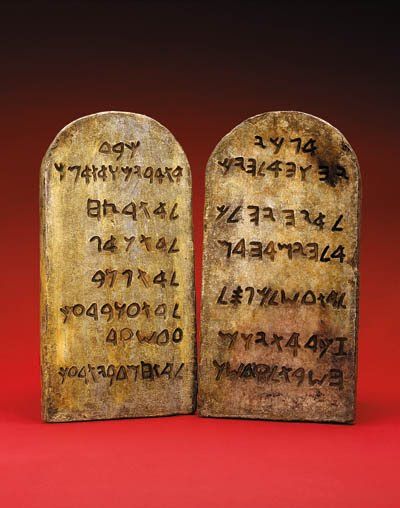
I have a couple of thoughts on this.

YHWH chose Sinai because Israel had to leave idolatrous Egypt before they could have an atmosphere where they could hear the Voice of God. 

Israel needed to receive the commandments before they entered the land and learned to obey. If they had entered the land in their idolatrous state they would not have followed the instruction to wipe out the inhabitants of the land–they would not have had discernment to understand what was so bad about their practices and might have chosen to join them.

Israel needed to be a Holy Nation, they needed to learn to walk with God in the wilderness before they could walk with God in the Land. Unfortunately, there is no desert in the transition from the Diaspora today. And yes, there has been a lot of learned nonsense from the nations–nonsense that comes with the baggage of Aliya to Israel.

The desert of Sinai, a place completely desolate, was a place for learning. No distractions or false teachings. Only the voice of the Eternal could be heard. 

The wilderness represents the idea that these commandments are not location bound. They are for the entire world and, no, I don’t embrace Noahide laws.

Sinai, where the Eternal Covenant was made, was a place beyond time and space. Thus the Eternal Covenant is a Mystical Covenant. The 10 commandments are not limited to several thousand years for a certain people in a certain land. They are Eternal. 

The Covenant people had to be separate from those who were not willing to embrace the covenant. This took 40 years. The Covenant was not to be trusted to those who would not follow it–notwithstanding their Jewish (Hebrew) blood. The same thing goes for today. The idea of being a descendant of the Chosen People has nothing to do with obligational entitlement to blessings. It is mandatory that we spend time at Sinai and “become” the Chosen People. 

Lev 20:26 – “And ye shall be holy unto me; for I YHWH am holy, and have separated you from the peoples to be mine.”

So the Covenant of YHWH is given in a Place outside any nation and in a time that is not time-bound. No one knows the date of the giving of the commandments, other than an approximation.  

The Shavuot holiday also is a little bit mysterious. Each year in Israel we count the Omer rather than basing the Holy Day of Shavuot upon a set calendar. The Holy Days of Pesach and then Shavuot are determined each year after the Barley is seen and the New Moon of the first month opens the door to Pesach. From the day after the Sabbath of Pesach, we count day by day to determine Shavuot. It is a personal counting. And Shavuot occurs only around the time the 10 commandments were given, which are even more mysterious as to time relativity. Shavuot requires us to follow the real signs of the Heavens plus Torah specified math calculation to determine when it falls. There can be no preset calendar. The counting is an individual application, that without it, you would miss some of the mitzvoth of Shavuot. 

Then the day of commandments, which was never specified, happens a few days or weeks later. And that is why! Because it is for all time.

Follow Take Hold the Tzitzit on WordPress.com

Shavuot is not a Shabbat

Shavuot and Holy Day Observance

Let’s talk about the rules, Rabbinic or not, of keeping Yom Tov’s and their relation to the observance of Shabbat. My Rabbinic Jewish friends will not turn on a light on Shabbat nor on Yom Tov. And in case you were wondering, a Yom Tov means “a good day” and is the name used for the Holy Days that are required by the Torah as festivals to YHWH. 

Picture from the Jewish Federation of New Jersey

There are indeed a lot of rules about keeping these days!

Observant Jews must refrain from driving on any Shabbat or Yom Tov. They do not light an original fire. That is, on Yom Tovs, they can transfer a fire but not light a new one. There is nothing in the Torah that prohibits the use of fire on a Festival (Yom Tov) other than Shabbat or Yom Kippur. 

Cooking or baking may be done on a Yom Tov, but only for those who eat of the meal. (That by the way is biblical). Basically the rules for Yom Tovs are almost the same as for Sabbaths, but they stress that the day must be celebrated even more than the Shabbat. Employment at a job or making any money is forbidden. The handling of money also is forbidden (No law was specified in the Torah here). Suppose my family wanted to go to a good restaurant. We would be forbidden to pay for the meal, or at least pay in advance of the day. I see nothing in the Torah that forbids driving a vehicle or eating at a restaurant on a Yom Tov. Writing is also forbidden because  it involves creating something from nothing, supposedly. You can’t turn the TV on but you can read novels. Really? Also, since the requirement to not carry a burden on the Sabbath includes not even carrying a handkerchief if it is not part of your attire, then also this rule applies to Yom Tovs! (To verify some of these rules I have stated, check out what Chabad says here. 

How can we simplify all of this? First start by comparing what the Torah really says!

Rulings in the Diaspora (anywhere outside of Israel) include keeping two days for Holy Days such as Rosh Hashanah, and actually 4 Holy days for Pesach (two at the beginning and two at the end), Shemini Atzeret and Sukkot also have 2 days when only one is specified. However, and here it gets sticky: some of these Holy Days are not to be kept outside the land of Israel. Research for yourself. I find that both Shavuot and Sukkot are harvest Holy Days and are only meant for Israel. Any time the Torah says, “and when you come into the land” referring to a Holy Day, then realize that that Holy Day is for Israel only. But not many follow this. Sometimes observant Jews get tired of keeping so many days as well as saying so many specified prayers, for which each Holy day has it’s own prayer book. Certainly, YHWH gets tired of it too!

Let us take a look at Shavuot. Here are the Torah verses:

Lev. 23:10-22 Read here. Note from verse 10: “… When ye come in unto the land which I am giving to you, and have reaped its harvest, and have brought in the sheaf, the beginning of your harvest unto the priest,”

So you see Shavuot is not to be celebrated in its entirety outside the land, and actually, until there are sacrifices and a temple, even in the land, it is very limited.

Exo 34:22 YLT – “`And a feast of weeks thou dost observe for thyself; first-fruits of wheat-harvest; and the feast of in-gathering, at the revolution of the year.”

Deu 16:10 YLT – “and thou hast made the feast of weeks to Jehovah thy God, a tribute of a free-will offering of thy hand, which thou dost give, as Jehovah thy God doth bless thee.”

Deu 16:16 YLT – “‘Three times in a year doth every one of thy males appear before Jehovah thy God in the place which He doth choose — in the feast of unleavened things, and in the feast of weeks, and in the feast of booths; and they do not appear before Jehovah empty;”

To discover what is to be done on Shavuot or any other Holy Day, please read all of Leviticus 23. You may discover some interesting things that will change your outlook. 

Basically we must admit that eating cheesecake is not a commandment for Shavuot. Of course, it is not forbidden, but the tradition comes close to requiring it. Why? Most branches of Judaism other than Karaites specify that the 10 commandments were given on Shavuot, which I take issue with. Nowhere does it say that. In fact Shavuot is not connected to the month system, rather to the weekly counting from the Sabbath of Pesach which is also something the Orthodox have changed. Since to them, any Holy Day is a Shabbat, they then count from the day after the first Holy Day of Pesach, which explains why those in Israel they are keeping from the 11th at Sundown through the 12th of June this year and Karaites, who count correctly from the weekly Shabbat that falls during Pesach, seven weeks of days ending on a Sunday (Yom Rishon) the first day after 7 full weeks. That means we will celebrate on the 16th, but beginning at Sundown on the 15th. Very difficult to live with two Holy Day systems, especially when the calendar in Israel is fixed to accommodate the Rabbinic days rather than the Torah days. So the stores will all be closed Monday night through Tuesday but open on the real Holy Day of Shavuot.  

Happy researching, my friends! What is really required and when?