Parsha Eikev 

Conquest of the Land, Now!

Brief commentary By Ariella Casey

In chapter 7 of Deuteronomy, we read that Moses instructed Israel how YHWH would help them conquer the land when they would cross over the Jordan.

“Moreover thy God will send the hornet among them, until they that are left, and hide themselves from thee, be destroyed. Thou shalt not be frightened at them: for the YHWH your Elohim is among you, a mighty God and terrible. And the YHWH your Elohim will put out those nations before thee by little and little: thou may not consume them at once, lest the beasts of the field increase upon thee. But the YHWH your Elohim shall deliver them unto thee, and shall destroy them with a mighty destruction, until they be destroyed. And he shall deliver their kings into thine hand, and thou shalt destroy their name from under heaven: there shall no man be able to stand before thee, until thou have destroyed them.” (Deu 7:20-24)

There is something here that speaks to me today in the current war situation. At times, we wonder if the Eternal is with us in this war that our enemies started in October of last year. Are we going to win it? That sounds like we have no Emunah. Is there something about us winning little by little and wiping out the kings of those nations? Maybe this is a historic precedent for today. Unfortunately, Hamas, backed by Iran, started this war. So perhaps it does not fit exactly into the picture of the original story back at the conquest of Canaan by the first Israelites! But there is something similar there. The leaders of the terror are being wiped out, and often through a direct miracle. Now Sinwar is trembling and trying to make a deal based on saving his life. He is shaking in his boots!

But also, we are moving ahead very slowly in recapturing the land that our enemies have claimed. We have to believe that we will do it and that there will be perhaps hornets and storms that help us do this. It seems overwhelming when they target Israel’s civilians and have had some success against us. Yet we have promises and must not lose our faith in the Divine Hand. 

Many are rightfully blaming the government and military leaders for not doing a better job, perhaps getting paid off to allow certain things. Yet, let us turn our attention to the Eternal and what He wants for Israel. What is the ultimate plan? Just to save the Jews? Or to save the Land for the majority of His people, who still have not returned? 

There are 10 tribes out there waiting to be brought home to the Land. Most of them are not aware of the fact of who they are. Many only feel something in their souls, that they belong here. 

And the land must be big enough for everyone to come home. Will these tribes come and help conquer? Unfortunately, most of Judah does not recognize Ephraim. 

Check out this prophecy:

“And it shall come to pass in that day, that YHWH shall set his hand again, the second time to acquire the remnant of his people which shall be left, from Assyria, and from Egypt, and from Pathros, and from Cush, and from Elam, and from Shinar, and from Hamath, and from the islands of the sea. And he shall lift up a banner to the nations, and shall assemble the outcasts of Israel, and gather together the dispersed of Judah from the four corners of the earth. And the envy of Ephraim shall depart, and the troublers of Judah shall be cut off; Ephraim will not envy Judah, and Judah will not trouble Ephraim: but they shall fly upon the shoulder of the Philistines towards the west; together shall they spoil the sons of the east; they shall lay their hand upon Edom and Moab, and the children of Ammon shall obey them. And YHWH will utterly destroy the tongue of the Egyptian sea; and with his mighty wind will he shake his hand over the river, and will smite it into seven streams, and make men go over dryshod. And there shall be a highway for the remnant of his people which will be left, from Assyria; like as it was to Israel in the day when he went up out of the land of Egypt.” (Isa 11:11-16)

Let us take hold of these promises. Judah will one day see us and grasp hold of us.

“And thou, son of man, take thee one stick, and write upon it, For Judah, and for the children of Israel, his companions. And take another stick, and write upon it, For Joseph, the stick of Ephraim and all the house of Israel, his companions. And join them one to another into one stick; and they shall become one in thy hand. … say unto them, Thus saith the Lord YHWH: Behold, I will take the stick of Joseph, which is in the hand of Ephraim, and the tribes of Israel his companions, and will put them with this, with the stick of Judah, and make them one stick, and they shall be one in my hand.” (Eze 37:16-17, 19)

¿De pie sobre la Torá solamente?

Mi respuesta a las acusaciones

Por J. Ariella Casey

La semana pasada, alguien afirmó que yo uso estrictamente la Torá y que descarto los Neviim (profetas) y Kituvim (escritos) del Tanaj. El rumor se extendió, y me sorprendí y quedé atónita al darme cuenta de que alguien había confundido mi posición. Todo sucedió durante el ayuno del 9 de Av, el día de ayuno que los judíos han cumplido desde antes de los días de algunos de los profetas posteriores.

Me dijeron que, dado que estaba en el Tanaj que se nos ordena guardarlo, he tomado la posición, y creo que estoy en terreno firme, de decir que ningún profeta tenía el derecho de agregar leyes a la Torá. De lo contrario, ¿por qué YHWH enfatizó tanto a Moisés como a Josué que nadie debía agregar ni quitar de las leyes dadas en el Sinaí?

Me aseguraron que todo el Tanaj era la voz de Elohim. Todavía estoy asombrado por el lío que hicieron con el pensamiento de la gente. Así que, si se me permite, voy a defender mi posición y espero que la gente me escuche y aclare cualquier malentendido.

Primero déjenme declarar lo que no he dicho. En ningún momento he dicho que estaba mal ayunar el 9 de Av o cualquiera de los otros 3 días mencionados por los profetas. En realidad, el profeta Zacarías reprende al pueblo por ayunar en esos días porque su ayuno no estaba dirigido a YHWH.

“Habla a todo el pueblo de la tierra, y a los sacerdotes, y diles: Cuando ayunasteis y llorasteis en el quinto y séptimo mes, estos setenta años, ¿ayunasteis para mí?” (Zac 7:5)

Y en Zac 8 leemos:

“Así dice Jehová de los ejércitos: El ayuno del cuarto mes, el ayuno del quinto, el ayuno del séptimo y el ayuno del décimo serán para la casa de Judá gozo y alegría, y fiestas solemnes; amad, pues, la verdad y la paz.” (Zac 8:19).

Permítanme preguntarles de qué época estaba hablando Zacarías aquí? ¿Cuáles eran las condiciones? ¿Y estaba aceptando que un ayuno o fiesta declarado por alguien ajeno a la Torá fuera un mandamiento? ¡Absolutamente no! Estaba hablando a la gente de su tiempo.

Tal vez este ejemplo parezca que el profeta estaba, de hecho, añadiendo a los mandamientos. ¡No lo estaba! Permítanme explicar. La idea de convocar un ayuno para una comunidad siempre es legítima en función de las necesidades del pueblo de Israel. Sin embargo, y subrayo, este NO es un mandamiento eterno, y si la gente se abstiene de él, ¡NO está pecando! Cuando el pueblo de Israel regrese a la Tierra, no será un momento para lamentar la pérdida de la tierra. Es un momento para celebrar. Pero queremos continuar con ayunos de un tiempo del pasado solamente porque un profeta los declaró.

Pero usted puede decir, “queremos ayunar por el tercer templo”. No hay nada de malo en eso. Adelante, pero no obligue a otros a hacerlo.

El otro día, uno de nuestra comunidad pidió al resto de los miembros que ayunaran por el pueblo de Israel durante esta terrible guerra de desgaste. No había nada de malo en eso. Pero muchos no ayunaron, y no están condenados. ¿Y deberíamos ser condenados porque no ayunamos por un templo que fue destruido por Nabucodonosor hace casi 3000 años?

¿Y qué pasa con Purim? ¿Se le dio a Mordechi el derecho de crear un nuevo mandamiento? ¡No se le dio! ¿No podemos ver que este es el mismo principio que he mencionado anteriormente sobre el llamado al ayuno?

Pero si uno quiere ayunar por eso, ¡es libre de hacerlo! No debemos prohibir a las personas que hagan lo que creen que las acercará al Rey del Universo. Sin embargo, se trata de un llamado individual y debemos reconocerlo como tal.

Siempre me mantendré firme en la Torá como la única ley para nuestra espiritualidad. Pero, y lo repito, la Torá, aunque tiene algunas leyes muy concretas, no restringe nuestra libertad de ayunar o festejar cuando deseamos hacerlo. Si lo hiciera, diría, alto y claro, “no ayunarás por tal o cual cosa”. Hay algunas leyes que sería bueno que aplicáramos hoy. Cosas como no levantar un objeto de adoración, un ídolo, un monumento, etc.

Hace mucho tiempo que dejé de besar las Mezuzot. Esto, según entiendo, es idolatría. Cuando una persona talla un objeto y lo santifica y luego le rinde homenaje, es idolatría. Tengo mezuzot en mis puertas, sí, pero no las beso. Y, de hecho, muchos caraítas prescinden de la Mezuzá por completo. Depende de ustedes cómo cumplen el mandato de escribir los mandamientos en los postes de sus puertas.

Démonos libertad unos a otros para interpretar individualmente cómo deben aplicarse los mandamientos. Creo que esta es la piedra angular a la que debemos aferrarnos: el discernimiento personal y no la legislación comunitaria. Pero no me malinterpreten. HAY mandamientos que están grabados en piedra.

Si alguien roba una caja de dulces de una tienda o, Dios no lo quiera, una motocicleta de un estacionamiento, no hay libertad individual para racionalizar que es aceptable. Lo mismo ocurre con los otros 9 mandamientos. Como digo, están grabados en piedra.

Háblenme de sus preocupaciones. Me preocupó mucho el rumor de principios de semana, Lo cual era pura habladuría maliciosa sobre mis estándares y mi enfoque de la Torá. Creo que la manera caraíta es medir todas las cosas que uno hace según la Torá y usar a los profetas para lo que fueron creados. Esto es para iluminar al menos a su generación sobre lo que la Torá significaba para esa época. También nos ayudan a entender cómo aplicar la Torá hoy, pero en ningún sentido están allí para agregar o quitar de la Torá.

“No añadiréis a la palabra que yo os mando, ni disminuiréis de ella, para que guardéis los mandamientos de Yehová vuestro Dios que yo os ordeno.” (Deuteronomio 4:2)

Torah Alone?

My Response

By J. Ariella Casey

Last week, someone claimed that I use strictly Torah and that I throw out the Neviim (prophets) and Kituvim (writings) in the Tanakh. The rumor spread, and I was shocked and stunned to realize that someone had mistaken my position. It all came about during the time of the fast of the 9th of Av, the day of fasting that Jews have complied with since before the days of some of the later prophets. 

I was told that since it was in the Tanakh that we are commanded to keep it. I have taken the stand, and I believe I am on firm ground, to say that no prophet had the right to add laws to the Torah. Otherwise, why did YHWH stress both to Moses and to Joshua that no one was to add nor take away from the laws given on Sinai?

I was assured that the entire Tanakh was the voice of Elohim. I am still astounded at the mess they made of people’s thinking! So, if I might, I am going to defend my position and hopefully people will hear me and clear up any misunderstandings. 

First, let me declare what I have not said. At no time have I said that it was wrong to fast on the 9th of Av or any of the other 3 days mentioned by the prophets. Actually, the prophet Zechariah rebukes the people for fasting on those days because their fast was not directed to YHWH. 

“Speak unto all the people of the land, and to the priests, saying, When ye fasted and mourned in the fifth and seventh month, even those seventy years, did ye at all fast unto me, even to me?” (Zec 7:5) 

And in Zec 8 we read:
“Thus saith YHWH of hosts; The fast of the fourth month, and the fast of the fifth, and the fast of the seventh, and the fast of the tenth, shall be to the house of Judah joy and gladness, and cheerful feasts; therefore love the truth and peace.” (Zec 8:19)

Let me ask you what time was Zechariah speaking about here? What were the conditions? And was he accepting that a fast or feast declared by someone outside the Torah was a commandment? He absolutely was not! He was speaking to the people of his time.

Maybe this example seems that the prophet was, indeed, adding to the commandments. They were not! Let me explain. The idea of calling a fast for a community is always legitimate based on the needs of the people of Israel. Though, and I underscore, this is NOT an eternal command, and if people abstain from it, they are NOT sinning! When the people of Israel come back to the Land, it is not a time to mourn the loss of the land. It is time to celebrate. But we want to carry on with outdated fasts just because a prophet declared them! 

But you may say, “we want to fast for the third temple.” –there is nothing wrong with that. Go ahead, but don’t obligate others to do so

The other day, one of our community asked the rest of the members to fast for the people of Israel during this terrible war of attrition. There was nothing wrong with this. But many did not fast, and they are not condemned. And should we be condemned because we do not fast for a temple that was destroyed by Nebuchadnezzar nearly 3000 years ago? 

And what about Purim? Was Mordechi given the right to create a new commandment? He was not! Can we not see that this is the same principle as I have mentioned above concerning the call to fasting?

But if one wants to fast for that, they are free to do so! We must not prohibit people from doing what they believe will bring them closer to the King of the Universe. Yet, this is an individual calling and we must recognize it as such.

I will always remain standing on the Torah as the only law for our spirituality. But, and I say again, the Torah, though it has some very concrete laws, does not restrict our freedom to fast or feast when we desire to do so. If it did, it would say, loud and clear, “thou shalt not fast for such and such.” There are some laws that we would be well to apply today. Things like not raising an object of worship, an idol, a monument, etc.

I have stopped kissing Mezuzot a long time ago. This, as I understand it,  is idolatry. When a person carves an object and renders it holy and then does obeisance to it, it is idolatry. I have mezuzot on my doors, yes, but I do not kiss them. And actually, many Karaites dispense with the Mezuzah completely. It is up to you how you fulfill the command to write the commandments on your doorposts. 

Let’s give each other freedom to interpret individually how the commandments are to be applied. I believe this to be the very foundation stone that we must cling to. Personal discernment and not community legislation. But don’t get me wrong. There ARE commandments that are carved in stone. 

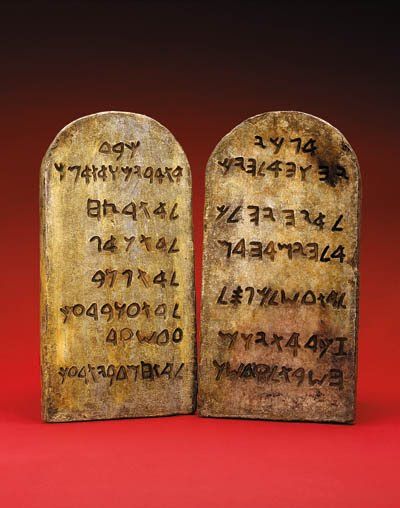
If someone steals a box of candy from a store or God forbid, a motorcycle from a parking lot, there is no individual freedom to rationalize that it is acceptable. So also with the other 9 commandments. As I say, they were carved in stone.

Please talk to me about your concerns. I was very troubled about the rumor early in the week, which was purely vicious gossip about my standards and my approach to Torah. I believe that the Karaite way is to measure all things one does by the Torah and to use the prophets for what they were meant. That is to enlighten at least their generation on what the Torah meant for that time. They also help us understand how to apply the Torah today, but in no sense are they there to add or take away from the Torah.

“Ye shall not add to the word which I command you, neither shall ye take from it, that ye may keep the commandments of Yehovah your God which I command you.” (Deu 4:2)

Please respond by commenting, like and share on your groups!

Follow Take Hold the Tzitzit on WordPress.com

Parashá Ve-Etjanan-Deut. 3:23-7:11

Por Ariella Casey

Las leyes para Israel en la Tierra y ¿Qué tan grande es la Tierra?

Moisés, cerca del final de su vida, pronuncia sus últimas palabras a Israel mientras se encontraba cerca de las fronteras de la Tierra Prometida. Les dice varias veces que las leyes que YHWH le dio en el Sinaí, las leyes aparte de los diez mandamientos, fueron dadas para cuando entraran en la Tierra.
Entonces, ¿por qué los judíos han continuado con las leyes del diezmo que fueron dadas para los Levitas y Cohenim (levitas y sacerdotes) y el Templo cuando no hay Templo? ¿Por qué los judíos en Europa y América construyen Sucot a lo largo de las calles de ciudades extranjeras cuando la Fiesta de los Tabernáculos debía celebrarse “en la Tierra” como un memorial de los 40 años que pasaron afuera en el desierto? ¿No están los judíos fuera de Israel, todavía en el desierto? ¿Y por qué se construyen y dedican sinagogas como lugares sagrados, cuando el único Lugar Santo verdadero fue apartado por YHWH en el Monte Sagrado en Israel? Y, en caso de que no lo sepamos, el Segundo Templo en Har HaBayit fue desolado por la traición del pueblo judío, ¡entregándole Jerusalén a Roma hace 2000 años! Har HaBayit está incluso ahora en las noticias, con el gobierno israelí poniéndose del lado de las naciones para evitar que los judíos recen allí. ¡Por favor, manténgase al tanto de lo que está sucediendo! ¡Siga orando!

La historia de los israelitas durante los últimos 3000 años no ha sido lo que Dios había planeado para nosotros, sino lo que nuestros antepasados ​​eligieron hacer. Israel ha estado entrando y saliendo de La Tierra; tomado cautivo varias veces y luego, durante un cautiverio prolongado, formularon nuevas leyes que les permitirían seguir siendo un pueblo separado y aún permanecer en las naciones a las que fueron dispersados. Pero, estas nuevas leyes fueron inventadas por sus rabinos y ahora se las conoce como la “Ley Oral”. Estas eran todo MENOS las leyes originales que les fueron dadas por mano de Moisés.
Las leyes dadas por mano de Moisés, que se afirma que son la base de la “Torá Oral”, debían ser observadas únicamente “en La Tierra”. Moisés dio sus palabras finales con varias referencias a esto. En ese momento estaban al final de la peregrinación de 40 años en el desierto. Seguramente habían estado practicando algunas de estas leyes, pero eran leyes que Moisés especificó claramente para cuando estuvieran en La Tierra. Veamos algunos de los versículos que dicen esto:

“Y Jehová os habló de en medio del fuego; oísteis la voz de las palabras, pero ninguna figura visteis; solamente oísteis una voz. Y él os anunció su pacto, el cual os mandó poner por obra, las diez palabras; y las escribió en dos tablas de piedra. A mí también me mandó Jehová en aquella ocasión que os enseñase los estatutos y decretos, para que los pusierais por obra en la tierra a la cual pasáis para tomar posesión de ella.” (Deu 4:12-14).

Y Moisés recuerda a los hijos de Israel que en el Sinaí ellos habían pedido que YHWH no les hablara, sino que Moisés fuera y recibiera de YHWH las leyes y luego se las enseñara.
Así que continúa recordándoles…

“Y ahora, ¿por qué moriremos? Porque este gran fuego nos consumirá. Si oímos más la voz de Jehová nuestro Dios, moriremos. Porque ¿quién hay de toda carne que haya oído la voz del Dios vivo hablando de en medio del fuego, como nosotros, y haya sobrevivido? Acércate tú, y oye todo lo que Jehová nuestro Dios diga, y dinos todo lo que Jehová nuestro Dios te diga, y nosotros lo oiremos, y lo haremos. Y oyó Jehová la voz de vuestras palabras cuando me hablasteis; y me dijo Jehová: Yo he oído la voz de las palabras de este pueblo que te ha hablado; han hablado bien en todo lo que han dicho. ¡Oh, si tuvieran tal corazón, que me temieran y guardaran siempre todos mis mandamientos, para que a ellos y a sus hijos les fuera bien para siempre! Ve, diles: Volveos a vuestras tiendas. Pero tú quédate aquí junto a mí, y yo te hablaré todas las cosas que te he dicho. mandamientos, estatutos y decretos que les enseñarás, para que los pongan por obra en la tierra que yo les doy para que la posean. Guardaos, pues, de hacer como Jehová vuestro Dios os ha mandado; no os desviéis a la diestra ni a la siniestra. Andad en todo el camino que Jehová vuestro Dios os ha mandado, para que viváis y os vaya bien, y tengáis largos días sobre la tierra que vais a poseer.” (Deu 5:25-33).

Nuevamente vemos que estas leyes eran para “en la tierra”.

“Estos, pues, son los mandamientos, estatutos y decretos que Jehová vuestro Dios mandó que os enseñase, para que los pongáis por obra en la tierra a la cual pasáis para tomar posesión de ella, para que temas a Jehová tu Dios, guardando todos sus estatutos y sus mandamientos que yo te mando, tú, tu hijo, y el hijo de tu hijo, todos los días de tu vida; y para que tus días sean prolongados. Y tú oirás, Israel, y cuidarás de ponerlos por obra, para que te vaya bien y seáis multiplicados, como Jehová el Dios de tus padres te ha dicho, en una tierra que fluye leche y miel.” (Deuteronomio 6:1-3).

Entonces Moisés enseña el Shemá, las leyes que hacen referencia a las Mezuzot (escribir las leyes en los postes de las puertas), y luego a la atadura del brazo y la cabeza-Tefilin- (que se refieren simbólicamente al control de nuestros pensamientos y acciones). Continúa desafiando a los israelitas a permanecer fieles y a no permitir que los idólatras vivan en La Tierra, para que no sean seducidos por la adoración de ídolos.

Estas instrucciones sobre el cumplimiento de ciertas leyes “en La Tierra” donde Israel iba a vivir de ahí en adelante eran para que prosperaran y tuvieran una larga vida en La Tierra y para que La Tierra fluyera leche y miel.

Por desgracia, nuestra historia muestra algo más y ahora esperamos un segundo Éxodo completo de nuestros exiliados que desean regresar y estar entre el pueblo de Israel.
¡Que nuestros hermanos y hermanas se esfuercen con todas sus fuerzas por estar entre ese grupo que viene a asentarse en La Tierra y a hacer retroceder las fronteras para que todos puedan habitar la Tierra que una vez fue prometida a nuestro padre Abraham!

¡Este es nuestro desafío! ¡Que regresemos y poseamos La Tierra en su plenitud!

“Jehová nuestro Dios nos habló en Horeb, diciendo: Bastante habéis estado en este monte. Volveos, partid e id al monte del amorreo, y a todos los lugares vecinos, en el Arabá, en el monte, en la Sefela, al Neguev y a la costa del mar, a la tierra del cananeo y al Líbano, hasta el gran río, el río Eufrates. Mirad que yo he puesto delante de vosotros la tierra; entrad y poseed la tierra que Jehová juró a vuestros padres Abraham, Isaac y Jacob, que les daría a ellos y a su descendencia después de ellos.” (Deuteronomio 1:6-8)

Por favor, clik en follow (Abajo), Compartir, y comentar

Follow Take Hold the Tzitzit on WordPress.com

Parsha Ve-Etchanan-Deut. 3:23-7:11

By Ariella Casey

Laws for Israel in The Land, and How Big is The Land?

Moses, near the end of his life, speaks his final words to Israel while near the borders of the Promised Land.  He tells them several times that the laws that YHWH gave to him on Sinai, the laws other than the ten commandments, were given for when they entered The Land. 

So why have the Jews continued the tithing laws which were given for the Leviim and Cohenim  (Levites and Priests) and the Temple when there is no Temple? Why do Jews in Europe and America build Sukkot along the streets of foreign cities when the Feast of Tabernacles was to be observed “in The Land” as a memorial of the 40 years they spent outside  in the wilderness? Aren’t Jews outside of Israel, still in the wilderness? And why are synagogues built and dedicated as holy places, when the only true Holy Place was set apart by YHWH on the Sacred Mount in Israel? And, in case we don’t know, the Second Temple on Har HaBayit was desolated by the betrayal of the Jewish people, giving Jerusalem to Rome 2000 years ago! Har HaBayit is even now in the news, with the Israeli government siding with the nations to prevent Jews from praying there. Please stay abreast of what is happening! Keep praying!

The history of the Israelites over the last 3000 years has been, not what God had planned for us, but what our forefathers chose to do. Israel has been in and out of The Land; taken captive several times and then during prolonged captivity, they formulated new laws which would allow them to be able to remain a separate people and still remain in the nations to which they were scattered. But, these new laws were invented by their rabbis and now referred to as the “Oral Law.” These were anything BUT the original laws given to them through the hand of Moses.  

The laws given by the hand of Moses, which are claimed to be the basis for the “Oral Torah” were to be kept solely “in The Land.” Moses gave his final words with several references to this. At this time they were at the end of the 40 years wilderness sojourn. They had, most certainly, been practicing some of these laws, but they were laws that Moses clearly specified for when they were in The Land. Let’s view some of the verses that say this:

“And Jehovah spoke to you from the midst of the fire: ye heard the voice of the words, but ye saw no form; only ye heard a voice. And he declared to you his covenant, which he commanded you to do, the ten words; and he wrote them on two tables of stone. And Jehovah commanded me at that time to teach you statutes and ordinances, that ye might do them in The Land whither ye are passing over to possess it.” (Deu 4:12-14).

And Moses reminds the children of Israel that at Sinai they had asked that YHWH not speak to them, but that Moses should go and receive the laws from YHWH and then teach them. 

So he continues reminding them…

“And now, why should we die? for this great fire will consume us. If we hear the voice of Jehovah our God any more, we shall die. For who is there of all flesh, that has heard the voice of the living God speaking from the midst of the fire, as we, and has lived? Come thou near, and hear all that Jehovah our God will say; and speak thou to us all that Jehovah our God will speak to thee; and we will hear it, and do it. And Jehovah heard the voice of your words, when ye spoke to me; and Jehovah said unto me, I have heard the voice of the words of this people that have spoken to thee: they have well spoken all that they have spoken. Oh that there were such a heart in them, that they would fear me, and keep all my commandments continually, that it might be well with them and with their sons for ever! Go, say unto them, Get you into your tents again. But as for thee, stand thou here by me, and I will speak unto thee all the commandments, and the statutes, and the ordinances, which thou shalt teach them, that they may do them in The Land which I give them to possess it. Take heed then to do as Jehovah your God hath commanded you: turn not aside to the right hand or to the left. In all the way that Jehovah your God hath commanded you shall ye walk, that ye may live, and that it may be well with you, and that ye may prolong your days in The Land which ye shall possess.” (Deu 5:25-33).

Again we see that these laws were for “in The Land.”

“And these are the commandments, the statutes, and the ordinances, which Jehovah your God commanded to teach you, that ye may do them in The Land whereunto ye pass over to possess it, that thou may fear Jehovah thy God, to keep all his statutes and his commandments which I command thee, thou, and thy son, and thy son’s son, all the days of thy life; and that thy days may be prolonged. And thou shalt hear, Israel, and take heed to do them; that it may be well with thee, and that ye may increase greatly, as Jehovah the God of thy fathers hath said unto thee, in a land flowing with milk and honey.” (Deu 6:1-3).

Then Moses teaches the Shema, the laws referring to Mezuzot (writing the laws on the doorposts), and then the binding of the arm and the head-Tefillin (which refer symbolically to controlling our thoughts and actions). He goes on to challenge the Israelites to remain faithful and to not allow idolaters to live in The Land–that they not be seduced into idol worship. 

These instructions about keeping certain laws “in The Land” where Israel was to dwell from then onward were so that they would prosper and have long life on The Land and that The Land would flow with milk and honey. 

Alas, our history shows something else and we now await a full second Exodus by our exiles who desire to return and be among the people of Israel. 

May our brothers and sisters strive with all their strength to be among that group that come to settle The Land and push back the borders that all may inhabit The Land that was once promised to our father Abraham!

Here is our challenge! May we return and possess The Land in it’s fullness!

“Jehovah our God spoke unto us in Horeb, saying, Ye have stayed long enough in this mountain. Turn and take your journey, and go to the hill-country of the Amorites, and unto all the neighboring places in the plain, in the mountain, and in the lowland, and in the south, and by the seaside, The Land of the Canaanites, and Lebanon, unto the great river, the river Euphrates. Behold, I have set The Land before you: go in and possess The Land which Jehovah swore unto your fathers, to Abraham, to Isaac, and to Jacob, to give unto them and to their seed after them.” (Deu 1:6-8)

Thanks for reading. Please share, comment and follow!

Follow Take Hold the Tzitzit on WordPress.com