
¿Es Dios la máxima autoridad o no?
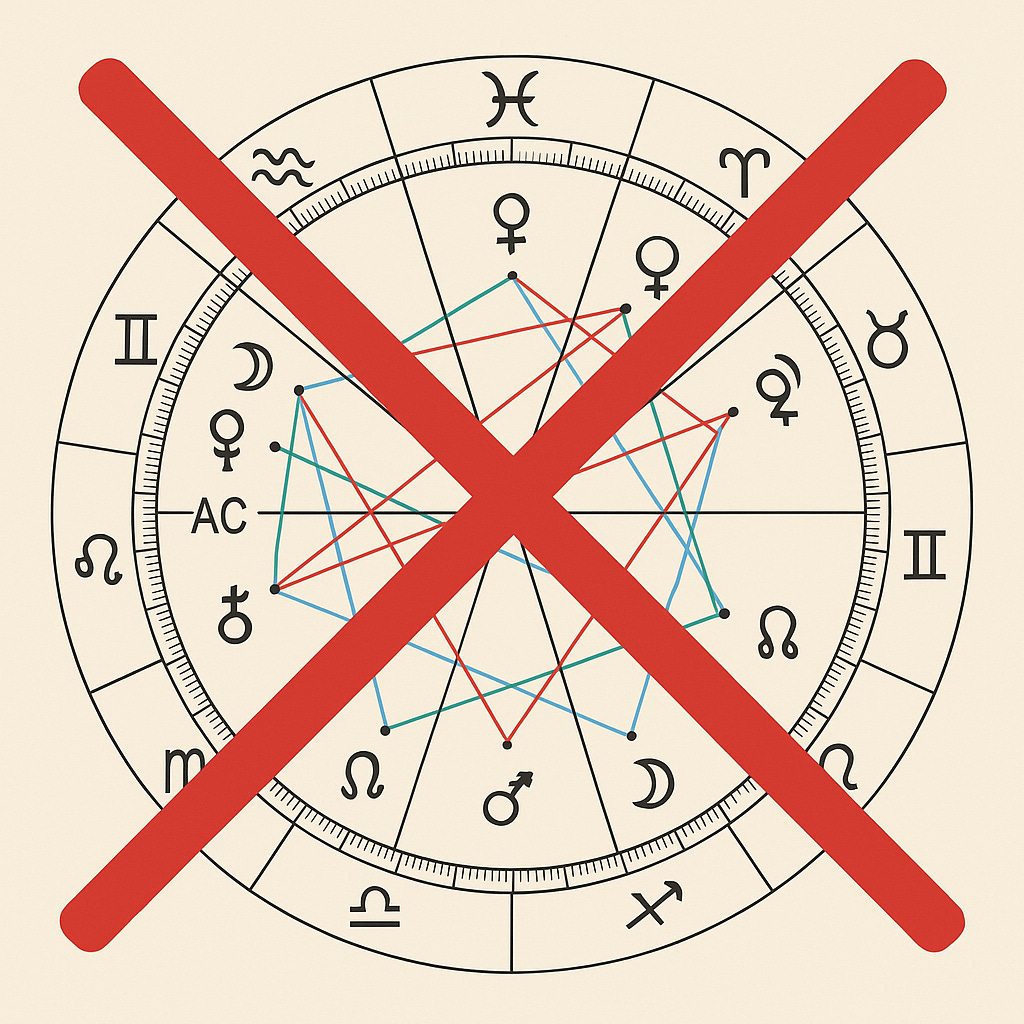
La astrología judía kosher dice que debemos aprender sobre la alineación de los planetas y cómo superar nuestras debilidades y moderar nuestras fortalezas desbordantes. Al menos eso es lo que enseñaban ayer, cuando asistí a una reunión de mujeres de Rosh Jodesh en nuestra ciudad de Israel. Una de ellas dijo: «Los planetas te bendecirán».
Todas las alarmas de mi cabeza se dispararon y supe que o iba a vomitar o a irme. Quería decir: «Eso es brujería y tú eres una bruja».
Pero me quedé sentada en silencio y terminé mi jarrón decorativo, en cuya elaboración la profesora de manualidades nos había ayudado generosamente. Había una docena de mujeres allí, y la mayoría coincidía con el tema que planteaba la instructora. Me asombró el nivel de adoctrinamiento que presencié, pero me di cuenta de que todo esto se ha creído durante mucho tiempo. ¿Pero eso lo justifica? ¿Acaso algo que se cree desde hace mucho tiempo lo hace más cierto? ¿Es que hoy en día no existen pensadores de verdad?
Esta astróloga judía (llamémosla Rivka) decía cosas como: «Estamos por encima del calendario, y nos corresponde a nosotros establecer la fecha de Rosh Jodesh». ¿Qué dice la Biblia al respecto? ¿Quién ordenó las señales en el cielo para guiarnos?
Y dijo Dios: Haya lumbreras en la expansión de los cielos para separar el día de la noche; y sirvan de señales.Y para citasY durante días y años.
“Dijo Dios: «Haya lumbreras en la expansión del cielo para separar el día de la noche; servirán de señales para los tiempos señalados: los días y los años;»Génesis 1:14, traducción JPS).
Nótese la palabra hebrea «moedim», resaltada en el versículo anterior. Esta palabra se refiere a las fechas fijas que el Creador estableció para el pueblo de Israel. «Fechas fijas» es otra forma de referirse a las fiestas bíblicas. «Moed» (parte de la palabra moedim) se usa para las reuniones sagradas. Por ejemplo, «ohel moed» significa «tienda de reunión», en referencia al lugar donde se celebraban estas reuniones. Originalmente, teníamos el Mishkán (tabernáculo o tienda de reunión) que acompañó a los israelitas en el desierto y que Josué erigió en la tierra después de cruzar el Jordán.
¿Acaso el pueblo judío puede decidir cuándo se celebran las fiestas? ¿Quién tiene prioridad? ¿Quién estableció los signos para marcar el año? Entonces, ¿podemos cambiar lo que Dios ha dicho? ¿Quién tiene prioridad, después de todo? ¿Sigue siendo Dios Dios o nos hemos puesto nosotros mismos en el trono?
¿Acaso el Creador otorga a los judíos el derecho de cambiar sus leyes? O, más específicamente, ¿puede el Pueblo Elegido ser santo si no obedece el Pacto?
Y ahora, si en verdad obedecéis mi voz y guardáis mi pacto, seréis una posesión especial entre todos los pueblos, incluso entre toda la tierra.
“Ahora bien, si me obedecéis fielmente y guardáis mi pacto, seréis mi tesoro preciado entre todos los pueblos. En verdad, toda la tierra es mía.”Éxodo 19:5 Traducción JPS).
¿De qué pacto estamos hablando? El pacto del que se habla en la Torá es la Torá misma, y esta fue dada a nuestros antepasados: Abraham, Isaac y Jacob. ¡Y aun así, la humanidad pretende alterar lo que fue establecido como una bendición para nosotros!
¿Cómo es posible que “los planetas te bendigan”? ¿Cómo puede un objeto inanimado, ya sea una piedra o un planeta, tener la capacidad de bendecirnos? ¿Acaso están elevados al nivel de dioses?
Hace poco conversaba con una mujer sobre las bombas y la guerra en Israel. Le comenté que alguien sale a la calle incluso cuando suenan las alarmas. Me dijo que los judíos tienen que protegerse. ¿Significa eso que Dios ya no nos protege? Es cierto que el sentido común nos dice que debemos protegernos en estos tiempos, pero ¿acaso nuestra protección depende únicamente de nosotros mismos? ¿Es posible que, al ignorar las reglas que el Creador estableció desde el principio, sintamos que este es nuestro universo y que la protección de Dios es mínima o inexistente?
¿Acaso Dios ha emprendido un largo viaje y, por alguna razón, no nos escucha? Esto me recuerda al profeta Elías en el Monte Carmelo (un lugar a un par de horas de aquí). ¿Qué les dijo a los hombres cuando los profetas de Baal danzaban alrededor de su altar?
“Cuando llegó el mediodía, Elías se burló de ellos, diciendo: ‘¡Gritad más fuerte! Después de todo, es un dios. Pero puede que esté conversando, puede que esté detenido, o puede que esté de viaje, o tal vez esté dormido y despierte’”.1 Reyes 18:27, Traducción JPS). Lee la historia completa en 1 Reyes.
Elías desafió al pueblo de Israel con estas palabras:
“¿Hasta cuándo vacilaréis entre dos opiniones? Si Jehová es Dios, seguidle; pero si Baal, seguidle a él.”Ibíd., versículo 2
1)
¿Cómo discernimos la verdad? Mediante una comprensión individual de las sencillas palabras de la Torá. A menudo, la ornamentación de nuestros sabios, tanto modernos como antiguos, nubla la verdad. ¿Podrían ser, en realidad, profetas de Baal? ¿Los mismos por los que Elías reprendió al pueblo?
¡Volvamos al estudio de lo que los profetas bíblicos nos transmitieron sin añadir ni quitar nada!
¡K.I.S.S. (Keep It Simple, Stupid)!
Ariella
¡La verdad es más preciosa que los rubíes!
Discover more from Take Hold the Tzitzit
Subscribe to get the latest posts sent to your email.

All Xtian or Muslim theological belief systems – Treif av tuma avoda zara.
Lutheran Dietrich Bonhoeffer never accepted the revelation of the Torah at Sinai. The difference between ספר בראשית — אל שדי, אלהים, אל וכו from ספר שמות ודברים — עשרת הדיבורות — the first Sinai commandment revelation of HaShem as תורה לא בשמים היא became permanently established. JeZeus prayed to his father Zeus who dwells in the Heavens, and not within the Yatzir Ha-Tov within the Cohen hearts here on this Earth. The Torah concept of בטול restricts the revelation of the שם השם לשמה to Spirits/רוח הקודש living within the chosen Cohen peoples’ hearts.
Just as the first born son Adam, Avraham, and Yitzak, and Yaacov rejected as the chosen Cohen, so too and how much more so the Pauline propaganda that Goyim — through belief in JeZeus as God become — magically becomes “grafted” onto the Torah Sinai revelation reserved only for the chosen Cohen people. The AI idea – [Dietrich Bonhoeffer, as a 20th-century Lutheran theologian, operated within a Christian framework that did not engage with Oral Torah as a normative, revelatory source — nor did he interpret the Shem HaShem (the Divine Name) through Kabbalistic or rabbinic lenses. His theology centered on Christ as the embodiment of God’s Word] … Which came first the chicken or the egg? Duh! The chicken.
The NT replacement theology in no wise respects the Torah concept of בטול as interpreted as לא בשמים היא. Therefore the AI clause that Bonhoeffer “respected” the Torah – utter drivel and complete bunk. Bonhoeffer, not respectful in the least to Hebrew Scriptures. All other Torah commandments, including the mitzva of Moshiach depend upon the 1st Sinai commandment. The mitzva of Moshiach – not a false messiah obligation to wait and recognize the son of God born from a virgin. The Moshiach wisdom commandment no different that all other Torah wisdom commandments — applicable to all generations of Israel; equally to sanctify this Torah commandment, no different from the model Torah wisdom commandment of shabbat.
The NT written in Greek not Hebrew. The Greek NT language has no concept of the distinction between מלאכה vs עבודה. JeZeus never kept shabbat as a mitzva. Torah wisdom commandments – starting with the Creation “story” introduce the wisdom of time through the 6 days of Creation! Not that “time” itself central, anymore than the bark of the tree replaces the fruit! This type of “time-oriented” commandment sanctifies Torah wisdom, which affixes the dedication of Oral Torah לשמה middot as the k’vanna of all time-oriented Torah commandments.
Just as the wisdom commandment of Shabbat dedicates not to do wisdom commandment/מלאכה on the day of Shabbat in order to sanctify doing wisdom commandments/מלאכה throughout the 6 days of the creation of מלאכים. The term מלאכה\מלאכים stands upon the precedents of Yaacov stripping the poles when ewes stood in heat, and sending מלאכים to Esau. Sheep conceived whatever condition which Lavan decreed to impoverish Yaacov; just as Esau, despite an Army led by 400 officers – kissed Yaacov!
The creation of מלאכים goes hand in glove with the creation of the chosen Cohen people – likewise created through wisdom time-oriented commandments; the wisdom commandments like shabbat or Moshiach forever testify to תמיד מעשה בראשית. Wisdom Torah commandments, they create the chosen Cohen people in all times and generations.
Lutheran Bonhoeffer, like all Goyim throughout history has no connection to this Torah revelation because only Israel accepts this revelation which the NT substitutes with its new God JeZeus. This closing statement, not polemical, but rather it represents judicial precision which fundamentally rejects all theological creed belief systems as the k’vanna of the 2nd Sinai commandment.
Greek NT word: ἔργον (ergon), can refer to anything from manual labor to moral actions; its employed throughout the NT in many contexts. Contrast mesechta Shabbat which defines מלאכה through the 39 skills required to construct the Mishkan. The two languages of opposing verbs not at all equivalent terms. The Greek NT text like Mark 2:27 uses general vocabulary like ergon or poiein (“to do”), not technical halakhic terms. The P’rushim, however, discern melacha — as defined through 39 skills required to construct the Mishkan — which Moshe Rabbeinu did not do on Shabbat.
The NT does not use the technical Jewish term melacha. Therefore, the Gospel writers are not making a halakhic argument about which specific actions count as melacha. Mark 227 replaces the commandment not to do מלאכה with a declaration that shabbat made for man rather than sanctifies the מלאכה required to accomplish the 6 days of creation.
The Rambam Yad dresses up philosophy in the garments of halacha. A NT wolf dressed in sheep wool con-job. Gemara halachic ruling only serve as witness who view the Mishnaic Case/Din viewed only from different witness perspectives and never from some foreign כלל of a Universal Monotheistic Tawhid God. Halacha observance in g’lut – Jews have no freedom and therefore no obligation to rule the oath sworn lands with justice. G’lut Jews “Rome becomes their New Jerusalem”.
Never once anywhere across the Yad code does the Rambam remember the oaths sworn by the Avot to cut the brit that they alone would father the chosen Cohen people through wisdom commandments. The statute Yad assimilated abomination declares that Gemara halachot stand upon their own two feet – they operate independently from serving as precedents which interpret a specific Case/Din Mishna! This catagorical error forever separates his Yad from the Talmud codes of the B’HaG Rif Rosh and Baali Tosafot common law commentaries on the Talmud.
Rambam’s statute halakhic system – not identical to the Torah‑she’be’al‑peh common law judicial system established by Ezra, the Anshei Knesset HaGedolah, and Chazal. Torah as Brit, not assimilated counterfeit Greek philosophy; פרדס inductive logic does not compare to Greek syllogism deductive logic. Rambam’s reduction of Torah commandments to 613 catagorically rejects the B’HaG who ruled that rabbinic commandments sanctified as wisdom mitzvot – from Sinai. Justice defines the k’vanna of the salvation from Egyptian slavery unto freedom. No where in the Rambam Yad does he once refer to justice as Sanhedrin court obligations to make a fair restitution of damages inflicted by Jews upon other Jews. No where does the Rambam ever once refer to the rejection of Shaul as Moshiach and the rebuke of David by Natan for their failure to sanctify justice as “the k’vanna” of their anointing as Moshiach – based upon the Torah precedent of Moshe anointing the House of Aaron as Moshiach.
Rambam’s statute halacha a perversion on par but different from the Karaim and Shomronim differ from the Torah established by Ezra and the Men of the Great Assembly. Rambam subsumes לא בשמים היא to a Tawhid Allah Universal God. Hence בדיעבד he permits a Jew to daven in a Mosque. Rambam’s this-worldly, political-national definition fails to validate the mitzva of Moshiach as a wisdom bound time-oriented commandment. His Sefer Ha’Mitzvot limits the 613 commandments to positive and negative commandments which do not require k’vanna. He confuses a building of wood and stone as the substance of צדק צדק תרדוף; that’s as false as JeZeus is God or Muhammad is a Torah prophet. He fails to discern that Shalom a verb that stands upon trust; whereas peace a noun forever used as Greek propaganda rhetoric to rule the mob/masses. His erroneous nonsense fails to learn Torah common law precedents as the basis to interpret wisdom k’vanna; Moshe anointed the House of Aaron as Moshiach to dedicate korbanot with the wisdom to sanctify צדק צדק תרדוף through Sanhedrin common law courtrooms! Restore Israel and build the Temple confuses klippot/bark with justice fruits of National Independence/responsibility\accountability. Slaves – Jews in g’lut have none of these three priorities of “freedom”.
Sugya: Shabbat 49b–50a, this sugya is perfect because it exposes the difference between Talmudic method and Rambam’s method. The sugya’s structure – inductive; start with a case then brings proofs, analogies, counter-proofs. It derives principles and applies them back to Mishna Case\din. In Hilchot Shabbat 7:1–2, Rambam simply states: “There are 39 melachot… these are the categories of prohibited labor.” His Yad presents – a closed list, no Mishna case; no sugya reasoning; no witness-perspectives; no inductive derivation; no connection to the oaths by which the Avot cut the brit to father the chosen Cohen people, the משל\נמשל Mishkan/Shekinah within the Yatzir Ha-Tov בכל לבבך interpretation made by rabbi Yechuda’s tefillah דאורייתא.
Contrast the Rif\Tosafot/Rosh: The Rif quotes the sugya almost verbatim, preserving the reasoning. The Tosafot analyze contradictions, exceptions, and conceptual boundaries. Rosh preserves the disputes and the logic – they all treat the sugya as jurisprudence, not legislation. In Hilchot Shabbat 12–13, Rambam “One who carries from reshut to reshut is liable…” “If he carries less than a shiur, he is exempt…” The Mishnah (Shabbat 1:1) presents a case: A poor man outside, a homeowner inside – who extends a hand vs ho takes or places. The Gemara analyzes: Intent, domains, agency, minimal quantities and purpose of carrying – case/based reasoning. The Rif code treats halacha as precedent; the Rosh treats halacha as jurisprudence. The Rambam Yad abstractions switches justice into statute – not brit obligations. The Rif/Rosh do not codify the mitzva of Moshiach. They treat it as aggadic-halacha which צריך עיין.
LikeLike