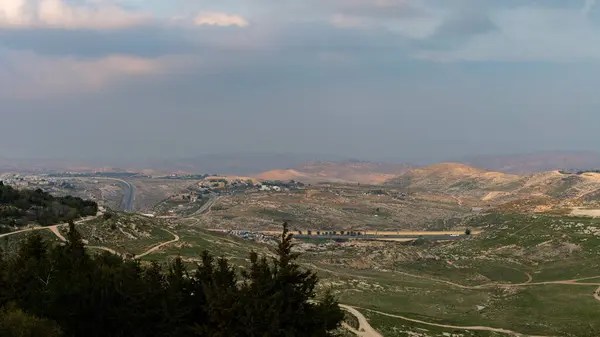
¿Qué pasa hoy?

Parashá Shoftim,

Deuteronomio 16:18- 21:9

Hay leyes que la mayoría de los judíos y diez tribus no pueden seguir cuando no viven en Israel. Gran parte de lo que está escrito en esta parashá corresponde a cuando el antiguo Israel entró en la tierra de Canaán. Sin embargo, existen principios que idealmente deberían seguirse en cualquier país. ¿Cuáles son estos principios? La gente necesita estudiar y pensar profundamente. ¿Quizás hacer planes para regresar a la tierra?

¿Qué pasa con la tala de árboles frutales? (Deu. 20:19,20) Esto estaba prohibido durante un asedio contra una ciudad enemiga. Pero, ¿qué sucede en el caso de la guerra moderna cuando se utilizan bombas en lugar de armas personales? ¿Deberían prohibirse las bombas para proteger los árboles de Israel? Una bomba puede quemar muchos campos, como vemos cada vez que conducimos, aunque sea a unos pocos kilómetros de nuestra casa. 

Este es un problema especialmente significativo ahora que el enemigo ha atacado a Israel en siete frentes diferentes. Muchos de los descendientes de Esaú e Ismael se han organizado para borrar a Israel del mapa. Bombardeos diarios, atentados suicidas, apuñalamientos, embestidas de coches, todo ello amenaza las vidas de los israelíes, y mucho menos la tierra en la que vivimos y el deseo de vivir una vida en paz. De hecho, el saludo principal en toda conversación es “Shalom”, que significa no sólo “Hola”, sino “Paz”. 

En la clase de hebreo de la semana pasada, discutimos cómo responder: “¿Cómo estás?”, en el estado de ansiedad en el que todos nos encontramos. Aprendimos respuestas a esta pregunta. Respuestas como: “no tan bien”, “me entristece cuando escucho la noticia”, “es difícil para mí”. Y el que preguntaba decía entonces: “Todo irá bien por la voluntad de Dios”. (Be-Ezrat Hashem, YiYay Tov). 

Mientras estudiamos la parashá, parece que las leyes de Israel en este momento no se pueden aplicar, al menos a la luz de la situación actual. ¿Serían diferentes las cosas si Israel hubiera seguido la Torá durante los últimos 2000 años?  ¿Y qué pasaría si Israel realmente siguiera la Torá hoy en día, en lugar de todas las leyes superfluas que ahora la mayoría de los judíos reconocen como Torá? Entonces, dado que nuestra situación moderna ha cambiado, ¿somos de alguna manera capaces de aplicar los principios indicados por la Torá? La ley sobre la no destrucción de árboles frutales tenía como objetivo preservar el suministro de alimentos. ¿Cómo podemos garantizar hoy la preservación del suministro de alimentos? 

¿Qué pasa con los magistrados que deciden en un caso en el que 2 o 3 testigos denuncian un delito? ¿Tenemos este sistema configurado hoy? ¿Puede funcionar incluso sin un Beit Din o salón de juicio en cada localidad de Israel? 

¿Qué hay de destruir a los que adoran a dioses falsos en la tierra? Según esta parashá (Deuteronomio 20:16-18). Tenemos otras religiones que viven en Israel. Algunos de ellos son pacíficos y apoyan el esfuerzo bélico. En este punto, no es factible destruirlos a todos. Parece que el foco hoy es decidir quién nos ayudará y quién es nuestro enemigo. 

Entonces, sí, estamos luchando por nuestra propia existencia. Y la pregunta es: ¿Por qué? ¿Dónde está el Dios del cielo? ¿Escucha nuestras oraciones? Creo que Él lo hace y sí, están sucediendo milagros. ¡Ahora hay cientos de judíos adorando cada semana en el Monte del Templo!  Postración total mientras rogamos al Dios Todopoderoso del Cielo que nos devuelva este Lugar Santo que fue tan perversamente intercambiado en 1994 para permitir que Jordania controlara el culto allí. (https://jcpa.org/article/jordan-and-the-temple-mount/)  Pero el hecho de que los judíos estén adorando allí es, sin duda, un milagro y un paso adelante. ¿Durará? 

¿Cuándo podremos volver a los verdaderos principios de la Torá? Creo que las cosas van en esa dirección. La mayoría de los israelíes apoyan la postura en contra de ceder más tierras. Todavía tenemos que ver la conquista de las fronteras originales de la tierra de Israel y su extensión a la asignación bíblicamente prometida a Israel que incluía toda la tierra desde el Éufrates hasta el Mar Mediterráneo, desde el Mar Rojo hacia arriba hasta parte del Líbano. 

Oremos todos para que YHWH salga con los ejércitos de Israel de una manera aún más significativa. Todavía no tenemos un sumo sacerdote que vaya delante del ejército, pero tenemos gente en todas partes orando por el éxito de los esfuerzos de Israel por hacerse con el control de nuestra propia tierra.

B’Shalom

Ariella

Follow Take Hold the Tzitzit on WordPress.com

What Applies Today?

Parsha Shoftim, Deuteronomy 16:18- 21:9

There are laws that cannot be followed by the majority of Jews and ten tribers when they do not live in Israel. Much of what is written in this Parsha is for when ancient Israel entered the land of Canaan. However, there are principles given which ideally should be followed in any country. What are these principles? People need to study and think deeply. Maybe make plans to return to the land?

What about cutting down fruit trees? (Deut. 20:19,20) This was forbidden during a siege against an enemy city. But what happens in the case of modern warfare when bombs are used rather than personal weapons? Should bombs be outlawed to protect Israel’s trees? A bomb can burn a lot of fields, as we see every time we drive even a few kilometers from our home. 

This is an especially significant problem now when the enemy has attacked Israel on seven different fronts. Many of the descendants of Esau and Ismael have organized to wipe Israel off the map. Daily bombardment, suicide bombs, knifings, car ramming, all of these threaten the lives of Israelis, let alone the land where we live and the desire to live a life of peace. In fact, the main greeting in every conversation is, “Shalom” which means not just “Hello”, but “Peace.” 

In last week’s Hebrew class, we discussed how to answer: “How are you?”, in the state of anxiety that we all find ourselves. We learned answers to this question. Answers such as: “not so good,” “I am sad when I hear the news,” “It is difficult for me.” And the one asking would then say: “Everything will be good by the will of God.” (Be-Ezrat Hashem, YiYay Tov). 

As we study the Parsha, it seems the laws for Israel at the moment cannot be applied, at least in the light of the current situation. Would things be different if Israel had followed the Torah during the past 2000 years?  And what if Israel truly followed Torah today, rather than all the superfluous laws that are now recognized by most Jews as Torah? So, since our modern situation has changed, are we somehow able to apply the principles indicated by Torah? The law about not destroying fruit trees was for the purpose of preserving the food supply. How can we guarantee the preservation of the food supply today? 

What about magistrates deciding on a case where 2 or 3 witnesses report a crime? Do we have this system set up today? Can it even work without a Beit Din or hall of judgement in every locality in Israel? 

What about destroying those who worship false gods in the land? According to this Parsha (Deut. 20:16-18). We have other religions that live in Israel. Some of these are peaceful and support the war effort. At this point, it is not feasible to destroy them all. It seems that the focus today is to decide who will help us and who is our enemy. 

So, yes, we are fighting for our very existence. And the question is: Why? Where is the God of Heaven? Does He hear our prayers? I believe He does and yes, there are miracles happening. There are hundreds of Jews worshiping every week on the Temple Mount now!  Full prostration while begging the Almighty God of Heaven to give us back this Holy Place that was so wickedly bartered away in 1994 to allow Jordan to control worship there.  (https://jcpa.org/article/jordan-and-the-temple-mount/). But the fact that Jews are worshiping there is, no doubt, a miracle and a step forward. Will it last? 

When will we be able to return to the true principles of the Torah? I believe things are moving in that direction. Most Israelis support the stand against giving away any more land. We have yet to see the conquest of the original borders of the land of Israel and their extension to the Biblically promised allotment to Israel which included all the land from the Euphrates to the Mediterranean Sea, from the Red Sea upwards into part of Lebanon. 

Let us all pray that YHWH will go out with Israel’s armies in an even more significant way. We do not have a high priest to go out ahead of the Army yet, but we have people everywhere praying for the success of Israel’s efforts to gain control of our own land.

B’Shalom

Ariella

¿Qué es lo que determina nuestro destino?

Por Ariella Casey

Existe una filosofía de que las personas nacen en un destino y que no importa qué camino elijan, terminarán de acuerdo con su destino predeterminado. Lamentablemente, esto es adoptado por muchas religiones, incluso algunas ramas del judaísmo. 

Muchos judíos creen que haber nacido judíos en realidad los convierte en elegidos. Que esto automáticamente hace que todas sus decisiones apoyen de alguna manera un propósito y un destino superior. He oído que todos los judíos heredan el más allá. Pero nada de esto es bíblico. 

Hablando a Israel, Moisés los desafió antes de morir: 

“Pongo hoy por testigos contra vosotros al cielo y a la tierra, que os he puesto delante la vida y la muerte, la bendición y la maldición; escoge, pues, la vida, para que vivas tú y tu descendencia, para amar a Jehová tu Dios, para obedecer su voz, y adhiérete a él; porque él es tu vida, y la duración de tus días, para que habites en la tierra que Jehová juró a tus padres, a Abraham, a Isaac y a Jacob, que les daría;”. (DEU 30:19-20)

Adam Rishon eligió en Gan Eden comer la fruta que abriría dos opciones para sus descendientes: dos conciencias, por así decirlo, están ahí afuera hablando a la voluntad humana; el poder para el bien y el poder para el mal. Si un joven elige correctamente, incluso cuando es un niño pequeño, es decir, sigue el camino del bien, cada vez que se enfrenta a una decisión, le resultará cada vez más fácil elegir el camino correcto. La voz maligna se vuelve cada vez más silenciosa hasta que casi no hay impulso para la inclinación al mal. Lo mismo sucede si un niño es rebelde y prueba el mal que tiene delante. La siguiente elección se vuelve cada vez más fácil, y si no corrige su camino, terminará completamente bajo el poder del mal. Se convierte en una trampa de acero en la que no puede elegir lo correcto aunque piense en hacerlo. 

Pero está claro que todo esto depende de cada uno. La Biblia no apoya la idea de que haya personas destinadas al infierno. A menudo parece así cuando vemos a padres malvados abusar de sus pequeños y hacer que se rebelen y prueben el camino del mal. ¡Quizás deberíamos decir que los padres tienen mucho que ver con las decisiones que toman sus hijos! 

Éxodo 20:5 nos dice que el mal continúa hasta la tercera y cuarta generación de los que odian al Dios del Universo. ¿Pero es eso predestinación? ¿O es eso el resultado de las elecciones de una persona? ¿El destino de uno se ve afectado por las decisiones que toman sus padres?

Cuando estudiamos las vidas de aquellos antes del Diluvio, vemos dos líneas de personas, los justos y los malvados. Quizás esto sugiera predestinación. Pero no lleguemos a esa conclusión todavía. Los que eligieron bien abrieron camino a su descendencia, así como los que hicieron el mal a su descendencia. Si tomamos la regla matemática establecida anteriormente (de 3 a 4 generaciones de maldad después de que un padre se rebela), entonces, si los descendientes no se vuelven y se arrepienten de la maldad de sus padres, y salen de ese sistema, el mal seguirá de ellos otras 3 o 4 generaciones y así, de una generación a otra, tal vez así en adelante para siempre. Pero de vez en cuando vemos a alguien rebelarse contra el mal que le ha sido impuesto, girar 180 grados y hacer lo correcto. ¡Veamos si esto es correcto!

“Y si ha engendrado un hijo violento, derramador de sangre, y que hace solo una de estas cosas, y que no cumple ninguno de esos deberes, sino que además come en los montes y contamina a la mujer de su prójimo, oprimió al pobre y necesitado, ejerció el robo, no devolvió la prenda, y alzó sus ojos a los ídolos, cometió abominación, dio a usura y recibió ganancias, ¿no vivirá? Ha hecho todas estas abominaciones; ciertamente morirá; su sangre será sobre él”. 

“Pero he aquí, si ha engendrado un hijo que ve todos los pecados que su padre ha cometido, y considera, y no le agradan: No comió en los montes, ni alzó sus ojos a los ídolos de la casa de Israel; no ha deshonrado a la mujer de su prójimo, ni ha oprimido a nadie, ni ha retenido la prenda, ni ha practicado robo; al hambriento dio su pan, y al desnudo cubrió con un manto; Retiró su mano de los pobres, no recibió usura ni aumento, cumplió mis derechos y anduvo en mis estatutos; no morirá por la iniquidad de su padre. Ciertamente vivirá. En cuanto a su padre, por cuanto hizo opresión, robo a su hermano e hizo lo que no era bueno entre su pueblo, he aquí, morirá en su iniquidad. Y decís: ¿Por qué el hijo no lleva la iniquidad del padre? Pero el hijo hizo juicio y justicia, guardó todos mis estatutos y los cumplió; ciertamente vivirá.” (Reyes 18:10-19)

Es realmente simple, ¡haz el bien y vive, haz el mal y muere! ¡La elección es tuya! ¡Pero será necesaria cierta abnegación y una revisión completa de las inclinaciones de uno! 

La idea errónea de que los judíos nacen santificados de alguna manera es errónea. A toda la humanidad se le permite seguir la Torá. ¡si así lo desean! La gente dice que el Tanaj fue escrito para los judíos (las 12 tribus, en realidad), pero ¿es esto cierto? ¿Qué pasa con esa persona en La La Land que de repente ve que hay una mejor manera y elige unirse al pacto y seguirlo lo mejor que puede? Algunos los llaman conversos. ¿Está exento del pacto sólo porque no nació judío? 

¡Es una mentira terrible que sólo se elija a los judíos! ¡Lea todos los versículos del Tanaj sobre el Ger, el Extraño o como lea su Biblia! 

“Así dice Jehová: Guardad la justicia y haced justicia; porque cercana está mi salvación para venir, y mi justicia para ser revelada. Bienaventurado el hombre que hace esto, y el hijo del hombre que lo retiene, que guarda el sábado. Ni el extranjero que se ha unido a Jehová hable, diciendo: Ciertamente, Jehová me separará de su pueblo, ni el eunuco diga: He aquí, soy seco; porque así dice Jehová de los eunucos que guardan mis sábados, y escogen lo que me agrada, y retienen mi pacto: A ellos les daré en mi casa y dentro de mis muros memoria y nombre mejor que el de hijos y. de hijas; les daré un nombre eterno, que no será cortado.También los extranjeros que se unen a Jehová para ministrarle, y amar el nombre de Jehová, para ser sus siervos, todos los que guardan el sábado para no profanarlo, y retienen mi pacto; aun a ellos los llevaré a mi santo monte, y los alegraré en mi casa de oración: sus holocaustos y sus sacrificios serán aceptados sobre mi altar; porque mi casa será llamada casa de oración para todos los pueblos. Dice el Señor Jehová, que reúne a los desterrados de Israel: Aún juntaré junto a él a otros, además de los suyos, que están reunidos.” (Isaías 56:1-8)

¡Lee eso de nuevo! YHWH se va a reunir”otros, además del suyo”!

Vemos a los judíos convirtiendo a las personas en Noájidas porque no pueden tolerar la idea de ser desafiados por las multitudes que quieren la salvación. El Tanaj deja claro que el pueblo puede aferrarse al pacto y vivir entre el pueblo de Israel. Según la Torá, incluso algunos de los enemigos de Israel podrían convertirse en parte del pueblo y adorar con él después de varias generaciones. 

“No entrará amonita ni moabita en la asamblea de Jehová; ni aun hasta la décima generación, ninguno de ellos entrará en la asamblea de Jehová para siempre:” (Deuteronomio 23:3). 

Una lectura minuciosa de este versículo muestra que hasta la décima generación, no se les permitiría estar en el Beit HaMikdash. Cuando dice para siempre, no puede significar nunca. Según tengo entendido, esta regla se aplica para siempre. Entonces, ¿qué significa? Que un moabita elija vivir entre el pueblo de Israel no podrá entrar al Templo durante 10 generaciones. ¿Por qué tan estricto? ¡Evidentemente, con estos idólatras, el mal era tan grande que fue incorregible durante 10 generaciones! ¿Qué pasa con Rut–(una moabita)? ¿Esto de alguna manera no se aplicaba porque ella se casó con un judío? Sólo tres generaciones después, David nació y vivió como judío y entró en el Santo Templo. Incluso planeó la construcción del primer templo. ¿Eso invalidó de alguna manera la declaración hecha por Moisés en Deuteronomio? ¿El matrimonio cambia un poco el efecto de la ascendencia de uno? 

En resumen, la puerta del Cielo siempre está abierta para aquellos que se arrepienten, se apartan de sus malos caminos y se aferran al pacto. Hay que tomar decisiones y tener firmeza decidida en seguir el camino de los justos:

“Pero el camino de los justos es como la luz resplandeciente, que brilla cada vez más hasta llegar al día perfecto”. (Pr 4:18)

Follow Take Hold the Tzitzit on WordPress.com (Clic, Síganme en mi sitio Web.)

¡Favor de compartir, gustar, y comentar! Me ayuda mucho en abrir camino para mi sitio web.

Choices

By Ariella Casey

There is a philosophy among religious groups that proclaims that people are born into a certain path and that no matter which choices they make, they will end up according to their predetermined destiny. Sadly, this is embraced by a lot of people, religions and even some branches of Judaism. 

Alongside this belief in Destiny, comes the fact that many Jews believe that being born Jewish actually makes them chosen and that this automatically makes all of their choices lead them to fulfill their predetermined destiny. I have heard that all Jews inherit the hereafter. But none of this is Biblical. 

Speaking to Israel, Moses challenged them before he died: 

“I call heaven and earth to witness against you this day, that I have set before you life and death, the blessing and the curse: therefore choose life, that thou may live, thou and thy seed; to love Jehovah thy God, to obey his voice, and to cleave unto him; for he is thy life, and the length of thy days; that thou may dwell in the land which Jehovah swore unto thy fathers, to Abraham, to Isaac, and to Jacob, to give them.” (DEU 30:19-20)

Adam Rishon chose in Gan Eden to eat the fruit that would open two options for their descendants–two consciousnesses, if you would, are out there speaking to the human will; the power for good and the power for evil. If a young person chooses correctly even as a small child–that is, to follow the path of good, it becomes easier and easier each time faced with a decision, to choose the correct path. The evil voice becomes quieter and quieter until there is almost no drive for the evil inclination. The same thing happens if a child is rebellious and tries out the evil that is before him. The next choice becomes easier and easier, and if he does not correct his path, he will end up fully under the power of evil. It becomes as a steel trap for which he cannot choose the right even if he thinks to do so. 

But it is clear that this is all up to the individual. The Bible does not support the idea of people who are destined to hell. It often seems that way when we see evil parents abusing their little ones and causing them to rebel and try out the path of evil. Maybe we should say that parents have a lot to do with the choices their kids make! 

Exodus 20:5 tells us that evil continues to the third and fourth generation of those who hate the God of the Universe. But is that predestination? Or is that the result of a person’s choices? Is one’s destiny affected by the choices his parents make?

So what about those before the Great Flood?

When we study the lives of those before the Flood, we see two lines of people, the righteous and the wicked. Perhaps this suggests predestination. But let’s not jump to that conclusion, yet. Those who chose well opened a path for their descendants, just as those who did evil to their offspring. If we take the mathematical rule established above, (of 3 to 4 generations of evil after a parent rebels), then, if the offspring do not turn and repent of the evil of their fathers, and leave that system, the evil will continue from them another 3 or 4 generations and thus, from one generation to another, maybe onward thus forever. But once in a while we see someone rebel against the evil that has been placed upon them, turn 180 degrees and do what is right. Let’s see if this is right!

“And if he has begotten a son that is violent, a shedder of blood, and that does only one of any of these things, and that does not any of those duties, but also has eaten upon the mountains, and defiled his neighbor’s wife, hath oppressed the poor and needy, exercised robbery, hath not restored the pledge, and has lifted up his eyes to the idols, committed abomination, given forth upon usury, and taken increase; shall he then live? He shall not live: he hath done all these abominations; he shall certainly die; his blood shall be upon him.” 

“But lo, if he has begotten a son that sees all his father’s sins which he hath done, and considers, and does not such like: — he hath not eaten upon the mountains, nor lifted up his eyes to the idols of the house of Israel; he hath not defiled his neighbor’s wife, and hath not oppressed any, nor withholden the pledge, neither hath exercised robbery; he hath given his bread to the hungry, and covered the naked with a garment; he hath withdrawn his hand from the poor, hath not received usury nor increase, hath executed my judgments, and walked in my statutes: he shall not die for the iniquity of his father, he shall certainly live. As for his father, because he practiced oppression, exercised robbery upon his brother, and did what was not good among his people, behold, he shall die in his iniquity. And ye say, Why doesn’t the son bear the iniquity of the father? But the son hath done judgment and justice, hath kept all my statutes, and hath done them; he shall certainly live.” (Eze 18:10-19)

It is really simple, do good and live, do evil and die! The choice is yours! But it will take some self-denial and complete overhaul of one’s inclinations! 

The mistaken idea that Jews are somehow born sanctified is erroneous. In fact, all mankind is allowed to follow the Torah if they so choose! God forbid that the King of the Universe should alienate anyone who desires to serve Him!

People say that the Tanakh was written for Jews (including all the 12 tribes), but is this true? What about that person out in La La Land who suddenly sees that there is a better way and chooses to join himself to the covenant and follow as best he can? Some call them Gerim. Some call them Gentiles. But is this person exempt from the covenant just because he was not born Jewish? 

It is a terrible lie that only Jews can be chosen! Read all the verses in Tanakh about the Ger, the stranger, the foreigner, or however your Bible reads! 

“Thus saith Jehovah, Keep ye justice, and do righteousness; for my salvation is near to come, and my righteousness to be revealed. Blessed is the man that does this, and the son of man that holds it fast; that keeps the sabbath from profaning it, and keeps his hand from doing any evil. Neither let the foreigner, that hath joined himself to Jehovah, speak, saying, Jehovah will surely separate me from his people; neither let the eunuch say, Behold, I am a dry tree. For thus saith Jehovah of the eunuchs that keep my sabbaths, and choose the things that please me, and hold fast my covenant: Unto them will I give in my house and within my walls a memorial and a name better than of sons and of daughters; I will give them an everlasting name, that shall not be cut off. Also, the foreigners that join themselves to Jehovah, to minister unto him, and to love the name of Jehovah, to be his servants, every one that keeps the sabbath from profaning it, and holds fast my covenant; even them will I bring to my holy mountain, and make them joyful in my house of prayer: their burnt-offerings and their sacrifices shall be accepted upon mine altar; for my house shall be called a house of prayer for all peoples. The Lord Jehovah, who gathers the outcasts of Israel, saith, Yet will I gather others to him, besides his own that are gathered.” (Isa 56:1-8)

Read that again! YHWH is going to gather together “others, besides his own”!

We see Jews making people into Noahides because they can’t accept the idea of being challenged by the multitudes that want salvation. The Tanakh makes it clear that people can take hold of the covenant and live among the people of Israel. According to the Torah, even some of the enemies of Israel could become part of the people and worship with them after several generations. 

“An Ammonite or a Moabite shall not enter into the assembly of Jehovah; even to the tenth generation shall none belonging to them enter into the assembly of Jehovah forever:” (Deu 23:3). 

A close reading of this verse shows that until the 10th generation, they would not be permitted in the Beit HaMiqdash. When it says forever, it cannot mean never. As I understand it, it is this rule that applies forever. So what does it mean? That a Moabite chooses to live among the people of Israel is not allowed to enter into the Temple for 10 generations. Why so strict? Evidently, with these idolaters, the evil was so great that it was uncorrectable for 10 generations! What about Ruth–(a Moabitess)? Did this somehow not apply because she married a Jew? Only three generations later, David was born and lived as a Jew and entered the Holy Temple. He even planned the building of the first temple. Did that somehow invalidate the declaration made by Moses in Deuteronomy? Does marriage change a bit of the effect of one’s ancestry?  Could it be that the combination in marriage changes the curse of the tenth generation? Obviously, the children will be raised differently in a mixed marriage.

To sum it up, the door of Heaven is always open to those who repent and turn from their evil ways and take hold of the covenant. Choices have to be made and resolute firmness in following the path of the just:

“But the path of the just is as the shining light, that shines more and more unto the perfect day.” (Pro 4:18)

Follow Take Hold the Tzitzit on WordPress.com

Please follow, like, comment and share to help me get my posts out!
Parsha Eikev 

Conquest of the Land, Now!

Brief commentary By Ariella Casey

In chapter 7 of Deuteronomy, we read that Moses instructed Israel how YHWH would help them conquer the land when they would cross over the Jordan.

“Moreover thy God will send the hornet among them, until they that are left, and hide themselves from thee, be destroyed. Thou shalt not be frightened at them: for the YHWH your Elohim is among you, a mighty God and terrible. And the YHWH your Elohim will put out those nations before thee by little and little: thou may not consume them at once, lest the beasts of the field increase upon thee. But the YHWH your Elohim shall deliver them unto thee, and shall destroy them with a mighty destruction, until they be destroyed. And he shall deliver their kings into thine hand, and thou shalt destroy their name from under heaven: there shall no man be able to stand before thee, until thou have destroyed them.” (Deu 7:20-24)

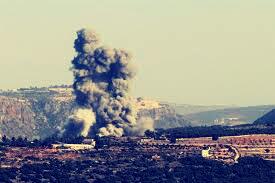
There is something here that speaks to me today in the current war situation. At times, we wonder if the Eternal is with us in this war that our enemies started in October of last year. Are we going to win it? That sounds like we have no Emunah. Is there something about us winning little by little and wiping out the kings of those nations? Maybe this is a historic precedent for today. Unfortunately, Hamas, backed by Iran, started this war. So perhaps it does not fit exactly into the picture of the original story back at the conquest of Canaan by the first Israelites! But there is something similar there. The leaders of the terror are being wiped out, and often through a direct miracle. Now Sinwar is trembling and trying to make a deal based on saving his life. He is shaking in his boots!

But also, we are moving ahead very slowly in recapturing the land that our enemies have claimed. We have to believe that we will do it and that there will be perhaps hornets and storms that help us do this. It seems overwhelming when they target Israel’s civilians and have had some success against us. Yet we have promises and must not lose our faith in the Divine Hand. 

Many are rightfully blaming the government and military leaders for not doing a better job, perhaps getting paid off to allow certain things. Yet, let us turn our attention to the Eternal and what He wants for Israel. What is the ultimate plan? Just to save the Jews? Or to save the Land for the majority of His people, who still have not returned? 

There are 10 tribes out there waiting to be brought home to the Land. Most of them are not aware of the fact of who they are. Many only feel something in their souls, that they belong here. 

And the land must be big enough for everyone to come home. Will these tribes come and help conquer? Unfortunately, most of Judah does not recognize Ephraim. 

Check out this prophecy:

“And it shall come to pass in that day, that YHWH shall set his hand again, the second time to acquire the remnant of his people which shall be left, from Assyria, and from Egypt, and from Pathros, and from Cush, and from Elam, and from Shinar, and from Hamath, and from the islands of the sea. And he shall lift up a banner to the nations, and shall assemble the outcasts of Israel, and gather together the dispersed of Judah from the four corners of the earth. And the envy of Ephraim shall depart, and the troublers of Judah shall be cut off; Ephraim will not envy Judah, and Judah will not trouble Ephraim: but they shall fly upon the shoulder of the Philistines towards the west; together shall they spoil the sons of the east; they shall lay their hand upon Edom and Moab, and the children of Ammon shall obey them. And YHWH will utterly destroy the tongue of the Egyptian sea; and with his mighty wind will he shake his hand over the river, and will smite it into seven streams, and make men go over dryshod. And there shall be a highway for the remnant of his people which will be left, from Assyria; like as it was to Israel in the day when he went up out of the land of Egypt.” (Isa 11:11-16)

Let us take hold of these promises. Judah will one day see us and grasp hold of us.

“And thou, son of man, take thee one stick, and write upon it, For Judah, and for the children of Israel, his companions. And take another stick, and write upon it, For Joseph, the stick of Ephraim and all the house of Israel, his companions. And join them one to another into one stick; and they shall become one in thy hand. … say unto them, Thus saith the Lord YHWH: Behold, I will take the stick of Joseph, which is in the hand of Ephraim, and the tribes of Israel his companions, and will put them with this, with the stick of Judah, and make them one stick, and they shall be one in my hand.” (Eze 37:16-17, 19)