
People for the most part want to be comfortable. Don’t stir the water. Leave me alone to my beliefs and let me live in my comfort zone!
But sometimes the hunger for something real, suppresses the boredom of expected melancholy of a mundane life. And those who break out of their comfort zone will probably live to regret it, if they do not find something better. The problem with those who defy boundaries and disappoint people’s expectations, is that people don’t like it. Especially when it comes to religion that may have been in the family for generations!
When I left Christianity, my family was disappointed. My father, may he rest in peace, asked: “How can you reject our Savior?” I was very defensive. Clearly, I wanted to do what was right. I had lived in that world for over 50 years and for several years before I separated from the church, I began to “see” the traps that were there to keep the members “safely in the fold.” The hierarchical set-up of the church was clear. The ones at the top were not questioned and the sheep, (the ones who sat in the pews from week to week) were their bread and butter, providing their financial and leadership platform of control.

My husband and I have just finished a book by Shulem Dean, an ex Hassid, Ultra Orthodox young man who defied gravity, so to speak and found his way out of the world of Orthodoxy, but in doing so, he lost his marriage, his 5 children, his community, and nearly ended up taking his life. The book, Those who Go, do not Return, is available online for purchase and a partial copy is available here. And he has many YouTube’s, one I have watched is here.
I lived and worked in several places where I could see what was going on in the leadership of that church. I may have been naive as a child and young adult, but when I began to see things, the wheels in my head started turning. During this time, I met a man in leadership who had worked in the higher echelons of that church, someone who was chastised for telling the truth. Furthermore, he had been ordered to write a recantation to a book he had written and pull it off the market–not because it was a lie, but because he had facts that might shake up the trust of the members and the organization could begin to totter from the top down! I also met another minister who was disfellowshipped for revealing some of what had gone on to change the church into something that the Vatican could accept. (For those who do not know, Vatican II was about aligning all the protestant churches and calling them back to the fold under certain specifications of fundamental belief.) These changes, which the retired and excommunicated pastor spoke about, happened during my lifetime. I knew things were not right. It was about then that I removed my membership from the church and stood alone in the wilderness, so to speak. A few friends and some of my family actually stepped a little ways out from the organization because of my discoveries. But that is as far as they went.
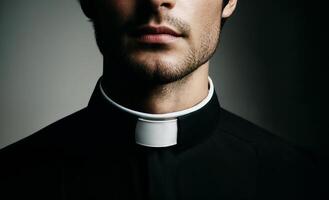
Brainwashing from birth happens in most families who are religious, and I believe it has to do with false concepts of the Most High God of the Universe. Fear of hellfire or separation from God based on lies trumped-up by most, if not all, ecclesiastic movements. Free thinking is not allowed, and people who cherish the comfortable above the real refuse to challenge the system. It is too dangerous! It is not easy to go against the crowd, for a lot of reasons.
After 15 years studying alone, I joined a liberal sect of Judaism. I knew that there were problems when I heard long sermons on the merits of women having the choice for abortions, even late-term abortions.I asked myself, what this had to do with the Dvar Torah on that particular Shabbat! I saw a lot of things that didn’t line up with the Bible and thought that maybe the more conservative and orthodox sects were more acceptable. I moved to Modern Orthodox. Now 15 years later, I see errors that make me tremble. The Bible is often not even known by many devout Jews. I often quote verses of Scripture and receive blank stares when I come up against things like reincarnation and the worship of the dead. (That is what I call it, even though they will deny it.) Let me explain. There is a common practice of visiting the tombs of the Sages and Prophets here in Israel. Many rabbis and even Cohanim take their prayer books and pray at these tombs. When asked why, they say they are asking the dead to mediate with God for them. I say that is praying to the dead! Is it not? Let me assert also that because of a loophole in what they have created for the Cohanim, they have special paths built for them so that they can worship in these cemeteries.
So I am back again, studying on my own. Wishing for the appearance of the Messiah and even a small group that thinks for themselves. After all, isn’t that what it’s all about? Wasn’t that what brought Abram into favor with the Eternal. Who led Abram? Yitsac? Yacov? I don’t see anything about them raising up synagogues or churches.
The history of all organized religions seems to take the same path. We see the first congregation, that of Israel at Sinai. How long did they stay on track? When they desired for formal worship they built a golden calf, and later the cults of the Midianites and Moabites who lived in the land. Apparently, the command to go up to the Holy Temple in Jerusalem three times a year was not enough for them. Then Babylon conquered the Jewish people and for 70 years they lived there. We do not know a lot about what happened there, but when they returned to build the second Temple, nothing was the same. There was a new leadership that began to rewrite Holy Writ. Talmud, Mishna Torah, Zohar. The literal Torah was not enough, and the Word of God, although sometimes spoke through prophets, soon left the people in the hands of the leadership which has carried on until this day. There were power struggles between the Hasmoneans, Pharisees, Sadducees, etc.
Then there was the appearance of Jesus, who apparently rebuked a lot of the customs and control that was taking place during his lifetime. Not much is really known of him, since most of the New Testament was introduced by Rome. The history we do have of the Essenes and others who purportedly followed him after his death, shows that none of them believed he was a god of any type. Many believed him to be the Messiah, and many believed in his resurrection and prayed for his soon return. But this movement turned into another deception. Many lost their lives at the hands of Rome. And Rome took over the religion and used it to destroy the Jews. And the Catholic Church became one of the most controlling and outstanding pyramid schemes in the history of the world.
Among the Jews during the Second Temple period, there was always vying for supremacy, even looking to Rome, who helped to establish the Pharisaic order. There is little known about the Sadducees who objected to the writings of the Rabbinic Sages and stood for the written Torah which was given by Moses. Yet we know that the Pharisees won over the vying factions of the day and then bartered off the Temple and Jerusalem to Rome. (Link). Research the history of how we got to where we are today. It may take some time and deep digging!
All organized religion assumes control of individual thinking and research. Churches provide research books. The Jews have many many books that define their authorized beliefs. Is it possible to find a group of people who embrace the Bible while at the same time giving freedom to others to think individually as they find and follow their own path? Is it dangerous to entertain such people as friends?
An interesting phenomenon seems to be true in Israel today. There are many Jews in Israel that are unaffiliated. Many are called secular by the more religious, yet many of these same “secular” Jews, have a deep understanding of eternal things and the Bible. How did this happen? When the Jews struggled to create a nation not even a century ago, it was through blood, sweat and tears. In this struggle, they found what it meant to work alone against an unbelieving world. They believed that Israel was given to the Jews and many laid down their lives to win back this land. The children and grandchildren of these people are some of the strongest, kindest and noblest of souls that I have met anywhere. Are they Anti-God just because they refuse to cow down to religion? I don’t see it that way!
Is it possible that this is the people that the Eternal is seeking? Those who have no one above them guiding their thinking? Is it possible that these non-religious people will hear a sound of a rustling wind in the willows that announce the entrance of the Messiah. There is still a small voice that speaks of the wonders of individual faith! Can it be that the Messiah will come from among these who listen to the ancient voice that once spoke to our Father Abraham?
“Forsake the foolish, and live; and go in the way of understanding.” (Pro 9:6)
“Flee out of the midst of Babylon, and deliver every man his soul: be not cut off in her iniquity; for this is the time of the LORD’S vengeance; he will render unto her a recompense.” (Jer 51:6)
B’Shalom,
Ariella of the Golan
Follow Take Hold the Tzitzit on WordPress.com


