Parsha Ve-Etchanan-Deut. 3:23-7:11

By Ariella Casey

Laws for Israel in The Land, and How Big is The Land?
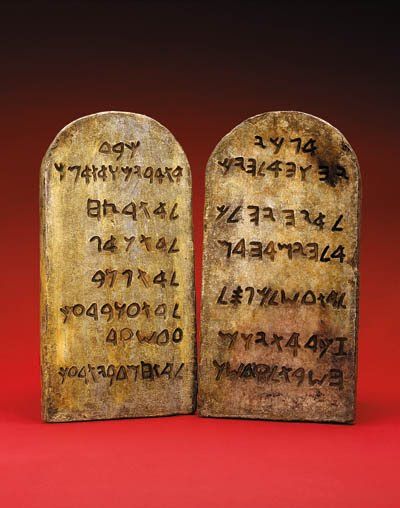
Moses, near the end of his life, speaks his final words to Israel while near the borders of the Promised Land.  He tells them several times that the laws that YHWH gave to him on Sinai, the laws other than the ten commandments, were given for when they entered The Land. 

So why have the Jews continued the tithing laws which were given for the Leviim and Cohenim  (Levites and Priests) and the Temple when there is no Temple? Why do Jews in Europe and America build Sukkot along the streets of foreign cities when the Feast of Tabernacles was to be observed “in The Land” as a memorial of the 40 years they spent outside  in the wilderness? Aren’t Jews outside of Israel, still in the wilderness? And why are synagogues built and dedicated as holy places, when the only true Holy Place was set apart by YHWH on the Sacred Mount in Israel? And, in case we don’t know, the Second Temple on Har HaBayit was desolated by the betrayal of the Jewish people, giving Jerusalem to Rome 2000 years ago! Har HaBayit is even now in the news, with the Israeli government siding with the nations to prevent Jews from praying there. Please stay abreast of what is happening! Keep praying!

The history of the Israelites over the last 3000 years has been, not what God had planned for us, but what our forefathers chose to do. Israel has been in and out of The Land; taken captive several times and then during prolonged captivity, they formulated new laws which would allow them to be able to remain a separate people and still remain in the nations to which they were scattered. But, these new laws were invented by their rabbis and now referred to as the “Oral Law.” These were anything BUT the original laws given to them through the hand of Moses.  

The laws given by the hand of Moses, which are claimed to be the basis for the “Oral Torah” were to be kept solely “in The Land.” Moses gave his final words with several references to this. At this time they were at the end of the 40 years wilderness sojourn. They had, most certainly, been practicing some of these laws, but they were laws that Moses clearly specified for when they were in The Land. Let’s view some of the verses that say this:

“And Jehovah spoke to you from the midst of the fire: ye heard the voice of the words, but ye saw no form; only ye heard a voice. And he declared to you his covenant, which he commanded you to do, the ten words; and he wrote them on two tables of stone. And Jehovah commanded me at that time to teach you statutes and ordinances, that ye might do them in The Land whither ye are passing over to possess it.” (Deu 4:12-14).

And Moses reminds the children of Israel that at Sinai they had asked that YHWH not speak to them, but that Moses should go and receive the laws from YHWH and then teach them. 

So he continues reminding them…

“And now, why should we die? for this great fire will consume us. If we hear the voice of Jehovah our God any more, we shall die. For who is there of all flesh, that has heard the voice of the living God speaking from the midst of the fire, as we, and has lived? Come thou near, and hear all that Jehovah our God will say; and speak thou to us all that Jehovah our God will speak to thee; and we will hear it, and do it. And Jehovah heard the voice of your words, when ye spoke to me; and Jehovah said unto me, I have heard the voice of the words of this people that have spoken to thee: they have well spoken all that they have spoken. Oh that there were such a heart in them, that they would fear me, and keep all my commandments continually, that it might be well with them and with their sons for ever! Go, say unto them, Get you into your tents again. But as for thee, stand thou here by me, and I will speak unto thee all the commandments, and the statutes, and the ordinances, which thou shalt teach them, that they may do them in The Land which I give them to possess it. Take heed then to do as Jehovah your God hath commanded you: turn not aside to the right hand or to the left. In all the way that Jehovah your God hath commanded you shall ye walk, that ye may live, and that it may be well with you, and that ye may prolong your days in The Land which ye shall possess.” (Deu 5:25-33).

Again we see that these laws were for “in The Land.”

“And these are the commandments, the statutes, and the ordinances, which Jehovah your God commanded to teach you, that ye may do them in The Land whereunto ye pass over to possess it, that thou may fear Jehovah thy God, to keep all his statutes and his commandments which I command thee, thou, and thy son, and thy son’s son, all the days of thy life; and that thy days may be prolonged. And thou shalt hear, Israel, and take heed to do them; that it may be well with thee, and that ye may increase greatly, as Jehovah the God of thy fathers hath said unto thee, in a land flowing with milk and honey.” (Deu 6:1-3).

Then Moses teaches the Shema, the laws referring to Mezuzot (writing the laws on the doorposts), and then the binding of the arm and the head-Tefillin (which refer symbolically to controlling our thoughts and actions). He goes on to challenge the Israelites to remain faithful and to not allow idolaters to live in The Land–that they not be seduced into idol worship. 

These instructions about keeping certain laws “in The Land” where Israel was to dwell from then onward were so that they would prosper and have long life on The Land and that The Land would flow with milk and honey. 

Alas, our history shows something else and we now await a full second Exodus by our exiles who desire to return and be among the people of Israel. 

May our brothers and sisters strive with all their strength to be among that group that come to settle The Land and push back the borders that all may inhabit The Land that was once promised to our father Abraham!

Here is our challenge! May we return and possess The Land in it’s fullness!

“Jehovah our God spoke unto us in Horeb, saying, Ye have stayed long enough in this mountain. Turn and take your journey, and go to the hill-country of the Amorites, and unto all the neighboring places in the plain, in the mountain, and in the lowland, and in the south, and by the seaside, The Land of the Canaanites, and Lebanon, unto the great river, the river Euphrates. Behold, I have set The Land before you: go in and possess The Land which Jehovah swore unto your fathers, to Abraham, to Isaac, and to Jacob, to give unto them and to their seed after them.” (Deu 1:6-8)

Thanks for reading. Please share, comment and follow!
Follow Take Hold the Tzitzit on WordPress.com

Parsha Koraj–6 Julio 2024

La Rebelión de Koraj (Números 16:1-18:32)

El libro de Números, ya sea que revele eventos dados en secuencia real o no, revela varias rebeliones del pueblo de Israel mientras aún estaba en el desierto. Están las quejas por la falta de agua y luego las murmuraciones pidiendo alimento “sustancial” además del maná; están las dudas de Mirian sobre la autoridad de Moisés y su posterior separación del campamento durante siete días. Está el hombre que claramente recogió leña para encender un fuego en sábado. Luego sigue la historia del malvado informe de los 10 espías y la consiguiente rebelión. Ahora asistimos a otro levantamiento y revuelta catastrófica. Varios levitas, primos de los hijos de Aarón, se sienten ofendidos por ser excluidos del sacerdocio, y vemos cómo esto nuevamente conmueve a todo el pueblo de Israel. Vemos la forma en que YHWH maneja la rebelión, destruyendo por completo a quienes instigaron el caos y a sus seguidores; Koraj, Datán y Abiram y 250 más que eran líderes de la congregación. Después, comienza una plaga entre la gente y 14.700 más son destruidos.

Al examinar los relatos de estas rebeliones escritos uno tras otro, veo que Israel tiene problemas para seguir su liderazgo divinamente designado. Uno se preguntaría cómo alguien podría involucrarse en una revuelta después de tantos años de esclavitud en Egipto, donde, bajo el látigo, recibieron órdenes de malvados capataces y las siguieron con precisión. ¿Donde si desobedecían, el resultado era la muerte? Cuando, después de una salvación milagrosa de la mano de Faraón, se relajan en una atmósfera de misericordia y protección de Dios y son guiados por su líder designado, Moisés, quien estuvo dispuesto a morir por el pueblo, adoptan la actitud de mimados, niños con derechos (al igual que la sociedad hoy en día) y se rebelan ante cualquier cosa que suponen que ha pisoteado sus derechos. Ahora rechazan la disciplina, son un pueblo testarudo (Exo 32:9). Lo que los ha hecho así es un misterio y continúa en nuestro mundo hoy. ¿Por qué alguien se rebelaría cuando todo está a tu favor? Fueron liberados de Faraón en el Mar Rojo, tenían alimento provisto diariamente, tuvieron protección del sol y del frío por una nube que les sigue en sus viajes, tuvieron un lugar de adoración ya preparado. Se les da protección contra Egipto y las otras naciones. Quizás lo único que no tuvieron era trabajo duro. Quizás ese sea el problema o parte de él. Cuando eran esclavos, no tenían tiempo para pensar, ni para quejarse y quejarse. Quizás esta sea la razón del mandamiento del sábado que declara: “seis días trabajarás”, que puede ser el secreto del verdadero descanso. Tenían demasiado tiempo libre y lo emplearon dudando y quejándose en lugar de construir su nueva sociedad. Las malas decisiones conducen al desastre.

En la historia de hoy, figuren Koraj, un Levita y sus amigos, Datán y Abiram y On.

“Y Koraj, hijo de Izhar, hijo de Coat, hijo de Leví, y Datán y Abiram, hijos de Eliab, y On, hijo de Pelet, hijos de Rubén, tomaron hombres: y se levantaron delante de Moisés. , con algunos de los hijos de Israel, doscientos cincuenta príncipes de la asamblea, famosos en la congregación, varones de renombre:” (Números 16:1-2)

“Y se juntaron contra Moisés y contra Aarón, y les dijeron: Vosotros tomáis demasiado sobre vosotros, siendo santa toda la congregación, cada uno de ellos, y YHWH está en medio de ellos; por tanto, os levantéis sobre los congregación de YHWH? Y cuando Moisés lo oyó, cayó sobre su rostro:” (Números 16:3-4)

La rebelión se abordó rápidamente, resultaba en la muerte no sólo de Koraj y sus dos amigos, sino también de los otros 250 a quienes se les ordenó quemar incienso en braseros. El terreno mismo se abrió y se tragó a los tres cabecillas y todo lo que poseían, incluidas esposas, hijos y pertenencias. Los 250 partidarios fueron consumidos por un fuego de YHWH.

Es fácil decir que tal vez el castigo fue demasiado duro. ¿Cómo afrontaríamos esto hoy, cuando casi todos los países han eliminado la pena de muerte? Antes, la traición solía conllevar la pena de muerte. ¡Quizás por eso el mundo se ha vuelto loco hoy! Seamos amables con los que se rebelan, al fin y al cabo, ¡sus sentimientos también importan más que la paz de la sociedad! Pero, afortunadamente, esta no fue la forma en que Dios manejó las cosas; tal vez nos hemos desviado mucho de la manera en que Dios obra en este mundo.

Lo que realmente sorprende de esta historia, es que el resto del pueblo, con su historia de rebelión, es decir, el maná, el informe de los espías y la rebelión de Koraj, protagonizaron una revuelta, alegando que Moisés y Aarón habían matado al pueblo de YHWH.

“Pero al día siguiente toda la congregación de los hijos de Israel murmuró contra Moisés y contra Aarón, diciendo: Habéis matado al pueblo de YHWH. Y aconteció que cuando la congregación se reunió contra Moisés y contra Aarón, miraron hacia el tabernáculo de reunión; y he aquí, la nube lo cubrió, y apareció la gloria de YHWH.” (Números 16:41-42)

¿Cómo podría alguien creer que el asesinato de los tres cabecillas y sus 250 cohortes fue una maniobra inventada por Moisés y Aarón para mantener su liderazgo? ¿Estaba la gente completamente loca? ¿Cómo habría abierto Moisés la tierra y se habría tragado a estos hombres y sus familias? ¿Qué tal el incendio que vino y quemó el 250? De donde vino eso? ¿Creían que Moisés era un mago y que al rebelarse podrían obtener lo que querían y reemplazarlo?

En ese momento comenzó una plaga entre el pueblo y Moisés ordenó a Aarón que interviniera, saliendo entre el pueblo con su brasero e incienso. Y la plaga se detuvo después de que 14.700 personas murieran.

Para mostrar finalmente el liderazgo de Aarón el Cohen Gadol y sus descendientes directos, YHWH da una señal. Le dice a Moisés:

“Habla a los hijos de Israel, y toma de cada uno de ellos una vara según las casas de sus padres, y de todos sus príncipes, según las casas de sus padres, doce varas; escribe el nombre de cada uno en su vara. Y tú escribirás el nombre de Aarón en la vara de Leví; porque una vara será para los jefes de las casas de sus padres, y las guardarás en el tabernáculo de reunión delante del testimonio, donde me reuniré contigo. Y sucederá que florecerá la vara del hombre que yo escoja, y haré cesar de mí las murmuraciones de los hijos de Israel con que murmuran contra vosotros. (Números 17:2-5)
“Y aconteció que al día siguiente Moisés entró en el tabernáculo del testimonio; y he aquí, la vara de Aarón para la casa de Leví reverdeció, y produjo renuevos, y floreció en flores, y dio almendras. … Y YHWH dijo a Moisés: Trae de nuevo la vara de Aarón delante del testimonio, para que sea guardada como señal contra los rebeldes; y quitarás de mí sus murmuraciones, para que no mueran.” (Números 17: 8, 10).

¿Pero qué vemos hoy? No tenemos un templo santo, solo tenemos sinagogas. La mayoría de los judíos religiosos no han aceptado realmente la Torá de Moisés, sino su propia sustitución, a la que llaman Torá Oral (o tora shebal peh). ¿No es esto nuevamente un movimiento similar al de Koraj para destronar a Moisés y al Dios del Universo? Creo que todo el caso de persecución de los judíos desde la destrucción del Templo tiene que ver con una Torá Oral erudita babilónica y un rechazo de la única religión verdadera establecida en el Sinaí. Pero pocos saben lo que pasó en Babilonia y a pocos, si es que a alguno, les importa. ¡Quizás necesitemos algún terremoto para abrir la tierra nuevamente!

Parsha Korach — 6 July 2024

The Rebellion of Korach (Numbers 16:1-18:32)

The book of Numbers, whether it reveals events given in actual sequence or not, reveals several rebellions of the people of Israel while still in the desert. There is the complaining about lack of water, then murmuring for “substantial” food other than the manna; there is Miriam’s doubting of Moses’ authority and her subsequent seven-day separation from the camp. There is the man who clearly gathered wood to build a fire on the Sabbath. Then follows the story of the evil report of the 10 spies and the consequent rebellion. Now we see another catastrophic uprising and revolt. Several Levites, cousins of Aaron’s sons, are offended that they should be excluded from the priesthood, and we see how this again stirs up the entire people of Israel. We see the way YHWH handles the rebellion, completely destroying those who instigated the chaos and their followers; Korach, Dathan and Abiram and 250 more who were leading men of the congregation. Afterward, a plague starts among the people and 14,700 more are destroyed. 

As I examine the accounts of these rebellions written one after the other, I see that Israel has a problem following their divinely-appointed leadership. One would wonder how any could become involved in revolt after so many years of slavery in Egypt, where under the whip, they took orders from evil task masters, and followed them precisely? Where, if they disobeyed, the result was death?  When, after a miraculous salvation from the hand of Pharaoh, they relax in an atmosphere of God’s mercy and protection and are led by His designated leader, Moses, who himself was willing to die for the people, they take on the attitude of spoiled, entitled children (much like society today) and rebel at whatever they assume has trampled their rights. They now refuse discipline, they are a stiff-necked people. What has made them this way is a mystery and continues in our world today. Why would anyone rebel when you have everything going for you? You were delivered from Pharaoh at the Sea of Reeds, you have food provided daily, you have protection from the sun and the cold by a cloud that follows you on your travels, you have a ready-made place of worship. You are given protection from Egypt and the other nations. Perhaps the only thing you do not have is hard labor. Maybe that is the problem or part of it. When they were slaves, they had no time to think, no time to grumble and complain. Maybe this is the reason for the Sabbath commandment that declares: “six days you shall labor,” which may be the secret of real rest. They had too much time on their hands and spent that time in doubting and complaining rather than building up their society. Bad choices lead to disaster. 

In today’s story, Korach a cousin of Aaron, and his two friends, Dathan and Abiram and On who were Reubenites, rebel.

“Now Korach, the son of Izhar, the son of Kohath, the son of Levi, and Dathan and Abiram, the sons of Eliab, and On, the son of Peleth, sons of Reuben, took men: And they rose up before Moses, with certain of the children of Israel, two hundred and fifty princes of the assembly, famous in the congregation, men of renown:” (Num 16:1-2)

“And they gathered themselves together against Moses and against Aaron, and said unto them, Ye take too much upon you, seeing all the congregation are holy, every one of them, and YHWH is among them: wherefore then lift ye up yourselves above the congregation of YHWH? And when Moses heard it, he fell upon his face:” (Num 16:3-4)

The rebellion is swiftly dealt with, resulting in the death of not only Korach and his two friends, but the 250 others who were ordered to burn incense in fire pans. The ground itself opened up and swallowed the three ringleaders and all that they owned, including wives,, children and belongings. The 250 supporters were consumed by a fire from YHWH. 

It is easy to say that maybe the punishment was too harsh. How would we deal with it today, when almost every country has done away with the death penalty? Treason used to carry the death penalty. Maybe this is why the world has gone mad today! Let’s be kind to those who rebel, after all, their feelings matter too! But this was not the way God handled things–perhaps we’ve wandered a long way from God’s ways of dealing in this world. 

What really is surprising about this story, is that the rest of the people, with their history of rebelling, i.e., the manna, the report of the spies, and the rebellion of Korach, they staged a revolt, claiming that Moses and Aaron had killed the people of YHWH. 

“But on the morrow all the congregation of the children of Israel murmured against Moses and against Aaron, saying, Ye have killed the people of YHWH. And it came to pass, when the congregation was gathered against Moses and against Aaron, that they looked toward the tabernacle of the congregation: and, behold, the cloud covered it, and the glory of YHWH appeared.” (Num 16:41-42)

How could anyone believe that the killing of the three ringleaders and their 250 cohorts was a maneuver trumped-up by Moses and Aaron to maintain their leadership? Were the people completely mad? How would Moses have made the ground open and swallow these ringleaders? How about the fire that came and burned up the 250? Where did that come from? Did they think Moses was a magician and that by rebelling they could get what they wanted and replace him? 

At this point, a plague began among the people and Moses commanded Aaron to intervene, going out among the people with his fire pan and incense. And the plague stopped after 14,700 had died. 

To finally show the leadership of Aaron the Cohen Gadol and his direct descendants, YHWH gives a sign. He tells Moses:

“Speak unto the children of Israel, and take of every one of them a rod according to the house of their fathers, of all their princes according to the house of their fathers twelve rods: write thou every man’s name upon his rod. And thou shalt write Aaron’s name upon the rod of Levi: for one rod shall be for the head of the house of their fathers. And thou shalt lay them up in the tabernacle of the congregation before the testimony, where I will meet with you. And it shall come to pass, that the man’s rod, whom I shall choose, shall blossom: and I will make to cease from me the murmurings of the children of Israel, whereby they murmur against you.” (Num 17:2-5)

“And it came to pass, that on the morrow Moses went into the tabernacle of witness; and, behold, the rod of Aaron for the house of Levi was budded, and brought forth buds, and bloomed blossoms, and yielded almonds. … And the LORD said unto Moses, Bring Aaron’s rod again before the testimony, to be kept for a token against the rebels; and thou shalt quite take away their murmurings from me, that they die not.” (Num 17: 8, 10).

But what do we see today? We have no holy temple, we have only synagogues. The majority of religious Jews have not truly accepted the Torah of Moses, but rather their own substitution, which they call Torah. Is this not again a Korach like movement to dethrone Moses and the God of the Universe? I believe the whole case of persecution of Jews ever since the destruction of the Temple has to do with a Babylonian learned Oral Torah and a rejection of the one true religion established at Sinai. But few know about what happened in Babylon and few, if any, care. Perhaps we need some earthquakes to open the ground again!

Parasha Shlaj

30 June 2024

Números 13:1-15:41

La Parashá Shlaj comienza con una orden de YHWH a Moisés de enviar líderes de las tribus a espiar la tierra de Canaán. Observamos que estos son líderes del pueblo de Israel. Se dan los nombres de estos líderes tribales. Estos incluyen a Caleb, hijo de Jefuná, y Oseas, hijo de Nun. Menciono estos dos por su importancia en lo que sucede en la historia después de los 40 días en Canaán. Antes de emprender su viaje, Moisés cambia el nombre de Oseas a Yehoshua.
Este detalle es importante. Con el nuevo nombre, el significado cambia de “salvación” a “YHWH salva”.

¿Por qué se cambió el nombre de Oseas en ese momento?

*Oseas había sido un niño bajo el cuidado de Moisés, y ya era hora de que creciera.
*El significado del cambio de nombre claramente puso la responsabilidad de la salvación en YHWH, y no en Yehoshua.
*Parece que Yehoshua era el emisario personal de Moisés, YHWH quería señalarlo como líder y usar su nombre como mensaje a Israel.

Después de 40 días, los espías regresaron llevando un enorme Eshcol (racimo) de uvas que era tan pesado que tuvo que ser transportado en un poste entre dos de los hombres. Pero no todo es como se esperaba. Diez de los 12 llevan un informe alarmante. Su informe conmueve a la gente acerca de los gigantes de la tierra. Afirman que se les aparecieron a ellos mismos y a los que vivían en la tierra como “saltamontes”. Esta declaración muestra su falta de fe en Aquel que los envió. Muestra su idea de que ellos mismos estaban a cargo y que Dios no era parte de este viaje. Si su líder se llamaba Yehoshua (YHWH salva), entonces ¿de qué tenían miedo?

En ese momento Yehoshua y Caleb se levantaron, tratando de detener la locura.

“Y Yehoshua hijo de Nun y Caleb hijo de Jefone, que eran de los que reconocían la tierra, rasgaron sus vestidos, y hablaron a toda la congregación de los hijos de Israel, diciendo: La tierra por la que pasamos para reconocerla, es una tierra muy buena. Si YHWH se agrada de nosotros, entonces nos traerá a esta tierra y nos la dará como tierra que mana leche y miel; pero no os rebeléis contra YHWH, ni temáis. el pueblo de la tierra; porque ellos son pan para nosotros; su defensa ha sido quitada de ellos, y YHWH está con nosotros; no les temáis.” (Números 14:6-9).

Note que Yehoshua declaró que la defensa (protección) de esos enemigos (los cananeos, los anakim, los nefilim, etc.) les había sido quitada.

De hecho, ¿por qué tenemos miedo hoy cuando los descendientes de este mismo pueblo intentan destruirnos? ¿Dónde está Yehoshua? ¿No tenemos una promesa que nos mantendrá a salvo? ¿Somos el Pueblo de Alianza o no? Cuando vemos incendios que llegan pero no nos tocan, cuando vemos bombas que caen en campos abiertos y tan pocas han muerto, ¿por qué no podemos creer que se les ha quitado la defensa de Hamás y Hezbolá?

Sabemos que el pueblo creyó el malvado informe de los 10 espías y estaban listos para apedrear a Yehoshua y Caleb. De repente, la presencia de Dios descendió sobre el Mishkán para mostrar su desaprobación por su falta de fe y el deseo del pueblo de matar a aquellos que permanecían en fe para la misión que su Dios había ordenado. Y los diez cabecillas de la rebelión, los espías que llevaban un mal informe, fueron heridos por una plaga de YHWH. Recordemos que estos eran los estimados líderes de las tribus. Sólo Yehoshua y Caleb se salvaron. En cuanto al resto del pueblo que murmuraba y se quejaba, estaban destinados a morir en el desierto, sólo sus hijos pequeños menores de 20 años subirían a poseer la tierra.

Y nuevamente, después de que Moisés les dijo que era inútil, un grupo de ellos se rebeló y se dirigió a la tierra de Canaán y fueron exterminados sumariamente por los amalakitas.

La parashá continúa con ofrendas por diferentes cosas, que no discutiremos aquí, pero luego habla de blasfemia y rebelión (capítulo 15:30-31) que se castiga con la muerte, y luego presenta el ejemplo del hombre que recogía leña en sábado. . Si se ve en contexto, el motivo de la lapidación no fue una obra accidental que alguien hizo, tiene que ver con la rebelión contra lo que el hombre sabía que estaba prohibido. Fue sacado y apedreado según la palabra de YHWH. Muchas veces los estudiantes de la Biblia no miran el contexto. En este caso fue claramente un acto de rebelión, ya que sigue el mandato de dar muerte a quienes blasfeman y se rebelan.

Los últimos versos de la parashá terminan con la orden de usar Tzitzit, un hilo azul en las esquinas de la prenda. Tienen que ver con aprender a seguir a YHWH y no a las intenciones del corazón:

“Habla a los hijos de Israel, y diles que se hagan flecos en las cenefas de sus vestidos por sus generaciones, y que pongan en la cenefa de cada cenefa un cordón de azul: y os será por flecos. , para que miréis y os acordéis de todos los mandamientos de YHWH, y los cumpláis, y no sigáis vuestro propio corazón ni vuestros propios ojos, después de lo cual os prostituís; para que os acordéis y cumpláis todos mis mandamientos, y seáis santos para vuestro Dios.” (Números 15:38-40)

Parsha Shelach

Shabbat 30 June 2024

Numbers 13:1-15:41

Parsha Shelach starts with a command from YHWH to Moses to send out leaders of the tribes to spy out the land of Canaan. We note that these are leaders of the people of Israel. The names of these tribal leaders are given. These include Caleb, son of Jephunah and Hosea son of Nun. I mention these two because of their importance in what happens in the story after the 40 days in Canaan. Before they leave on their journey, Moses changes the name of Hosea to Yehoshua. 

This detail is important. With the new name, the meaning changes from “salvation” to “YHWH saves”.

Why was Hosea’s name changed at this time? 

*Hosea had been a lad under Moses care, and it was time for him to grow up. 

*The significance of the change of name clearly put the responsibility for salvation on YHWH, and not on Yehoshua.

*It appears that Yehoshua was Moses personal emissary, YHWH wanted to single him out as leader and to use his name as a message to Israel.

After 40 days, the spies returned, carrying a huge Eshcol (Cluster) of grapes that was so heavy it had to be carried on a pole between two of the men. But all is not as expected. Ten of the 12 carry an alarming report. Their report stirs up the people about the giants in the land. They claim that they appeared as “grasshoppers” to themselves and to those who lived in the land. This declaration shows their lack of faith in the One who sent them. It shows their idea that they themselves were in charge and that God was not a part of this trip. If their leader was named Yehoshua (YHWH saves), then what were they afraid of? 

At this point Yehoshua and Caleb stood up, trying to stop the madness.

“And Yehoshua the son of Nun and Caleb the son of Jephunneh, who were of them that spied out the land, rent their clothes: and they spake unto all the congregation of the children of Israel, saying, The land, which we passed through to spy it out, is an exceeding good land. If YHWH delight in us, then he will bring us into this land, and give it unto us; a land which flows with milk and honey. Only rebel not against YHWH, neither fear ye the people of the land; for they are bread for us: their defense is removed from over them, and YHWH is with us: fear them not.” (Num 14:6-9).

Notice that Yehoshua declared that the defense (protection) of those enemies, (the Canaanites, the Anakim, the Nephilim, etc), had been removed from them.

In fact, why are we afraid today when descendants of these same people try to destroy us? Where is Yehoshua? Do we not have a promise that will keep us safe? Are we the Covenant People or not? When we see fires that come but do not touch us, when we see bombs that land in open fields and so few have actually been killed, why can we not believe that the Defense of Hamas and Hezbollah has been removed from them?

We know that the people believed the 10 spies evil report and were ready to stone Yehoshua and Caleb. Suddenly, the presence of God descended upon the Mishkan to show His disapproval of their lack of faith and the people’s desire to kill those who stood in faith for the mission which their God had ordained! And the ten ringleaders of the rebellion, the spies who carried an evil report, were smitten by a plague from YHWH. Let’s remember that these were the esteemed leaders of the tribes. Only Yehoshua and Caleb were spared. As to the rest of the people who murmured and complained, they were destined to die in the wilderness, only their young children under 20 years of age would go up to possess the land. 

And again, after Moses told them it was futile, a group of them rebelled and headed off to the land of Canaan and were summarily wiped out by the Amalakites.

The Parsha continues with offerings for different things, which we will not discuss here, but then speaks of blasphemy and rebellion (chapter15:30-31) which is punishable by death, and then presents the example of the man who gathered sticks on the Sabbath. If it is seen in context, the reason for the stoning was not an accidental work that someone did, it has to do with rebellion against what the man knew was forbidden. He was taken out and stoned according to the word of YHWH. Many times Bible students do not look at context. In this case it was clearly an act of rebellion, for it follows the command to put to death those who blaspheme and rebel. 

The last few verses of the Parsha end with the command to wear Tzitzit, a strand of blue on the corners of the garment. They have to do with learning to follow YHWH and not the intentions of the heart:

“Speak unto the children of Israel, and bid them that they make them fringes in the borders of their garments throughout their generations, and that they put upon the fringe of each border a cord of blue: and it shall be unto you for a fringe, that ye may look upon it, and remember all the commandments of YHWH, and do them; and that ye follow not after your own heart and your own eyes, after which ye use to play the harlot; that ye may remember and do all my commandments, and be holy unto your God.” (Num 15:38-40)