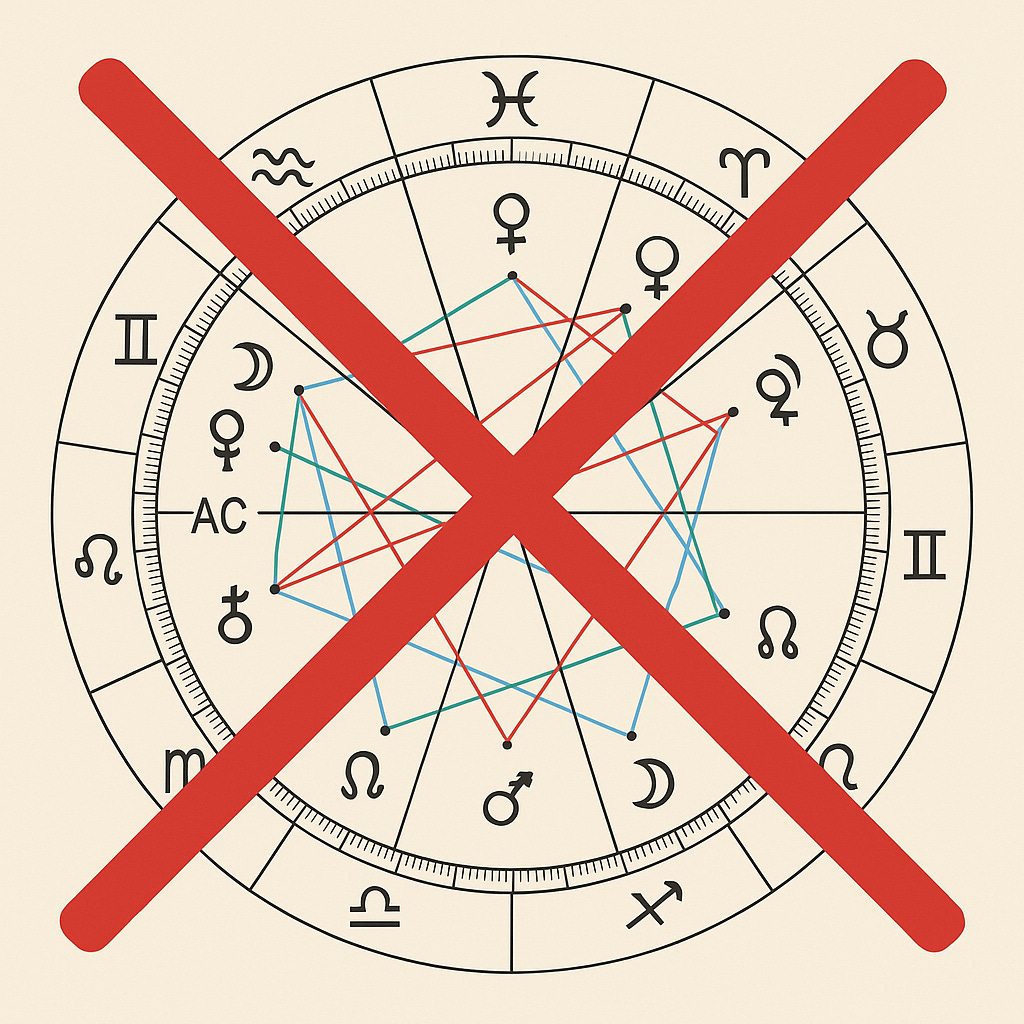
La astrología judía kosher dice que debemos aprender sobre la alineación de los planetas y cómo superar nuestras debilidades y moderar nuestras fortalezas desbordantes. Al menos eso es lo que enseñaban ayer, cuando asistí a una reunión de mujeres de Rosh Jodesh en nuestra ciudad de Israel. Una de ellas dijo: «Los planetas te bendecirán».
Todas las alarmas de mi cabeza se dispararon y supe que o iba a vomitar o a irme. Quería decir: «Eso es brujería y tú eres una bruja».
Pero me quedé sentada en silencio y terminé mi jarrón decorativo, en cuya elaboración la profesora de manualidades nos había ayudado generosamente. Había una docena de mujeres allí, y la mayoría coincidía con el tema que planteaba la instructora. Me asombró el nivel de adoctrinamiento que presencié, pero me di cuenta de que todo esto se ha creído durante mucho tiempo. ¿Pero eso lo justifica? ¿Acaso algo que se cree desde hace mucho tiempo lo hace más cierto? ¿Es que hoy en día no existen pensadores de verdad?
Esta astróloga judía (llamémosla Rivka) decía cosas como: «Estamos por encima del calendario, y nos corresponde a nosotros establecer la fecha de Rosh Jodesh». ¿Qué dice la Biblia al respecto? ¿Quién ordenó las señales en el cielo para guiarnos?
Y dijo Dios: Haya lumbreras en la expansión de los cielos para separar el día de la noche; y sirvan de señales.Y para citasY durante días y años.
“Dijo Dios: «Haya lumbreras en la expansión del cielo para separar el día de la noche; servirán de señales para los tiempos señalados: los días y los años;»Génesis 1:14, traducción JPS).
Nótese la palabra hebrea «moedim», resaltada en el versículo anterior. Esta palabra se refiere a las fechas fijas que el Creador estableció para el pueblo de Israel. «Fechas fijas» es otra forma de referirse a las fiestas bíblicas. «Moed» (parte de la palabra moedim) se usa para las reuniones sagradas. Por ejemplo, «ohel moed» significa «tienda de reunión», en referencia al lugar donde se celebraban estas reuniones. Originalmente, teníamos el Mishkán (tabernáculo o tienda de reunión) que acompañó a los israelitas en el desierto y que Josué erigió en la tierra después de cruzar el Jordán.
¿Acaso el pueblo judío puede decidir cuándo se celebran las fiestas? ¿Quién tiene prioridad? ¿Quién estableció los signos para marcar el año? Entonces, ¿podemos cambiar lo que Dios ha dicho? ¿Quién tiene prioridad, después de todo? ¿Sigue siendo Dios Dios o nos hemos puesto nosotros mismos en el trono?
¿Acaso el Creador otorga a los judíos el derecho de cambiar sus leyes? O, más específicamente, ¿puede el Pueblo Elegido ser santo si no obedece el Pacto?
Y ahora, si en verdad obedecéis mi voz y guardáis mi pacto, seréis una posesión especial entre todos los pueblos, incluso entre toda la tierra.
“Ahora bien, si me obedecéis fielmente y guardáis mi pacto, seréis mi tesoro preciado entre todos los pueblos. En verdad, toda la tierra es mía.”Éxodo 19:5 Traducción JPS).
¿De qué pacto estamos hablando? El pacto del que se habla en la Torá es la Torá misma, y esta fue dada a nuestros antepasados: Abraham, Isaac y Jacob. ¡Y aun así, la humanidad pretende alterar lo que fue establecido como una bendición para nosotros!
¿Cómo es posible que “los planetas te bendigan”? ¿Cómo puede un objeto inanimado, ya sea una piedra o un planeta, tener la capacidad de bendecirnos? ¿Acaso están elevados al nivel de dioses?
Hace poco conversaba con una mujer sobre las bombas y la guerra en Israel. Le comenté que alguien sale a la calle incluso cuando suenan las alarmas. Me dijo que los judíos tienen que protegerse. ¿Significa eso que Dios ya no nos protege? Es cierto que el sentido común nos dice que debemos protegernos en estos tiempos, pero ¿acaso nuestra protección depende únicamente de nosotros mismos? ¿Es posible que, al ignorar las reglas que el Creador estableció desde el principio, sintamos que este es nuestro universo y que la protección de Dios es mínima o inexistente?
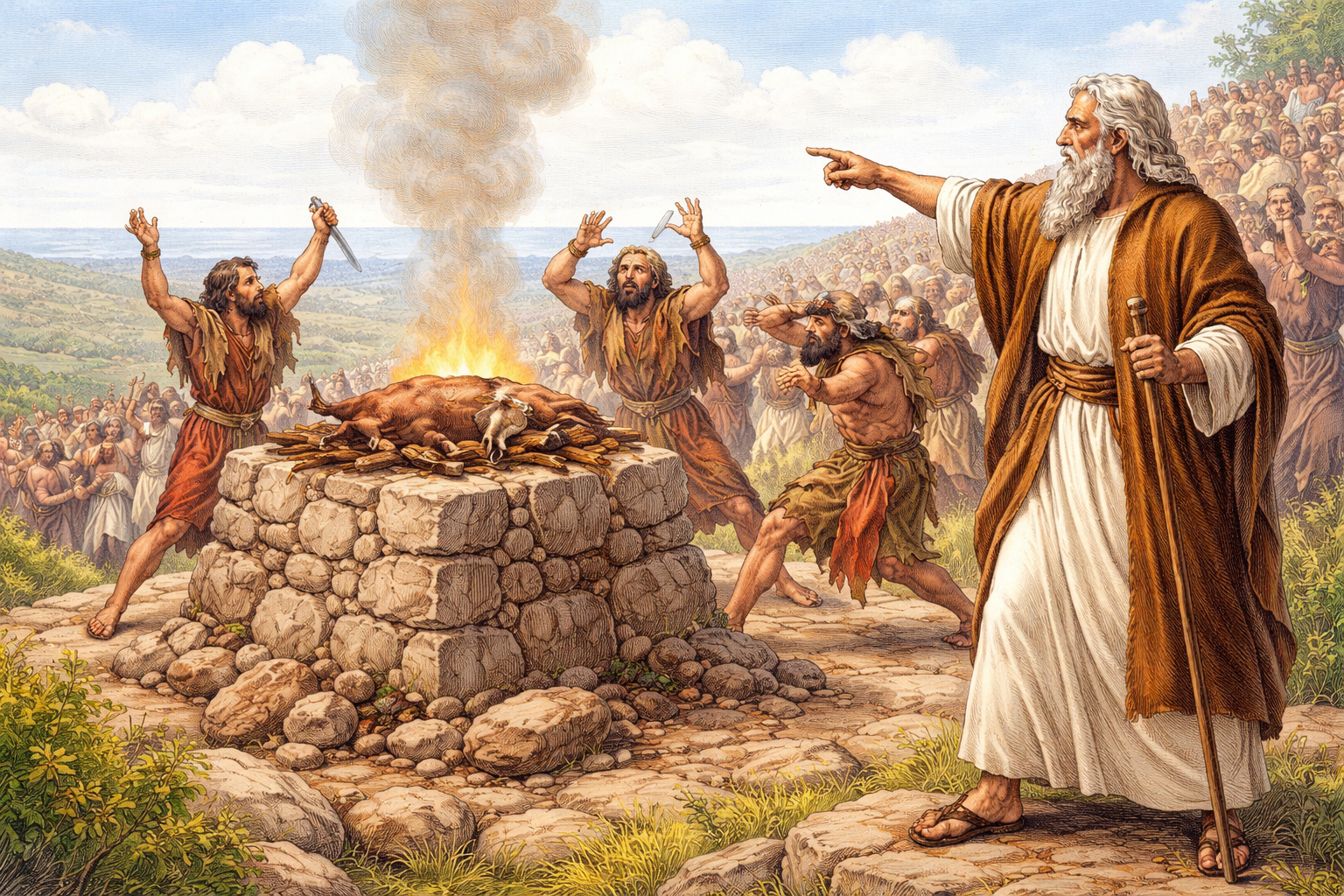
¿Acaso Dios ha emprendido un largo viaje y, por alguna razón, no nos escucha? Esto me recuerda al profeta Elías en el Monte Carmelo (un lugar a un par de horas de aquí). ¿Qué les dijo a los hombres cuando los profetas de Baal danzaban alrededor de su altar?
“Cuando llegó el mediodía, Elías se burló de ellos, diciendo: ‘¡Gritad más fuerte! Después de todo, es un dios. Pero puede que esté conversando, puede que esté detenido, o puede que esté de viaje, o tal vez esté dormido y despierte’”.1 Reyes 18:27, Traducción JPS). Lee la historia completa en 1 Reyes.
Elías desafió al pueblo de Israel con estas palabras:
“¿Hasta cuándo vacilaréis entre dos opiniones? Si Jehová es Dios, seguidle; pero si Baal, seguidle a él.”Ibíd., versículo 2
¿Cómo discernimos la verdad? Mediante una comprensión individual de las sencillas palabras de la Torá. A menudo, la ornamentación de nuestros sabios, tanto modernos como antiguos, nubla la verdad. ¿Podrían ser, en realidad, profetas de Baal? ¿Los mismos por los que Elías reprendió al pueblo?
¡Volvamos al estudio de lo que los profetas bíblicos nos transmitieron sin añadir ni quitar nada!
Kosher Jewish Astrology says that we must learn about the alignment of the planets and how to overcome our weaknesses and tone down our wild strengths. At least that is what they were teaching yesterday, when I went to a Rosh Hodesh gathering of women in our town in Israel. The speaker actually said: “The planets will bless you.”
All the red alerts in my head started going off and I knew I was either going to vomit or walk out. I wanted to say: “That’s witchcraft and you are a witch.”
But I sat there quietly and finished my decorative vase that the craft teacher generously helped us with. There were about a dozen women there and most agreed happily with the theme of the woman who was teaching. I was astounded at the level of brainwashing that I saw but I realized that all of this has been believed for a very long time. But does that make it right? And does something that is believed for a long time make it more right? Do real thinkers not exist today?
This Jewish Astrologist (Let’s call her Diva) said things like, “we are above the calendar, and it is up to us to establish the date for Rosh Hodesh.” So what does the Bible say about that? Who ordained the signs in the heavens to guide us?
“God said, “Let there be lights in the expanse of the sky to separate day from night; they shall serve as signs for the set times—the days and the years;” (Genesis 1:14, JPS translation).
Notice the word “moedim” in Hebrew, highlighted in the verse above. This word refers to the set times that the Creator established for the people of Israel. “Set times” is another way to express the Biblical Festivals. “Moed” (part of the word moedim) is used for sacred meetings. The “ohel moed” for example means “tent of meeting” referring to where these gatherings were held. Originally we had the Mishkan (tabernacle or tent of meeting) that traveled with the Israelites in the wilderness and was set up by Joshua in the land after they crossed the Jordan.
So the Jewish people can decide when the festivals occur? Who is on first? Who appointed the signs to frame the year for us? So now then, can we change what God has said? Who is on first anyway? Is God still God or do we place ourselves on the throne?
Does the Creator give the Jews the right to change His laws? Or more specifically, can the Chosen People be Holy if they do not obey the Covenant?
“Now then, if you will obey Me faithfully and keep My covenant, you shall be My treasured possession among all the peoples. Indeed, all the earth is Mine.” (Exodus 19:5 JPS translation).
So which covenant are we talking about? The Covenant that was spoken of in the Torah is the Torah itself and this was given to our forefathers; Abraham, Isaac and Jacob. And yet mankind likes to alter what was set up as a blessing for us!
How is it that “the planets will bless you?” How can an inanimate object, be it a stone or a planet have the ability to bless us? Are these somehow elevated to the level of gods?
I was recently chatting with a woman about the bombs and the ongoing war in Israel. I mentioned someone who goes out even when the alerts go off. She told me that the Jews have to protect themselves. Does that mean that the Almighty no longer protects us? It is true that common sense dictates that we exercise a bit of self preservation in these times, but is our protection only in our own hands? Is it possible that by ignoring the rules that the Creator set up in the very beginning, we somehow feel that this is our universe and that there is little if any protection coming from Hashem?
Has God taken a long journey and somehow does not hear us? This reminds me of the prophet Elijah on Mount Carmel (a place a couple of hours from us here). What did he tell the people when the prophets of Baal were dancing around their altar?
“When noon came, Elijah mocked them, saying, ‘Shout louder! After all, he is a god. But he may be in conversation, he may be detained, or he may be on a journey, or perhaps he is asleep and will wake up.’” (1 Kings 18:27, JPS Translation). Read the entire story in 1 Kings.
Elijah challenged the people of Israel with these words:
“‘How long halt ye between two opinions? If YHVH be God, follow Him; but if Baal, follow him.’” (Ibid, verse 2
How do we discern truth? By having an individual understanding of the simple words of Torah. How often does the embellishment provided by our modern and ancient sages cloud the truth?–Could they actually be prophets of Baal? The same ones Elijah rebuked the people for?
Let’s get back to the study of what the Biblical prophets handed down to us without adding or subtracting!
I often hear that Satan is in charge of the world, that Satan is the god of this world and that all the trouble that comes against us is because of Satan and his followers, but to what extent is this true? And if it is, perhaps it is for a good cause and not as is suggested.
The concept of the New Testament or Christian Bible is that Satan is a power opposed to YHVH. That Satan’s power is immense for evil, that he rebelled and fell from heaven as the archenemy of God—yet, do we realize that when we accredit him with a power almost equal to the power of the Creator, that we make him into a lesser god? I have often chuckled that for some religions, Satan holds the fourth position in the Trinity. Joking aside, it seems to be the level in which he is exalted among these groups.
The Jewish belief, based on the Torah and Tanakh does not support this. What is an angel, but a messenger? Does a messenger have the ability to change the message he was sent to deliver? As the scriptures portray angels, and as I will attempt to show; they do only what they are sent by God to do. They do not exercise their own judgement.
But, some will say, Satan is too evil to be part of God’s kingdom. But what about this verse in Isaiah?
Isa 45:60-7: “that they may know from the rising of the sun, and from the west, that there is none beside me. I am YHVH, and there is none else, I form the light, and create darkness: I make peace, and create evil: I, YHVH, do all these things.”
Now if we take this at what it says, then YHVH creates evil and if we look at other verses, we will know that He created angels as adversaries to test the righteous or bring about His will in this world even when the angel does a destructive work.
Check out the case of Balaam. (Num 22:22), an angel was sent as an adversary (a Satan שָׂטָן ) to block his path. Who sent him?
In the case of King Saul, after he had refused to obey the specific command to destroy the Amalakites and their king, etc. A very strange verse follows:
1 Sam 16: 14: “וְר֧וּחַ יְהֹוָ֛ה סָ֖רָה מֵעִ֣ם שָׁא֑וּל וּבִעֲתַ֥תּוּ רֽוּחַ־רָעָ֖ה מֵאֵ֥ת יְהֹוָֽה׃ But the spirit of the YHVH departed from Sha᾽ul, and an evil spirit from the YHVH tormented him.” (A good spirit and then a bad one?) Clearly both spirits were from YHVH, the latter one was not from another source.
Jdg 9:23 “Then God sent an evil spirit between Abimelech and the men of Shechem; and the men of Shechem dealt treacherously with Abimelech” It says God sent the evil spiritרוּחַ רָעָה.
But are angels spirits?
Psa 104:4: עֹשֶׂ֣ה מַלְאָכָ֣יו רוּח֑וֹת מְ֝שָׁרְתָ֗יו אֵ֣שׁ לֹהֵֽט׃ “Who makes his angels spirits and his ministers a flaming fire.” (We see that angels are used by God to carry out his will, they are not in opposition to Him. Also note that they are transformed at the will of YHVH into spirits or flames of fire.)
Did God create evil angels?
Psa 78:49: speaking of the Angels who wreaked havok upon Egypt bringing the plagues: “And he sent upon them the wrath of his indignation: indignation and wrath and trouble, which he sent by evil angels.”
Hebrew for evil angels: מַלְאֲכֵ֥י רָעִֽים (literally: angels of evil). The question arises, did God create them as evil? Many versions use “destroying angels” but this is not the meaning of the Hebrew. Is it possible that an angel can do whatever work he is assigned to do? Can a good angel carry out an evil purpose that the Eternal designs and still be a good angel? Isn’t goodness about carrying out the will of the Eternal? I do not know if there are separate groups of angels; some that carry out destructive jobs and others that do things such as speak to prophets and bring blessings upon the righteous. And perhaps it does not matter.
Are there biblical examples of angels sent to work for mankind?
Psa 91:11-12: “For he shall give his angels charge over thee, to keep thee in all thy ways. They shall bear thee up in their hands, lest thou dash thy foot against a stone.” (Here again, the angels are not self-directed nor do they use their own wisdom).
Gen 24:40: “And he said to me, The Lord, before Whom I walk, will send His angel with thee, and prosper thy way; and thou shalt take a wife for my son of my kindred, and of my father’s house:” (And again, the angel is sent to do God’s bidding, it is YHVH who decides what the angel will do).
Dan 6:22 “My God hath sent his angel, and hath shut the lions’ mouths, that they have not hurt me: forasmuch as before him innocency was found in me; and also before thee, O king, have I done no hurt.”
Dan 8:16 “And I heard a man’s voice between the banks of Ulai, which called, and said, Gabriel, make this man to understand the vision.”
Dan 9:20-23 “And whiles I was speaking, and praying, and confessing my sin and the sin of my people Israel, and presenting my supplication before the LORD my God for the holy mountain of my God; Yea, whiles I was speaking in prayer, even the man Gabriel, whom I had seen in the vision at the beginning, being caused to fly swiftly, touched me about the time of the evening oblation. And he informed me, and talked with me, and said, O Daniel, I am now come forth to give thee skill and understanding. At the beginning of thy supplications the commandment came forth, and I am come to shew thee; for thou art greatly beloved: therefore understand the matter, and consider the vision. (Daniel had been praying ferverently for an answer to his question about the restoration of his people to the land of Israel based on his understanding of the prophecy of Jeremiah. Gabriel is despached from Heaven, flying faster than any can imagine, to give him an answer. He is commanded to speak to him and to show him the meaning of what he did not understand. Here again is an example of an angel being despached to do a work on earth. Also look at the part that says he was “caused to fly swiftly.” Is this not an example of the power of YHVH to make an angel into a spirit to be able to arrive just in time to answer the prayer of Daniel? Was this some kind of jet-pack power, or transformer power that made space travel faster than the speed of light. Was it thought power? Interesting passage for sure!)
So God’s angels do what they are sent to do and nothing more?
Psa 103:20-21: “Bless the Lord, you angels of his, you mighty ones who perform his bidding, hearkening to the voice of his word. Bless the Lord, all his hosts; you ministers of his, who do his pleasure.
בָּרְכ֥וּ יְהֹוָ֗ה מַלְאָ֫כָ֥יו גִּבֹּ֣רֵי כֹ֭חַ עֹשֵׂ֣י דְבָר֑וֹ לִ֝שְׁמֹ֗עַ בְּק֣וֹל דְּבָרֽוֹ׃” (All the host of powerful angels do God’s pleasure….none does his own will ).
Jdg 13:13-20 “And the angel of the LORD said unto Manoah, Of all that I said unto the woman let her beware. 14 She may not eat of any thing that cometh of the vine, neither let her drink wine or strong drink, nor eat any unclean thing: all that I commanded her let her observe. 15 And Manoah said unto the angel of the LORD, I pray thee, let us detain thee, until we shall have made ready a kid for thee. 16 And the angel of the LORD said unto Manoah, Though thou detain me, I will not eat of thy bread: and if thou wilt offer a burnt offering, thou must offer it unto the LORD. For Manoah knew not that he was an angel of the LORD. 17 And Manoah said unto the angel of the LORD, What is] thy name, that when thy sayings come to pass we may do thee honour? 18 And the angel of the LORD said unto him, Why askest thou thus after my name, seeing it is secret? 19 So Manoah took a kid with a meat offering, and offered it upon a rock unto the LORD: and the angel did wondrously; and Manoah and his wife looked on. 20 For it came to pass, when the flame went up toward heaven from off the altar, that the angel of the LORD ascended in the flame of the altar. And Manoah and his wife looked on it, and fell on their faces to the ground.” (The angel came to do a job, not to be entertained. In the story of Abraham and the angels who came as guests, they ate his food. Here this was not part of the plan.)
Are there levels of hierarchy among the angels that God directs?
In Daniel 10 we see a being that is so awesome, and at the same time in human likeness, that Daniel fell on his face. This is apparently an angel or celestial potentate highly exalted for dealing with the great matters of humanity. Look at the passage:
Dan 10:10-21: “And, behold, an hand touched me, which set me upon my knees and upon the palms of my hands. 11 And he said unto me, O Daniel, a man greatly beloved, understand the words that I speak unto thee, and stand upright: for unto thee am I now sent. And when he had spoken this word unto me, I stood trembling. 12 Then said he unto me, Fear not, Daniel: for from the first day that thou didst set thine heart to understand, and to chasten thyself before thy God, thy words were heard, and I am come for thy words. 13 But the prince of the kingdom of Persia withstood me one and twenty days: but, lo, Michael, one of the chief princes, came to help me; and I remained there with the kings of Persia. 14 Now I am come to make thee understand what shall befall thy people in the latter days: for yet the vision is for many days. 15 And when he had spoken such words unto me, I set my face toward the ground, and I became dumb. 16 And, behold, one like the similitude of the sons of men touched my lips: then I opened my mouth, and spake, and said unto him that stood before me, O my lord, by the vision my sorrows are turned upon me, and I have retained no strength. 17 For how can the servant of this my lord talk with this my lord? for as for me, straightway there remained no strength in me, neither is there breath left in me. 18 Then there came again and touched me one like the appearance of a man, and he strengthened me, 19 And said, O man greatly beloved, fear not: peace be unto thee, be strong, yea, be strong. And when he had spoken unto me, I was strengthened, and said, Let my lord speak; for thou hast strengthened me. 20 Then said he, Knowest thou wherefore I come unto thee? and now will I return to fight with the prince of Persia: and when I am gone forth, lo, the prince of Grecia shall come. 21 But I will shew thee that which is noted in the scripture of truth: and there is none that holdeth with me in these things, but Michael your prince.” (This shows angels or heavely potentates dealing with the leaders of the nations. One is sent to Daniel but has to wait to finish a job with the king of Persia, and when he leaves the one in charge of Greece will be dispatched. These beings had a tremendous effect on Daniel, more so than other angels that ministered to him. Michael is shown in this passage as being “the prince” perhaps higher than the other angels.)
There may be many more examples in the Scriptures of angels and their work, but here we see enough to make us understand that angels are sent to do the jobs for which they are sent, they do not come to do what they think they should do or feel like doing. They can be sent great distances in a matter of seconds, they control kingdoms and fight with leaders of nations, they have levels of status as seen in the book of Daniel. There is apparently a prince of the angels called Michael who is apparently head angel and possesses some kind of super knowledge. Angels are sent to answer the prayers of the righteous and to be obstacles for people like Balaam. Angels also do the work of evil spirits, bringing depression upon those who have chosen to defy God’s will such as King Saul. They brought destruction to Sodom and Gomorrah.
There are many questions that could arise about angels, such as were they the ones that Elohim spoke of when He said, let US make man in OUR image? If they were present at the creation as indicated in the following verse, then perhaps this is the meaning. Perhaps.
Job 38:4-7 “Where wast thou when I laid the foundations of the earth? declare, if thou hast understanding. Who hath laid the measures thereof, if thou knowest? or who hath stretched the line upon it? Whereupon are the foundations thereof fastened? or who laid the corner stone thereof; When the morning stars sang together, and all the sons of God shouted for joy?” (Who would these morning stars and sons of God be?)
Job and HaSatan
If angels can do good or evil from the perspective of mankind—evil being that which harms things on the earth or places obstacles or trials, then who was the Satan who appeared in the heavenly court to tempt God to afflict Job? Let’s examine this passage again:
Job 1:6-12: “Now there was a day when the sons of God came to present themselves before the LORD, and Satan came also among them. And the LORD said unto Satan, Whence comest thou? Then Satan answered the LORD, and said, From going to and fro in the earth, and from walking up and down in it. And the LORD said unto Satan, Hast thou considered my servant Job, that there is none like him in the earth, a perfect and an upright man, one that feareth God, and escheweth evil? Then Satan answered the LORD, and said, Doth Job fear God for nought? Hast not thou made an hedge about him, and about his house, and about all that he hath on every side? thou hast blessed the work of his hands, and his substance is increased in the land. But put forth thine hand now, and touch all that he hath, and he will curse thee to thy face. And the LORD said unto Satan, Behold, all that he hath is in thy power; only upon himself put not forth thine hand. So Satan went forth from the presence of the LORD.”
Finally…
With what we have studied, the Satan (adversary in Hebrew—not a given name), is an angel created for a specific purpose (ever heard the term “devil’s adversary”? Sort of like that. He appears at the general conference of the sons of God and brings an evil report against Job. He has to get permission to persecute him. God gives him permission. So what does that say to us? That God has all kinds of agents. It is like the Satan goes around spying on people to see if they are who they claim to be. And he incited the Eternal to let him persecute him. And Job passed the test.
Maybe this explains a lot about the world today. We see the agenda of evil dominating the world scene. We see abominations against the Eternal Covenant of YHVH wherever we look. And some see this as proof that the devil is in control of the world, but let us think for a moment. If the Satan was sent to cull off the ones who do not love God and his Covenant, then would it not be according to the plan of the Eternal to separate His people from them and gather the wicked ones together for some kind of punishment? Is this not the Divine Plan? Is the Supreme One, Ruler of all, in charge of the universe or is He not? Is He in any way made inferior by the one appointed to orchestrate evil? I say no!
In Zechariah we find an interesting passage where YHVH rebukes the Satan.
Zec 3:1-7: “And he shewed me Joshua the high priest standing before the angel of the LORD, and Satan standing at his right hand to resist him. 2 And the LORD said unto Satan, The LORD rebuke thee, O Satan; even the LORD that hath chosen Jerusalem rebuke thee: is not this a brand plucked out of the fire? 3 Now Joshua was clothed with filthy garments, and stood before the angel. 4 And he answered and spake unto those that stood before him, saying, Take away the filthy garments from him. And unto him he said, Behold, I have caused thine iniquity to pass from thee, and I will clothe thee with change of raiment. 5 And I said, Let them set a fair mitre upon his head. So they set a fair mitre upon his head, and clothed him with garments. And the angel of the LORD stood by. 6 And the angel of the LORD protested unto Joshua, saying, 7 Thus saith the LORD of hosts; If thou wilt walk in my ways, and if thou wilt keep my charge, then thou shalt also judge my house, and shalt also keep my courts, and I will give thee places to walk among these that stand by.”
So what is this saying? That the Satan, doing what he was made to do, was overdoing it and had to be rebuked. Isn’t this similar to what finally happened in the book of Job, when he passed the test and was rewarded doubly? Though there is no mention of the Satan after Job was tested, it is clear that he was no longer testing and persecuting him.
So the lesson for those of us in these trying times is shown in the command to Joshua (above)… “If thou wilt walk in my ways, and if thou wilt keep my charge…” then we too can have the adversary taken away and we will be enabled to “walk among these that stand by (Holy angels).”
So, Angels all are on the work force of the Eternal.
Whether they do evil work or good, angels collaborate to get things wrapped up on this earth to bring about an eternal reign of peace under appointed King Messiah, who is, by the way as I see it, soon to come.
Alguien planteó la pregunta en un grupo de chat la semana pasada: si Dios tiene todo el conocimiento y conoce el futuro, ¿cómo podemos realmente tener libre albedrío? Esta pregunta se ha hecho una y otra vez desde tiempos inmemoriales. ¿Cuál es la respuesta? ¿Es siquiera importante que lo sepamos? ¿O es posible saberlo? Hay al menos dos posturas sobre este tema.
El Poder de Elegir después del Jardín
¿Significa el hecho de que Dios lo sabe todo que nos predestina a tomar las decisiones que tomamos? ¿Significa que de alguna manera dirige, para mal o para bien, dónde terminamos?
La excusa: “El diablo me hizo hacerlo” no está muy lejos de “Dios me hizo hacerlo”. Entonces, ¿tenemos libre albedrío? ¿Y es posible que el diablo, o como algunos dicen, la inclinación al mal, me haya hecho hacerlo? Si es así, ¿tiene realmente la humanidad libre albedrío? ¿Es posible resistir la inclinación al mal que está ligada a nuestro ADN… algo que comenzó después de que Eva y Adán comieron la manzana?
¿Trabaja el Eterno con nuestras debilidades? ¿Está Él allí para darnos sabiduría y fortaleza para escoger el camino correcto?
Cuando nuestros primeros padres eligieron comer del árbol, aceptaron el destino de dos naturalezas gobernando su carne. Lamentablemente, nuestra inclinación al mal se amplifica hasta la tercera y cuarta generación y, por ello, a veces parecemos destinados a hacer el mal. Pero esto no es, como explican algunas religiones, pecado original del cual no podamos salir; ¡podemos elegir nuestro camino fuera de ello!
La idea de que el Eterno lo sabe todo y tiene un plan divino… ¿significa eso que Dios nos controla contra nuestra voluntad y nos convierte en meros autómatas sobre un tablero de ajedrez? No me gusta esa idea.
La Biblia dice que Dios “conoce el camino que tomo” (Job 23:10). También muestra el desastre de hacer las cosas según nuestras propias inclinaciones. David siguió su inclinación con Betsabé y su arrepentimiento quedó registrado para nosotros: la decisión de David, aunque fue una decisión equivocada que produjo graves consecuencias, al final fue encauzada porque el Eterno conoce el camino que tomamos y guía y dirige incluso después de que se han tomado malas decisiones. Pero siempre hay consecuencias. Si ampliamos la perspectiva, ¿qué efecto tienen mis acciones en la vida de otros?… decisiones que ellos no tomaron pero cuyas consecuencias los incluyeron.
¿Fue la voluntad de Hashem dirigir a David a tomar a Betsabé? ¡Absolutamente no! Pero ¿sacó algo de ello de todos modos? Obviamente, muchos de sus descendientes, incluido el rey Salomón, nunca habrían nacido. Aquí está la confesión sincera de David:
Salmo 51: “3 Porque yo reconozco mis transgresiones, Y mi pecado está siempre delante de mí. 4 Contra ti, contra ti solo he pecado, Y he hecho lo malo delante de tus ojos; Para que seas reconocido justo en tu palabra, Y tenido por puro en tu juicio. 5 He aquí, en maldad he sido formado, Y en pecado me concibió mi madre. 6 He aquí, tú amas la verdad en lo íntimo, Y en lo secreto me has hecho comprender sabiduría. 7 Purifícame con hisopo, y seré limpio; Lávame, y seré más blanco que la nieve.”
¿Y qué hay de la venta de José por sus hermanos? ¿Lo planeó el Eterno? No exactamente. ¿Sufrieron todos por ello? ¡Por supuesto! Desde el punto de vista de José, él fue el inocente afectado por la decisión de sus hermanos. Claramente no fue su culpa. Entonces, ¿fue todo esto orquestado por el Maestro de nuestro destino?
La tragedia de la venta de José a Egipto sí salvó a muchas personas, como él mismo les dijo más tarde a sus hermanos. ¡Sí! No sabemos qué habría pasado si José no hubiera sido vendido, pero algo más podría haber sucedido porque la omnipotencia de Dios está por encima de toda nuestra simple lógica humana.
Si nuestro ADN incluye tendencias al bien y al mal, entonces ¿es posible escoger el bien y el camino de la vida y resistir el mal? Podemos, pero no siempre lo hacemos. Así que debe haber un plan B, que Dios ya conoce antes de que ocurra. Si elegimos correctamente la primera vez, quizá no tendríamos tantos caminos y túneles en el laberinto de la vida. Nuevamente, no lo sabemos, y hay mucha sabiduría en decir que no conocemos la mente del Eterno.
Deuteronomio 30: “19 A los cielos y a la tierra llamo por testigos hoy contra vosotros, que os he puesto delante la vida y la muerte, la bendición y la maldición. Escoge, pues, la vida, para que vivas tú y tu descendencia; 20 amando al SEÑOR tu Dios, escuchando su voz y aferrándote a Él; porque Él es tu vida y la prolongación de tus días en la tierra que juró dar a tus padres Abraham, Isaac y Jacob.”
Todos hemos tomado malas decisiones, y algunos vemos que esas mismas decisiones nos han traído experiencias de aprendizaje y, de hecho, nos han colocado en un lugar donde podemos influir y recibir bien en este mundo. ¿Cómo se saca bien del mal? Solo Hashem lo sabe. Pero sucede. Job hizo la misma pregunta:
Job 14:4: ¿Quién hará limpio a lo inmundo?
Y sí, Dios tiene un plan, a pesar de todo lo que atravesamos, y al final todo se resolverá, con o sin nosotros, pero ojalá sea con nosotros mientras enderezamos nuestros pasos bajo Su guía.
Proverbios 4:26: “Examina la senda de tus pies, Y todos tus caminos sean rectos.”
Proverbios 4:27: “No te desvíes a la derecha ni a la izquierda; Aparta tu pie del mal.”
Pero ¿qué sucede cuando nuestro camino está claramente dirigido hacia algo en lo que no tuvimos nada que ver, como Job cuando todo lo que amaba fue destruido? Esto no tuvo nada que ver con sus decisiones. A veces esto sucede, ¿y entonces qué? ¿Cómo podemos decir que él tenía libre albedrío? ¿Cómo puede el Eterno ser justo y permitir algo así sobre un ser humano? Sabemos que Job fue recompensado a largo plazo y, sin embargo, parece que no tuvo elección en el asunto. Entonces, ¿qué? ¿Fue elegido? ¿Y para qué?
¿Esta Escogido? — El Pueblo Escogido
“Lo sé, lo sé. Somos tu pueblo elegido. Pero, de vez en cuando, ¿no podrías elegir a otro?” — Tevye en El violinista en el tejado.
Parece que los judíos han sido elegidos para sufrir desde tiempos inmemoriales. ¿Había una razón para ese sufrimiento? Individualmente parece muy confuso. ¿Sufrimos por los pecados de nuestros antepasados? ¡Aparentemente! Y, sin embargo, tenemos la promesa de que el hijo no será castigado por los pecados del padre (Deut 24:16). Extrañas consecuencias, aparentemente no merecidas. ¿Hay alguna salida?
Sí, hay casos en que las personas parecen ser elegidas como conejillos de indias, como en el caso de Job mencionado arriba. No lo sabemos en el momento y quizá nunca lo sepamos, pero estas cosas suceden y parece que no tenemos elección en el asunto, lo que vuelve a plantear la pregunta eterna: “Si realmente tenemos libre albedrío, entonces ¿por qué me suceden estas cosas? Y si Dios es el arquitecto del destino del mundo, entonces ¿cómo encajo yo y realmente puedo dirigir mi propia vida?”
Someone raised the question in a chat group last week: if God has all knowledge and knows the future, how can we truly have free will? This query has been asked over and over for time immemorial. What is the answer? Is it even important for us to know? Or is it even possible to know? There are at least two views of this subject.
Power of Choice after the Tree
Does the fact that God knows everything mean that He predestines us to make the decisions that we make? Does it mean that He somehow directs for bad or for good, where we end up?
The excuse: “The devil made me do it.” Is not far off from “God made me do it.” So do we have free will? And is it possible that the devil, or as some say, the evil inclination made me do it? If so, does mankind truly have free will? Is it possible to resist the evil inclination that is bound up in our DNA…Something that started after Eve and Adam ate the apple?
Does the Eternal work with our weaknesses? Is He there to give us wisdom and strength to choose the right path?
When our first parents chose to eat of the tree, they accepted the fate of two natures ruling their flesh. Unfortunately our inclination to evil is amplified unto the third and fourth generation and so we seem destined to do evil at times. But this is not as some religions explain, original sin and we can choose our way out of it!
The idea that the Eternal knows everything and has a divine plan…does that mean that God controls us against our will and makes us mere automatons on a chess board? I don’t like that idea.
The Bible says that God “knows the way that I take” (Job 23:10). It also shows the disaster of doing things the way we feel inclined. David followed his inclination with Bathsheba and his repentance is recorded for us: David’s decision, albeit a wrong decision which produced grave consequences, worked out in the end because the Eternal knows the way we take and guides and directs even after wrong decisions have been made. But, there are always consequences! But if we broaden the view, what effect do my actions have on the lives of others?…choices they may not have made but consequences that included them?
Was it the will of Hashem to direct David to take Bathsheba? Absolutely not! But did he work out something regardless? Obviously many of their descendants, including King Solomon would never have been born. Here is David’s sincere confession:
Psa 51:”3 For I know my transgressions; And my sin is ever before me. 4 Against thee, thee only, have I sinned, And done that which is evil in thy sight; That thou mayest be justified when thou speakest, And be clear when thou judgest. 5 Behold, I was brought forth in iniquity; And in sin did my mother conceive me. 6 Behold, thou desirest truth in the inward parts; And in the hidden part thou wilt make me to know wisdom. 7 Purify me with hyssop, and I shall be clean: Wash me, and I shall be whiter than snow. “
What about the sale of Joseph by his brothers? Did the Eternal plan that? Not exactly! Did they all suffer for it! Of course! From Joseph’s point of view, he was the innocent bystander affected by the decision of his brothers. Clearly not his fault. So was this all engineered by the Master of our Fate?
The tragedy of Joseph’s sale to Egypt did save many people as he later told his brothers. Yes! We don’t know what would have been if Joseph had not been sold, but something else could have happened because the Omnipotence of God is above all of our simple human logic.
If our DNA includes tendencies to good and to evil, then is it possible to choose good and the path of life and to resist evil? We can, but we do not always do so. So there has to be a plan B, which God already knows about before it happens. If we choose correctly the first time, we might not have so many paths and tunnels in the maze of life. Again, we don’t know and there is much wisdom in saying we do not know the mind of the Eternal.
Deu 30: “19 This day I call the heavens and the earth as witnesses against you that I have set before you life and death, blessings and curses. Now choose life, so that you and your children may live 20 and that you may love the LORD your God, listen to his voice, and hold fast to him. For the LORD is your life, and he will give you many years in the land he swore to give to your fathers, Abraham, Isaac and Jacob.”
All of us have made bad choices and some of us see that those very choices have brought about learning experiences and actually positioned us to be where we can affect and receive good in this world. How do you bring good out of bad? Well only Hashem knows! But it happens. Job asked the very same question:
Job 14:4: Who can bring a clean thing out of an unclean?
I can’t quit believing that God has a plan, regardless of all the stuff we wade through, and it will all work out, with or without us but hopefully with us as we straighten our steps under His guidance!
Pro 4: 26 “Ponder the path of thy feet, and let all thy ways be established.
Prov 4: 27 “Turn not to the right hand nor to the left: remove thy foot from evil.”
On the Other Hand
But what happens when our path is clearly guided to something we had nothing to do with, like Job when all he held dear was destroyed? This had nothing to do with his choices. Sometimes this happens and then what? How can we say he had free will? How can the Eternal be just and throw something like this upon any human being? We know that Job was recompensed in the long run and yet it seems he had no choice in the matter. So what? Was he chosen? And for what?
Chosen–The Chosen People
“I know, I know. We are your chosen People. But, once in a while can’t you choose someone else?” Tevye from Fiddler on the Roof.
It seems the Jews are chosen to suffer from time immemorial and was there a reason for this suffering? Individually it appears very vague. Do we suffer for the sins of our ancestors? Apparently! And yet we have the promise that the son is not punished for the sins of the father. (Deut 24:16). Strange, seemingly unmerited consequences. Is there ever a way out?
Right, so yes, there are instances when people are apparently chosen as guinea pigs, as in the case of Job above. We don’t know at the time and may never know but these things happen and it seems we have no choice in the matter which puts the eternal question back in place: “If we truly have free will, then why do these things happen to me? And if God is the engineer of the world’s fate then how do I fit in and can I really direct my own life?