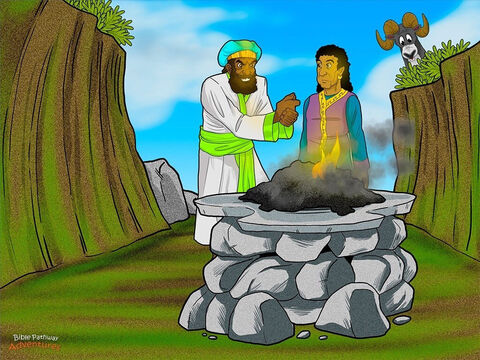
Parsha Ve-Etchanan-Deut. 3:23-7:11

By Ariella Casey

Laws for Israel in The Land, and How Big is The Land?
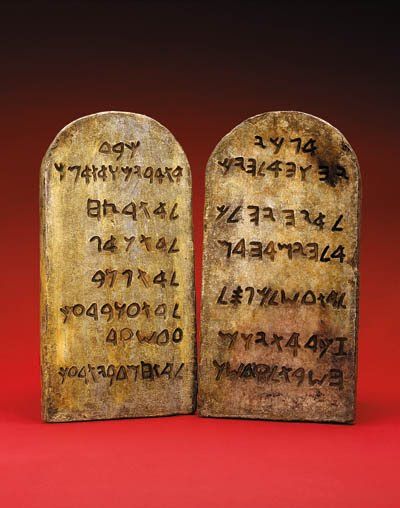
Moses, near the end of his life, speaks his final words to Israel while near the borders of the Promised Land.  He tells them several times that the laws that YHWH gave to him on Sinai, the laws other than the ten commandments, were given for when they entered The Land. 

So why have the Jews continued the tithing laws which were given for the Leviim and Cohenim  (Levites and Priests) and the Temple when there is no Temple? Why do Jews in Europe and America build Sukkot along the streets of foreign cities when the Feast of Tabernacles was to be observed “in The Land” as a memorial of the 40 years they spent outside  in the wilderness? Aren’t Jews outside of Israel, still in the wilderness? And why are synagogues built and dedicated as holy places, when the only true Holy Place was set apart by YHWH on the Sacred Mount in Israel? And, in case we don’t know, the Second Temple on Har HaBayit was desolated by the betrayal of the Jewish people, giving Jerusalem to Rome 2000 years ago! Har HaBayit is even now in the news, with the Israeli government siding with the nations to prevent Jews from praying there. Please stay abreast of what is happening! Keep praying!

The history of the Israelites over the last 3000 years has been, not what God had planned for us, but what our forefathers chose to do. Israel has been in and out of The Land; taken captive several times and then during prolonged captivity, they formulated new laws which would allow them to be able to remain a separate people and still remain in the nations to which they were scattered. But, these new laws were invented by their rabbis and now referred to as the “Oral Law.” These were anything BUT the original laws given to them through the hand of Moses.  

The laws given by the hand of Moses, which are claimed to be the basis for the “Oral Torah” were to be kept solely “in The Land.” Moses gave his final words with several references to this. At this time they were at the end of the 40 years wilderness sojourn. They had, most certainly, been practicing some of these laws, but they were laws that Moses clearly specified for when they were in The Land. Let’s view some of the verses that say this:

“And Jehovah spoke to you from the midst of the fire: ye heard the voice of the words, but ye saw no form; only ye heard a voice. And he declared to you his covenant, which he commanded you to do, the ten words; and he wrote them on two tables of stone. And Jehovah commanded me at that time to teach you statutes and ordinances, that ye might do them in The Land whither ye are passing over to possess it.” (Deu 4:12-14).

And Moses reminds the children of Israel that at Sinai they had asked that YHWH not speak to them, but that Moses should go and receive the laws from YHWH and then teach them. 

So he continues reminding them…

“And now, why should we die? for this great fire will consume us. If we hear the voice of Jehovah our God any more, we shall die. For who is there of all flesh, that has heard the voice of the living God speaking from the midst of the fire, as we, and has lived? Come thou near, and hear all that Jehovah our God will say; and speak thou to us all that Jehovah our God will speak to thee; and we will hear it, and do it. And Jehovah heard the voice of your words, when ye spoke to me; and Jehovah said unto me, I have heard the voice of the words of this people that have spoken to thee: they have well spoken all that they have spoken. Oh that there were such a heart in them, that they would fear me, and keep all my commandments continually, that it might be well with them and with their sons for ever! Go, say unto them, Get you into your tents again. But as for thee, stand thou here by me, and I will speak unto thee all the commandments, and the statutes, and the ordinances, which thou shalt teach them, that they may do them in The Land which I give them to possess it. Take heed then to do as Jehovah your God hath commanded you: turn not aside to the right hand or to the left. In all the way that Jehovah your God hath commanded you shall ye walk, that ye may live, and that it may be well with you, and that ye may prolong your days in The Land which ye shall possess.” (Deu 5:25-33).

Again we see that these laws were for “in The Land.”

“And these are the commandments, the statutes, and the ordinances, which Jehovah your God commanded to teach you, that ye may do them in The Land whereunto ye pass over to possess it, that thou may fear Jehovah thy God, to keep all his statutes and his commandments which I command thee, thou, and thy son, and thy son’s son, all the days of thy life; and that thy days may be prolonged. And thou shalt hear, Israel, and take heed to do them; that it may be well with thee, and that ye may increase greatly, as Jehovah the God of thy fathers hath said unto thee, in a land flowing with milk and honey.” (Deu 6:1-3).

Then Moses teaches the Shema, the laws referring to Mezuzot (writing the laws on the doorposts), and then the binding of the arm and the head-Tefillin (which refer symbolically to controlling our thoughts and actions). He goes on to challenge the Israelites to remain faithful and to not allow idolaters to live in The Land–that they not be seduced into idol worship. 

These instructions about keeping certain laws “in The Land” where Israel was to dwell from then onward were so that they would prosper and have long life on The Land and that The Land would flow with milk and honey. 

Alas, our history shows something else and we now await a full second Exodus by our exiles who desire to return and be among the people of Israel. 

May our brothers and sisters strive with all their strength to be among that group that come to settle The Land and push back the borders that all may inhabit The Land that was once promised to our father Abraham!

Here is our challenge! May we return and possess The Land in it’s fullness!

“Jehovah our God spoke unto us in Horeb, saying, Ye have stayed long enough in this mountain. Turn and take your journey, and go to the hill-country of the Amorites, and unto all the neighboring places in the plain, in the mountain, and in the lowland, and in the south, and by the seaside, The Land of the Canaanites, and Lebanon, unto the great river, the river Euphrates. Behold, I have set The Land before you: go in and possess The Land which Jehovah swore unto your fathers, to Abraham, to Isaac, and to Jacob, to give unto them and to their seed after them.” (Deu 1:6-8)

Thanks for reading. Please share, comment and follow!

Follow Take Hold the Tzitzit on WordPress.com

Vendrá un Maestro de la Justicia

¿Nos unimos a otra secta?

¿Qué y a quién debemos seguir? ¿Seguir es incluso lo que debemos hacer en este momento?

¿Entenderemos alguna vez que los grupos pequeños a menudo se convierten en algo que nunca debieron ser?

Estamos en los últimos años que preceden al fin del tiempo asignado a la Tierra. La mayoría de los verdaderos eruditos bíblicos creen que nos acercamos a los 6000 años desde la creación de la humanidad, es decir, aquellos que no son evolucionistas. De mis cálculos, sean exactos o no, llego a aproximadamente 5995 desde que comenzó la cuenta con Adán. Pero me gustaría mucho abordar la postura bíblica que se supone que debemos adoptar en este momento en el que vivimos en circunstancias muy diferentes a las de los hijos de Israel que oraron en el Sinaí. 

Naturalmente surge la pregunta de que si la Torá escrita que dio casi innumerables instrucciones a Israel durante su estancia en el desierto, de alguna manera este conjunto de instrucciones no encaja en nuestro tiempo cuando se aplica literalmente, entonces, ¿cuáles son los principios detrás de lo que fue escrito? ? 

¿Necesitamos una nueva clase de sabios que nos digan lo que significa para nosotros? A menudo he afirmado que cada individuo tiene el deber de estudiar, orar y escuchar la voz de Elohim para decidir lo que es correcto. Por supuesto, buscamos respuestas profundamente en la Torá y los profetas. Pero ¿cómo se puede responder al problema de los hombres de hoy que quieren dos o tres esposas? ¿Cómo se puede lidiar con los diferentes sacrificios requeridos por diferentes ofensas y pecados, cuando no hay sacerdocio ni templo? 

Según tengo entendido, la formación de sinagogas en Babilonia estableció una nueva etapa para Israel, ya sea buena o mala. Cuando el pueblo salió de Babilonia, algunos querían regresar al antiguo servicio del Templo bajo los Cohanim autorizados por Moisés y otros (aquellos que más tarde se convirtieron en la clase gobernante a través del gobierno mayoritario y la conexión con Roma) dejaron de lado la Torá del Sinaí y crearon su propia Torá. y hoy tenemos a los rabinos que descendieron de los fariseos. 

Todos nosotros, como verdaderos estudiantes de la Biblia, sacudimos la cabeza y condenamos esto, pero ¿en qué nos diferenciamos si queremos establecer nuevas reglas de vida? ¿Cómo podemos encontrar lo que se aplica hoy? Y si creamos un grupo de sabios para que nos enseñen, ¿en qué nos diferenciamos? 

Éste es un dilema al que todos debemos responder. Ha habido muchas sectas y cultos a lo largo de los años. Vemos a los simples esenios de los que surgieron los primeros cristianos y, sin embargo, ¿qué pasó con eso? Vemos una jerarquía romana que se infiltró no sólo en el movimiento cristiano sino también en el movimiento rabínico que jugó directamente en sus manos por el poder y la riqueza. Esos fueron los que cambiaron Jerusalén por “Yavneh y los sabios”. El judaísmo durante los últimos 2500 años se ha convertido en una religión muy poco relacionada con la Torá y los profetas. Vea esta cita:

“El Talmud en Gittin (56a-b) y el midrash en Avot DeRabbi Natan (versión B, capítulo 4:5) nos dicen que el rabino Yochan ben Zakai se escapó de Jerusalén durante el asedio que condujo a la destrucción del Segundo Templo ( Bet HaMikdash) en un ataúd para hacer una paz separada con el futuro emperador romano que arrasaría Jerusalén. El rabino Yojanan ben Zakai pidió que a Yavneh y sus eruditos se les concediera la libertad religiosa para estudiar y continuar haciendo crecer la tradición rabínica, pero dejaría Jerusalén para que Roma la destruyera. Vespasiano aceptó el trato. Yavneh se salvó, Jerusalén fue destruida y el judaísmo rabínico sobrevivió. Sin el enfoque acomodaticio del rabino Yojanan ben Zakai, todo habría estado perdido”. Ver Corrientes cruzadas para más.

Muchos de nosotros hemos seguido a los caraítas. Muchos de nosotros seguimos siendo fieles a este grupo del caraísmo moderno. ¿Pero qué les impide convertirse en otra jerarquía, crear su propia Torá y establecer su propio credo y terminar traicionándonos? Y bueno, ¡allá vamos de nuevo! ¿Continuaremos este ciclo, o estableceremos algo nuevo e individual, donde cada persona sea responsable ante el Juez del Universo individualmente? 

Todos debemos orar diligentemente por esto, especialmente aquellos de nosotros que aún no estamos en la Tierra de Israel. ¿Los que están reunidos vendrán en grupos o vendrán uno por uno? ¿Entenderá el Mesías mediante alguna sabiduría divina quiénes son los verdaderos seguidores de la Torá? 

“Y acontecerá en aquel día, que YHWH batirá desde la corriente del río hasta el torrente de Egipto, y seréis reunidos uno por uno, hijos de Israel. Y sucederá en aquel día, que se tocará la gran trompeta; y vendrán los que estaban pereciendo en la tierra de Asiria, y los desterrados en la tierra de Egipto, y adorarán a Jehová en el monte santo de Jerusalén.” (Isaías 27:12-13)

“Y sucederá en aquel día, que el Señor volverá a extender su mano por segunda vez para adquirir el remanente de su pueblo que quedará, de Asiria, de Egipto, de Patros, de Cus y de Cus. de Elam, de Sinar, de Hamat y de las islas del mar. Y alzará bandera a las naciones, y reunirá a los desterrados de Israel, y reunirá a los dispersos de Judá de los cuatro confines. la tierra.” (Isaías 11:11-12). 

Si, repito, vamos a reunirnos uno por uno y no en grupos, entonces lo importante es que asumamos la responsabilidad individual de nuestras vidas. Y no, esto no significa que no podamos congregarnos, ¡no! Pero significa que debemos hacer lo mejor que podamos y dejar que el resto siga su propia conciencia. “Pero”, dirán algunos, “¿no es eso peligroso?” ¿Por qué sucedería si cada uno de nosotros permanece o cae según nuestra obediencia a YHWH y nuestra fe en Él? Si la reunión se realiza individualmente, entonces todos deberíamos poner nuestras vidas en orden, porque nadie es nuestro juez más que el Dios Supremo del Universo, quien se comunicará directamente con quien nos reúne. ¿Realmente creemos que el Mesías sacará una lista de traviesos y amables, como Santa Claus, Papá Noel o como lo llamen? ¿Y esa lista será los Fundamentos de la fe caraítas o los 13 principios del Rambam? 

Así que les pido que hagan un inventario de sus vidas, sus acciones y se preparen para ser reunidos en la tierra para ayudar a abrir el camino para la verdadera observancia de la Torá, y eso es algo que todos debemos estudiar con discernimiento a la luz de nuestros días. Hay espacio para que todos compartan sus estudios, pero quisiera advertirnos a todos que los dejemos en manos de quienes los leen y que no les impongamos reglas. Las listas de reglas se convierten en leyes y las leyes en otro credo, y ningún credo ha resistido la Torá original por mucho tiempo. 

Así que con tu acuerdo, comenzaremos a estudiar como nunca antes. Debemos orar por el maestro de justicia prometido en Joel 2:23.

“Y vosotros, hijos de Sion, alegraos y alegraos en YHWH vuestro Dios, porque os ha dado Maestro de justicia, y hace descender sobre vosotros lluvia que rocía y recoge, en el principio”. (Joe 2:23)

Nota: el versículo anterior habla dos veces en hebreo acerca de un maestro de justicia, pero la mayoría de las traducciones lo traducen erróneamente como lluvia temprana y tardía. Aquí está el hebreo para quienes lo entiendan:

וּבְנֵי צִיּוֹן גִּילוּ וְשִׂמְחוּ בַּיהוָה אֱלֹהֵיכֶם כִּי־נָתַן לָכֶם אֶת־הַמּוֹרֶה לִצְדָקָה וַיּוֹרֶד לָכֶם גֶּשֶׁם מוֹרֶה וּמַלְקוֹשׁ בָּרִאשׁוֹן׃

Esta parte iluminada con mi hebreo limitado parece decir “que les daré un maestro de justicia y les haré llover abundantemente un maestro como en el principio”. 

La palabra MORE (iluminado arriba) significa maestro y Tzadeka es rectitud o justicia. 

Por ahora los dejo para que digieran esto y contemplen lo que debemos hacer como individuos. Oro para que muchos acepten el desafío de compartir la verdad unos con otros. 

¡Bendiciones y Shabat shalom!

Ariella

A Teacher of Righteousness

Shall we join another Cult?

What and who are we to follow? Is following even what we are to do at this time?

(Credit: Raland/Shutterstock)

Are we ever going to understand that small groups often turn into something that they were never meant to be?

We are in the last few years preceding the end of the earth’s allotted time. Most true Biblical scholars believe that we are nearing 6000 years since the creation of mankind, that is, those who are not evolutionists. From my calculations, whether they are accurate or not, I come to about, 5995 since the count started with Adam. But I would very much like to address the biblical stand we are supposed to take at this time when we live under very different circumstances than the sons of Israel who stood and prayed at Sinai. 

The question naturally arises, that if the written Torah that gave nearly countless instructions to Israel during their time in the desert–that this set of instructions somehow does not fit at our time when applied literally, then what are the principles behind what was written? 

Do we need a new class of sages to tell us what it means for us? I have often asserted that each individual has the duty to study and pray and listen to the voice of Elohim in order to decide what is right. Of course, we look deeply into the Torah and the prophets for answers. But how does one answer a problem of men today that want two or three wives? How does one deal with the many different sacrifices required for different offenses and sins, when there is no priesthood and no temple? 

As I understand it, the formation of synagogues in Babylon set up a new stage for Israel, whether good or bad. When the people left Babylon, some wanted to return to the old Temple service under the Mosaic authorized Cohanim and others (those who later became the ruling class through majority rule and connection with Rome) laid aside the Torah of Sinai and created their own Torah, and today we have the Rabbis who descended from the Pharisees. 

We all, as true Biblical students, shake our heads and condemn this, but how are we any different if we want to set up new rules for living? How can we find what applies today? And if we set up a group of sages to teach us, how are we any different? 

This is a quandary that must be answered by all of us. There have been many sects and cults over the years. We see the simple Essenes from which the early Christians arose and yet what happened to that? We see a Roman hierarchy that infiltrated not only the Christian movement but the Rabbinic movement that played directly into their hands for power and wealth. Those were the ones who exchanged Jerusalem for “Yavneh and the sages.” Judaism over the past 2500 years has become a religion very little related to Torah and the prophets. See this quote:

“The Talmud in Gittin (56a-b) and the midrash in Avot DeRabbi Natan (version B, chapter 4:5) tell us that Rabbi Yochan ben Zakai snuck out of Jerusalem during the siege that led to the destruction of the Second Temple (Bet HaMikdash) in a coffin to make a separate peace with the future Roman emperor who would level Jerusalem. Rabbi Yochanan ben Zakai asked for Yavneh and its scholars to be granted the religious freedom to study and continue growing the rabbinic tradition but would leave Jerusalem for Rome to destroy. Vespasian accepted the deal. Yavneh was saved, Jerusalem was destroyed, and rabbinic Judaism survived. But for Rabbi Yochanan ben Zakai, the accommodationist approach, all would have been lost.” See Cross-Currents for more.

Many of us have followed the Karaites. Many of us still remain faithful to this group of modern Karaism. But what is to keep them from becoming another hierarchy, create their own Torah and establish their own creed and end up betraying us? And well, here we go again! Shall we continue this cycle, or shall we establish something new and individual, where each person is responsible to the Judge of the Universe individually? 

We must all pray diligently for this, especially those of us who still are not in the Land of Israel. Will those who are gathered come as groups, or will they come one by one? Will the Messiah understand by some god-given wisdom who the true followers of Torah are? 

“And it shall come to pass in that day, that YHWH shall beat out from the flood of the river unto the torrent of Egypt, and ye shall be gathered one by one, ye children of Israel. And it shall come to pass in that day, that the great trumpet shall be blown; and they shall come that were perishing in the land of Assyria, and the outcasts in the land of Egypt, and they shall worship YHWH in the holy mountain at Jerusalem.” (Isa 27:12-13)

“And it shall come to pass in that day, that the Lord shall set his hand again the second time to acquire the remnant of his people which shall be left, from Assyria, and from Egypt, and from Pathros, and from Cush, and from Elam, and from Shinar, and from Hamath, and from the islands of the sea. And he shall lift up a banner to the nations, and shall assemble the outcasts of Israel, and gather together the dispersed of Judah from the four corners of the earth.” (Isa 11:11-12). 

If, and I repeat, we are to be gathered one by one and not in groups, then the importance is that we take individual responsibility for our lives. And no, this does not mean we are not allowed to congregate, no! But it means we must do our best and leave the rest to follow their own consciences. “But,” some will say, “isn’t that dangerous?” Why would it be if every one of us stands or falls according to our obedience to YHWH and our faith in Him? If the gathering is based individually, then we all should get our lives in order, for none is our judge other than the Supreme God of the Universe who will communicate directly with the one gathering us. Do we really believe that the Messiah will pull out a list of naughty and nice, much like Santa Claus, Papa Noel, or however you call him? And will that list be a Karaite Fundamentals of Faith or Rambam’s 13 principles? 

So I appeal to you to take inventory of your lives, your actions and prepare to be gathered to the land to help open the way for true Torah observance, and that is something we all need to study with discernment in the light of our day. There is room for all to share their studies, but I would caution all of us to leave those studies in the hands of those who read them and not make rules for them. Lists of rules become laws and laws become another creed and no creed has ever stood up to the original Torah for long. 

So with your agreement, we will begin to study like never before. We must pray for the teacher of righteousness that is promised in Joel 2:23.

“And ye sons of Zion, joy and rejoice, In YHWH your God, For He hath given to you the Teacher for righteousness, And causes to come down to you a shower, Sprinkling and gathered — in the beginning.” (Joe 2:23)

Note: the above verse speaks twice in the Hebrew about a teacher of righteousness, but most translations wrongly translate it as the early and latter rain. Here is the Hebrew for those who understand it:

וּבְנֵי צִיּוֹן גִּילוּ וְשִׂמְחוּ בַּיהוָה אֱלֹהֵיכֶם כִּי־נָתַן לָכֶם אֶת־הַמּוֹרֶה לִצְדָקָה וַיּוֹרֶד לָכֶם גֶּשֶׁם מוֹרֶה וּמַלְקוֹשׁ בָּרִאשׁוֹן׃

This highlighted part with my limited Hebrew seems to say “that I will give them a teacher of righteousness and rain down abundantly a teacher as at the first.” 

The word MOREY  means Teacher and Tzedaka is righteousness or justice. 

For now, I leave you to digest this and contemplate what we must do as individuals. I pray that many will take up the challenge of sharing truth with each other. 

Blessings and Shabbat Shalom!

Ariella

One People–When?

One People in the Land of Israel

We sat with friends and shared conversation across our living room while we drank coffee late one morning. The friends had not visited our new house yet, so they brought a welcome cake, which is too rich to devour–Not yet! 

I think the major important topic we discussed, besides the war, was Jewish cliques. Sadly, it is a discussion that happens because of the reality of shul based prejudice which separates people. Of course, the four of us are not super observant as far as rabbinic standards go, and that may present some people with a problem. Simply put, we like to think for ourselves and make our own decisions on what our priorities in religion are. I refuse to do what I used to do, which was to pretend to be something just to impress people that I was in agreement with them. That was when Covid hit Israel, and we all locked down for a long year’s nap! And this meant some serious thinking time about who we are and what the purpose of being a Jew means in practical terms. Does it mean showing up at shul like clockwork for every function?–even if you don’t want to read prayers for two hours after walking to the shul on a 100 degree Shabbat morning? Could I pray at home even if no one knows about it? During Covid, we mostly did not go to shul anywhere. Sometimes the neighbors came over and sat on our balcony 6 feet apart to do evening prayers on Erev Shabbat, and yes that was meaningful, but now Covid is gone, and most people are back in the shul crowd. But the sad thing is the cliques. So your shul requires a head covering, and the other one doesn’t, so that makes one shul less acceptable than the other? Really? And where does that play into whether someone is a good person or not, especially when the women are separated from the men anyway? Why can’t we all just love each other and support the ongoing activities in the town, rather than narrow ourselves to one group of people? The divisions need to go away. And I pray that it can happen without more serious events in this country!

There are very kind people here, maybe they are secular Israelis, maybe they are immigrants from Russia or South America or somewhere else. Maybe they don’t understand the prayers, or maybe they are not inspired by them. Does that mean they are not acceptable citizens of this country? Does that mean we cannot be friends? Often when others are busy with their cultic devotion, a secular person will reach out to help a neighbor in need. Are these people doing it by the book? Or is their heart in the right place? Are they somehow more connected to Spirituality than others? I can’t judge that, but I can say that there is something very special about some of these people who were born and raised in Israel, who are not so shul-bound. And those who are refugees from another country, maybe they have suffered hardship and know what it means to need someone! Sometimes, you say to them, “Be safe and good luck!” And they raise their hands to Heaven as if to say, “all things come from God.” and we know they have a connection that maybe others have never felt. I love friends like that! They are real people. I want to somehow share that connection that they have. 

I pray that Hashem will open the eyes of Jews here and those coming to Israel, that they will see the problem of the cliques that separate us. I would challenge all of us to put aside our differences and look to the golden rule of loving God supremely and our neighbor as ourselves. Furthermore, I hope we don’t have to get into an even more serious war for this to happen!

Yours for unity among our people!
Ariella

Follow Take Hold the Tzitzit on WordPress.com

Parashá Balac

Las bendiciones y maldiciones de Balaam: un mago con el corazón dividido

Por Ariella Casey

La Parashá Balac está repleta de ideas y verdades de las que se pueden extraer importantes lecciones. Aquí veremos algunas bendiciones y el rebelde Balaam. 

Balaam

Tenemos a un mago pagano, Balaam, que aparentemente se da cuenta de que se debe consultar al Dios de Israel antes de poder quedarse con el dinero de un soborno ofrecido para maldecir al pueblo que ha pasado a la tierra de Moab. Notamos que Balac, el rey madianita, envía todo el camino hasta el río Éufrates para encontrar a Balaam y traerlo para resolver su problema: el problema de los israelitas (hebreos en ese momento) que estaban en su tierra. Balaam era obviamente un profeta muy conocido, porque el pasaje afirma que tenía fama de éxito en maldecir o bendecir a quien deseaba. Ver Números 22:6.

Pero, al darse cuenta de que no podía hacer nada sin algún tipo de permiso espiritual, Balaam pide a los mensajeros de Balac que esperen hasta que él hable con Dios al respecto. En ese momento Balaam hace lo correcto y lo vemos rechazar a los visitantes y despedirlos a la mañana siguiente. Balac envía otros mensajeros más importantes con promesas de riquezas y gloria. Esta vez vacila, aunque dice que debe pedir permiso, ya sabe la respuesta, pero insiste en pedirle a Elohim el derecho de ir con los hombres. Vemos cómo la codicia influye en su resolución de hacer lo que el Eterno le dijo al principio. 

He aquí un buen ejemplo de cuando la gente racionaliza que lo que Dios dijo en realidad no es lo que quiso decir: que podemos cambiar las cosas excusándonos ante Él.

 “¿Podría hacer un pequeño cambio en las reglas? ¡Después de todo, sabes cuánto me gustan esas cosas! Eche un vistazo a Lot después de la destrucción de Sodoma cuando le suplicó al Todopoderoso que lo dejara ir al pequeño pueblo de Zoar a pesar de que la instrucción era huir de allí. Lot terminó en una cueva con sus dos hijas, y esto es lo que engendró al pueblo de Moab, el mismo de quien estamos hablando aquí. Entonces Balaam puso excusas para poder encontrar una manera de obtener dinero y fama. Se endureció en su camino, jugando las dos caras de la moneda. Y lo vemos a medida que se desarrolla la historia. 

El siguiente es el episodio del asno y el ángel. Balaam le da excusas al ángel que finalmente ve de pie junto a él: excusas por golpear a su asna. La bestia le impedía ir a recoger su recompensa. El Ángel lo advierte severamente, pero él continúa en el camino de su ya corrupto corazón. 

Cuando encuentra a Balac, le dice que sólo puede decir lo que se le pone en la boca. Números 22:38. Otra excusa. En otras palabras, “Verás, he venido hasta aquí y realmente quiero hacer esto por ti, pero hay un Poder mayor que yo que no me dejará fuera de su control. ¡Haré todo lo posible para complacerte!

Después de comer un suntuoso bistec de los sacrificios que Balac ofrece a los dioses, Balaam va a diferentes lugares por sugerencia de Balak, pensando tal vez que el lugar puede estar oculto al Eterno y que puede salirse con la suya maldiciendo a Israel. YHVH lo convierte en el hazmerreír una y otra vez debido a su avaricia y su falta de voluntad para alejarse de la tentación. Después de varios sacrificios de siete becerros y siete carneros y esfuerzos por maldecir a Israel desde diferentes lugares, ¡Balam termina bendiciendo a Israel al grado que Balac le ordena regresar a casa! Lo único que logró fue bendecir, que era lo contrario de lo que se le pedía. 

Bendiciones

Balaam pronunció varias bendiciones importantes sobre Israel. Y finalmente, una promesa de un Redentor que debería surgir en los últimos tiempos como libertador. 

Balaam le dijo a Balac:

“¿Cómo maldeciré a quien Dios no ha maldecido? ¿O cómo denunciaré a quien YHVH no denuncia? Porque desde lo alto de las peñas lo veo, y desde los collados lo contemplo:”
“He aquí, es un pueblo que habitará solo y no será contado entre las naciones”.


Esta declaración fue dada como consejo para Israel, consejo que rara vez se ha seguido: “no ser contado entre las naciones”. Y vemos el resultado una y otra vez cuando Israel se compromete a mantener la paz con las naciones. ¡Lo vemos incluso ahora!

Ver (Números 23:5-12)

El siguiente conjunto de bendiciones fue aún más fuerte, ¡y pensamos en lo maravilloso que habría sido si hubiéramos permanecido fieles a nuestro convenio!

“No ha visto iniquidad en Jacob, ni ha visto mal en Israel; YHVH su Dios está con él, y grito de rey está en medio de él. Dios lo sacó de Egipto; tiene como fuerza de un búfalo. Porque no hay encantamiento contra Jacob, ni hay adivinación contra Israel. En este tiempo se dirá de Jacob y de Israel: ¡Qué ha hecho Dios!, el pueblo se levantará como una leona. “Se levantará como un león. No se echará hasta que haya comido la presa y bebido la sangre de los muertos”. (Números 23:21-24)

Y:

¡Cuán hermosas son tus tiendas, oh Jacob, y tus tabernáculos, oh Israel! Como valles extendidos, como huertos junto a un río, como áloes que plantó YHVH, como cedros junto a las aguas. De sus cántaros brotará agua, y su descendencia será en muchas aguas, y su rey será más alto que Agag, y su reino será enaltecido. Dios lo sacó de Egipto, tiene como fuerza de búfalo. Consumirá a las naciones sus enemigas. , y quebrantará sus huesos, y con sus flechas los despedazará. Se encorvó, se echó como león y como leona: ¿quién lo despertará? Bienaventurado el que te bendiga, y maldito el que maldice. El e.” (Números 24:5-9)

Entonces Balac se enoja y le ordena a Balaam que se vaya.

“Y Balaam dijo a Balac: ¿No hablé yo también a tus mensajeros que me enviaste, diciendo: Si Balac me diera su casa llena de plata y de oro, no podría ir más allá del mandamiento de YHVH para hacer bien o mal? de mi corazón: ¿qué dirá YHVH, eso hablaré yo?” (Números 24:12-13)

Antes de que Balaam se vaya, le pide a Balac que lo escuche una vez más mientras da una profecía del fin de los tiempos sobre Israel, ¡una que nosotros también debemos tomar en serio! Escuchen!:

“Lo veré, pero no ahora; lo contemplaré, pero no de cerca. Una estrella saldrá de Jacob, y un cetro se levantará de Israel, y desmenuzará las esquinas de Moab, y destruirá a todos. los hijos del alboroto. Y Edom será una posesión, y Seir, sus enemigos; pero Israel actuará con valentía y uno de Jacob tendrá dominio, y destruirá lo que quede de la ciudad. vio a Amalec, y retomó su parábola, y dijo: Amalec es la primera de las naciones, pero su fin será la destrucción. Y vio a los céneos, y retomó su parábola, y dijo: Firme es tu morada. Lugar, y tu nido fijado en la peña; pero el ceneo será consumido, hasta que Asur te lleve cautivo. Y tomó su parábola, y dijo: ¡Ay, quién vivirá cuando Dios haga esto! la costa de Quitim, y afligirán a Asur y a Heber, y él también será destruido”. (Números 24:17-24).

En resumen, parece que Balaam tenía el corazón dividido. Quería dinero y fama, pero al mismo tiempo se dejó llevar por las palabras de Elohim. Cuando estuvo bajo el poder de Elohim, le fue bien, pero cuando el Espíritu fue quitado de él, era otra persona por completo. 

Después de eso, aunque Balaam no se menciona en la historia de conexión, fue él quien sugirió que las muchachas madianitas fueran al campamento de Israel para seducir a los hombres e inducirlos a adorar a sus dioses. Esto surge más adelante en la batalla contra Madián cuando Moisés declaró:

“He aquí, estos, por el consejo de Balaam, hicieron que los hijos de Israel pecaran contra YHVH en el asunto de Peor, y hubo plaga sobre la asamblea de YHVH”. (Números 31:16)

¡Me imagino que Balaam recibió su dinero después de todo! Pero la recompensa no duró mucho, porque murió en la batalla que siguió con Madián. 

¡Manténganse al tanto! ¡La próxima semana aprenderemos sobre Pinjás que mató a un líder tribal que llevó a una de estas niñas a su tienda!

Favor de comentar, gustar y compartir!

Follow Take Hold the Tzitzit on WordPress.com