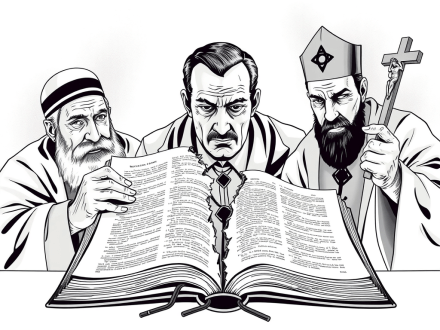
The Holiday of Purim is here again, and costumes, parties and fun are sprouting everywhere. Fun is the name of the game. Is there anything wrong with that? I admit that I love to see people smile and all the children and adults dressed up and clowning around! I am not keen on kids eating a lot of candy, partly because I know the health problems that go along with too much sugar, but then that is a personal issue.
I want to examine, and I don’t claim to be right or wrong, a few things I am uncomfortable with:
I know that God’s Eternal Name, YHVH, is important in all of Tenakh, but why is he not mentioned in any form in the entire book? People tell me that it is because He had to stay hidden. That does not make sense. When is it right to hide the God whom we worship from stories that we write about our lives? If anything in a story was done by the Eternal, then why is the emphasis placed on the clever Mordecai and his beautiful niece, Esther, who found herself lined up to become queen of Persia? Why not mention that the Hand of God was involved? Why take credit for the Jews being so clever and smart and leave God completely out of it? Was this because they knew they were in the wrong place at the wrong time? Were they indeed under persecution at this time?
If they were not suffering persecution, then what else may have been the reason for hiding one’s ethnicity?
Is it possible that the story about justifying life for the Chosen People among the nations? No need for a a temple? No need for a Covenant with the Land and the God of the Land?
Why were the majority of the Jews still in Persia many years after they were commissioned to return to the Land sixty years after the decree of Cyrus the Great?
Why did Hadassah become Esther naming herself after the pagan goddess Ishtar? And why did Mordecai take that name since it is also a variation of Marduk, a pagan deity worshiped in Babylon and ancient Mesopotamia? According to Torah it is wrong to pronounce the name of a pagan god, but these went so far as to rename themselves after these idols..
Perhaps choosing these names was a political move to be able to work and live among the Persians. But the question looms large, why do they want to stay in the Galut? Is it because they are now permeated with the culture? Do they love the customs of the Gentiles more than their own?
And what else might be the motive to hide at this time before Haman had the decree to kill all the Jews signed by the king? Would Haman have declared the Jews as public enemy number one, if he had known that the queen was Jewish? The story does not say that they were being persecuted. If so, then why not move back to the land?
The entire plot of the story of Esther seems to justify working subversively to overthrow the powers that be. When is it right to clearly hide one’s identity to be able to climb the political ladder with the intent of having someone at the top? Were Jews ever commanded to do such things? There is plenty of evidence of this happening throughout history. We see Joseph shaving to appear acceptable to Pharaoh when he was brought before him, but he apparently didn’t hide his parentage, because later in the Joseph story, the Egyptians would not eat with the Hebrews. He apparently was known as a Hebrew even since Potiphar put him in jail.
Maybe there are other reasons, but to me, it seems that the Jews who stayed in Persia enjoyed the Persian lifestyle and culture and did what they did to justify living in the Galut 60 or 70 years after Cyrus opened the way for them to leave. (Note that the decree of Cyrus took place in 539 and the events in the book of Esther were between 483 and 473. (See here and here). These dates are estimates.
I don’t have answers, on this, and I have to admit that I have gone along with things many times so that I don’t make waves. What should we do about this? Is there anybody else out there who is concerned?
So “Happy Purim” and please think deeply when you drink so much you can’t discern Haman from Mordecai!
Sermon por Israel Horowitz, copia de transcrito de video en Español
Nota de Ariella Golani:
Favor de leer lo que he traducido debajo. Desculpe la forma que salio, pero es muy importante que lo veen or por lo menos leen. Luego voy a subir otra documento sobre este hombre y como llego a renunciar la ortodoxia. Gracias.
Quiero hablar de un tema muy importante cuando se trata de entender la revelación original en el Antiguo Testamento los cinco libros de Moisés, loscinco libros de Moisés son la base de todas las leyes del judaísmo tal como lo conocemos al estudiar el judaísmo te encontrarás con varias interpretaciones y varias sectas del judaísmo así que quiero aclarar algunas cosas cualquier libro que siga los cinco libros de Moisés que de alguna manera contradiga la Revelación original de Dios es por definición un libro ilegítimo en la Tora porque lo que dice en los cinco libros de Moisés muy claramente es que no añadirás ni quitarás a las palabras escritas. En los cinco libros de Moisés También dice que
estos son los Mandamientos de Dios revelados a
Moisés durante los 40 años que el
pueblo judío estuvo en el desierto y
esa es la base de la religión
conocida como Judaísmo cuando se habla de esto
con un rabino reformista por ejemplo un rabino reformista
te dirá bueno, ya sabes, a medida que
ha pasado el tiempo hemos podido
reformar el texto original y hemos podido
agregar y quitar a nuestro antojo
porque queremos y nos da la gana
y sentimos que en este momento
somos más iluminados que Moisés
somos más iluminados
que un individuo que habló cara a cara cara con Dios mismo y a quien Dios dijo
es confiable y que los Mandamientos
que fueron transmitidos a través de Moisés son
mandamientos eternos tan claramente todas
formas de secularización y la
modernización del judaísmo hasta la
exclusión de los textos explícitos en la
Biblia son ilegítimos donde las cosas se ponen
muy extrañas cuando se llega al
judaísmo ortodoxo porque el
judaísmo ortodoxo cree en la
revelación original que Dios le dio a Moisés de
hecho te dirán que es divina y
Es verdadera pero hay algo llamado la
Torá oral, oral refiriéndose a la boca
y entonces aunque eso existe cinco
libros donde está escrita la palabra revelada de Dios
también hay una tradición oral
que se remonta a la época de Sión, así como
tan atrás como la Revelación a Moisés
va la revelación de la Torá oral
la Torá que fue transmitida de boca en boca de una generación a la siguiente
y que consiste en las interpretaciones y tradiciones de las personas
de las prácticas relacionadas con la Torá. Hay
solo un problema con esta afirmación: la
Torá oral no es tan oral, en realidad está
escrita, está escrita en
numerosos libros conocidos como el midrash, la
mishna, el talmud, la
halaka, todos estos libros fueron escritos por lo menos
1.500 años después de la revelación en Sinaí
en el pecado consisten en opiniones de
rabinos cualquiera que haya abierto alguna vez uno de
estos libros leerá muy claramente el rabino tal y tal dijo esto y
rabis tal y tal dijo aquello y son
esencialmente discusiones y debates y
argumentos y opiniones sobre el
texto original en la Biblia ahora afirmar
que una discusión sobre la Biblia durante
mil años después de la revelación de
los cinco libros de Moisés es de alguna manera también
que se remonta al Monte Si es obviamente una
afirmación absurda pero te la repetirán
como si fuera verdad y fuera parte del
adoctrinamiento para creer o no
tiene sentido ahora ¿Qué sucede cuando
comienza a aceptar esta narrativa de que fuera
de la Revelación original de Dios
hay probablemente mil libros adicionales
en total que también datan de alguna manera
de Sinaí y que esta tradición está
tambien conservada que es igualmente
tan válida, si no más válida, que la
Torá original misma? Bueno, cuando
sigues esta narrativa, la observancia del
judaísmo comienza a tomar una forma completamente nueva
comienza a tomar una forma que
en realidad ni siquiera recuerda al
texto original y a los
mandamientos originales de Dios mismo, por
ejemplo en Shabat, el séptimo día, un día
de descanso, donde Dios dice: Debes
cesar todo de tus actividades de obra, no hagas ningún
trabajo de ningún tipo hazlo un día sagrado para
Dios no dejes tu lugar, haz que toda tu
comida se cocina el sexto día antes del
séptimo día y descansa porque es el Shabbat
en la Biblia bien según la literatura del Rabino
uno también está obligado en el
Shabbat a comer tres comidas uno también está
obligado a orar tres veces al día no
solo en el Shabbat como resulta ser pero
tienes que orar tres veces al día todos
día con un grupo de 10 hombres que leen un
libro de oraciones y repiten esencialmente las
mismas oraciones tres veces al día todos
todos los días afirmando que esta es la
forma más elevada de oración y la La más alta
forma de comunión con Dios, podemos seguir
y seguir hablando de todas las muchas veces que
Los mandamientos de los rabinos contradicen abiertamente
la Biblia o no tienen absolutamente
ninguna fuente en la Biblia, en cuyo caso
son solo mandamientos que fueron
inventados por seres humanos y agregados al
texto original para decir ahora que es
todo un mandamiento de Dios y esto es
un fenómeno extremadamente preocupante para
cualquiera que realmente se preocupe por la
preservación de la Torá y la
preservación del judaísmo porque la
mayoría de los judíos no están afiliados al judaísmo, la mayoría de los judíos ni siquiera
se preocupan por la Torá y, por lo tanto, que la
minoría de los judíos se involucra en una
forma de judaísmo que no es precisa y
no está En línea con el texto original de la Torá, esto es
extremadamente dañino y hace que el judaísmo
básicamente sea eliminado porque si el 80%
de los judíos no siguen la Torá en absoluto y si el otro 20% sigue
la Torá incorrectamente porque están siguiendo bien su propia narrativa
entonces lo que estamos viendo es un pueblo
judío entero, una nación entera que fue
escogida y encargada de una misión de
Dios para defender sus leyes en este mundo y
estar completamente comprometidos con su papel
como sacerdotes entre las naciones para enseñar
la ley de Dios y vivir de acuerdo con
sus leyes, ahora tenemos un pueblo que está
completamente desconectado de Dios. y
esa es una tragedia que en realidad es el
peor escenario posible y la verdad es
que no es nada nuevo, no es nada nuevo que
el pueblo judío esté desconectado de
Dios a pesar de haber sido cogido por Dios
a pesar de haber sido salvado de la esclavitud por Dios
a pesar de tener un pacto con Dios
que se remonta a los días de sus
antepasados, desafortunadamente la nación de
Israel ha fallado miserablemente en la
mayor parte en defender las leyes de Dios, si uno
lee los libros de los jueces y los libros
de los reyes y los profetas verá
que la historia incluso durante los tiempos
cuando el reino existía en la tierra de
Israel fue un tiempo muy terrible para el
pueblo judío con el que estaban involucrados
adoraban ídolos, la idolatría ocurría por todas partes
en todo el lugar, la prostitución, todo tipo de
actividades llenas, de hecho, la tierra estaba
contaminada con todo el pecado del
pueblo judío en la tierra que Dios les había
dado y les había prometido que la guardarían
solo si observaban sus decretos y sus mandamientos. Hubo
incluso un tiempo durante el reinado del rey
Josías Josías era descendiente del rey
David, quien como era el
rey descubrió la Biblia, descubrió CED
el Antiguo Testamento en los Archivos del
templo y al leerlo comenzó a
llorar y dijo que este es el fundamento
de nuestra religión y Estamos en completa
negación de ello, ni siquiera sabemos que
existe y por eso puedes ver qué
absurdo es afirmar que la Torá oral
se ha conservado durante miles
de años cuando, de hecho, la Torá escrita
el documento original, la palabra directa de
Dios, estuvo completamente perdida por un tiempo, así que
el problema aquí es que la gente está tan
distante de los caminos de Dios y son tan
desconocedores de los Mandamientos originales de Dios que casi no hay
posibilidad de que puedan obedecer
sus decretos correctamente, aquellos que están perdidos
en los debates de la
ortodoxia se encuentran argumentando todo tipo de información irrelevante que no tiene
nada que ver con las leyes de Dios, aquellos que
están en las afueras de la ortodoxia ven
a la ortodoxia como una representación del
judaísmo y lo ven con razón y
dicen que no queremos tener nada
que ver con eso, niegan sus
obligaciones hacia Dios junto con todos
sus hermanos y hermanas del pueblo
judío y esto es realmente
problemático porque lo más importante
para los seres humanos es que tengan
una buena relación con Dios, lo más
importante para nuestro mundo es que
vivamos de acuerdo con los
principios divinos que Dios estableció
para que esta creación pudiera ser
gobernados correctamente y cuanto más
hay corrupción, más vamos
por los caminos del mal en lugar de
moverse en la dirección del bien, más nos alejamos de la salvación y
cuando Dios sigue adelante y elige una nación
y dice: van a ser mis siervos
van a tener que estar allí
para defender mis decretos y ser una luz
para el mundo y enseñar la verdad
para que todos la escuchen, pero en cambio lo que encontramos
es una nación que niega su propósito, una
nación que ni siquiera reconoce su
propia historia y sus propias obligaciones para
con Dios mismo, en ese punto estamos
que se ocupan de cuestiones reales que necesitan ser
resueltas y que necesitan ser resueltas
En realidad, lo bueno es que la
solución ya existe y es solo
la acción que se requiere en este
momento, la acción de parte del
pueblo judío para realmente comenzar a preocuparse
The last article: Who was the Daniel of the Bible? by Guest Author Deb Freeland, raises a lot of questions, especially for those who are born and bread as Bible thumpers. Daniel in the lions’ den, in many of our minds, is one of the big stories of faithfulness and Divine deliverance. Why would anyone want to discredit it?
In my recent approach to the Bible, I have begun to question anything that has no real historical basis. This was not always so for me. In the past, I often argued against history if it somehow didn’t line up with the Bible. Many believe that Scripture is God-breathed. And yet when we begin to dig, many of the bible stories are just that, stories!
When, recently, I examined the fact that Daniel, according to the book by his name, existed for several centuries, actually being passed from king to king as advisor throughout the Babylonian Persian and Median monarchies. How did Daniel avoid being slain in the take-over of these kingdoms? And how did he live so long? Do the math! From Nebuchadnezzar, until Darius with all the kingdoms in between, we come up to more than 200, perhaps 300 years. According to typical longevity at the time, people were not living that long. King David is recorded as 70 years old when he died and David lived a long time before Babylon took over.
So the years do not add up, nor does his presence in at least 5 of the kingdoms, make any sense. Ok, some will say that he was able to continue because of Divine miracles. But where else do we see anything like this in history? The prophets often fell in the same overwhelming take-over of kingdoms.
Another point, if Daniel was so dedicated to the return of the captives to Jerusalem under Cyrus, why didn’t he accompany them? And if he did, why is he not listed? Also why is he not mentioned in other biblical books other than a couple of obscure references in the book of Ezekiel? There are basically a lot of things to factor in, and since history is mute about Daniel–as far as I know, he is not mentioned in the records kept during the lives of the different kings, we have to question the entire book and perhaps, ask ourselves what is it’s purpose? Does it somehow show that a Jew can be faithful even in the exile? Does it show that kings will deliver the Jews and that they can rise to power at times as second to the king?
When we look at the different prophecies in Daniel 2 and 7, we see that the outline of the takeover of kingdoms is fairly accurate. But since we know that Daniel did not live to see these kingdoms, we can well ask, was something written in later to make the story accurate? And when Daniel 9 is factored in, we find a very deep mathematical puzzle which Christians have used to prove the event of Jesus and his death centuries later. Yet the matter of weeks adding up to days and then becoming years which count down to the event of Jesus, makes for a confusing story at the best.
It seems also that the absence of a date for the death of Daniel, is significant? Was he a real person? I don’t believe he was, at least not the same person that figured throughout the book. I guess where history is silent, maybe we should be as well.
So, I want to thank Deb for her brief article on this subject.
I want to state that I do believe there is still much to be valued in Torah and Tenakh that we should not be discouraged, and begin to doubt everything that is written.
The exiled people of Israel that actually stood up and returned to Jerusalem [2 per cent of the whole] in those early years under Cyrus the Great of Persia had all the hope and future promised by God. Each step they made out of Babylon and into Judah and Jerusalem was filled with the Words of God from the prophets that they would be successful in their efforts to build the Temple of God on Mount Zion.
Their building efforts were suspended for a time due to conflicts with their neighbors and even some discouragement in their own ranks. Their hope and joy returned when another brave but small group of returnees showed up in Jerusalem in the reign of Darius the Great. In those days of return and building, these brave men and women heard words of encouragement for success from Haggai and Zechariah, the prophets of God. They renewed their commitment to finish the Temple and in the year 515 BCE they dedicated the Temple and the Levitical priesthood and the temple service was reinstated.
God’s Words prophesied to Israel during the years before, during and after the destruction of Solomon’s Temple, had been fulfilled. People of Israel had returned at the end of the foretold 70 years of exile and the Temple now stood restored and serving the One and Only God. What remained to be fulfilled were the prophecies of redemption for all of Mankind.
History records that that redemption did not take place. History also records that there are no records for what happened to the people of Israel that returned in the years 539 BCE through around 410 BCE. What we do have in our hands are the books contained in the Writings of the Hebrew Tanakh and the three books of the last prophets of God to Israel.
The storyline from the prophets Haggai and Zechariah is one of hope for a redemptive future and the end of the exile. There would be a new era of Temple service in Jerusalem with the Levitical priesthood and the signet ring of the Davidic line on the hand of Zerubavel the Governor of Judah. Malachi records certain admonitions for the priesthood to handle the Torah of Moshe in purity and holiness and to teach the people to distinguish between the sacred and the profane. All signs are pointing to redemption in those days as the books of the Prophets close with the dedication of the Temple.
Then silence. No history, no records, not even a whisper of what is happening in the Land until the end of the Persian governance over the Middle East with the rise of the Greek empire in the late 4th c. BCE. We are awakened from our slumber, like Rumpelstiltskin from a 200-year nap. When we gaze upon the world of Judah and Jerusalem during the rise of the Greek era, there is a new and different landscape for the Jewish people.
We find that we are holding some books in our hands that cover the history of the Jewish people in the early years of the Second Temple period. Although this historical period was 200+ years, these books, written in the 4th c. BCE, only cover approximately 40 years. The sages of the 1st c. CE reconciled the missing years of history with a formulaic equation that shortened the Persian period from 209 years to 40 years and the invention of The Epoch of the Creation of the World beginning in the year 3761 BCE.
In 520 BCE, Haggai’s message stirred the people and the leaders to return to the work of building the Temple. God was with them to a successful end and, with Yehoshua the High Priest alongside Zerubavel the signet ring of “H, the kingdom would be restored and Torah would go forth from Zion. Zechariah the prophet came to say that there were two destinies that Israel could choose in this powerful moment of history.
His emphasis was on the whole hearted and meaningful return to God who would be there to build them up and give them their righteous future. The 70 years of exile and judgment were over and God wanted a full reconciliation with his people Israel.
“Then the angel of the LORD answered and said, O LORD of hosts, how long wilt thou not have mercy on Jerusalem and on the cities of Judah, against which thou hast had indignation these seventy years?” Zech 1:12
Therefore, thus saith the LORD, “I am returned to Jerusalem with mercies: My House shall be built in it,” says the LORD of Hosts, “and a line shall be stretched forth upon Jerusalem. Cry yet, saying, Thus saith the LORD of hosts; My cities through prosperity shall yet be spread abroad; and the LORD shall yet comfort Zion, and shall yet choose Jerusalem.” Zechariah 1:16-17
Haggai spoke further promises from “H of success if the return of Israel to the Land and the Temple was complete.
“Then lifted I up mine eyes, and saw, and behold four horns. And I said to the angel that talked with me, what are these? And he answered me, these are the horns which have scattered Judah, Israel, and Jerusalem. And the LORD showed me four carpenters. Then said I, what come these to do? And he spoke, saying, These are the horns which have scattered Judah, so that no man did lift up his head: but these are come to fray them, to cast out the horns of the Gentiles, which lifted up their horn over the land of Judah to scatter it.” Zechariah 1:18-21
The people of the return were hearing that God would lift them up with a strength to scatter and cast out the power of the Gentiles or nations. Their redemption and joy would be soon realized.
“Sing and rejoice, O daughter of Zion: for, lo, I come, and I will dwell in the midst of thee, saith the LORD. And many nations shall be joined to the LORD in that day, and shall be my people: and I will dwell in the midst of thee, and thou shalt know that the LORD of hosts hath sent me unto thee. And the LORD shall inherit Judah his portion in the holy land, and shall choose Jerusalem again. Be silent, O all flesh, before the LORD: for he is raised up out of his holy habitation. Zechariah 2:10-13
The prophet’s words continue with the process of the cleansing and restoring of the Levitical priesthood with Yehoshua ben Yehozadak as Cohen Hagadol. If you, Yehoshua, walk in my ways, it will go well for you. The servant of “H, the Branch, would come and there would be peace and prosperity in the Land. Zechariah 3
Zerubavel would finish the work he had begun and new oil would be poured on Israel, the anointing oil of a people chosen to be the light to the world. Zechariah 4
And then suddenly, the prophet offers another scenario of events, based on communal choices, of how the destiny of Israel could go. The following visions of God pronounced the destiny of Israel should she collectively choose to remain in the exile.
Zechariah lifted his eyes “and looked, and behold a flying roll. And he said unto me, What do you see? And I answered, I see a flying roll; the length thereof is twenty cubits, and the breadth thereof ten cubits. Then said he unto me, this is the curse that goes forth over the face of the whole earth: for every one that steals shall be cut off as on this side according to it; and every one that swears shall be cut off as on that side according to it. I will bring it forth, saith the LORD of hosts, and it shall enter into the house of the thief, and into the house of him that swears falsely by my name: and it shall remain in the midst of his house, and shall consume it with the timber thereof and the stones thereof. Zechariah 5
And then another vision came.
“Then the angel that talked with me went forth, and said unto me, Lift up now thine eyes, and see what is this that goes forth. And I said, what is it? And he said, this is an ephah that goes forth. He said moreover, this is their resemblance through all the earth. And, behold, there was lifted up a talent of lead: and this is a woman that sits in the midst of the ephah. And he said, this is Wickedness. And he cast it into the midst of the ephah; and he cast the weight of lead upon the mouth thereof. Then lifted I up mine eyes, and looked, and, behold, there came out two women, and the wind was in their wings; for they had wings like the wings of a stork: and they lifted up the ephah between the earth and the heaven. Then said I to the angel that talked with me, where do these bear the ephah? And he said unto me, to build it a house in the land of Shinar: and it shall be established, and set there upon her own base.” Zechariah 5
These visions collided with the strong will of the people who chose to remain in the exile. Joy and redemption were coming. But there was another possibility failing the complete return: the false swearers in the Name of “H and thieves would build a temple for Wickedness in Babylon. What does this mean? Suddenly, Israel was poised between two choices with two very different destinies. Was there more to the story than the 45,000 or 2 per cent of the Jews who returned with the last prophets to build the temple in Jerusalem? What about the remaining 98 per cent of the Jews who stayed in Babylon? Who were they and why did they choose to remain in exile? What future was in store for them? What happened to them and those who would become their leadership in Babylon? From whence came the Judaism that would suffice the Jews in the exile?
As we flash forward to the documented history that appears after the prophets Haggai, Zechariah and Malachi, we are in the 4th c. BCE; sitting with a “Men of the Great Assembly” who have become the heirs apparent to the leadership of Israel. They reside and legislate from Babylon; they are judges over the Levitical priesthood and the people in Jerusalem and the greater exile in Babylon.
As retold by the men of the Mishna and Talmudic eras, these “men of the great assembly” have canonized the books that are the final version of the Hebrew scripture. There are now new books, post prophecy, that will fill out the section of the Writings: Esther, Ezra-Nehemiah, Chronicles, and Daniel. We learn from these new books that the temple built by Zerubavel is of a lesser quality and the Levitical priesthood was in disarray and without genealogical proofs at some point after its dedication.
Further, the Aharonic Levitical, heirs of the priests who served in Solomon’s temple, seem to have forgotten the temple service protocols. They, and the citizens of Jerusalem of the past 150+ years, submit to the leadership of this assembly which sits in Babylon. Ezra, a “scribe and priest,” member and possible leader of this exilic assembly, comes to Jerusalem to set the priests and the people straight according to the Torah. This Ezra, who has chosen to remain in the exile and serve the foreign kings in Persia, instructs the people from the Torah as if they had no clue of its contents. How was it that those holy Levites and people who came out of Babylon according to the Word of God and, with the last of the prophets to guide them, degenerate into such a profane condition while the exiled Jews serving the foreign kings did not?
The histories of the Persian kings in Esther and Ezra-Nehemiah are difficult and obtuse to follow. In fact, the entire Persian empire with its known 15 kings that ruled from 539-332 BCE is conflated into only 4 kings that ruled from 370-330 BCE. These dates for the traditional Jewish history timeline are derived from the Seder Olam Rabba authored by R. Yosef Halafta, adopted by the Talmud through R. Akiva, and codified into the modern Jewish counting of years by Rambam.
These Writings also contain the story of survival in exilic Iran. Mordechai, serving the foreign king in Shushan, Persia, prepares his niece Esther to concubine herself to the king in order to save the Jews from certain death in their host nations. From this derives the festival of Purim which allows Jews to participate in masking themselves in foreign apparel in recognition of the hiddenness of God as they revel in the exile.
The next event on the historical map for the Jewish people comes in the 2nd c. BCE when the Hasmonean family rises up and defends the Jewish faith and temple against the crusading Greeks in Jerusalem and Judea. With the induction of Purim and Hanukkah on the Jewish calendar in the Mishnaic/Talmudic era, the choices to remain in the exile throughout the previous generations were finalized and Israel walked into her future of an extended exile.
These disjointed histories seem more like scattered pieces of a larger jigsaw puzzle. Holes in the bigger picture are on the board but we grasp the few pieces we have to make our timeline work and bring us to the era of the scholars and finally rabbis who bring us forward to survive in an exile that was presaged at least 300 years before the fall of Herod’s temple in Jerusalem.
We stop here and take a deeper look into the discrepancies, the irregularities, and the missing personalities and documents of the dark ages of Jewish history from 597 BCE to 332 BCE. It was during these years that choices were made that set Israel on a path of extended exile and banishment from her God.
What were the choices of Israel in those years? Come home and be a nation under God with the Temple and Levitical Priesthood and Davidic King or stay in the exile and follow those who would rise in authority to make the exile a feasible solution. Temple service with Levites in Jerusalem or exile with rabbis in the host nations.
The past 2000 years of Jewish history answers the questions of which choice became the national mandate for Israel. Today, in the 71st year of sovereign Israel with her people in the Land, we can and we must examine ourselves. We must look into the mirror and ask: what must we do to choose redemption consciousness over the exile mentality to bring our final chapter as Covenant Israel.
Which of the two destinies won the day? Have you ever asked why? Why did the “Second Temple Period” fail? Was the exile religion the foundation of the temple rather than the foundation of the Covenant? Did we desire to remain in the nations over what God Himself ordained for us? Were we so determined to have our way because of our innate desire for free will, much like Adam and Eve, to express our own path?
Was our Covenant with our Holy One such a burden to us?
Many friends in my community do not allow themselves to learn the Prophets without a rabbinic teacher because they fear that they will not understand them properly. In the end, the prophets’ message is one singular line: Remember the Covenant of your God, O Israel, do and keep the Torah of Moshe the Servant of God, and do not go after the ways and gods of other nations.
While simply stated, this path of the “If-Then” covenant with our God has not only eluded us, we simply cannot “get it right.” Why is it so hard for the Jewish people to know, understand and follow the actual mandates of the Torah and do the Divine Will for Israel, one nation under God?
Today we remain yoked under the rabbinic tutelage of Talmudic Judaism and thus most Jews today believe that they are doing the Divine Will of God while living in exile, even in Israel.
Will we find the will and the courage to remove our burdensome yokes of exile, rote tradition and religion, and receive our redemption of freedom from the reproach of the nations? Will we make straight the paths of our Maker, the Rock of Israel, and allow the return of His Divine Presence to His Holy Mountain under the leadership of His Levitical priesthood in His Holy House?
El mundo ha estado girando fuera de control en un caos loco que nadie entiende realmente. Trump fue investido. Logró algunas cosas alentadoras durante sus primeras horas en el cargo. Todo suena bien. ¿Pero lo es realmente? Algunos de nosotros estamos agotados por preocuparnos por lo que viene después. ¿Trump nos está diciendo la verdad? ¿O esto es propaganda?… ¿Otra vez? ¿Otro gran espectáculo para ganar poder y dinero? ¿Está Donald Trump realmente trabajando para establecer un control global? ¿Quizás el mundo estaba tan debilitado bajo el régimen pasado que ahora, con la espalda y la voluntad destrozadas, por así decirlo, aceptaremos e incluso daremos la bienvenida a un líder que va más allá de los deberes de un presidente de los Estados Unidos?
No, ¡realmente no puedes culparnos por pensar que lo que vemos no es realmente lo que obtenemos! ¿Y cómo llegamos a ser así? Los que hacemos estas preguntas evidentemente tomamos la pastilla roja, lo que nos hace sospechar de todo. ¿Pero Dios influye en alguna parte? ¿Podemos creer que el Eterno y todopoderoso Maestro del Universo todavía tiene el control? ¿Realmente Él levanta reyes y derriba reyes? (Daniel 2:21), ¿o las promesas en las que hemos confiado en el pasado son nulas y sin cumplimiento?
¿Tiene Israel realmente un propósito en este mundo para los últimos tiempos? ¿Las gloriosas promesas de la Biblia realmente están destinadas a nosotros hoy, o de alguna manera perdimos el rumbo en el camino? Es fácil preguntarse y quizás no sea correcto pensar de esta manera. Pero es extremadamente triste ver a tantos inocentes asesinados, violados, decapitados, aterrorizados e incluso después de que algunos sean liberados, ¿cuál es la probabilidad de que aquellos que soportaron los últimos 16 meses tengan enfermedades mentales, es decir, si es que sobrevivieron? ? Naturalmente, somos inseguros e incluso dudamos de las razones de nuestra fe. Nos preguntamos si veremos otro mañana.
Tratamos de sacárnoslo de la cabeza, la distracción es un juego al que jugamos y puede ser la única forma de sobrevivir a esta horrenda guerra con algo de cordura. Es difícil no pensar en los rehenes medio enterrados en oscuros agujeros bajo la mugre, violados y odiados. No hay certeza de que alguno de ellos siga vivo. Como seres humanos, nunca podemos estar satisfechos con no saber acerca de algo tan precioso como la vida humana. ¡Y por eso tratamos de evitar pensar en lo impensable! Después de todo, hay mucho que un ser humano puede soportar, y la larga saga de insistir en el destino malvado de estas queridas víctimas (viviendo o quizás incluso preferiblemente muertas en los túneles del miedo helado) es un infierno puro tanto para ellos como para todos. de nosotros que tenemos alma.
Entonces dejamos de pensar porque debemos hacerlo. Y, sin embargo, ¿adónde se ha ido la esperanza? ¿Dónde está Dios en un momento como éste? ¿Hay algunas almas fieles que todavía ven el bien más allá de la tragedia de nuestros tiempos?
El mundo está siendo pesado en la balanza, siendo Israel la pieza central sobre la que se decide el juicio.
Llamar al mal bien y al bien mal parece ser el tema de un mundo enloquecido. Que el Todopoderoso vea tal como vio a Israel en los horrores de los pozos de lodo de Egipto cuando llamó a Moisés para liberar a su pueblo.
“Y vio Dios a los hijos de Israel, y supo Dios…” Éxodo 2:25
¿Que quiere decir este pasaje? ¡Que nada pasa con nuestro Creador sin que se oye y se da cuenta!
¿Podemos confiar en eso ahora?
Por favor comparten sus pensamientos. ¡Realmente me gustaría saber lo que piensen!