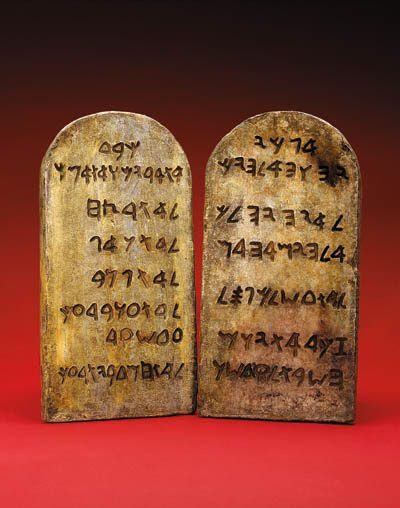
¿Descartamos la Sagrada Escritura? 

¿Como medir lo que es la verdad?

¿El Tanaj está inspirado o no? La Biblia ha existido durante muchos años y continúa siendo reverenciada y defendida como una luz a seguir; sin embargo, hay algunos que la destrozarían y dirían que no está inspirada. ¿Cómo podemos saberlo? ¿Cómo podemos saber si incluso un profeta moderno dice la verdad? ¿Y cuál es nuestro resultado final? 

La mayoría de los judíos estarán de acuerdo en que la Torá escrita es la base de todos los demás libros del Tanaj. ¿Cuál es el propósito de esos otros libros? Hay libros de profecía, libros de alabanza, libros de sabiduría, poesía, relatos de conquista y los libros de historia de Josué y Jueces, Samuel, Reyes y Crónicas. De hecho, la historia está esparcida por todo el Tanaj. ¿Debe descartarse o ignorarse porque no es la Torá? Hay reglas para medir a los profetas dadas en la Torá.

¿Qué dice la Torá sobre los profetas?

“Les levantaré un profeta de en medio de sus hermanos, como tú; y pondré mis palabras en su boca, y él les hablará todo lo que yo le mandaré. Y sucederá que cualquiera que quiera Si no escucha mis palabras que hablará en mi nombre, se lo demandaré. Pero el profeta que hable con soberbia una palabra que yo no le he mandado hablar, o que hable en mi nombre. de otro dioses, ese mismo profeta morirá. Y si dices en tu corazón: ¿Cómo sabremos la palabra que YHVH no ha dicho, cuando un profeta habla en el nombre de YHVH, si no se cumple ni se cumple? Esto es lo que YHVH no ha dicho: el profeta lo ha hablado con soberbia, no tendrás miedo de él.” (Deuteronomio 18:18-22).

Entonces, para aquellos que dicen que no hay nada importante en las enseñanzas de los profetas, ¡lean esto nuevamente! Esta es una profecía de un profeta que vendrá después del tiempo de Moisés y la amonestación es escucharlo, pero también antes de que alguien obedezca a un profeta, debe ser probado. ¿Cómo? Lea esta parte nuevamente…

“…Pero el profeta que hable con soberbia una palabra en mi nombre, que yo no le haya mandado hablar, o que hable en nombre de otros dioses, ese mismo profeta morirá. Y si dijeres en tu corazón: ¿Cómo sabremos la palabra que YHVH no ha hablado? Cuando un profeta habla en el nombre de YHVH, si las cosas no se siguen ni suceden, eso es lo que YHVH no ha dicho: el profeta lo ha hablado con presunción, no tendrás miedo de él.

Por eso el profeta debe hablar en nombre de YHVH, lo que profetiza debe suceder, y no debe hablar en nombre de otros dioses. También debemos estar seguros de que el profeta está de acuerdo con toda la Torá o es un falso profeta. La Torá es un pacto eterno. 

“Ahora pues, si en verdad oyereis mi voz y guardarais mi pacto, entonces seréis posesión mía entre todos los pueblos, porque mía es toda la tierra; y seréis para mí un reino de sacerdotes y un reino santo. nación. Estas son las palabras que hablarás a los hijos de Israel. Y vino Moisés y llamó a los ancianos del pueblo, y les expuso todas estas palabras que YHVH le había mandado. (Éxodo 19:5-7)

“Y Moisés escribió todas las palabras de YHVH, y se levantó de mañana, y edificó un altar debajo del monte, y doce columnas, conforme a las doce tribus de Israel… Y tomó el libro del pacto, y leyeron en presencia del pueblo, y ellos dijeron: Todo lo que YHVH ha dicho haremos, y seremos obedientes. Y Moisés tomó la sangre, y la roció sobre el pueblo, y dijo: He aquí la sangre del pacto, que YHVH ha hecho con vosotros respecto a todas estas palabras.” (Éxodo 24:4, 7-8)

Deuteronomio: ¿para quién fue este pacto?

“Estas son las palabras del pacto que YHVH mandó a Moisés hacer con los hijos de Israel en la tierra de Moab, además del pacto que hizo con ellos en Horeb… Vosotros estáis hoy todos vosotros delante de YHVH vuestro Dios. vuestros jefes, vuestras tribus, vuestros ancianos y vuestros oficiales, todos los hombres de Israel, vuestros pequeños, vuestras mujeres y vuestro extranjero que está en medio de vuestros campamentos, desde el cortador de tu leña al sacador de tu agua; para que entres en el pacto de YHVH tu Dios, y en su juramento que YHVH tu Dios hace contigo hoy, para establecerte hoy por pueblo; , y para que él sea para ti por Dios, como te habló, y como juró a tus padres, a Abraham, a Isaac y a Jacob, ni contigo. Sólo hago este pacto y este juramento, pero con el que está hoy aquí con nosotros delante de YHVH nuestro Dios, y también con el que no está aquí con nosotros hoy” (Deu 29:1, 10-15)

Si estudiamos detenidamente las palabras de estos pasajes, veremos que el pacto se hizo durante la vida de Moisés, especialmente dado en el Sinaí y escrito por Moisés. Esta fue la base de la ley para todos los tiempos. 

¿Añadir o restar?

Si volvemos a la prueba de un verdadero profeta como se ve en los versículos anteriores, entonces hay otro propósito para los profetas. Nunca se les permite cambiar la Torá, ni agregar ni quitar nada de lo que le fue dado a Moisés. 

“Ahora pues, oh Israel, oíd los estatutos y las ordenanzas que yo os enseño, para ponerlos por obra, para que viváis, y entréis y poseáis la tierra que os da YHVH, Dios de vuestros padres. No añadiréis a la palabra que yo os mando, ni disminuiréis de para que guardéis los mandamientos de YHVH vuestro Dios que yo os ordeno.” (Deuteronomio 4:1-2)

“Todo lo que yo os ordene, guardaréis de hacerlo; no le añadiréis ni disminuiréis”. (Deuteronomio 12:32)

Así que ahora, para aquellos que tirarían al bebé con el agua del baño…

Hay un propósito definido en la presencia de la profecía, como guía para situaciones actuales. Sin embargo, debemos entender el resultado final: los principios de la Torá, o caeremos en el error. Y en cuanto a los profetas del Tanaj, ¡échales un vistazo! ¿Están en línea con la Torá? Obviamente, a un profeta no se le permite dictar nuevas leyes para que el pueblo las siga, pero puede dar reprensiones y advertencias cuando el pueblo de Dios se equivoca. Y esto siempre debe basarse en la ley de la Torá (¡los 5 libros de Moisés, nada más!)

¿Y que hay del concepto de los  Angeles? ¿Acaso, no hay angeles mencionados en la Tora?

Los angeles que sacaron a Lot de Sodoma no fueron meramente hombres. Y hay otros ejemplos.

Entonces, cuando leemos en los Salmos que los ángeles son siervos y ministros del Eterno, ¿deberíamos dudarlo? ¿Esto contradice la Torá y los eventos escritos allí sobre el trabajo que los ángeles hicieron por los antepasados? 

“Bendecid a YHVH, vosotros sus ángeles, poderosos en fuerza, que cumplís su palabra, escuchando la voz de su palabra. Bendecid a YHVH, todos vosotros sus ejércitos, servidores suyos que hacéis su voluntad.” (Sal 103: 20-21).

Si leemos el Tanaj y encontramos alguna contradicción con la Torá escrita, entonces tenemos una razón para descartar esa contradicción, pero si no, entonces la sabiduría dada en estos libros es para que la disfrutemos y nos haga sabios y rentables en nuestros esfuerzos. . 

B’Shalom

Ariella

Discarding Holy Writ-To Keep or not to Keep

Is the Tanakh inspired, or is it not? The Bible has been around for many years, and it continues to be revered and upheld as a light to follow, yet there are some who would tear it apart and say that it is not inspired. How can we know? How can we know if even a modern prophet speaks truth? And what is our bottom line? 

Most Jews will agree that the written Torah is the basis for all the other books of Tanakh. What is the purpose of those other books? There are books of prophecy, books of praise, books of wisdom, poetry, accounts of conquest and the history books of Joshua and Judges, Samuel, and others. In fact, history is scattered all through the Tanakh. Is it to be discarded or ignored because it is not Torah? There are rules for measuring prophets given in the Torah.

What does the Torah say about Prophets?

“I will raise them up a prophet from among their brethren, like unto thee; and I will put my words in his mouth, and he shall speak unto them all that I shall command him. And it shall come to pass, that whosoever will not hearken unto my words which he shall speak in my name, I will require it of him. But the prophet, that shall speak a word presumptuously in my name, which I have not commanded him to speak, or that shall speak in the name of other gods, that same prophet shall die. And if thou say in thy heart, How shall we know the word which YHVH hath not spoken? when a prophet speaketh in the name of YHVH, if the thing follow not, nor come to pass, that is the thing which YHVH hath not spoken: the prophet hath spoken it presumptuously, thou shalt not be afraid of him.” (Deu 18:18-22).

So for those who are saying there is nothing important about the teachings of the prophets, read this again! This is a prophecy of a prophet to come after the time of Moses and the admonition is to hearken unto him, but also before anyone obeys a prophet, he is to be tested. How? Read this part again…

“… But the prophet, that shall speak a word presumptuously in my name, which I have not commanded him to speak, or that shall speak in the name of other gods, that same prophet shall die. And if thou say in thy heart, How shall we know the word which YHVH hath not spoken? when a prophet speaketh in the name of YHVH, if the thing follow not, nor come to pass, that is the thing which YHVH hath not spoken: the prophet hath spoken it presumptuously, thou shalt not be afraid of him.”

So the prophet must speak in the name of YHVH, what he prophesies must come to pass, and he must not speak in the name of other gods. We also must be certain that the prophet is in agreement with the entire Torah or he or she is a false prophet. The Torah stands as an eternal covenant. 

“Now therefore, if ye will obey my voice indeed, and keep my covenant, then ye shall be mine own possession from among all peoples: for all the earth is mine: and ye shall be unto me a kingdom of priests, and a holy nation. These are the words which thou shalt speak unto the children of Israel. And Moses came and called for the elders of the people, and set before them all these words which YHVH commanded him.” (Exo 19:5-7)

“And Moses wrote all the words of YHVH, and rose up early in the morning, and builded an altar under the mount, and twelve pillars, according to the twelve tribes of Israel. … And he took the book of the covenant, and read in the audience of the people: and they said, All that YHVH hath spoken will we do, and be obedient. And Moses took the blood, and sprinkled it on the people, and said, Behold the blood of the covenant, which YHVH hath made with you concerning all these words.” (Exo 24:4, 7-8)

Deuteronomy: for whom was this covenant?

“These are the words of the covenant which YHVH commanded Moses to make with the children of Israel in the land of Moab, besides the covenant which he made with them in Horeb. … Ye stand this day all of you before YHVH your God; your heads, your tribes, your elders, and your officers, even all the men of Israel, your little ones, your wives, and thy sojourner that is in the midst of thy camps, from the hewer of thy wood unto the drawer of thy water; that thou mayest enter into the covenant of YHVH thy God, and into his oath, which YHVH thy God maketh with thee this day; that he may establish thee this day unto himself for a people, and that he may be unto thee a God, as he spake unto thee, and as he sware unto thy fathers, to Abraham, to Isaac, and to Jacob. Neither with you only do I make this covenant and this oath, but with him that standeth here with us this day before YHVH our God, and also with him that is not here with us this day” (Deu 29:1, 10-15)

If we study closely the words in these passages, we will see that the covenant was made during the life of Moses, especially given on Sinai and written down by Moses. This was the basis of law for all time. 

Adding and subtracting?

If we return to the test of a true prophet as seen in the verses above, then there is another purpose for prophets. They are not ever allowed to change the Torah, not to add to nor subtract anything from what was given to Moses. 

“And now, O Israel, hearken unto the statutes and unto the ordinances, which I teach you, to do them; that ye may live, and go in and possess the land which YHVH, the God of your fathers, giveth you. Ye shall not add unto the word which I command you, neither shall ye diminish from it, that ye may keep the commandments of YHVH your God which I command you.” (Deu 4:1-2)

“What thing soever I command you, that shall ye observe to do: thou shalt not add thereto, nor diminish from it.” (Deu 12:32)

So now, for those who would throw the baby out with the bath water…

There is a definite purpose in the presence of prophecy, as a guide to current situations. Yet we must understand the bottom line–the principles of the Torah, or we will fall into error. And as far as the prophets in the Tanakh, check them out! Are they in line with Torah? Obviously a prophet is not allowed to make new laws for the people to follow, but they may give rebukes and warnings when God’s people are in error. And this should always be based on Torah law-(the 5 books of Moses, nothing more!)

When we read in Psalms that the angels are the servants and ministers of the Eternal, should we doubt it? Does this contradict the Torah and the events written there about the work that angels did for the forefathers? 

“Bless YHVH, ye his angels, That are mighty in strength, that fulfil his word, hearkening unto the voice of his word.  Bless YHVH, all ye his hosts, Ye ministers of his, that do his pleasure. ” (Psa 103:20-21).

If we read the Tanakh and find any contradiction to the written Torah, then we have a reason to discard that contradiction, but if not, then the wisdom given in these books is for us to enjoy and to make us wise and profitable in our endeavors. 

B’Shalom

Ariella

¿Qué no existen ángeles en el servicio del Eterno?

Por Ariella Casey

Hay quienes hoy afirman que los Ángeles no existen. Para quienes creen en la Biblia, esto parece increíble, ya que la Biblia está llena de encuentros con Ángeles. 

Pero, ¿cuál es el obstáculo para aceptar que Dios tiene una sala llena de mensajeros? ¿Es miedo a las represalias? ¿Miedo a algo más? ¿Es por un deseo básico de dudar de la Palabra de Dios? 

¿Se complace el Eterno en Su creación? ¿Es un rey? ¿Un rey no tiene sala de audiencias y asistentes? 

La palabra para ángel en hebreo es Malaj (מַלְאַךְ). Su Malaj es מַלְאָכוֹ. En la Torá hay 28 apariciones de la palabra ángel y 4 apariciones donde hay más de un ángel. Estos seres son conocidos como mensajeros. ¿Dios necesita ángeles? Supongo que podríamos decir que Él podría trabajar solo sin ninguna ayuda, pero lo que Él elige hacer es algo que debemos aceptar. YHVH no hace nada solo sin testigos. Es un ejemplo para la humanidad. Él nunca pide a los humanos que hagan algo que Él no hace. Cada juicio está respaldado por testigos. Esto se muestra en el libro de Job en el concilio divino. Es cierto que la palabra Malaj también se traduce en ocasiones como mensajero y en ocasiones incluso representa a un ser humano, como en Job 1:

“Y vino un mensajero a Job, y dijo: Los bueyes estaban arando, y los asnos pastando junto a ellos; y los sabeos cayeron sobre ellos y se los llevaron; y mataron a los siervos a filo de espada; y sólo yo escapé solo para decírtelo. Mientras él aún hablaba, vino también otro, y dijo: Fuego de Dios cayó del cielo, y quemó las ovejas y a los siervos, y los consumió, y a mí; Sólo he escapado solo para decírtelo”. (Job 1:14-16). 

En este caso, el mensajero es uno de los siervos de Job. Aquí se usa la misma palabra Malach, pero el contexto es claro. Job tenía sirvientes. YHVH también tiene siervos. La pregunta es si estos siervos son seres enviados del Cielo y trabajan para YHVH o si son humanos haciendo la voluntad de Di-s. De los relatos escritos sobre los acontecimientos donde se menciona a los ángeles, podemos determinar si actuaron como emisarios divinos del Eterno o meros servidores humanos. 

La diferencia puede mostrarse en las cosas que se lograron. 

Sin embargo, dado que la Torá está llena de ejemplos, en este momento no podemos extendernos más sobre el libro de Job.

No limitaré este estudio únicamente a la aparición de ángeles en la Torá, sino que comenzaré allí. Sólo en Génesis hay 11 referencias al ángel en sentido singular y 4 en plural. 

En la historia del rescate de Lot y sus hijas de Sodoma tenemos dos ángeles. ¿Eran realmente estos seres enviados divinamente? Mire nuevamente la historia, hirieron a los hombres de esa ciudad con ceguera. ¿Qué ser humano puede hacer eso? 

La primera aparición de la palabra ángel en Génesis ocurre en el capítulo 16. Aquí vemos a Agar a quien le dicen que regrese con su amante y le informan que está embarazada y que tendrá un hijo que se llamará Ismael. Esta vez se le llama ángel de YHVH. Este no es un “hombre de Di-s” sino un Ángel de YHVH. Está claro que este no es un ser humano porque ¿cómo podría un simple hombre saber que estaba embarazada de un hijo y llamarlo Ismael?

Luego en el capítulo 22 vemos el sacrificio de Isaac donde el Ángel de YHVH llama desde el Cielo a Abraham para que no mate al muchacho. Luego el ángel procede a bendecir a Abraham y profetiza de la descendencia numerosa que vendría por medio de Isaac de quien todas las naciones serían benditas. Nadie más que YHVH tiene derecho a predecir y bendecir así. Su Ángel fue autorizado a bendecir y profetizar las palabras que le habían encomendado pronunciar. Ningún simple hombre sabría estas cosas, ni la historia del mundo vista de antemano. 

En Génesis 31 un Ángel de YHVH le habla a Jacob en sueños para despedirlo de Labán contándole del milagro del crecimiento de sus rebaños a través de la intervención divina en la crianza. Una vez más, esto no es un mero sueño ni una imaginación humana. Y el ángel puede incluso comunicarse a través de los sueños.

En Éxodo 3 vemos al Ángel de YHVH aparecerle a Moisés desde la zarza ardiente, algo que el hombre no puede replicar. El ángel no fue quemado pero habló a Moisés para que le quitara los zapatos. 

En Éxodo 33 tenemos la promesa de que un ángel avanzaría a los hebreos cuando entraran en la tierra prometida para exterminar a los pueblos idólatras de la tierra de Canaán. 

Números 22 habla de Balaam y el Ángel que hablaba a través de su asna. El ángel no era visible y luego se hizo visible, hablaba a través de un asna. Este no es un encuentro humano. 

El libro de los Jueces está lleno de ángeles, en la historia de Gedeón:

“Y se le apareció el ángel de YHVH, y le dijo: YHVH está contigo, hombre valiente y valiente… Y el ángel de Dios le dijo: Toma la carne y los panes sin levadura, y ponlos sobre esta roca, y derramó el caldo. Y así lo hizo. Entonces el ángel de YHVH extendió el extremo del bastón que tenía en su mano, y tocó la carne y los panes sin levadura y salió fuego de la roca; , y consumió la carne y los panes sin levadura. Entonces el ángel de YHVH se apartó de su vista. Y cuando Gedeón se dio cuenta de que era un ángel de YHVH, dijo: ¡Ay, Señor DIOS! YHVH cara a cara.” (Jueces 6:12, 20-22)

Y la historia del anuncio del nacimiento de Sansón a Manoa y su esposa:

“Y Manoa dijo al ángel de YHVH: Te ruego que te detengamos hasta que te hayamos preparado un cabrito. Y el ángel de YHVH dijo a Manoa: Aunque me detengas, no comeré de tu pan: y si ofreces holocausto, a YHVH deberás ofrecerlo. Porque Manoa no sabía que era ángel de YHVH, y Manoa dijo al ángel de YHVH: ¿Cuál es tu nombre, para que cuando lleguen tus dichos? ¿Podremos honrarte? Y el ángel de YHVH le dijo: ¿Por qué preguntas así por mi nombre, siendo que es secreto? Entonces Manoa tomó un cabrito con una ofrenda y lo ofreció sobre una peña a YHVH. El ángel hizo maravillas; y Manoa y su esposa miraban. Porque aconteció que cuando la llama subía hacia el cielo desde el altar, el ángel de YHVH ascendió en la llama del altar. y cayeron rostro en tierra. Pero el ángel de YHVH no se apareció más a Manoa y a su esposa. Entonces Manoa supo que era un ángel de YHVH. (Jueces 13:15-21)

Que diremos del Ángel que protegió a Daniel de los leones hambrientos y luego le habló a Daniel y luego directamente se encargó al Ángel Gabriel darle entendimiento:

“Y mientras yo hablaba en oración, aun aquel hombre Gabriel, a quien había visto en la visión al principio, siendo hecho volar velozmente, me tocó a la hora de la ofrenda de la tarde. Y me informó, y habló con y dijo: Oh Daniel, ahora he salido para darte habilidad y entendimiento. Al principio de tus súplicas salió el mandamiento, y he venido para mostrarte que eres muy amado; entiende, pues, el asunto; y considera la visión.” (Daniel 9:21-23)

Gabriel afirma que fue enviado a volar rápidamente a petición de Daniel, encargado de darle habilidad y comprensión. 

Luego, en Daniel 10 y 11 vemos el mensaje de un ángel muy poderoso que muchos creen que es Gabriel. El efecto en Daniel se ve en estos versículos:

“Y he aquí, una mano me tocó, y me puso sobre mis rodillas y sobre las palmas de mis manos. Y me dijo: Oh Daniel, varón muy amado, entiende las palabras que te digo, y levántate derecho. porque a ti ahora soy enviado. Y cuando él me habló esta palabra, me quedé temblando. Entonces me dijo: No temas, Daniel, porque desde el primer día que dispusiste tu corazón a entender y a Castígate delante de tu Dios, fueron oídas tus palabras, y yo he venido a recibir tus palabras. Pero el príncipe del reino de Persia me resistió veintiún días; pero he aquí, Miguel, uno de los principales príncipes, vino en mi ayuda. ; y estuve allí con los reyes de Persia. Ahora he venido para hacerte entender lo que acontecerá a tu pueblo en los últimos días; porque aún la visión dura muchos días y cuando me hubo dicho tales palabras, me puse. Mi rostro hacia el suelo y me quedé mudo”. (Daniel 10:10-15)

Me han dicho que hay hermanos que niegan la existencia de los angeles porque dicen que no les mencionen en la Tora . ¿Como no?  ¿Que hay de los ejemplos de Ángeles que guardaban el camino al jardín de Edén? Y los que acompañaron a Lot. Estos no actuaban como meros humanos.  Pero, como se reclamen creer solamente en la Tora, aún con este evidencia, ¿que más pueden torcer a su gusto?

Si afirmamos que sólo creemos en la Torá, entonces somos iguales a los samaritanos que todavía creen de esta manera. Y al hacerlo no tenemos profecía ni testimonio, sino historias limitadas sobre la compañía de Di-s y sus Santos Mensajeros.

B’Shalom, favor de hacer clic abajo:

Follow Take Hold the Tzitzit on WordPress.com

How to Boil a Frog… and keep it “Kosher”!

How History transformed Religion, Politics and Everything

By Ariella Casey

Why did the prophets almost invariably suffer from rejection of those they came to instruct? There are plenty of examples. Ever since the passing of Moses and then Joshua, the people of Israel balked at following anything but what they wanted to follow. They were called stiff-necked by Hashem and also by Moses even when he was there to supervise!

“Therefore understand that YHVH your God is not giving you this good land to possess because of your righteousness, for you are a stiff-necked people. … “Furthermore, YHVH spoke to me, saying, ‘I have seen this people, and indeed they are a stiff-necked people.” (Deu 9:6, 13).

What makes a nation of slaves ruled by Egypt become stiff-necked? Was it the abuse that drove them to rebel? I suppose there are psychological explanations for why people once under the whip do not care to obey a loving God, interested in their welfare, yet even after the 40-year purge in the desert, the Hebrews were still stiff-necked, doing their own thing, not trusting, trying to figure things out to suit them. But they were still the chosen people and beloved of their Savior YHVH. The patience of God is beyond our human comprehension at times!

Are we any better today? I really wonder. Every religion on earth has its self-styled leadership that guides it’s people in ways that work for them. Sometimes the teachings and rulings are even harder and more of a burden than the original instructions given in the Book of Books! 

So why not check that out? If we really outlined the rules of Halakha and laid them one by one besides literal Torah laws, what would we find? And if there are discrepancies? Which set of laws should we observe? Shall we just go along to get along and think that maybe the true meaning is given in what the leadership teaches? Let me ask you, was there ever a time since the life of Joshua when the leadership of the Israelites did not cause them to go astray? It is interesting to see how many prophets arose to rebuke the nation in nearly every generation.

So what about the prophets? I really would not want the job. Especially when I read about the things they were made to suffer at the hands of those they came to warn. 

I was told today by an elderly Jew by choice that we are instructed in Deuteronomy to follow the majority. Strange that she doesn’t remember that just the opposite is true. Let’s look at another verse about the majority: 

“You shall not follow a multitude to do evil; nor shall you bear witness in a suit, turning aside after a multitude, so as to pervert justice” (Exodus 23:2).

What would all this have to do with a frog in a boiling pot?

Bear with me as I set the stage. The following quotation is from Forbes Magazine and shows the danger of allowing corporate leadership to establish thinking in the business world. The same goes for religion: 

In business

“There is a fascinating 19th century science experiment.  As the story goes, researchers found that when they put a frog in a pan of boiling water, the frog just quickly jumped out.  On the other hand, when they put a frog in cold water and put the water to boil over time, the frog just boiled to death.  The hypothesis is that the change in temperature is so gradual, the frog does not realize it’s boiling to death…Often the lack of trust and engagement creeps up on us. We don’t even feel it coming. We just know something smells funny.  Often we’re not sure what to do about it. We’re not even sure whether it’s our job to do something about it.” (Source)

What examples do we have of Israel following a multitude to do evil? 

  • The Golden Calf
  • Murmuring over food and water
  • The report of the 10 spies
  • The rebellion of Korach
  • The rejection of King David in favor of his son Absalom

And there are a lot more. How were these cases handled? 

Judaism today follows Rabbis instead of Cohanim and Leviim from the line of Aaron, (we might ask how this came about) and how is it that we now follow halacha instead of the laws of the literal Torah? Perhaps there is a need for another prophet or two. 

How on earth did we get here? Who stole our Torah, making it into something so heavy to bear? This of course has happened over thousands of years so that none really understands what is required of him. It came about like metamorphosis. Like a frog in a kettle that slowly comes to a boil. 

So what do the Sages tell us about this? Do we actually know anything about it? And when did this all start? This is what OU Torah says about following the majority: 

“Following the majority is the general rule in deciding matters of Torah law, assuming that all of the people involved in the debate are of comparable stature…The reason for this mitzvah is that if every individual was left to observe the Torah as he or she personally understood it, there would be as many versions of Judaism as there are Jews! No one could ever defer to another opinion, as everyone would be personally obligated to follow his or her own conscience in every matter. In order to have a feasible society, the Torah had to dictate that a majority consensus of the Sages would decide matters of religious practice. This unifies Jews worldwide and enables the Torah to survive and be transmitted from generation to generation.” See context here.

Taken at face value, this appears to be wise, but what happens when leaders add to the laws of Torah and then pass it off as if it is the true interpretation of Torah? And ask yourself if the Creator of the Torah ever meant to give His Torah over to a group of scholars to decide what it means. Can we not know in our hearts what it means by diligent study of the literal words of Torah? I do not say there is no room for leadership, but I do question why Hashem allowed the Temple to be destroyed about the time that the leadership was turning over to sages instead of divinely appointed Cohanim? At a time when they had just declared that the Torah was in their hands and that they did not listen to Heaven. Remember the Oven of Akhnai? (Source)

History bears testimony to the fact that this change was carried out under intense struggle and horrible fighting, between the vying factions of leadership at the time. There were the Hasmoneans, Sadducee and Pharisee groups, the Pharisees giving in to and appealing to Roman authority at a time when everything was coming together for a new order for Jews. The temple really didn’t matter to the leadership anymore. And how dare we say that?

In politics

We know very well what happens in a political situation that has led its people in a direction for so long they no longer know what they really believe about how a country should be run. They vote one way because they have always voted that way, even when something has come in little by little to change everything the party once stood for. It was the same thing back 2000 years ago when the Pharisees took over by working with Rome. 

At the time of Vespasian’s conquest of Jerusalem, something took place that not many know about.  Rabban Yoḥanan ben Zakkai made an ungodly exchange in order to preserve his students.  This is history. He asked for Yavne and the Sages in exchange for Jerusalem. ( link) And as much as that was and is justified, it showed how little value he placed on the Temple and the Temple Mount. He was granted his wish by Vespasian, and the sages were the chosen leaders of Israel. Yeshiva education was consequently founded as the approved training for all rabbis for the Jewish religion and thus, the priesthood-based on the descent from Aaron was replaced. 

Who was this Yochanan ben Zakkai? 

Yohanan ben Zakkai[a] (Hebrew: יוֹחָנָן בֶּן זַכַּאי, romanized: Yōḥānān ben Zakkaʾy; 1st century CE), sometimes abbreviated as ריב״ז‎ ribaz for Rabbi Yohanan ben Zakkai, was a tanna, an important Jewish sage during the late Second Temple period during the transformative post-destruction era. He was a primary contributor to the core text of Rabbinic Judaism, the Mishnah. His name is often preceded by the honorific title Rabban. He is widely regarded as one of the most important Jewish figures of his time, and his escape from the Roman destruction of Jerusalem (which allowed him to continue teaching) may have been instrumental in Rabbinic Judaism’s survival post-Temple. His tomb is located in Tiberias within the Maimonides burial compound.”

Yohanan ben Zakkai was the first Jewish sage attributed the title of rabbi in the Mishnah” (source)

So, he was the primary sage founded the Mishnah along with others. Highly respected for establishing, as it were, the rabbinic order. Honored as he was and is, can it be that there was something that smells funny about this? 

Perhaps this would be well and good if there had not been dire consequences. The Temple was destroyed, Jews were exiled and force converted to Catholicism, the pogroms started, the Holocaust happened and so much more! Where was God in all of this? How dare I assert that the reason for all the persecution was the acceptance of a substitute for Heaven? Well, I am saying it and what I say is based on the prophecies of what would happen if Israel strayed from the Word given them on Sinai!

There is a dire warning in the Torah itself for what would happen if Israel strayed from it’s divinely mandated Torah? Is there not a prediction given in the curses on Mount Ebal for what almost exactly took place?  What were the expressed consequences of adding or subtracting from the Torah as given on Sinai? The warnings in the Torah have been fulfilled. These things happened and we still don’t get it? Why does Israel have to fight so hard to win back our God-given land, losing so many soldiers and civilians when, if we returned to the Torah as given on Sinai, we might have a complete and quick salvation from our enemies? But YHVH is a God of compassion. He knows the history of how the traditions and Halakha came to be and how difficult it is to open people’s eyes to what has been and what used to be. 

“Observe and hear all these words which I command thee, that it may go well with thee, and with thy children after thee forever, when thou doest that which is good and right in the eyes of YHVH thy God. When YHVH thy God shall cut off the nations from before thee, whither thou goest in to dispossess them, and thou dispossessest them, and dwellest in their land; take heed to thyself that thou be not ensnared to follow them, after that they are destroyed from before thee; and that thou inquire not after their gods, saying, How do these nations serve their gods? even so will I do likewise. Thou shalt not do so unto YHVH thy God: for every abomination to YHVH, which he hates, have they done unto their gods; for even their sons and their daughters do they burn in the fire to their gods. What thing soever I command you, that shall ye observe to do: thou shalt not add thereto, nor diminish from it.” (Deu 12:28-32 ASV)

And the curse of exile for not following the Torah: 

“But it shall come to pass, if thou wilt not hearken unto the voice of YHVH thy God, to observe to do all his commandments and his statutes which I command thee this day, that all these curses shall come upon thee, and overtake thee.” (Deu 28:15)

” … therefore shalt thou serve thine enemies that YHVH shall send against thee, in hunger, and in thirst, and in nakedness, and in want of all things: and he shall put a yoke of iron upon thy neck, until he have destroyed thee. YHVH will bring a nation against thee from far, from the end of the earth, as the eagle flieth; a nation whose tongue thou shalt not understand; a nation of fierce countenance, that shall not regard the person of the old, nor show favor to the young, …;” (Deu 28: 48-50, ASV)

“ … And ye shall be left few in number, whereas ye were as the stars of heaven for multitude; because thou didst not hearken unto the voice of YHVH thy God. And it shall come to pass, that, as YHVH rejoiced over you to do you good, and to multiply you, so YHVH will rejoice over you to cause you to perish, and to destroy you; and ye shall be plucked from off the land whither thou goest in to possess it. And YHVH will scatter thee among all peoples, from the one end of the earth even unto the other end of the earth; and there thou shalt serve other gods, which thou hast not known, thou nor thy fathers, even wood and stone. And among these nations shalt thou find no ease, and there shall be no rest for the sole of thy foot: but YHVH will give thee there a trembling heart, and failing of eyes, and pining of soul;” (Deu 28:62-65 ASV)

Now that a large portion of the Jewish people have returned to live in the Land of Israel and we are embattled on seven fronts, is it not time to appeal to the Eternal who made the Everlasting Covenant with us on Sinai? Do we really need all the books of instruction to guide us? Sadly, all that we read above has come upon our people.  So how do we get back with the original program to serve YHVH with all our hearts? After all, is it not too difficult for us to change? And how will we know the way? 

“He hath showed thee, O man, what is good; and what doth YHVH require of thee, but to do justly, and to love kindness, and to walk humbly with thy God?” (Mic 6:8 ASV)

“For this commandment which I command thee this day, it is not too hard for thee, neither is it far off. It is not in heaven, that thou should say, Who shall go up for us to heaven, and bring it unto us, and make us to hear it, that we may do it? Neither is it beyond the sea, that thou should say, Who shall go over the sea for us, and bring it unto us, and make us to hear it, that we may do it? But the word is very nigh unto thee, in thy mouth, and in thy heart, that thou may do it.” (Deu 30:11-14 ASV)

I know that it is nearly impossible to question everything you have ever learned about your traditions, your culture and your understanding of Biblical truth, but what if we are somehow blinded to the truth by a leadership gone wrong. What if we are following a multitude to do evil. Would it not be evil to say that God doesn’t speak to us anymore? Would it not be evil to change God’s laws to fit the decisions of the majority? 

Would it be wiser, though not easier, to jump out of the boiling pot before we become frog stew?

Please follow, share and comment, it helps grow my audience. Thanks!

Follow Take Hold the Tzitzit on WordPress.com

Parashá Noe:  Misterios Extraños

¿Por qué la maldición sobre Canaán?

Por Ariella Casey

En algún lugar alrededor Hace 4000 años, justo antes del diluvio, si tomamos la línea de tiempo de la Biblia para ser exacta, YHVH declaró que la tierra era irredimible y comenzó la búsqueda para encontrar algún justo que pudiera estar vivo. Si no hubiera encontrado a Noe, es posible que nosotros, los que habitamos la tierra hoy en día, nunca hayamos visto la luz de los tiempos modernos. Para algunos de nosotros, no es tan difícil imaginar el grado de maldad al que había caído el mundo en ese momento porque vemos nuestro mundo hoy en una condición similar, excusando todo tipo de pecado imaginable; violaciones de niños pequeños, asesinatos, robos, casi todas las aberraciones sexuales imaginables y otras cosas que ni siquiera se pueden mencionar. Y lo que es peor, las autoridades dudan en castigar este mal. Los niños son arrebatados a padres que les niegan el cambio de sexo. 

Pero Noé encontró favor con el Creador siendo la única persona justa que pudo encontrar sobre la tierra. Pero ¿qué pasa con ese mundo del que sabemos tan poco aparte de los cráteres gigantes y las montañas sobresalientes que son testigos de la historia de la Biblia? ¿Se trata simplemente de un mito, como a muchos les gusta afirmar, que basan sus creencias en descubrimientos “científicos” anteriores a la creación de nuestro mundo, hace millones de años? ¿Y más bien una explosión celestial masiva, “un big bang” si se quiere, como su Diseñador en lugar de un Dios amoroso que planeó cuidadosamente todas y cada una de las criaturas con la idea de un universo armonioso?

Imagen gratis de Freepik.com

Al mirar la historia anterior al diluvio, nos vienen a la mente muchas preguntas. Los capítulos 4 y 5 del Génesis (Bereshit) son especialmente intrigantes. Después de que Caín mató a Abel, parece que Adán no lo reconoció como su hijo, ya que sólo después del nacimiento de Set, 130 años después, reclamó un hijo a su semejanza (imagen). 

“Y vivió Adán ciento treinta años, y engendró un hijo a su semejanza, conforme a su imagen, y llamó su nombre Set:” (Génesis 5:3 RV)

¿Qué pasó para crear tal ira en Caín que mató a Abel? ¿Por qué tan cerca de la época de Gan Eden encontramos este impulso abrumador de pecar? Sé lo que enseñan los católicos sobre el pecado original. Pero hay un versículo en esta historia que muestra claramente que las personas no están obligadas a obedecer a la llamada “naturaleza caída”:

“Pero él (Elohim) no miró con agrado a Caín y su ofrenda. Entonces Caín se enojó mucho, y su rostro estaba abatido. Entonces YHVH dijo a Caín: “¿Por qué estás enojado? ¿Por qué tienes la cara abatida? Si haces lo correcto, ¿no serás aceptado? Pero si no haces lo correcto, el pecado está acechando a tu puerta; desea tenerte a ti, pero tú debes gobernarlo.”” (Génesis 4:5-7 NVI)

Desde muy temprano vemos que el pecado puede crear un impulso de actuar, pero como el Creador le señaló a Caín, “tú debes gobernarlo”. El hombre no está sujeto al pecado, éste se presenta, pero hay que resistirlo. Caín siguió su inclinación y eso inició un proceso de maldad que continuó hasta el momento del diluvio. Su linaje no se destacó por sus buenas costumbres. Por eso Adán se sintió aliviado cuando engendró a Set, que era a su imagen. Después de tomar el fruto en el Jardín, no se registró que el propio Adán hubiera pecado de ninguna otra manera. Los capítulos 4 y 5 tratan sobre los dos linajes desde Adán. El de Caín que fue marcadamente malvado y el de Set que mostró muy poca maldad. Es casi como si el poder del bien se manifestara a través de este linaje real, el linaje de Set que continuó hasta Noé.h. En el momento del diluvio, Noé era el único de este linaje que aún vivía. Su padre Lamec había muerto y Matusalén, su abuelo, murió el año del diluvio. Un ejemplo sobresaliente de este linaje es Enoc, quien caminó con Elohim después del nacimiento de su hijo Matusalén. 

“Cuando Enoc había vivido 65 años, engendró a Matusalén. Después de convertirse en padre de Matusalén, Enoc caminó fielmente con Dios 300 años y tuvo otros hijos e hijas. En total, Enoc vivió un total de 365 años. Enoc caminó fielmente con Dios; entonces ya no estaba, porque Dios se lo llevó.” (Génesis 5:21-24 NVI)

No vemos hombres que caminaran con Dios entre los descendientes de Caín. ¿Por qué? Los grupos religiosos suelen enseñar que las personas con todos los niveles de pecado pueden arrepentirse y cambiar. Podemos tomar lo que se dice acerca del pecado que se extiende a la tercera y cuarta generación (ver el siguiente versículo) y asumir que este linaje nunca corrigió sus caminos, pecando repetidamente y así extendiendo y amplificando el impulso de pecar en el futuro.  

“No te inclinarás ante ellos, ni les servirás, porque yo YHVH tu Dios soy un Dios celoso, que visito la iniquidad de los padres sobre los hijos, sobre la tercera y cuarta generación de los que me aborrecen,” ( Éxodo 20:5 NVI)

Pero ¿a qué se debe el sorprendente contraste entre los dos linajes? Parece que el linaje justo de Set en realidad llevaba algún tipo de bendición inherente adicional ya que dos de este linaje fueron mencionados caminando con Elohim. (Enoc y Noe). 

¿Pero qué pasó en el capítulo 6? 

Los hijos de Elohim tomaron a las hijas del hombre y procrearon con ellas porque eran hermosas a la vista. 

¿Quiénes fueron los hijos de Elohim? Muchos dicen que los ángeles fueron seducidos por estas mujeres y así se formaron los poderosos gigantes y así Dios tuvo que poner fin al mundo como era entonces. Pero tengo muchos problemas con esa suposición. Pensé que los Ángeles sólo sirven al Eterno, que no tienen libre albedrío. ¿Cómo serían tentados? No estaban sujetos al conocimiento del bien y del mal como lo estaban los descendientes de Adán después de la elección que hicieron nuestros primeros padres junto al árbol. Además, un ángel no tiene carne humana, entonces, ¿cómo podría crear niños? Estos son seres eternos que sirven ante el Trono del Altísimo continuamente. No son del mismo ADN. ¿Cómo se puede aparear uno con un ángel si no son de carne y hueso? 

Debemos recordar que no hay nada en el Tanaj que diga que los ángeles alguna vez pecaron. 

“La Biblia hebrea informa que ángeles se aparecieron a cada uno de los Patriarcas, a Moisés, Josuéy muchas otras figuras. ellos parecen Agar en Génesis 16:9, a Lot en Génesis 19:1, y a Abraham en Génesis 22:11, ascienden y descienden La escalera de Jacob en Génesis 28:12 y parecen jacob nuevamente en Génesis 31:11–13. Dios promete enviar uno a Moisés en éxodo 33:2, y envía a uno a interponerse en el camino de Balaam en Números 22:31. Isaías habla del rostro de un ángel “el ángel de la presencia” (“En toda su aflicción fue afligido, y el ángel de su presencia los salvó; en su amor y en su misericordia los redimió; y los llevó, y los llevó todos los días de antaño”) (Isaías 63:9). El Libro de los Salmos dice: “Porque a sus ángeles encargará que te guarden en todos tus caminos” (Salmo 91:11)”. Wikipedia, ver enlace aquí

No sólo eso, si los ángeles eran susceptibles a la tentación con los humanos y podían distraerse de sus misiones asignadas, ¿cómo podían los humanos confiar en que Dios estaba tratando correctamente con ellos? ¿Qué pasaría si cambiaran las palabras del mensaje que fueron enviados a transmitir? ¿No serían aniquilados por el gran YHVH? 

Entonces, ¿quiénes eran los “hijos de Dios” mencionados en el capítulo 6 sino los hombres del linaje real justo de Set? ¿Y podría alguna vez un ser humano ser exaltado para ser llamado “hijo de Dios”? ¿Hay casos en la Biblia donde los hombres son llamados Hijos de Dios?

Hijos de YHVH:

“Y dirás a Faraón: Así dice YHVH: Israel es mi hijo, mi primogénito:” (Éxodo 4:22).

“Cuando se cumplan tus días y duermas con tus padres, yo pondré después de ti tu descendencia, que procederá de tus entrañas, y estableceré su reino. Él edificará una casa a mi nombre, y yo establecerá el trono de su reino para siempre. Yo seré su padre y él será mi hijo.: si comete iniquidad, yo lo castigaré con vara de hombres y con azotes de hijos de hombres;” (2Sa 7:12-14)

“Sin embargo, he puesto a mi rey sobre mi santo monte de Sión. Diré el decreto: YHVH me dijo: tu eres mi hijo; Hoy te he engendrado. ” (Sal 2:6-7 NVI)

“¿Es Efraín mi querido hijo? ¿Es un niño querido? porque cada vez que hablo contra él, todavía lo recuerdo sinceramente: por eso mi corazón lo anhela; Ciertamente tendré misericordia de él, dice YHVH.” (Jer 31:20 ASV)

“Sin embargo, el número de los hijos de Israel será como la arena del mar, que no se puede medir ni contar; y sucederá que en el lugar donde se les dijo: Vosotros no sois mi pueblo, allí se les dirá: Vosotros sois los hijos del Dios vivo.” (Oseas 1:10 RV)

De estos versículos queda muy claro que a los humanos se les puede llamar “hijos de Dios”.

Entonces, ¿quiénes eran los Hijos de Dios en el libro de Job? 

“Y aconteció que el día que vinieron los hijos de Dios a presentarse delante de YHVH, que Satanás también vino entre ellos. Y YHVH dijo a Satanás: ¿De dónde vienes? Entonces Satanás respondió a YHVH, y dijo: De ir y venir por la tierra, y de andar por ella. Y YHVH dijo a Satanás: ¿Has considerado a mi siervo Job? porque no hay nadie como él en la tierra, varón perfecto y recto, temeroso de Dios y apartado del mal.” (Job 1:6-8)

Entonces tenemos a Satanás, que es un ángel creado para una obra especial: la de ser un adversario de la humanidad. La palabra Satán se usa varias veces en el Tanaj y siempre significa adversario. No siempre se refiere a un ángel y no es un ángel caído. Es cierto que Satanás es reprendido por atacar al Sumo Sacerdote Josué en Zacarías. ¿Por qué?

“Entonces me mostró al sumo sacerdote Josué, de pie delante del ángel de YHVH, y Satanás de pie a su derecha para acusarlo. YHVH dijo a Satanás: “¡YHVH te reprenda, Satanás! ¡El Señor, que ha escogido a Jerusalén, os reprenda! ¿No es este hombre un palo encendido arrebatado del fuego?”” (Zac 3:1-2 NVI)

¿Qué se puede decir de un Satán al que se le asigna la tarea de encontrar el mal entre la humanidad y denunciarlo? Parece estar configurado como un fiscal, encuadrando a la humanidad en la sala del tribunal del Universo. 

Volvemos al Justo Job

tLos demás reunidos en la asamblea fueron llamados “Hijos de Dios”. En particular, Satanás viene “también entre a ellos”. Él no es uno de ellos. Viene como un impostor. Ya hablamos de hombres que caminaron con Dios. También sabemos de Elías que fue llevado en un carro de fuego. ¿Pueden ser estos los hijos de Dios mencionados en el primer capítulo de Job? ¿O podrían los allí reunidos ser representantes de mundos no caídos? ¿Podría ser que Satanás venga a la reunión como representante de este mundo caído? (Pues Adán ya no vive). Claramente no es bienvenido allí entre ellos, pero Dios le permite acusar a Job y lo envía de regreso a la tierra para probarlo. La historia es desgarradora. Pero en esto Satanás muestra su obra. Si no hubiera sido limitado, habría destruido a Job junto con todas las demás cosas que perdió. 

Basado en mi sugerencia anterior, los Hijos de Elohim tomaron esposas de entre los descendientes de Caín que eran mujeres muy hermosas. Su descendencia se hizo famosa en las obras del mal. Fueron llamados Nephalim (los caídos). 

Sin embargo, ésta no es toda la historia. Había extrañas criaturas que vagaban por la tierra. En la mitología antigua de diferentes culturas paganas, hay historias de criaturas extrañas, centauros, mitad hombres y mitad bestias, gigantes, tal vez incluidos los bien documentados dinosaurios que nunca llegaron al arca. ¿De dónde vinieron estos? ¿De dónde vino Og? Og apareció después del diluvio y finalmente fue asesinado durante el tiempo de la conquista antes de que Moisés muriera. 

Según mi especulación, una de las mujeres en el arca pudo haber tenido ADN de un pariente nefalim. O quizás el propio Cam fuera hijo de una de estas mujeres. Ningún verso dice que Noe Tuvo los tres hijos de una misma mujer. La extrañeza de tener 3 hijos los obligaría a ser trillizos o de diferente mujer o mujeres si nacieran en el mismo año. La otra posibilidad es que la Biblia simplemente resumiera el nacimiento de los hijos de Noa.h ¿Qué sucede en su año 500? Parece fuera de lugar considerando todas las demás líneas de tiempo y engendramientos que se escriben antes y después de este tiempo. era Noe ¿Tentado con una de estas mujeres y luego llevó a su hijo al arca? 

El pecado de Cam.

Después del diluvio, Noé plantó una viña y al beber el vino, se emborrachó mucho. Quizás el cambio en la tierra hizo posible la fermentación en esta época. Obviamente, o planeaba emborracharse o bebía y no sabía nada de alcohol. Quizás estaba deprimido, pero Ham lo vio descubierto en su cama. Ahora bien, ver accidentalmente a su padre desnudo no fue pecado, pero burlarse de ello y hacer algo que provocó una maldición sobre su hijo Canaán, ciertamente sí lo fue. 

“Cuando Noé despertó de su vino y se enteró de lo que le había hecho su hijo menor, dijo: “¡Maldito sea Canaán! Será el más bajo de los esclavos para sus hermanos.” También dijo: “¡Alabado sea el SEÑOR, el Dios de Sem! Que Canaán sea esclavo de Sem. Que Dios extienda el territorio de Jafet; Que Jafet habite en las tiendas de Sem, y que Canaán sea esclavo de Jafet.”” (Génesis 9:24-27 NVI)

No dice qué había hecho Cam, pero podría haber involucrado algún tipo de acto sexual y podría haber producido a Canaán. ¿Tuvo relaciones con Noa?h¿La esposa? ¿Es posible que lo que pasó fue simplemente bromear sobre esto con sus 2 hermanos? Sin embargo, ¿por qué fue maldecido Canaán si él no estuvo involucrado? Deja mucho que imaginar, y tal vez no deberíamos explorar más, sin embargo, ¿cómo es que Og, que era un refaíta, un gigante y era descendiente de Canaán, llegó a poseer ese extraño ADN si Cam o Canaán no tenían algún ¿Qué tipo de ADN deformado de la época anterior al diluvio? Esto apunta extrañamente a una de las mujeres en el arca o incluso a la esposa de Noé, o a una ex esposa que podría haber sido la madre de Cam. 

Pero no sabemos nada con certeza y, por lo tanto, el elefante en la habitación sigue siendo grande pero sin una identificación definitiva. Espero que le haya resultado agradable buscar pistas en las Escrituras y encontrar cosas que podrían ser más grandes que nuestra comprensión actual. Por ahora, debemos dejar en paz a Cam y Canaán, pero las preguntas ciertamente indican que algo salió mal. Ese algo quizá tengamos que esperar un tiempo para descubrirlo.

Todavía no sabemos mucho sobre los Nephalim excepto que surgieron por los Hijos de Elohim cohabitando con las hijas del hombre de las cuales estoy seguro que estas mujeres eran del linaje de Caín. Una cosa de la que creo que podemos estar seguros que no sucedió es la suposición de que ángeles o extraterrestres se aparearon con mujeres dando lugar a los personajes míticos retratados en el paganismo. Es posible que estas criaturas hayan existido, pero no fue apareándose con ángeles o extraterrestres. Quizás experimentaron cruzando animales con humanos. Algunas fuentes afirman que esta ha sido una práctica incluso en los últimos años. 

Favor de gustar, comentar, compartir y Seguir (debajo)

Follow Take Hold the Tzitzit on WordPress.com