Abraham’s Walk of Faith…Learned from Whom?

Let’s take a deep dive into the lives of Abraham vs Noah. In case you did not see the first article about Noah, check it out (here).

To quote from that article...“The Bible does not say that Abraham walked with the Eternal, but rather that he was told to walk…”

“And when Abram was ninety-nine years old, YHVH appeared to Abram, and said to him, I am the Almighty God; walk before Me, and be perfect.” Genesis 17:1

The Bible mentions that Adam, Noah and Enoch walked with God, but note that in the description of the beginning of Abraham’s life God told him to walk before Him. Is there a difference? There is no record of God instructing Noah or Enoch to walk with Him. Some Jewish sages elevate Abraham as more righteous than Noah. But how so, if Abraham was commanded to walk but of Noah it is stated that he “walked with God?”  Maybe this is a very small point but as mankind descended from the original created “Image of God man.” 

How would Abraham know what it means to walk with God? Was anyone alive to instruct him? Adam died before the flood-actually from the Biblical timeline, 126 years before Noah was born!

All the righteous lineage of the family of Adam, from Seth down, died before the flood, EXCEPT Noah and his three sons and their wives. And  Noah died in the year 2006 from Creation– which was 350 years after the flood (1656) which is 58 years after Abram is born. 

 Genealogy of Abram/Abraham

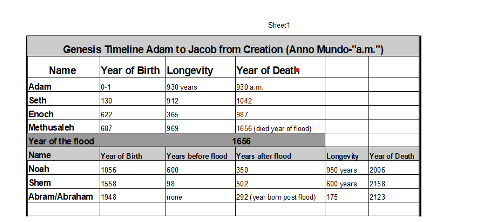
How many of the descendants of Adam knew Noah? According to the biblical timeline of the years counted to the birth and death of Methuselah, Adam was still alive during Methusaleh’s life. Methuselah was born 687 years after creation and died the year of the flood (1656) Though Noah did not know Adam, Methuselah did– for Adam was alive for 247 years of Methuselah’s life. Adam’s influence must have affected him. Methuselah also knew Enoch, though Enoch was “taken” some 69 years before Noah was born, so Methuselah served as a bridge between Adam, Enoch and Noah, who all are reported in the Torah as having walked with YHVH. Adam and Noah both were coexistent with Methuselah. And then Noah lived until Abram was 58 years old. But Shem was alive during the entire life of Abram/Abraham. So we see Adam, Methuselah, Noah, Shem, Abram– A short father to son line to pass on the word of mouth story of the creation, the temptation in the garden, Adam’s, Methuselah’s, and Noah’s walk with God–all this before God commanded Abram to walk with Him. So maybe Abram knew a little already of the walk that his ancestors had lived out?! Now Shem, born 98 years before the flood (see Genesis 11:10 where it states that Shem was 100 years old two years after the flood) and lived another 500 years after the birth of Arphaxad places his death from the year of creation (hereafter referred to as anno mundo, a.m.) at 2158 a.m. 

For calculating the birth of Abraham (70 years into Terah’s life—Genesis 11:26, Terah being born 1878 a.m.) would make the birth of Abram to be in the year 1948 if, indeed he was the son born in Terah’s 70th year; This is based on:

1). Abram is mentioned first in the verse recording the births of the three sons of Terah 

2). Abram was the only notable spiritual character in the story. See Gen 12:4. From a clear stating of Terah’s birth in 1878 plus 70 years for the birth of Abram would give us the year 1948. Check out this chart:

There is a common teaching that Abram stayed in Haran until his father’s death, but the timing does not line up with future events. Terah died at 205 years of age. Abram was born in Terah’s 70th year but left Haran when he was 75. Let’s see more on this:

In Genesis 12:1 Abraham is told by YHVH:

“Get thee out of thy country, and from thy kindred, and from thy father’s house, unto a land that I will show thee;”

Did Abram tarry long after the call for his father to die?  He obviously would not have waited many years to leave. Why does the text mention his father’s house if his father had passed away? If his father was dead, then it would not have been a test for Abram to leave–his father would no longer have been there to detain him. And why, later, in sending his servant to seek a wife for Isaac, did Abraham mention that he had left his father’s house and his kindred as God had instructed him? Since he left both his father’s house and kindred, neither his father nor his kindred were dead at that time. Later, when Abraham sent his servant to find a wife for Isaac he tells him:

Gen 24:7 “The LORD God of heaven, which took me from my father’s house, and from the land of my kindred, and which spake unto me, and that sware unto me, saying, Unto thy seed will I give this land; he shall send his angel before thee, and thou shalt take a wife unto my son from thence.”

And when we think of why Abraham did not go back himself to find a wife for Isaac, we remember that he had been told to leave that land, his father’s house AND his kindred. So he did not return there in obedience to YHVH’s original command, and now, he could only send his servant there, and under strict orders to not take Isaac to Haran. His descendants were not to return to the place where he had been told to leave.

Gen 24:6 “And Abraham said unto him, Beware thou that thou bring not my son thither again.”

So, to restate what we have found so far:  Abram was born when Terah was 70 and he was 75 when he left Haran; we find that Noah and Shem were both still alive. Abram being born in 1948 a.m. indicates that Noah died 58 years later in 2006 a.m. while Abram is still in Haran and before the call of YHVH to leave. Abraham dies in 2123. Shem dies in 2158 outliving Abraham by 34 years! So he had a lot of time to teach him about the Creator, 175 years of his life and 105 years after he left his father’s house and kindred. Does the Bible refer to Shem anywhere in relation to Abraham? Whether Noah and Shem lived near Abram in his journeyings we have little to go on, but later we see Shem appear in Abram’s life.

Shem was Melchizedek. How so?

1) Shem was the only one left of the royal line from Adam and then Seth, 2) Noah placed a special spiritual blessing on Shem at the time he and Japheth walked backwards to cover Noah’s nakedness (Genesis 9:26:27). He was exalted above both Japheth and Ham at this time.

3). Melchizedek was king of Salem, which seems to be Jerusalem–Salem being the place God chose to place His name. 

4). Melchizedek was a righteous king according to the Hebrew meaning of his name, and 4) is declared “priest of the Most High God”.

5). Abram paid tithes to him after the battle of the kings. (When the Bible uses, El Elyon (Most High God), it is not talking of just any god that is worshiped. Elyon is used here for the One and only God. Check out my other article on Abraham and Melchizedek here.

So as I stated at the beginning, Abram, later called Abraham, had to learn to walk with YHVH: (We remember that Noah is mentioned as having walked with God and likely taught Abram a thing or two, which would mean that Abram had an idea of what YHVH meant when he was commanded to walk before God and be perfect.)

“And when Abram was ninety-nine years old, YHVH appeared to Abram, and said to him, I am the Almighty God; walk before Me, and be perfect.” Genesis 17:1

And this is fitting for the father of all those who are sons of Abraham–The walk has to be learned! Since Noah and Shem were still alive during the life of Abram, he would have learned from them even before God spoke to him and guided him directly.

As I said in my first article: (see here):, the obedience levels of Noah and Abraham were different. By no means did Noah cause the flood as some commentators suggest, (because he did not wrestle with God for the salvation of the wicked preflood world.) On the other hand, Abraham clearly had trouble believing the Eternal’s promises several times in his walk with YHVH. He gave his wife away twice out of fear, he took Hagar at Sarah’s suggestion to create a son. Which even today haunts the People of the Book! Even so, his walk in Emunah was growing, as the Torah records:

“And he believed in YHVH; and he counted it to him for righteousness.” Gen 15:6

Still later, he argued with God about the destruction of Sodom. Yes it was noble that Abraham tried to intercede for Sodom, but perhaps he still lacked trust that God knew what He was doing. Perhaps he had heard the horror stories of the flood and didn’t want this to happen to anyone ever! But ultimately the Almighty taught Abraham to trust, and the rest is history!

For the sake of Torah,

Ariella

¿Yahwéh? ¿Yehová? ¿O algo más?

Hay mucha discusión entre aquellos que toman la Biblia como la única Palabra válida de Dios.

Nadie conoce realmente la pronunciación del NOMBRE, ni siquiera cuando afirman saberlo. Creo que algún día será revelado, no por algún erudito, sino por Aquel a quien pertenece ese nombre. ¿Y es realmente un nombre o una descripción de Quién es Él? Creo esto último, pero esa es mi opinión.

No creo que ninguna de las formas escritas arriba sea correcta. Déjame explicarte por qué.
A Yahweh le falta la O y Yehovah usa la “e” en lugar de la “a” de Yah que sabemos que se usa en otros lugares de la Biblia.

¿Por qué necesita la O?
Porque la categoría del tiempo presente del hebreo es “Hove”

“En hebreo, el término para “tiempo presente” (gramática) es הוֹוֶה (pronunciadoHove), que literalmente significa “tiempo presente” o “ahora”.Enlace

Entonces, ¿qué significaría que Dios está en el presente?

La mayoría de los judíos conocen la canción Adon Olam, que expresa la naturaleza eterna de Dios.

Aquí está la letra de uno de los estrofas, transliterada para ti:

V’acharei kichlot hakol,

l’vado yimloch nora.

V’hu hayah, v’hu hoveh,

v’hu yihyeh, b’tifarah.

Y en Español:

Y después de todas las dificultades,

Solo, reinará en el terror.

Y fue, y esta,

Y así será, en gloria.

Las palabras resaltadas arriba significan: él era, él es y él será.

Así que si los ponemos todos juntos obtenemos algo como Yahoveh.

Dos ejemplos de la Biblia que muestran la parte “hoveh” del nombre:

Números 13:16: «Estos son los nombres de los hombres que Moisés envió a reconocer la tierra. Moisés llamó a Oseas hijo de Nun Yehoshua».

¿Por qué era importante cambiar su nombre antes de ir a espiar la tierra de Canaán?

Hoshea (Hôshēaʿ) significa “salvación”, y fue cambiado a Joshua (Yehôshuaʿ) que significa “Yahoveh es salvación”.

“Al insertar el elemento divino “Yah”, Moisés cambió el enfoque: las victorias de Josué no serían obra suya, sino de Dios”.Enlace

El nombre de Jehosafat (rey de Judá) se encuentra en el libro de los Reyes (capítulo 22).

Como saben los hablantes de hebreo, no hay J en hebreo. (Jehová)

Su nombre forma parte del nombre de YHVH y significa que YHVH ha juzgado. Aquí hay unEnlacepara la etimología.

Echemos un vistazo: Josafat

Y-a-shafat. La primera parte es parte del nombre de YHVH. La segunda parte, Shafat, es:

“La forma masculina en pasado del verbo “juzgar” (לִשְׁפּוֹט,olla de barro) en tercera persona del singular (él/ello) es שָׁפַט (Shafat).”Enlace

Así que, queridos lectores, en nuestra continua búsqueda del nombre, solo puedo decir que aún no hemos llegado a ese punto, aunque este breve estudio debería abrir algunas puertas para repensar la forma en que se pronuncia. Desafortunadamente, el nombre se perdió durante miles de años para la mayoría de los estudiosos de la Biblia. Quizás se perdió porque no debía usarse a la ligera, y mucho de lo que se hace en el supuesto nombre de YHVH en realidad profana ese nombre.

¿Qué dice el Mandamiento?

Éxodo 20:7“No tomarás el nombre de YHVH tu Dios en vano; porque YHVH no dará por inocente al que tome su nombre en vano.” Aquí está la etimología BDB para este versículo. Enlace y Aquí.

Resumiendo lo que dicen estos enlaces: no debe usarse a la ligera para hacer un juramento frívolo, y no debe volverse “vacío” o vano al pronunciarlo sin pensar. Pero ¿no debería usarse nunca?

Deuteronomio 6:13: “A Jehová tu Dios temerás, y a él servirás, y por su nombre jurarás.” Véase tambiénSon las 10:20.

¡Feliz búsqueda!

Ariella

Yahweh? Yehovah? Or something else?

There is much discussion among those who take the Bible as the only valid Word of God.

Nobody really knows the pronunciation of the NAME, even when they claim to know it. I believe it will one day be revealed, not by some erudite scholar but by the ONE who owns that name. And is it really a name, or is it a description of who He is? I believe the latter, but that’s me.

I don’t believe either of the forms written above are correct. Let me tell you why.
Yahweh is missing the O and Yehovah uses the “e”instead of the “a” of Yah which we know is used in other places in the Bible. 

Why does it need the O?
Because the present tense category of Hebrew is “Hoveh” 

“In Hebrew, the term for “present tense” (grammar) is הוֹוֶה (pronounced hove), which literally means “present time” or “now”. Link

So what would it mean that God is in the present? 

Most Jews know the song Adon Olam which expresses the eternal nature of God. 

Here are the Lyrics, transliterated from Hebrew for you:

V’acharei kichlot hakol,

l’vado yimloch nora.

V’hu hayah, v’hu hoveh,

v’hu yihyeh, b’tifarah.

And in Hebrew: 

וְאַחֲרֵי כִּכְלוֹת הַכֹּל,

לְבַדּוֹ יִמְלוֹךְ נוֹרָא.

וְהוּא הָיָה, וְהוּא הֹוֶה,

וְהוּא יִהְיֶה, בְּתִפְאָרָה

In English, the highlighted words mean, he was and he is and he will be. 

So if we put them all together, we get something like Yahoveh. 

Two examples from the Bible that show the hove  part of the name:

Num 13:16: “These are the names of the men who Moshe sent to spy out the land. Moshe called Hoshea the son of Nun Yehoshua.” 

Why was it important to change his name before he went to spy out the land of Canaan?

Hoshea (Hôshēaʿ) means “salvation”, and it was changed to Joshua (Yehôshuaʿ) which means “Yahoveh is salvation.”

“By inserting the divine element “Yah,” Moses shifted the focus: Joshua’s victories would not be self-wrought but God-wrought.” Link

The Name Jehosaphat (a king of Judah). He is found in the book of Kings (chapter 22).

As Hebrew speakers know, there is no J in Hebrew. (יְהוֹשָׁפָט) 

His name takes part of the name of YHVH and signifies YHVH has judged. Here is a Link for the etymology. 

Let’s take a look:יְהוֹשָׁפָט

Y-ho-shaphat. The first part is part of the name of YHVH. The second part Shafat is:

“The past tense masculine form for the verb “to judge” (לִשְׁפּוֹט, lishpot) in the third-person singular (he/it) is שָׁפַט (shafat).” Link

So dear readers, in our ongoing quest for the name, all I can say is we are not quite there yet, though this little study should open some doors to rethinking what has been thought of how to pronounce the name. Unfortunately, or not the name was lost for thousands of years to most students of the Bible. Perhaps it was lost because it was not to be used lightly, and much of what is done in the supposed name of YHVH actually profanes that name. 

What does the Commandment say?

Exodus 20:7 “Thou shalt not take the name of  YHVH thy God in vain; for YHVH will not hold him guiltless that takes his name in vain.”  Here is the Brown Driver Briggs etymology for this verse.Link and Here.

Summing up what is said in these links: it is not to be used lightly to take a frivolous oath, and it must not be made “empty” or vain by idly taking it upon one’s lips. But should it never be used?

Deu 6:13: “You shall fear YHVH your God; and him shall you serve, and shall swear by his name.” See also Deu. 10:20.

Happy searching!

Ariella

Subiendo a la Montaña del Templo

Mi Viaje al Har HaBeit

Por Ariella Golani

He tenido lo que llamo “síndrome de confinamiento” durante los últimos cinco años. Todo comenzó con los confinamientos físicos impuestos por los gobiernos durante la época del Coronavirus, y luego, desde la masacre del 7 de octubre en adelante en Israel, vivimos bajo la presión constante de permanecer cerca de casa por si las bombas apuntaban a nuestra ciudad. Mi amiga, Judy de Tzfat, me invitó decenas de veces a encontrarme con ella en Jerusalén y subir juntas al Har HaBeit (el Monte del Templo) para hacer sentir nuestra presencia y orar por la restauración del Templo y de la tierra de Israel. No había estado en Jerusalén durante 5 años cuando visité el Kotel (el Muro Occidental). Y habían pasado 35 años desde la última vez que realmente subí a la Montaña. En aquel entonces, la presencia de judíos en el sitio no era bienvenida. Con la insistencia continua de judíos con el Templo en el corazón y en la mente, el lugar ha comenzado a permitir la postración en al menos un sitio y también ciertas oraciones, aunque no se permiten siddurim (libros de oración).

Los ruegos de varios amigos y familiares enfermos dieron inicio a mi viaje. Me levanté de la cama a las 4:30 de la mañana para tomar el autobús hacia Jerusalén a las 6. El caso de mis amigos hispanos de Centro y Sudamérica ha pesado en mi corazón por algún tiempo. Muchos de ellos descienden de “conversos” judíos de la diáspora (personas que se hicieron católicas para salvar sus vidas). Después de la inquisición en España y Portugal, muchos de ellos huyeron a las Américas y a otros lugares. Conozco a algunos que han dejado personalmente el cristianismo, que les fue transmitido por sus antepasados, quienes fueron amenazados con tortura y muerte por esos países. Lamentablemente, muchos de sus descendientes no tienen documentos que prueben quiénes son. Lo único que tienen es el conocimiento interior de que algo dentro de ellos clama por regresar a la tierra y al pueblo de Israel. Este clamor no expresado, desgraciadamente, no es escuchado por los gobiernos políticos ni por el Estado de Israel. Para que estos conversos vengan a Israel, deben hacer lo imposible: convertirse a una forma aceptada de judaísmo, lo cual es extremadamente costoso, cuesta miles de dólares y aun así hay poca garantía de que el rabinato israelí los aceptará.

Países como Cuba no tienen embajada israelí a la cual acudir, y la gente vive de mendrugo en mendrugo, apenas sobreviviendo, por lo que la idea de una conversión o incluso obtener una visa de turista por 3 meses a Israel es completamente imposible. Así que una de mis oraciones, la cual llevaba en mi corazón y escribí en un trozo de papel que coloqué en el Muro Occidental (Kotel), fue por una puerta abierta para la diáspora hispana de “conversos”, aquellos que realmente desean regresar a la tierra de nuestros antepasados.

Fue un largo viaje en autobús. La Carretera 90 atraviesa Judea y Samaria (conocida por el mundo como Cisjordania). El autobús bajó por las colinas secas hasta que vimos un destello del Mar Muerto, y luego giró hacia el oeste hacia Ma’ale Adumim, la última ciudad antes de la barrera entre el área conflictiva y el dominio judío. En la barrera (como un cruce fronterizo) dos soldados subieron al autobús. Uno se quedó delante junto al conductor por si surgía algún problema, mientras el otro caminó por el pasillo inspeccionando las filas de pasajeros en busca de cualquier cosa sospechosa. Al avanzar por la puerta para ascender la colina hacia Jerusalén, el tráfico se hizo cada vez más denso. El autobús se retrasó casi una hora, pero afortunadamente Judy estuvo dispuesta a venir a encontrarme en la salida del tren ligero que va desde la estación central hasta muchas partes de Jerusalén.

Tomamos el autobús #38, que nos llevó cerca del Kotel, desde donde el pasadizo en forma de túnel asciende hasta la cima del Har HaBeit. Como Judy va casi todas las semanas, los guardias la conocen y no fuimos examinadas más allá del primer detector de metales.

Es desalentador darse cuenta de cuánto se ha profanado el propio Monte por parte de quienes no respetan el lugar que HaShem (YHVH) eligió para poner Su nombre y que ha sido el sitio más sagrado de la tierra, al haber albergado dos de nuestros Santos Templos, destruidos por los enemigos de Israel: Babilonia y luego Roma. Según la historia, la Presencia Santa de nuestro Dios había abandonado el primer templo debido a la desobediencia de nuestros antepasados. En Ezequiel 7:20–25, el profeta describe la partida de la Presencia Divina del primer Templo.

Cuando la esposa de Jonatán dio a luz después de que él muriera junto con el rey Saúl, exclamó —esto era acerca del Mishkán en Shiló, antes de la construcción del primer Templo, pero muestra que el arca de Dios debe estar presente en el Templo—:

“La gloria se ha apartado de Israel, porque el arca de Dios ha sido capturada.” (1 Samuel 4:22)

Nunca hubo un resurgimiento de la Presencia Divina en el segundo templo después del exilio. ¿Por qué?

“El historiador judío Josefo registra que cuando el general romano Pompeyo entró en el Lugar Santísimo en el año 63 a. C., encontró una habitación vacía, ya que el Arca del Pacto llevaba mucho tiempo desaparecida. Esta ausencia del Arca, la manifestación física de la presencia de Dios en el Primer Templo, a menudo se interpreta como que la presencia divina ya no estaba allí de la misma manera.”

La esperanza de muchos en Israel es que pronto Dios regresará a este Lugar y veremos el fin de la guerra y del odio que por tanto tiempo ha perseguido al pueblo judío. Que los judíos se convertirán en la Luz prometida a las naciones, profetizada por el profeta Isaías:

“Yo, YHVH, te he llamado en justicia, y te sostendré por la mano, y te guardaré, y te daré por pacto al pueblo, por luz de los gentiles.” (Isaías 42:6)

Al entrar al pasadizo entablado del túnel, íbamos acompañadas por policías con uniformes negros, algunos árabes, otros judíos. Se nos indicó que no se permitían libros de oración y que solo en ciertos lugares podíamos inclinarnos y rezar. Otros lugares se consideraban ofensivos para los musulmanes si se permitía que los judíos lo hicieran. Vimos pilares antiguos, escalones y restos de lo que alguna vez fue, pero en su mayor parte, la sólida cúpula dorada sobre la mezquita dominaba todo y podía verse desde casi cualquier punto dentro o alrededor de Jerusalén.

Mi clamor sincero por la restauración de este lugar trajo otra oración: que el Dios eterno y perdonador de nuestros ancestros recordara Su promesa a Abraham, Isaac y Jacob, y regresara para consolar a Su pueblo Israel y una vez más hacer sentir Su Presencia, y morar en este Monte Santo, que ha sido profanado durante casi 2.5 milenios. Y nuevamente preguntamos: ¿por qué? ¿Por qué la Presencia Divina no regresó al Segundo Templo? ¿Se perdió algo en el exilio a Babilonia? ¿Había surgido una nueva religión que sustituyó a la enseñada en el Sinaí? ¿Y creó esta religión costumbres y tradiciones propias que hicieron que los judíos no necesitaran que el Eterno los gobernara?

Al acercarnos al final de nuestro recorrido alrededor de la cima de la montaña, vimos escalones que habían permanecido desde los tiempos del Segundo Templo. Subí a uno de ellos, donde pude decir en voz baja la oración de Oseh Shalom.

“Oseh shalom bimromav”: Que Aquel que hace la paz en las alturas.

“Hu ya’aseh shalom aleinu”: Haga la paz sobre nosotros.

“V’al kol Yisrael”: Y sobre todo Israel.

“V’imru amen”: Y digamos, amén.

עֹשֶׂה שָׁלוֹם בִּמְרוֹמָיו, הוּא יַעֲשֶׂה שָׁלוֹם עָלֵינוּ וְעַל כָּל יִשְׂרָאֵל, וְאִמְרוּ: אָמֵן.

En un momento, los hombres y mujeres del recorrido se separaron, y algunos de nosotros nos tendimos en el suelo boca abajo con nuestras cabezas y manos extendidas hacia donde habría estado el Lugar Santísimo. Hubo una sensación increíble de luz y paz allí. Era casi como si la Presencia Divina estuviera flotando cerca. Es un lugar donde todo judío que tenga un corazón para ser Uno con nuestro Pueblo y Uno con Dios debería estar. Es el verdadero hogar del pueblo judío y de las diez tribus de Israel. Realmente creo que es la presencia y las oraciones de los humildes y contritos, que buscan a su Dios, lo que traerá de vuelta el Fuego Santo al Monte del Templo.

Me resistía a irme, pero el recorrido había terminado y los policías nos instaban hacia la salida. Creo que estuvimos allí solo 30 minutos. Bajamos entonces al Kotel y allí coloqué mis papelitos con oraciones escritas para diferentes personas y causas.

Me despedí de Judy y esperé a otra amiga, Miriam, quien pronto llegó para acompañarme mientras me sentaba frente al muro. Después de que ella oró, nos lavamos las manos en la fuente de la salida y fuimos a buscar un autobús hacia la terminal para regresar a nuestras casas en los Altos del Golán.

Esta no será la última vez que haga este viaje. Fue un día de recuerdo y, aunque estaba cansada después del trayecto en tres autobuses y dos trenes, valió la pena. Ha desaparecido la sensación de encierro que me mantuvo estancada por tanto tiempo.

“Si me olvidare de ti, oh Jerusalén, pierda mi diestra su destreza.” (Salmo 137:5)

Going up to the Mountain

My Journey to the Temple Mount

by Ariella Golani

I have had what I refer to as “lock-down syndrome” over the last five years. It all started with the physical lock-downs forced by the governments during the time of the Corona Virus and then from the October 7 massacre and onward in Israel, we had the constant pressure to stay near home just in case bombs should target our town. My friend, Judy in Tzfat  invited me dozens of times to meet her in Jerusalem and go together to Har HaBeit (the Temple Mount) to make our presence felt and to pray for the restoration of the Temple and the land of Israel. I had not been to Jerusalem for 5 years when I visited the Kotel (Western Wall).. It was 35 years before that when I actually went up to the Mountain. And at that time, the presence of Jews on the site was not welcome. With the continual insistence of Jews with the Temple in heart and mind, the place has begun to allow prostration in at least one place and prayers, though no siddurim (prayer books) are allowed. 

The appeals from several sick friends and relatives kick started my journey! I got myself out of bed at 4:30 in the morning to meet the 6 a.m Jerusalem bus. The case of my Hispanic friends in Central and South America has been heavy on my heart for some time. Many of these descended from diaspora Jewish “conversos” (people who became Catholic to save their lives). After the inquisition in Spain and Portugal found many of these fleeing to the Americas and other places. I know some who have personally left Christianity, which was passed down to them by their ancestors, who were threatened with torture and death by these countries. Alas, many of their descendants don’t have paperwork to show who they are. All they have is the knowledge that something inside them is crying out to return to the land and people of Israel. This unspoken cry, unfortunately, is not heard by political governments, nor the state of Israel. For these conversos to come to Israel they have to do the impossible: convert to an accepted form of Judaism, which is extremely expensive, costing thousands of dollars and then there is little assurance that the Israeli rabbinate will accept them. 

Countries such as Cuba have no Israeli embassy to appeal to and the people live from bread crust to bread crust barely surviving, thus the idea of conversion or even a visitor’s visa for 3 months to Israel is completely out of the question. So one of my prayers which I bore on my heart and wrote on a scrap of paper which I tucked into the Western Wall (Kotel) was for an open door to the Hispanic diaspora “Conversos”–those who truly desire to return to the land of our ancestors. 

It was a long bus ride. Highway 90 traverses Judea and Samaria (known by the world as the West Bank). The bus moved down the dry hills until we saw a glimpse of the Dead Sea and then turned West towards Ma’ale Adumim, the last town before the barrier between the embattled area and Jewish domain. At the barrier (like a border crossing) two soldiers entered the bus. One stood in front by the driver, in case trouble broke out, as the other walked down the aisle inspecting the rows of passengers for anything that might raise suspicion. As we forged on through the gate to climb the hill up to Jerusalem, the traffic got more and more heavy. The bus was delayed almost an hour, but fortunately, Judy was willing to come meet me at the exit of the light rail which runs from the Central station to many parts of Jerusalem. 

We boarded a #38 bus which took us close to the Kotel from where the boarded tunnel passage climbs up to the top of Har HaBeit. Because Judy goes nearly every week, the guards know her so that we were not scrutinized beyond the first metal detector. 

It is disheartening to realize how much the Mount itself has been desecrated by those who do not respect the place that HaShem (YHVH) chose to place his name and which has been the holiest place on earth, having housed two of our Holy Temples which were destroyed by Israel’s enemies: Babylon and then Rome. According to history, the Holy Presence of our God had left the first temple because of the disobedience of our forefathers. In Ezekiel 7:20-25 the prophet described the departure of the Divine Presence from the first Temple (Go to verses.)

When Jonathan’s wife gave birth after he was killed along with King Saul, she exclaimed: This was about the Mishkan in Shilo, before the building of the first Temple, but shows that the ark of God must be present in the Temple.

“The glory has departed from Israel, for the ark of God has been captured.” 1Sa 4:22

There was never a resurgence of the Divine Presence in the second temple after the exile. Why?

“The Jewish historian Josephus records that when the Roman general Pompey entered the Holy of Holies in 63 BCE, he found an empty room, as the Ark of the Covenant was long gone. This absence of the Ark, the physical manifestation of God’s presence in the First Temple, is often interpreted to mean the divine presence was no longer there in the same way.” Ai Google.

The hope of many in Israel is that soon, God will return to this Place and we will see the end of war and the hatred that has so long dogged the path of the Jewish people. That Jews will become the promised Light to the nations, prophesied by the prophet Isaiah:

“I, YHVH, have called thee in righteousness, and will hold thy hand, and will keep thee, and give thee for a covenant of the people, for a light of the Gentiles;” Isa 42:6

As we entered the boarded up tunnel walkway, we were accompanied by policemen in black uniforms, some Arabs, some Jews. Our instruction was that there were to be no prayer books and there were only certain places we could incline and pray. Other places were considered as offensive to the Muslims if Jews were allowed. We saw ancient pillars and steps and remnants of what once was, but for the most part the solid golden dome over the mosque was at the center of everything and which can be seen from almost everywhere in or around Jerusalem. 

My heartfelt cry for the restoration of this place brought about  another prayer–that the Eternal forgiving God of our ancestors would remember His promise to Abraham, Isaac and Jacob and return to comfort His people Israel and once again make His Presence known, and to dwell in this Holy Mountain which has been desecrated through the last nearly 2.5 millennia. Again, we ask, why? Why did the Divine Presence not return to the Second Temple? Had something been lost in the exile to Babylon? Had a new religion taken the place of the one taught on Sinai? And did this religion in some way create customs and tradions of its own so that the Jews did not need the Eternal to rule them? 

As we neared the end of our circuit around the top of the mountain, we saw steps that had remained from times of the Second Temple. I stepped up on one where I was able to say the Oseh Shalom prayer quietly. 

“Oseh shalom bimromav”: May He who makes peace in high places.
“Hu ya’aseh shalom aleinu”: Make peace for us
“V’al kol Yisrael”: And for all Israel
“V’imru: amen”: And let us say, amen
עֹשֶׂה שָׁלוֹם בִּמְרוֹמָיו, הוּא יַעֲשֶׂה שָׁלוֹם עָלֵיֽנוּ וְעַל כָּל יִשְׂרָאֵל, וְאִמְרוּ : אָמֵן.

At one point the men and women on the tour separated and some of us lay flat on the ground face down with our heads and hands stretched out toward where the Most Holy Place would have stood. There was an amazing feeling of light and peace there. It was almost as if the Divine Presence  was hovering somewhere near. It is a place every Jew with a heart to be One with our People and One with God should be. It is the true home of the Jewish people and the ten tribes of Israel.  I truly believe it is the presence and prayers of the humble and contrite, who seek their God, that will bring back the Holy Fire to the Temple Mountain. 

I was loath to leave, but the tour was over and the policemen urged us towards the exit. I think we were there only 30 minutes. We then descended to the Kotel below and there I  placed my scraps of paper with prayers written for different people and causes. 

I bade goodbye to Judy and awaited another friend, Miriam who soon came to accompany me as I sat before the wall. After she prayed, we washed our hands in the fountain at the exit, and headed to find a bus to the terminal so that we might return to our homes in the Golan Heights. 

This will not be the last time I make this journey. It was a day of remembrance, and tired as I was on the journey of three buses and two trains, it well worth it. Gone is the locked-down feeling that has kept me stuck for so long!

“If I forget thee, O Jerusalem, let my right hand forget her cunning.”  Psa 137:5