¿Israel, Isra-El? … ¡Ten mucho miedo!

Por Ariella Casey

Israel está en guerra, una guerra en la que el mundo entero atribuye a Israel el genocidio. ¡El genocidio se ha convertido en la etiqueta sucia que nos hemos ganado por luchar contra quienes masacraron a nuestros inocentes y continúan atacándonos! La mayoría de las naciones están enojadas con Israel, aparentemente sin causa. ¡Lo que es justo para ellos, ya no parece que acepten para nosotros, ya no lo es para el ganso! ¡El mundo ha sido atado por los que promueven el nuevo orden mundial–los que odian a los judíos, odian a la Tierra de Israel y también odian todo lo establecido como Santo por el Dios del Universo! Independientemente de la conexión de uno con el judaísmo, hay un pacto que se hizo con la Tierra de Israel y esta podría ser la línea divisoria entre Aquel que permanece y Aquel que cae en este universo loco.

Sin embargo, aquellos que conocen la Biblia saben que cualquiera que odie el Pacto hecho con los hebreos en el Sinaí, odiará al pueblo del Pacto y a la Tierra Prometida.

La advertencia sobre maldecir a Israel fue dada a Abraham, y Balaam la reiteró:

“Bendeciré a los que te bendigan, y maldeciré a los que te maldigan; y en ti serán benditas todas las familias de la tierra”. (Génesis 12:3)

“Bendito el que te bendiga, y maldito el que te maldiga.”” (Números 24:9)

Hace pocos meses:
*Ebrahim Raisi, el Carnicero de Irán, murió en un accidente de helicóptero el 20 y 24 de mayo tras amenazar con destruir Israel.

*El diputado turco Hasan Bitmez murió de un ataque cardíaco el 13 de diciembre después de maldecir a Israel en el escenario. Murió dos días después.

Israel está luchando con todo lo que tiene para sobrevivir. Son pocos los que tienen fe en el Dios de Israel. Muchos, incluso entre los israelíes, se preguntan si el Eterno ha abandonado al pueblo judío. Otros ven que esta misma lucha es lo que separa lo verdadero de lo falso, la plata pura de la escoria, el pueblo de YHWH de los egoístas que reclaman derechos como pueblo elegido. Es una prueba para el mundo entero. En este momento, ¿quién apoya a Israel y quién no? ¿Y dentro de Israel…? ¿Quiénes están unidos y quiénes están críticamente separados?

Las últimas semanas han demostrado que los aspirantes a líderes abandonan el gobierno. Algunos de nosotros tuvimos miedo cuando esto sucedió, otros dijeron: “¡adiós!” ¡Es hora de limpiar la casa, amigos míos, y nunca dudemos de la Mano de YHWH en todo esto! ¿Nos volveremos más débiles con menos?

Gedeón fue llamado a luchar contra Madián durante el tiempo de los Jueces. Reunió a 32.000 hombres de Israel para luchar contra un enorme ejército de 135.000 madianitas. Le dijeron que su ejército era demasiado grande. Además, puso a prueba a los que se ofrecieron como voluntarios una y otra vez hasta que se quedó con 300 hombres elegidos para luchar contra las vastas fuerzas de Madián. Una de las pruebas consistía en preguntar quién tenía miedo.
22.000 regresaron a casa. Los hombres restantes fueron probados en las aguas para ver cómo bebían. De este grupo solamente quedaron 300. A estas alturas, Gedeón debía haber estado temblando, porque ¿cómo podía luchar con tan pocos soldados? Lea la historia de la victoria completa sobre los madianitas en Jueces 7.

En la Torá, Israel no debía alistar hombres para el ejército si estaban recién casados ​​y había otras condiciones. Hoy vemos a hombres y mujeres luchando y el ejército no tiene en cuenta las reglas para las parejas de recién casados. Quizás deberían mirar eso un poco más de cerca.

El Tenaj revela muchas experiencias de los israelitas durante sus guerras con diferentes naciones. No somos como todas las naciones. Israel debe estar solo y no afiliado a las naciones.

Porque desde lo alto de las peñas lo veo, y desde los collados lo miro: he aquí, un pueblo que habitará solo y no será contado entre las naciones”. (Números 23:9)

El mismo nombre “Isra-el” da la descripción de quién será Israel. Israel es el nombre que se le dio a Jacob después de prevalecer sobre el hombre en el desierto.

“Y Jacob se quedó solo, y un hombre luchó con él hasta que rayaba el alba… Y le dijo: ¿Cuál es tu nombre? Y él dijo: Jacob. Y dijo: Tu nombre no será llamado más Jacob, sino Israel; porque has luchado con Dios y con los hombres, y has vencido.” (Génesis 32:24, 27-28 )

¿La palabra Israel יִשְׂרָאֵל se toma de una palabra que significa luchar y ejercer poder sobre otro? Si miramos las dos palabras, una al lado de la otra en el versículo anterior, vemos lo siguiente:

וַיֹּאמֶר לֹא יַעֲקֹב יֵאָמֵר עוֹד שִׁמְךָ כִּי אִם־יִשְׂרָאֵל כִּל י־שָׂרִיתָ עִם־אֱלֹהִים וְעִם־אֲנָשִׁים וַתּוּכָל׃

Para aquellos que no leen hebreo con comprensión, he resaltado las dos palabras: Ysra-el y sarit. Las letras de la raíz son de la misma base: La letra Sin y la Resh. Esto significa que tienen el mismo significado básico. Recordamos que las vocales no cambian el significado raíz de una palabra, por lo tanto, la posición de la vocal pronunciada “ah” no es significativa en lo que quiere decir.

Incluso el contexto de la historia revela que solo Jacob prevaleció sobre el hombre enviado a luchar con él, ya sea un ángel o YHWH mismo. Lea nuevamente: (Vea los versículos 24-28 de Génesis 32).

Entonces el nombre Israel significa luchar con Dios, solamente, por la fe, apoderándose de la fuerza de YHWH.

¿Sabía Jacob con quién peleó? Aparentemente, pensó que estaba peleando con Esaú o uno de sus agentes. Quizás pensemos que en este momento estamos luchando contra Hamás y Hezbolá. ¿Contra quién realmente estamos luchando? ¿No es que realmente Israel está luchando para tomar fuerzas para poder ser la potencia formidable que gobierna el mundo? A medida que el miedo se infunda en las mentes del mundo, esta pequeña nación, elegida por el Eterno, ascenderá al poder. Es cierto que estamos luchando contra quienes nos quieren muertos, ¡pero el propósito de la lucha es otro!

¿Israel prevalecerá? ¡La victoria está incrustada en el nombre! La gente puede fracasar y lo hará, ¡pero la nación se levantará!

“O que se apodere de mi fuerza; que haga las paces conmigo; sí, que haga las paces conmigo”. (Isaías 27:5 )

Tenemos asegurada la victoria, pero debe haber una pérdida casi catastrófica de personas pretenden estar por nuestra causa, incluso gente entre nosotros. Venceremos, pero no obligando a luchar a quienes no aman a Israel. ¡Ahora es un momento de separación! ¡Esto requerirá toda la emuná que cualquiera de nosotros pueda reunir! ¡Aguantemos todos mientras YHWH trae la victoria a través de aquellos pocos que luchan con toda la fuerza que Dios les ha dado!

“Levántate, resplandece, porque ha venido tu luz, y la gloria de Jehová ha nacido sobre ti. Porque he aquí, tinieblas cubrirán la tierra, y oscuridad los pueblos; pero sobre ti nacerá Jehová, y su gloria serán vistos sobre ti. Y las naciones vendrán a tu luz, y los reyes al resplandor de tu levantamiento.” (Isaías 60:1-3)
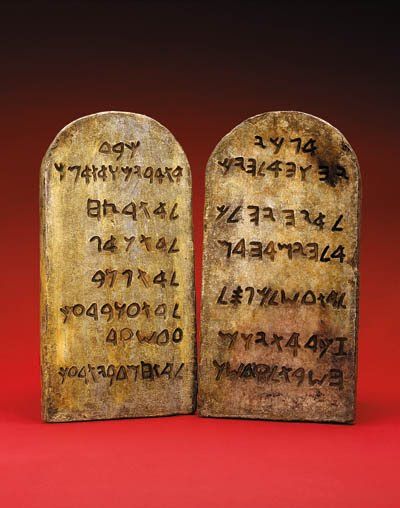
Mystical Moments in Time and Space

When and where was Sinai?

By Ariella Casey

Someone asked during a Parsha Bmidbar discussion: “Why did Hashem choose to give the commandments on Sinai and not in the land of Israel?”

I have a couple of thoughts on this.

YHWH chose Sinai because Israel had to leave idolatrous Egypt before they could have an atmosphere where they could hear the Voice of God. 

Israel needed to receive the commandments before they entered the land and learned to obey. If they had entered the land in their idolatrous state they would not have followed the instruction to wipe out the inhabitants of the land–they would not have had discernment to understand what was so bad about their practices and might have chosen to join them.

Israel needed to be a Holy Nation, they needed to learn to walk with God in the wilderness before they could walk with God in the Land. Unfortunately, there is no desert in the transition from the Diaspora today. And yes, there has been a lot of learned nonsense from the nations–nonsense that comes with the baggage of Aliya to Israel.

The desert of Sinai, a place completely desolate, was a place for learning. No distractions or false teachings. Only the voice of the Eternal could be heard. 

The wilderness represents the idea that these commandments are not location bound. They are for the entire world and, no, I don’t embrace Noahide laws.

Sinai, where the Eternal Covenant was made, was a place beyond time and space. Thus the Eternal Covenant is a Mystical Covenant. The 10 commandments are not limited to several thousand years for a certain people in a certain land. They are Eternal. 

The Covenant people had to be separate from those who were not willing to embrace the covenant. This took 40 years. The Covenant was not to be trusted to those who would not follow it–notwithstanding their Jewish (Hebrew) blood. The same thing goes for today. The idea of being a descendant of the Chosen People has nothing to do with obligational entitlement to blessings. It is mandatory that we spend time at Sinai and “become” the Chosen People. 

Lev 20:26 – “And ye shall be holy unto me; for I YHWH am holy, and have separated you from the peoples to be mine.”

So the Covenant of YHWH is given in a Place outside any nation and in a time that is not time-bound. No one knows the date of the giving of the commandments, other than an approximation.  

The Shavuot holiday also is a little bit mysterious. Each year in Israel we count the Omer rather than basing the Holy Day of Shavuot upon a set calendar. The Holy Days of Pesach and then Shavuot are determined each year after the Barley is seen and the New Moon of the first month opens the door to Pesach. From the day after the Sabbath of Pesach, we count day by day to determine Shavuot. It is a personal counting. And Shavuot occurs only around the time the 10 commandments were given, which are even more mysterious as to time relativity. Shavuot requires us to follow the real signs of the Heavens plus Torah specified math calculation to determine when it falls. There can be no preset calendar. The counting is an individual application, that without it, you would miss some of the mitzvoth of Shavuot. 

Then the day of commandments, which was never specified, happens a few days or weeks later. And that is why! Because it is for all time.

Follow Take Hold the Tzitzit on WordPress.com

Josephus and the Pharisees

By Hakham Meir Yosef Rekhavi

One should always bear in mind that history is written by the victors, and in this case, the victors were the Pharisees who collaborated with the Romans. Many people labour under the assumption that the Pharisees were the “Party of the People”, attracting the masses. This is simply not true. Such information as this is drawn from the Talmud and the works of Josephus, who himself was a Pharisee. However, if we comb through Josephus’ works we will notice that he has not been consistent in his white washing of the Pharisees. First, Josephus confesses as a Pharisee that the Pharisees added to the Tora laws that had not been handed down by YHWH to Moshe and the Children of Yisrael. What I would now explain is this, that the Pharisees have delivered to the people a great many observances by succession from their fathers, which are not written in the laws of Moses; and for that reason it is that the Sadducees reject them, and say that we are to esteem those observances to be obligatory which are in the written word, but are not to observe what are derived from the tradition of our forefathers. (Josephus Ant. 13 Ch. 10 Par. 6) The following passages taken from the works of Josephus clearly illustrate that the people did not adhere to the ways of the Pharisees but to those of the Sadducees. It will also become clear, against popular misconception, that it was the Pharisees who allied themselves and collaborated with the Roman Empire and not the Sadducees. “So she (Alexandra) made Hyrcanus high priest, because he was the elder, but much more because he cared not to meddle with politics, and permitted the Pharisees to do every thing; to whom also she ordered the multitude to be obedient. She also restored again those practices which the Pharisees had introduced, according to the traditions of their forefathers, and which her father-in-law, Hyrcanus, had abrogated. So she had indeed the name of the regent, but the Pharisees had the authority; for it was they who restored such as had been banished, and set such as were prisoners at liberty, and, to say all at once, they differed in nothing from lords.” (Josephus Ant. 13 Ch. 16 Par. 2) In the above passage, we notice several things; i) Queen Alexandra (76-67 b.c.e.), who succeeded her husband Alexander Yannai (103-76 b.c.e.) to the throne, was a sympathizer of the Pharisees. Alexander Yannai was a Sadducees. ii) We also notice that John Hyrkanos (134-104 b.c.e.) the second Hasmonean king and father of Alexander Yannai was also a Sadducee. iii) Queen Alexandra made the Pharisees her advisors and gave them a free hand in the affairs of State. iv) Queen Alexandra’s elder son Hyrkanos was weak and turned a blind eye to the Pharisaic coup d’etat. v) The people were ordered to follow the Pharisees, in other words a totalitarian dictatorial government of “do what we say or else” came about, the people therefore followed the Pharisees not because they loved the Pharisees nor because they agreed with them, but out of fear. vi) The Pharisaic way was installed by the power of the crown and not by the will of the people. vii) The Pharisees now had the power of government and not the Sadducees. Seventy two years later we notice that not much had changed; “HOW Sosius and Herod took Jerusalem by force; and besides that, how they took Antigonus captive, has been related by us in the foregoing book. We will now proceed in the narration. And since Herod had now the government of all Judea put into his hands, he promoted such of the private men in the city as had been of his party, but never left off avenging and punishing every day those that had chosen to be of the party of his enemies. But Pollio the Pharisee, and Sameas, a disciple of his, were honored by him above all the rest; for when Jerusalem was besieged, they advised the citizens to receive Herod, for which advice they were well requited.” (Josephus Ant. 15 Ch. 1 Par. 1) Herod was placed in power by Rome and therefore owed his allegiance to Rome. We notice in the above passage that the Pharisees supported Herod. Therefore, with Herod being a Roman proxy and the Pharisees being supporters of Herod, the Pharisees were also lackeys of the Roman Empire. During Herod’s rule the Kohen Haggadhol (High Priest) was appointed by Herod and seeing that the Pharisees were supporters of Herod it is only natural that he would appoint a Pharisee to the position of Kohen Haggadhol and not a Sadducee who would have been loyal to the Hasmonean dynasty. Therefore, during the Roman occupation the Kohen Haggadhol would have been a pro-Herodian Roman lackey, in other words a Pharisee, and not a pro-Hasmonean anti-Roman nationalist, i.e. a Sadducee. The victors, i.e. the Pharisees, after the Great Revolt and at the time of Emperor Hadrian rewrote history making themselves into anti-Roman nationalist and changing the Sadducees into collaborators when in truth, it was the other way around. Further proof can be found in the works of Josephus that the people supported the Sadducees and not the Pharisees. The words in brackets are my notes. “NOW Hyrcanus (a Pharisee) was heir to the kingdom, and to him did his mother (Alexandra) commit it before she died; but Aristobulus (a Sadducee like his father and grandfather before him) was superior to him in power and magnanimity; and when there was a battle between them, to decide the dispute about the kingdom, near Jericho, the greatest part deserted Hyrcanus, and went over to Aristobulus; but Hyrcanus, with those of his party who staid with him, fled to Antonia, and got into his power the hostages that might he for his preservation (which were Aristobulus’s wife, with her children); but they came to an agreement before things should come to extremities, that Aristobulus should be king, and Hyrcanus should resign that up, but retain all the rest of his dignities, as being the king’s brother. Hereupon they were reconciled to each other in the temple, and embraced one another in a very kind manner, while the people stood round about them; they also changed their houses, while Aristobulus went to the royal palace, and Hyrcanus retired to the house of Aristobulus.” (Josephus War. 1 Ch. 6 Par. 1) We can clearly see from the above passage that the people went over to Aristobulus who was a Sadducee. In fact there were only two Hasmonean rulers who were Pharisees, Alexandra and her weak son Hyrcanus, the rest were Sadducees and the Hasmoneans held the support of the people. It would seem a little strange, if indeed the masses did follow the Pharisees, why they would support a Sadducean dynasty. Josephus further furnishes us with evidence that the people supported the Sadducees and that the Pharisees were pro-Roman and not the other way round as we are led to believe. “At this treatment Pompey was very angry, and took Aristobulus into custody. And when he was come to the city, he looked about where he might make his attack; for he saw the walls were so firm, that it would be hard to overcome them; and that the valley before the walls was terrible; and that the temple, which was within that valley, was itself encompassed with a very strong wall, insomuch that if the city were taken, that temple would be a second place of refuge for the enemy to retire to.” “Now as be was long in deliberating about this matter, a sedition arose among the people within the city; Aristobulus’s (a Sadducee) party being willing to fight, and to set their king at liberty, while the party of Hyrcanus (a Pharisee) were for opening the gates to Pompey… So Aristobulus’s party was worsted, and retired into the temple, and cut off the communication between the temple and the city, by breaking down the bridge that joined them together, and prepared to make an opposition to the utmost; but as the others (the party of Hyrcanus, in other words the Pharisees) had received the Romans into the city, and had delivered up the palace to him (Pompey)… he then disposed all things that were round about them so as might favor their attacks, as having Hyrcanus’s party very ready to afford them both counsel and assistance.” “Now here it was that, upon the many hardships which the Romans underwent, Pompey could not but admire not only at the other instances of the Jews’ fortitude, but especially that they did not at all intermit their religious services, even when they were encompassed with darts on all sides; for, as if the city were in full peace, their daily sacrifices and purifications, and every branch of their religious worship, was still performed to God with the utmost exactness. Nor indeed when the temple was actually taken, and they were every day slain about the altar, did they leave off the instances of their Divine worship that were appointed by their law; for it was in the third month of the siege before the Romans could even with great difficulty overthrow one of the towers, and get into the temple.” “And now did many of the priests, even when they saw their enemies assailing them with swords in their hands, without any disturbance, go on with their Divine worship, and were slain while they were offering their drink-offerings, and burning their incense, as preferring the duties about their worship to God before their own preservation. The greatest part of them were slain by their own countrymen (the party of Hyrcanus, in other words the Pharisees), of the adverse faction, and an innumerable multitude threw themselves down precipices; nay, some there were who were so distracted among the insuperable difficulties they were under, that they set fire to the buildings that were near to the wall, and were burnt together with them. Now of the Jews were slain twelve thousand; but of the Romans very few were slain, but a greater number was wounded.” “But there was nothing that affected the nation so much, in the calamities they were then under, as that their holy place, which had been hitherto seen by none, should be laid open to strangers; for Pompey, and those that were about him, went into the temple itself whither it was not lawful for any to enter but the high priest,… Moreover, he made Hyrcanus high priest, as one that not only in other respects had showed great alacrity, on his side, during the siege, but as he had been the means of hindering the multitude that was in the country from fighting for Aristobulus, which they were otherwise very ready to have done.” (Josephus War. 1 Ch. 7 Par. 1-2,4-6) In the above passages, we notice several things; i) The Sadducees offered resistance to the Romans. ii) The Pharisees sided with the Romans and opened the gates of Yerushalem to let them in, thus betraying the nation to Rome. iii) The Pharisees not only opened the gates of Yerushalem to the Romans but were “very ready to afford them both counsel and assistance” in other words they fought alongside the Romans against the people. iv) The majority of the Jews fought against Rome and supported Aristobulus, they thus supported the Sadducees. v) The defenders of Yerushalem, i.e. the Sadducees, were meticulous in keeping the Shabbath and the Torah. vi) 12,000 Jews were massacred when Yerushalem was taken. vii) This massacre of the people was carried out by the Pharisees and not by the Romans. I find it rather difficult to believe that the people would then wilfully accept the ways of those who were responsible for such a massacre. viii) The people were greatly affected by these events, i.e. the massacre and desecration of the Temple, which were carried out by the Pharisees. Again it seems hardly likely that after such acts as these carried out by the Pharisees that the people would wilfully accept the ways of the Pharisees. ix) Hyrcanus a Pharisee is made Kohen Haggadhol by Pompey and not his brother Aristobulus who was a Sadducee. x) Pompey made sure that the Nation of Yisrael, which sided with Aristobulus a Sadducee, were unable to support him, “but as he had been the means of hindering the multitude that was in the country from fighting for Aristobulus, which they were otherwise very ready to have done.” When it came to the time of the Great Revolt against Rome we see again that little had changed. “Hereupon the men of power got together, and conferred with the high priests, as did also the principal of the Pharisees; and thinking all was at stake, and that their calamities were becoming incurable, took counsel on what was to be done. Accordingly, they determined to try what they could do with the seditious by (their) words, and assembled the people before the brazen gate, which was that gate of the inner temple [court of the priests] which looked toward the sun-rising. And, in the first place, they showed the great indignation they had at this attempt for a revolt, and for their bringing so great a war upon their country; after which they conflated their pretense as unjustifiable.” “So the men of power perceiving that the sedition was too hard for them to subdue, and that the danger which would arise from the Romans would come upon them first of all, endeavored to save themselves, and sent ambassadors, some to Florus, the chief of which was Simon the son of Ananias; and others to Agrippa, among whom the most eminent were Saul, and Antipas, and Costobarus, who were of the king’s kindred; and they desired of them both that they would come with an army to the city, and cut off the seditious before it should be too hard to be subdued.” “Upon this the men of power, with the high priests, as also all the part of the multitude that were desirous of peace, took courage, and seized upon the upper city [Mount Sion;] for the seditious part had the lower city and the temple in their power; so they made use of stones and slings perpetually against one another, and threw darts continually on both sides; and sometimes it happened that they made incursions by troops, and fought it out hand to hand, while the seditious were superior in boldness, but the king’s soldiers in skill. These last strove chiefly to gain the temple, and to drive those out of it who profaned it; as did the seditious, with Eleazar, besides what they had already, labor to gain the upper city. Thus were there perpetual slaughters on both sides for seven days’ time; but neither side would yield up the parts they had seized on.” (Josephus War. 2 Ch. 17 Par. 3-5) i) The Pharisees were in allegiance with the men of power. ii) The Pharisees through seditious words tried to persuade the people to surrender to Rome. iii) The Pharisees did not support the revolt. iv) The Pharisees went over to the Romans and desired that the Romans should conquer Yerushalem. v) The Pharisees helped the Romans and fought against the people. Conclusion: Just as the Pharisees were divided into various schools, the main two being Beth (House) of Hillel and Beth Shammai, the Sadducees were also divided into various schools. However, none of them were Hellenists, but were rather ardent upholders of the Torah. The Rabbanites in the early medieval period tried (to ruin) the name of the Sadducees by claiming they were Hellenists and assimilationists. This lie became entrenched in Rabbanite Judaism and was later taken on by Christian and secular historians of the Second Temple period. The raison d’etre of both the Pharisees and Sadducees can be seen in the meanings of their names. The name Pharisee in Hebrew is Perushi (singular) Perushim (plural), which actually means Separatists and not Interpreters as the Rabbis of the late medieval period liked to claim in order to white-wash themselves. In other words they were Separatists from the pure way of the Torah. The name Sadducee is usually pronounced in Hebrew as Sedhoqi (singular) Sedhoqim (plural). However, this is a misnomer and is a label applied to them by the Pharisees/Rabbanites in order to besmirch them by claiming that the Sadducees were founded by a man named Sadhoq (Zadok). The proper pronunciation was probably Sidduqi (singular) Sidduqim (plural), which is a Second Temple period Hebrew word meaning; justification/righteousness derived from the word Sedheq meaning justice, righteousness, correctness; hence the Hebrew sedhaqa meaning charity/righteous act; and Sadhiq (Zadik) a righteous person. In conclusion, it was the Sadducees who were anti-Roman, pro-Hasmonean, nationalistic, and had the support of the people. While the Pharisees were proRoman, fought against the people, were in control under the Roman occupation, invited the Romans into Yerushalem, aided the Romans during the Great Revolt and thus brought about the destruction of the Temple. 

Who’s in Heaven Anyway?

Death and Immortality of the Soul

Recently I heard a friend comment about all the souls in Heaven that are watching the events on this earth–cheering for the progress in restoring the land of Israel and crying over all the mistakes made by our Government. I was shocked because the Bible, Tanakh, Old Testament if you will, do not say these things. It is clear that those who are dead take no part in what happens under the sun, nor do they even know when their sons come to honor or disgrace. There is no way any human that we know of other than Enoch and Elijah are out there watching us and the events that happen to us. Remember, this is based on the Hebrew Scriptures only. 

So let’s begin with a perusal of texts that relate to this topic. 

Genesis 2:7:: “Then the LORD God formed man of dust from the ground, and breathed into his nostrils the breath (soul) of life; and man became a living being.”

 וַיִּיצֶר יְהוָה אֱלֹהִים אֶת־הָאָדָם עָפָר מִן־הָאֲדָמָה וַיִּפַּח בְּאַפָּיו נִשְׁמַת חַיִּים וַיְהִי הָאָדָם לְנֶפֶשׁ חַיָּה׃

Gen 2:17””But of the tree of the knowledge of good and evil you shall not eat, for in the day that you eat of it you shall surely die.” ( or dying you shall die), 

וּמֵעֵץ הַדַּעַת טוֹב וָרָע לֹא תֹאכַל מִמֶּנּוּ כִּי בְּיוֹם אֲכָלְךָ מִמֶּנּוּ מוֹת תָּמוּת׃

The idea of dying “that same day” is something a lot of students of scripture have tried to wrap their heads around. The verse uses two words for death ( מוֹת תָּמוּת). This is found elsewhere in scripture. When the children of Israel were in the desert and had been complaining about many things, YHVH told Moses that many would die in the wilderness. 

Num 26:65 ”For the LORD had said of them, “They shall surely die in the wilderness.” There was not left a man of them, except Caleb the son of Jephunneh and Joshua the son of Nun.”

This passage also uses the two words that are translated “surely die” in some Bibles (מוֹת תָּמוּת). From both stories we see that physical death happened sometime later. But could it also mean that Adam and Eve, on that day became mortal, no longer having eternal life within them? At that point the element of eternal life had left them. 

But what actually happens when someone dies physically? This is really an important question and one that many religions state that only the body dies and stops breathing but the soul goes on living as an eternal element whether in Heaven or the other Place. But what does the Bible say? 

Is there evidence that the theory of the eternality of the soul is something that comes from paganism? When did this belief begin? I know that in Ancient Egypt, the mummified remains of rulers were buried with treasures and food for them to enter the afterlife. Not only Egypt, but Babylon, the cult of Osiris/Isis and the Greeks held this belief. See here.  It seems all pagan religions clung to this belief–the idea of an eternal life of the soul which elevated the senses to bliss or destined to them to hell and torment. But is this what the Bible says? Let’s look at all of this as we open this up for scrutiny.  The following verses deal with death and the grave:

Job 7:9-10 “[As] the cloud is consumed and vanisheth away: so he that goeth down to the grave shall come up no [more]. He shall return no more to his house, neither shall his place know him any more.”

Job 14:10, 14,15, 21, “But man dieth, and wasteth away: yea, man giveth up the ghost, and where [is] he? If a man die, shall he live [again]? all the days of my appointed time will I wait, till my change come. Thou shalt call, and I will answer thee: thou wilt have a desire to the work of thine hands. His sons come to honor, and he knoweth [it] not; and they are brought low, but he perceiveth [it] not of them.”

Sometimes people tell me that these verses are speaking of the wicked, not the righteous, but I don’t see any surrounding verses that suggest this. Notice in the verse above, Job is waiting for an appointed time. Trusting that God will remember him.  And mind you, Job is listed as one of the three most righteous men.

Eze 14:14: “even if these three men, Noah, Daniel, and Job, were in it, they would deliver but their own lives by their righteousness, says the Lord GOD.”

Psa 6:5 “For in death there is no remembrance of thee; in Sheol who can give thee praise?”

Again, no mention that there are two types of people with different conditions in death. In fact, the wicked would not be praising Yah anyway. 

Psalm 115:17: “The dead do not praise the LORD, nor do any that go down into silence.”

Psa 13:3 “Consider and answer me, O LORD my God; lighten my eyes, lest I sleep the sleep of death.” So here the Psalmist calls death a sleep. 

Once King Saul sought out a Spirit Medium (one who practices Necromancy) which had been forbidden by YHVH in the Torah (see here). He wanted to know the outcome of the battle with the Philistines.Deut 18:9-11 See Here.

Saul asked to have Samuel brought up for him to tell the future of the battle. Samuel said the following:

1Sam 28:15: “Then Samuel said to Saul, “Why have you disturbed me by bringing me up?” Saul answered, “I am in great distress; for the Philistines are warring against me, and God has turned away from me and answers me no more, either by prophets or by dreams; therefore I have summoned you to tell me what I shall do.”

Note that Samuel demanded, “Why have you disturbed me?” As we are seeing, Samuel was dead and no, he did not come down from heaven, he was awakened to speak to Saul and was not happy about it. YHVH clearly forbade communication with the dead. They are not to be woken up, disturbed. Saul paid dearly for his disobedience. Read the whole passage in the link above.

Psa 16:10 “For thou dost not give me up to Sheol, or let thy godly one see the Pit.”

Here it seems that maybe this verse, if taken alone, means that the righteous do not go down to Sheol, but notice that it says that the Eternal will not “give me up to Sheol.” Other versions, us the word “abandon my soul.” If the soul has the possibility of being abandoned to Sheol (the grave), then David is saying that he trusts that his soul will not remain there permanently. And how long is that? Until the resurrection according to Daniel 12 and other passages.

Psa 49:15 “But God will ransom my soul from the power of Sheol, for he will receive me.” [Selah]

What about the resurrection?

Why would YHVH even need a resurrection if He already has the souls of the good people with Him? The resurrection is a principle of faith for both Jews, see here,  as well as most Christian organizations, see here

In Job 19:25-27, Job speaks of waiting for the resurrection: “For I know that my Redeemer lives, and at last he will stand upon the earth; – and after my skin has been thus destroyed, then from my flesh I shall see God, – whom I shall see on my side, and my eyes shall behold, and not another. My heart faints within me!” See verse 25 in Hebrew below:

 וַאֲנִי יָדַעְתִּי גֹּאֲלִי חָי וְאַחֲרוֹן עַל־עָפָר יָקוּם׃

Again, what would be the purpose for Job to claim with faith that the Great Redeemer of souls would remember him in the final day upon the earth if there were no resurrection of the dead?

Daniel 12:1-2 “At that time shall arise Michael, the great prince who has charge of your people. And there shall be a time of trouble, such as never has been since there was a nation till that time; but at that time your people shall be delivered, every one whose name shall be found written in the book.- And many of those who sleep in the dust of the earth shall awake, some to everlasting life, and some to shame and everlasting contempt.”

Did you notice the words,” Sleep in the Dust”? Again we see that the dead are asleep, not wandering around either in Hell or in Heaven. But what returns to Hashem anyway?

And what about Isaiah?
Isa 26:19 “Your dead shall live; together with my dead body they shall arise. Awake and sing, you who dwell in dust; for your dew is like the dew of herbs, and the earth shall cast out the dead”

So, again, what returns to the Creator when one dies?
Eccl 12:6-7: “before the silver cord is snapped, or the golden bowl is broken, or the pitcher is broken at the fountain, or the wheel broken at the cistern, and the dust returns to the earth as it was, and the spirit (ruach) returns to God who gave it.” 

Notice the spirit (breath or ruach)  returns, not the soul.

 וְיָשֹׁב הֶעָפָר עַל־הָאָרֶץ כְּשֶׁהָיָה וְהָרוּחַ תָּשׁוּב אֶל־הָאֱלֹהִים אֲשֶׁר נְתָנָהּ׃

Psa 146:4 “When his breath departs he returns to his earth; on that very day his thoughts perish.” 

 תֵּצֵא רוּחוֹ יָשֻׁב לְאַדְמָתוֹ בַּיּוֹם הַהוּא אָבְדוּ עֶשְׁתֹּנֹתָיו׃

If his thoughts perish, he will not even know he is buried, nor would he know if he is in Heaven. 

Ecclesiastes 9:5-6, 10 “For the living know that they will die, but the dead know nothing, and they have no more reward; but the memory of them is lost. Their love and their hate and their envy have already perished, and they have no more for ever any share in all that is done under the sun. Whatever your hand finds to do, do it with your might; for there is no work or thought or knowledge or wisdom in Sheol, to which you are going.”

The following shows that souls are not ever existing and here even the souls of those who sin (which is all of us), die along with the body. Nobody is in hell suffering damnation, nor in Heaven enjoying paradise except for those such as Enoch, and Elijah whose stories of translation are written for us in the Tanakh. And they did not die first but were taken by the Creator. What was their purpose? I could speculate that they were taken as judges for the generation in which they lived. Are there others? There are no others written of in the Tanakh.  

Ezek 18:4, 20: “Behold, all souls are mine; the soul of the father as well as the soul of the son is mine: the soul that sins shall die.”

“The soul that sins shall die. The son shall not suffer for the iniquity of the father, nor the father suffer for the iniquity of the son; the righteousness of the righteous shall be upon himself, and the wickedness of the wicked shall be upon himself.”

Nefesh and Neshama: The body and the soul–(breath of YHVH) made a living being

Gen 2:7: “Then the LORD God formed man of dust from the ground, and breathed into his nostrils the breath (Neshama or soul) of life; and man became a living being.”

וַיִּיצֶר יְהוָה אֱלֹהִים אֶת־הָאָדָם עָפָר מִן־הָאֲדָמָה וַיִּפַּח בְּאַפָּיו נִשְׁמַת חַיִּים וַיְהִי הָאָדָם לְנֶפֶשׁ חַיָּה׃

Again we see this verse, but for the purpose of identifying the body and the soul as one unit once the breath of his Creator has been placed in his nostrils. 

Many take this to mean that the breath of G-d was actually the soul and it appears to so in this verse. But then why later when man dies, does only the Ruach (breath) return to God? Let me explain again. In Genesis 2:7, the Hebrew is clear that the Creator breathed a soul into Adam and he then became a living creature (Nefesh). So as we have seen above, when man dies only the breath (no not neshama–soul, but ruach–wind or breath) returns to the Eternal. However, and watch this train of thought closely, Adam was created with the potential of eternal life–He was an eternally existent soul. Then something changed when he and Eve ate from the tree of the Knowledge of Good and Evil. 

Gen 2:17 ”But of the tree of the knowledge of good and evil you shall not eat, for in the day that you eat of it you shall surely die.” 

We know that they ate of the tree and something happened to them at that time. My best research reveals that the first pair became mortal on that day. That means there was a change in the soul. No longer was the soul immortal. And so the question arises: If Adam and Eve were no longer immortal and this seems to be the death that was foretold as “in the day that ye eat thereof,” then this describes the change of the soul from immortal  to mortal. Immortality was lost. So then it would follow that the soul now was not able to return to the Creator in its defiled form. The body now was bound up with the soul and this combination (body and soul) would have to wait for the resurrection of the dead. It also suggests that there must be a judgment day which we must study at another time.

If we see again the verse in Ezekiel 18 above that says “the soul that sinneth, it shall die”, it is clear that not only the body dies, but that the soul that is chained to it dies also. After all it is now a mortal soul, not an immortal one. 

I hope this study comes across clearly. If not, please leave a question or comment in the comments section.

For another study, the subject of judgment and eternal reward and punishment must be saved for later. 

Blessings as we dig deeply into the mine of truth!

Ariella

Please share your comments with me, like and share with others and click on the link below to follow my studies. Thanks for your support!

Follow Take Hold the Tzitzit on WordPress.com

K.I.S.S. Cleaning before Pesach

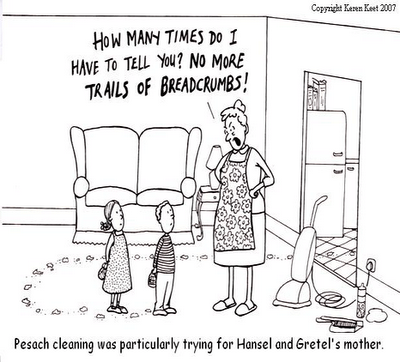
Today we find ourselves just a week before Pesach and most of my Jewish friends are feverishly cleaning every crack and cranny of everything that can be imagined to be Chametz. All of their dishes are stored away and Kosher for Pesach plates and utensils are brought out of where they have been kept free of contamination for the past year! (If you don’t know the word Chametz, See Here). I personally am just starting, one item a day for the next few days. And no, I do not separate my plates and utensils for the holiday. After washing them, I can’t imagine them to have Chametz smeared on them! Today I cleaned the fridge. Tomorrow I will clean the stove…

Well, tomorrow is here and I cleaned both of my ovens and as I cleaned them, I realized that if you cause leaven to be rendered unusable, you destroy it. And that means that it has no more power to leaven anything. Therefore, if you clean the oven with chemicals or heat it to a high temperature, there is no chance that leavening will remain in any kind of active form. So I cleaned it well, but I could not get every dark spot off of the roof of the oven and I am not worried.

In regards to cleaning for Pesach, again we see where fence upon fence has been placed to protect what was given at Sinai. In fact some of these fences have become walls so high you cannot see past them to what was originally given, nor can we understand why. We probably should crash through some of those fences so we can catch a glimpse of the original Torah!

One of these multi-fenced laws that have been built around Sinai is found in the strict observance of Pesach.

I have been in homes that cover everything including the sofas with aluminum foil. I ask myself, so do they think that Hashem does not see through tin foil? Good grief! Every bit of flour, every one of the five grains listed by, no not the Torah, but you guessed it, the Rabbinic books must be taken out of the house or sold to a jewish organization who will sell it on to some gentile we don’t even know. 

And this is the loophole. Just put everything in a closed room or cupboard and sell it to your rabbi. That is, pay to Chabad or any other Orthodox group to have them sell it to a gentile and then buy it back after Pesach. Seems like a great-get rich quick plan, if the proceeds at $25 plus per Jewish person in the world goes into the pockets of the Orthodox institutions. How much would it come to,  if the estimated 10 million Jews in the world earn even $10 each to sell their people’s Chametz? That comes to 10 million dollars!

But of course, IF the Torah commands it, we had better pay for it. But does it? 

Actually the Torah makes no allowance to sell the Chametz. It is to be discarded or taken out of one’s’ property. And also we must see that something has been overlooked. All of the Gerim in the land were to clean for Pesach as well! Look closely at the following verse from Exodus 12:

“…for if any one eats what is leavened, that person shall be cut off from the congregation of Israel, whether he is a sojourner (Ger) or a native of the land. Exodus 12:19”

Let’s look at the Hebrew:

 שִׁבְעַת יָמִים שְׂאֹר לֹא יִמָּצֵא בְּבָתֵּיכֶם כִּי כָּל־אֹכֵל מַחְמֶצֶת וְנִכְרְתָה הַנֶּפֶשׁ הַהִוא מֵעֲדַת יִשְׂרָאֵל בַּגֵּר וּבְאֶזְרַח הָאָרֶץ׃

 So there is a place for the gentile in the Land of Israel, but they are not legitimate buyers of Chametz! Perhaps later we need to study who is the Ger, but the Ger is not a homeborn Jew. And certainly not a convert. I choose to see them as the workers who come to Israel to support the farming and caregiving that is required. They also are to keep many of the laws of Torah.

Also we need to see that a lot of things that are not Chametz that are claimed to be. One is the five grains. The following is claimed by the Orthodox Union:

“If one of the five grains – wheat, barley, rye, oats and spelt – sits in water for more than 18 minutes it becomes chametz, and one may not eat, derive benefit from or own it on Pesach. In addition, Ashkenazim don’t eat kitniyot – a group of foods which includes (among other things) rice, corn, soy and their derivatives – but are allowed to own kitniyot foods on Pesach.” From OUKosher, see here.

But what does the Torah actually say?

Leviticus 23:5-6: “In the first month, on the fourteenth day of the month in the evening, is YHVH’s passover. And on the fifteenth day of the same month is the feast of unleavened bread to YHVH; seven days you shall eat unleavened bread.”

Exodus 12:15-20: ”Seven days you shall eat unleavened bread; on the first day you shall put away leaven out of your houses, for if any one eats what is leavened, from the first day until the seventh day, that person shall be cut off from Israel.On the first day you shall hold a holy assembly, and on the seventh day a holy assembly; no work shall be done on those days; but what every one must eat, that only may be prepared by you. And you shall observe the feast of unleavened bread, for on this very day I brought your hosts out of the land of Egypt: therefore you shall observe this day, throughout your generations, as an ordinance for ever.

In the first month, on the fourteenth day of the month at evening, you shall eat unleavened bread, and so until the twenty-first day of the month at evening. For seven days no leaven shall be found in your houses; for if any one eats what is leavened, that person shall be cut off from the congregation of Israel, whether he is a sojourner or a native of the land. You shall eat nothing leavened; in all your dwellings you shall eat unleavened bread.”

Let’s look at the underlying principle. “You shall eat nothing leavened.” It does NOT say that things that might ferment, like the five grains, must be discarded or what they call Kitniyot (rice, corn, soy). How can you even imagine that soybeans will create leavening so that they become edible just by becoming damp? It is true that they increase in size when you soak and cook them, but this is not leavening–this is normal expansion. Leaven is that which causes flour to rise and create leavened bread.  The simple rule is to not leaven the flour of any type of grain. Get rid of the leavening (the yeast).  Now what was the original leavening process? Sourdough was the way bread was leavened in Egypt. Modern activated dry yeast was unknown at the time. However it does qualify as leavening for works the same way. So concerning the ancient Egyptian leavening process:

So all of one’s sourdough starter must be discarded, which is a bit inconvenient because you then wait until after Pesach to start a new batch. Otherwise the starter would have to be placed outside your property and not attended until after the week of Passover. 

What about beer?

Now some think this is debatable.. But beer is made with yeast. And if you have ever eaten beer bread, you will agree that it leavens the dough. So beer is definitely out. No we don’t eat beer, but people drink it which is basically ingesting it which is what you do when you eat food. Also the brewer’s yeast which is a by product after the making of beer, is questionable. It is a yeast, though it does not serve to leaven bread. 

There are other things that are listed by the OU as no-nos for those who keep passover. Vinegar is listed because it is fermented. But vinegar is not leaven, nor is it used to raise dough. 

And fermentation is not leavening. Only in the case of when fermentation of flour actually creates yeast as in the process of making sourdough bread. 

So it sounds pretty simple, just don’t eat anything with leavening agents. No yeast, no sour dough starter, and no baking soda or baking powder. This means no bread, cakes or cookies, nor beer.  There are a lot of leavening agents used in chips and crackers. Be sure to read the ingredients. And looking at all the ingredients labels in Hebrew may take an extra day for me!

 But, beyond food, there is more to be done. There should be no leavening found in the house, nor in one’s personal property, be it your office downtown or the garage where you park your car. 

Now, before we go crazy cleaning out from under the refrigerator, or tipping over the sofa to see what is down inside the cracks, let’s remember that the Torah stresses several times that it is about not eating leaven. You would never eat the crumbs that you would find under the furniture. And though I would suggest cleaning the fridge from all bread and cake remnants and crumbs and doing a deep clean on the oven and grill, you can avoid the month long scrutiny and the purchase of new utensils and plates just used for Pesach. The basic cleaning needed for Pesach and the Week of Unleavened Bread should not take that long. After all, it really is NOT rocket science! 

And the making of Matzoh, since when did we need the rule of 18 minutes before the flour would start to ferment (again it isn’t about fermentation, it is about leavening)? So what we learned earlier about sourdough– that it takes time to create yeast, is actually when the flour and water mixture creates yeast which is more than a couple of days. By the 3rd or 4th day, the sourdough may work, but usually up to a week of feeding it is required to create the yeast that raises the bread. It will not raise your dough during the first few days after mixing the flour with water. So let’s let go of the idea of fermented dough being leavened. Fermentation is not the same as leavening unless it creates a type of bacteria that turns into yeast, which happens after a long period as in the case of sourdough.  

The Israelites carried their dough wrapped up to their first encampment where they cooked their unleavened bread during that first week of unleavened bread. It may have soured but it was not leavened. Because of this example, we can be sure that the 18 minute rule for Matzoh is just a created rabbinic frustration for Jews. 

So here we are coming up to Pesach and the week of Unleavened Bread. Let’s Keep it Simple Stupid–no heavy duty cleaning inside the pockets of your husband’s favorite winter jacket!

Just don’t leave anything leavened on the property, don’t sell it nor buy it back– Really!!

And here is the promised link to Karaite Matzah! Enjoy!
https://www.nehemiaswall.com/karaite-matzah-recipe

Please help support my channel by liking, sharing, commenting and following me!

Thanks,

Ariella

Follow Take Hold the Tzitzit on WordPress.com