Uncategorized
Memorial for Katzrin’s Fallen Soldiers

The black sky formed a domed canopy above the assembly that gathered in the big square next to the community center in Katzrin. It was a night of remembrance. On the stage stood a flag pole and three soldiers. The Israeli flag fluttered in the mild breeze at half-mast. As residents of the community filed in through several guarded entrances, they were visually checked for weapons and where weapons were found, those who held them were sent to an entrance where licenses must be submitted to the authorities. At this time in Israel, there is danger involved in taking chances in groups of this size. Imagine what could happen, if?… But all ifs dissolved last night, with the armed security and soldiers standing guard.

Five hundred plus white plastic chairs awaited the expected crowd. Eager, yet serious, the attendees arrived, and soon row after row of family and friends shuffled into the makeshift auditorium under the stars. Many were Jews from different countries of the world, and perhaps even more were native-born Israelis.
Instructions had been given via every local media outlet that there would be a one-minute siren at exactly 8 pm, honoring the fallen soldiers of the past 7 months and especially those from Katzrin who gave their lives fighting Israel. The audience would stand at attention while the siren lasted. Further instructions were given to prepare the group for the eventuality of a bombing raid during the program. If this was to happen, all were to lay on the ground face down with their hands over their heads. Those who were disabled were to bow as low as possible in their seats and cover their heads in the same way.
As the siren receded, the audience remained standing as Introductory words and dedications were made, including a memorial Kadesh blessing for Hashem honoring those who died. The three soldiers still stood at stiff attention beside the flagpole on the stage that was illuminated by spotlights of different colors. Not a hand movement nor nod of the head was seen. They stood this way for over an hour, erect and solemn in their military attire.

During this time, family members, friends, officials of the town d others brought colorful memorial wreaths and placed them by the flagpole in front of the three soldiers. The names of the fallen soldiers were read and pictures of their lives illuminated the giant screens on either side of the stage. Sadly, the first soldier was killed on October 7, the day the war began. The second soldier died a few days later that week. The third was much later.
The service had touching eulogies by the family members, two mothers and a father, honoring the boys. Then a talented soldier sang vocal pieces and accompanied himself on a large keyboard.
Some of us did not know Hebrew well enough to follow the service literally, but the soul of the Israeli people was apparent and the meaning of it all sank deep into our hearts. We know that Israel is about being One People on the land, no matter what happens.
The thought has been voiced by many, that at this time when the majority of the world wants to destroy our people, when many so-called Jews, even in government positions in the diaspora are happy to give away our land in exchange for making a name for themselves, we must take the position that we are alone–that we stand for the people of Israel and for this God-given land, whatever comes.
And as always in the past, a remnant will survive and flourish. This must toughen us, come what may. There is no going back. We must strengthen our resolve to stand and not to fall prey to the lies that continue to fall from the mouths of those who hate us, even though many of them are Jews seeking temporal fame and a moment in the limelight.
Like one seasoned veteran soldier said today concerning Jews that betray the Jewish people. “They are traitors, … and what do you do with traitors…?”
Let him who thinks he is standing take heed lest he fall…
Ariella
¡Bombas, terror y mi dulce cachorra Simcha!
Por Binjamin Casey
Son las dos y cuarto de la mañana y el rugido sordo de los F15 que sobrevuelan en constante patrulla me despierta una vez más. Incluso con el suave zumbido del ventilador de ventana que usamos para el “ruido blanco”, la vibración profunda perturba mi sueño y mi cuerpo se tensa por el estrés de “¿Es esto solo otra salida o es algo real?”
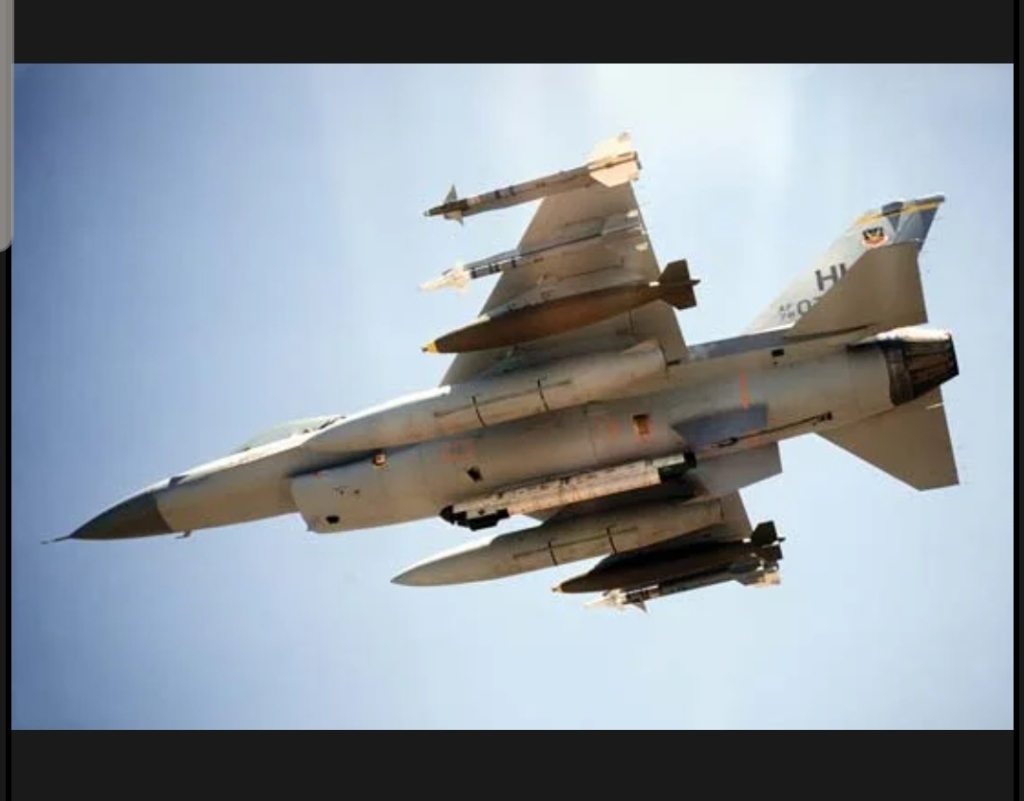
El avión se inclina sobre su cabeza y comienza su amplio giro que lo lleva sobre la Cordillera de Hermón, a través del valle del Jordán y luego por la frontera libanesa de regreso al centro de Israel a través del Kinneret o Mar de Galilea.
Desde el Black Sabbath de octubre, hace poco más de seis meses, las patrullas aéreas y los ataques a Siria y el Líbano se han convertido en una realidad y en un recordatorio físico constante para aquellos de nosotros en los Altos del Golán de que, efectivamente, estamos en guerra. El ruido debería ser tranquilizador y lógicamente lo es, la mayor parte del tiempo. Durante las horas del día miramos hacia arriba para ver los aviones mientras sobrevuelan. Es algo difícil detectar los aviones porque vuelan tan alto y tan rápido. Tienes que juzgar la elevación por la intensidad del ruido y luego mirar hacia adelante, donde parece estar el sonido. A veces tienes suerte y vislumbras un F15, F16 o F35. Otras veces te dejas engañar porque es posible que un avión haya dado un giro cerrado y esté regresando hacia el sonido.
Pero, como dije antes, por tranquilizador que sea, encuentro que el sonido después de seis meses comienza a desgastarse en mi mente cansada de la guerra. Este es el undécimo conflicto importante en el que he estado involucrado y es el más largo y conflictivo.
Hace unos días, mi mente dañada por el trastorno de estrés postraumático finalmente cedió al sonido y rompí a llorar por el estrés. Mientras estaba sentada en nuestro jardín con la cabeza entre las manos llorando, mi pastora alemana Simcha (alegría en hebreo), de pelo largo, se acercó y puso suavemente su enorme cabeza peluda en mi regazo. Ella me miró con sus grandes ojos tristes y me lamió suavemente. Estallé en un torrente de lágrimas y poco a poco la tensión empezó a disminuir. Cualquier rincón oscuro de mi mente que había permitido que emergieron los fantasmas del pasado, lentamente cerró sus puertas y los demonios retrocedieron.
Estoy seguro de que muchos de nosotros en Israel hemos sentido este dolor abrumador últimamente, pero no todos tenemos una Simjá que nos ayude a superarlo. Sintiendo mi cambio de humor, ahora era su turno de recibir atención. Era hora de vengarse y esta niña de dos años quería jugar en serio a cambio de su afecto.
Los días transcurrieron hasta que una mañana llegó la noticia que esperábamos pero temíamos. Irán, el Estado patrocinador del terrorismo global, finalmente había decidido lanzar un ataque contra Israel. Nos advirtieron que se había lanzado un ataque masivo con misiles y que estábamos situados entre una hora y media y dos horas antes del ataque, dependiendo del tipo de proyectil que se lanzara. Elige tu opción; UAV, misiles balísticos y de crucero, así que mientras esperábamos, nuestros antiguos primos en el Líbano estaban aumentando su cuota de cohetes Quassam y Katyusha de corto alcance.
Mis ojos captaron la vista del valle del Yarden o río Jordán, que era como siempre hermoso. Debajo del enorme montículo del Monte Canaán, las luces de Rosh Piná y Hazor Hagalil brillaban en la oscuridad de la noche mientras la corona de la montaña estaba iluminada por las luces de Birya. Hazor, que es donde el profeta Josué, el protegido de Moisés, libró su batalla final después de entrar en la tierra hace unos 3500 años, después de los años de exilio en Egipto y luego de la saga del Éxodo. Esta zona estaba a punto de presenciar otro ataque contra los hijos de Israel.
Las luces continuaron parpadeando tranquilizadoramente y había una tranquilidad inusual en la noche, como si todo el campo estuviera conteniendo la respiración con anticipación. O los aviones habían regresado a la base para rearmarse y abastecerse de combustible o se dirigían hacia el este a través de Siria para hacer frente al ataque que se avecinaba.
El ataque en sí no fue del todo inesperado, ya que el ruido de sables se había prolongado durante días, si no semanas. Sin embargo, lo que sí me sorprendió fue una avalancha de mensajes de amigos en Gran Bretaña e incluso en Estados Unidos preguntando si todo estaba bien y asegurándonos que estábamos en sus pensamientos y oraciones.
Como había pasado la mayor parte de la noche despierto por la adrenalina esperando lo que fuera que nos ocurriera, no había mucho que hacer más que esperar. Entonces, como haría cualquier buen británico en una crisis, fui a prepararme una taza de té y me tranquilicé mientras esperaba.
A la 1:45 a. m., la alarma de mi teléfono comenzó a sonar advertencias de ataque tras ataque y esto ahora llegó más rápido de lo que podía leer. Hasta ahora, la mayoría de los ataques se produjeron en el sur, en las extensiones vacías del desierto de Negev. De repente, mis ojos captaron el brillo de una esfera roja que se elevaba lentamente hacia el cielo en dirección a Tiberio, la antigua ciudad romana y bíblica en Kinneret. Supe en ese momento que había comenzado. El orbe se eleva hacia el cielo y recuerda los días más felices de hace mucho tiempo, cuando la gente se sentaba y miraba las velas romanas arrojar sus orbes al cielo nocturno el 4 de julio o la Noche de las Hogueras para el deleite de los niños. Esta vez, sin embargo, el propósito era mucho más mortal, como lo indicó un repentino destello brillante. Al menos un misil ahora no alcanzaría su objetivo gracias al asombroso sistema de defensa aérea Cúpula de Hierro que ha salvado tantas vidas desde su primer despliegue en 2011. Se han disparado miles de cohetes contra Israel desde 2007, cuando Hamás tomó el control de Israel. La Franja de Gaza y Hezbollah, el representante iraní en el Líbano, y desde entonces disparan conjuntamente cohetes frecuentes e indiscriminados contra Israel. El costo financiero de detener estos cohetes es escandaloso y, sin embargo, sin la Cúpula de Hierro es sólo una suposición calcular el costo en vidas humanas perdidas.
El sonido de las explosiones empezó a resonar por todo el valle y el fuerte estallido de un cohete derribado por nuestras defensas. La Cúpula de Hierro es capaz de rastrear y calcular la velocidad, la dirección y el probable punto de aterrizaje de los misiles entrantes, por lo que sólo dispara a aquellos que considera que probablemente impactarán en áreas pobladas. Aun así, el coste de cada misil ronda los 60.000 dólares. Millones de dólares que podrían haberse gastado en escuelas, hospitales o utilizados en exploraciones científicas en beneficio de la humanidad, se han utilizado en cambio para derribar cohetes lanzados por ultrarreligiosos. musulmanes fanáticos.
Sorprendentemente, el ataque terminó muy rápidamente y comenzaron a llegar los informes iniciales. La única herida reportada fue la de una joven beduina que había sufrido heridas de metralla y algunos edificios fueron alcanzados en una base aérea. Esta noche se estaba presenciando verdaderamente un milagro, pero aún no sabíamos hasta qué punto.
La noche volvió a su solemnidad, los aviones habían regresado a la base y no se oían más explosiones en el valle. Eché un último vistazo por la ventana, asombrado de que se hubieran causado tan pocos daños o lesiones, y finalmente me dirigí a la comodidad de mi cama para dormir un par de horas.
De repente me despertó la estridente sirena antiaérea que subía y bajaba y nos advertía que teníamos 30 segundos para llegar a nuestra habitación segura. Esta vez nosotros éramos el objetivo, habíamos dormido vestidos sabiendo que esta posibilidad podría suceder así que agarramos una bolsa de emergencia y por supuesto a Simcha, quien pensó que esto era solo un juego divertido. Nos dirigimos a nuestro rincón debajo de las escaleras. Esta vez el sonido de las intercepciones de la Cúpula de Hierro fue mucho más fuerte, como un trueno directamente sobre nuestras cabezas, pero mucho más siniestro cuando comprendimos el peligro que podría causar la metralla de estos cohetes. De nuevo, después de lo que pareció muy poco tiempo, todo terminó, y el silencio repentino me recordó las historias que mi abuelo me había contado acerca de cómo después de un bombardeo de artillería en la Primera Guerra Mundial, el silencio repentino fue casi tan opresivo como el ruido del bombardeo mismo. Todo un infierno durante 15 minutos y luego un silencio como una tumba mientras tus oídos volvían a la normalidad. Más tarde esa mañana descubrimos que un cohete, probablemente un Katushkya, había aterrizado en nuestra ciudad. Sin quitarle ningún crédito a los miembros de las FDI y la IAF que habían hecho un trabajo increíble esa noche, el verdadero crédito tiene que ser para el Todopoderoso, sin el cual nuestro país sería un pedazo de tierra humeante con víctimas incalculables.
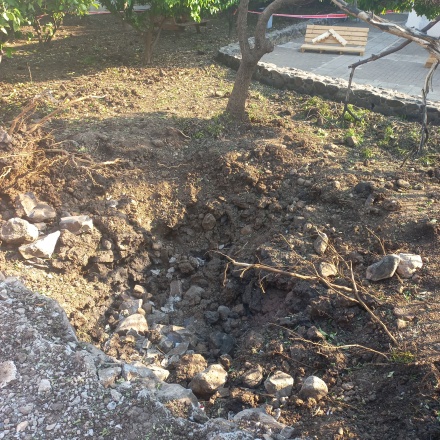
El cohete que había caído en la ciudad había impactado a unos dos metros de un muro de hormigón y roca coronado por una valla de hierro en la única zona de tierra blanda de los alrededores. La pared de roca dirigió la explosión lejos de las casas al otro lado de la calle y arrojó pequeños terrones de tierra y piedras pequeñas a unas dos cuadras de distancia. En el terreno había varios árboles frutales y se pudo ver cómo las raíces de los árboles también ayudaron a contener la explosión y alejarla de las casas a unos diez o quince metros de distancia. Alrededor del punto de impacto había viviendas de varios pisos que fácilmente podrían haber sido impactadas y destruidas. Si el cohete hubiera aterrizado al otro lado de la pared de ladrillos, se habría enterrado en un camino adoquinado hecho con ladrillos de tres kilos. Cada uno de esos ladrillos podría haberse convertido en misiles y el daño que habrían causado no es difícil de imaginar. Sin embargo, los únicos daños, aunque leves, fueron los de un coche cercano, la barandilla de la parte superior de la pared y varios paneles solares dañados por los terrones de tierra lanzados al aire por el impacto.
Desde esa noche se ha confirmado que en aquella ocasión se dispararon unos trescientos proyectiles contra Israel. La gran mayoría fueron derribados por las fuerzas armadas de Israel y la Cúpula de Hierro y posiblemente por algunos de nuestros supuestos aliados, mientras que a otros se les permitió caer en áreas abiertas.
Gracias al Creador, esa noche solo ocurrió una lesión grave y oramos para que se recupere rápidamente y recupere su plena salud.
Considerándolo todo, el ataque fue un completo y miserable fracaso en lo que respecta a Irán. Con el mayor ataque con misiles de la historia lanzado contra nosotros, nuestras defensas resistieron la prueba y humillaron al agresor.
En los días siguientes, los aviones han reanudado sus patrullas y ataques contra objetivos dentro del Líbano, pero el ruido de su paso todavía me irrita los nervios.
Aunque conozco el compromiso de nuestros valientes soldados y pilotos, su habilidad, dedicación y compromiso continuamente me sorprenden pero sobre todo doy gracias al Eterno por su misericordia y guía.
También agradezco a mi esposa Ariella y a mis queridos amigos por su aliento y apoyo. Por último, mi dulce cachorrito Simcha, sé que es hora de jugar… ¡otra vez!
Bombs, Terror and Sweet Simcha
By Binjamin Casey
It’s two fifteen in the morning and the low roar of the F15s flying overhead on their constant patrols wakens me once again. Even with the gentle hum of the window fan we use for “white noise” the deep throated vibration disturbs my slumber and my body tenses from the stress of “is this just another sortie, or is this the real thing?”

The airplane banks overhead and begins its wide turn that takes it over the Hermon Mountain Range, across the Jordan valley and then down the Lebanese border back into central Israel across the Kinneret or Sea of Galilee.
Ever since October’s Black Sabbath, just over six months ago, aerial patrols and strikes into Syria and Lebanon have become a fact of life and a constant physical reminder to those of us in the Golan Heights that we are indeed at war. The noise should be reassuring and logically is, most of the time. During the daylight hours we look upward to see the aircraft as they fly overhead. It’s somewhat difficult spotting the planes as they fly so high and so fast. You have to judge elevation by the noise intensity and then look ahead of where the sound appears to be. Sometimes you are lucky and get a glimpse of an F15, F16 or F35. Other times you are fooled because an aircraft may have made a tight turn and is going back towards the sound.
But, as I said earlier, reassuring as it should be, I find the sound after six months beginning to wear on my war weary mind. This is the eleventh major conflict I have been involved in and it is the longest and most conflicted one.
A few days ago my PTSD damaged mind finally gave into the sound and I broke down in tears from the stress. As I sat in our yard with my head in my hands weeping, my long-haired German Shepherd Simcha, (joy in Hebrew), came and gently laid her massive shaggy head in my lap. She looked up at me with her big doleful eyes and gently licked me. I broke into a torrent of tears and slowly the tension began to subside. Whatever dark recess of my mind that had allowed the ghosts of the past to emerge, slowly closed their doors and the demons receded.
I’m sure many of us in Israel have felt this overwhelming sorrow of late but not all of us have a Simcha to help us through it. Sensing my change in mood it was now her turn for some attention. It was payback time and this two year old bundle of love wanted some serious playtime in return for her affection.
The days rolled on until one morning the news we had expected but dreaded arrived. Iran, the state sponsor of global terror, had finally decided to launch an attack on Israel. We were warned that a massive missile attack had been launched and that we were situated between 1 1⁄2 to two hours before the onslaught depending on which type of projectile was launched. Take your pick; UAVs, ballistic and cruise missiles–so while we waited our erstwhile cousins in Lebanon were upping their quota of Quassam and Katyusha short range rockets.
My eyes caught the view across the valley of the Yarden or River Jordan, which was as always beautiful. Below the massive mound of Mount Canaan the lights of Rosh Pina and Hazor Hagalil twinkled in the night-time darkness whilst the crown of the mountain was lit from the lights of Birya. Hazor which is where the prophet Joshua, the protege of Moses fought his final battle after entering the land some 3500 years ago after the years of exile in Egypt then the saga of the Exodus. This area was about to witness yet another onslaught against the children of Yisrael.
The lights continued to twinkle reassuringly and there was an unusual quiet to the night as if the whole countryside was holding its breath in anticipation. Either the airplanes had gone back to base to rearm and fuel or they were heading eastwards through Syria to meet the coming onslaught.
The attack itself was not entirely unexpected as saber rattling had been going on for days, if not weeks. What did surprise me though was a rush of messages from friends in Britain and even the USA asking if all was well and ensuring us that we were in their thoughts and prayers.
Since I had spent most of the night awake from my adrenaline waiting for whatever would befall us, there was nothing much to do but wait. So as any good Brit would do in a crisis, I went to make myself a cup of tea and settle down while I waited.
At 1:45 a.m. the home front alarm on my phone started blaring out warnings of attack after attack and this now came faster than I could read them. So far, the majority of the strikes were in the south in the empty expanses of the Negev desert. Suddenly my eye caught the glow of a red orb slowly rising into the sky in the direction of Tiberius, the ancient Roman and biblical city on the Kinneret. I knew at that moment that it had started. The orb rises into the sky reminiscent of happier days long ago when people would sit and watch Roman Candles throw their orbs into the night sky on July Fourth or Bonfire Night to the delight of the children. This time though the purpose was far more deadly as a sudden bright flash indicated. At least one missile would not now reach its target thanks to the amazing Iron Dome system of air defense that has saved so many lives since its first deployment in 2011. Countless thousands of rockets have been fired into Israel since 2007 when Hamas took control of the Gaza strip and Hezbollah the Iranian proxy in Lebanon and since then jointly fire frequent and indiscriminate rockets into Israel. The financial cost of stopping these rockets is outrageous and yet without the Iron Dome it is only a guess to calculate the cost in lost human lives.
The sound of explosions began to echo up and down the valley and the loud boom of an exploding rocket knocked out by our defenses. The Iron Dome is able to track and compute the speed, direction and probable landing point of the incoming missiles so only fires at those that it deems are likely to hit populated areas. Even so the cost of each missile is around 60,000 dollars–Millions of dollars that could have been spent on schools, hospitals or used for scientific exploration to the benefit of mankind have been used instead to knock rockets out of the sky launched by ultra religious fanatical muslims.
Surprisingly the attack was over very quickly and the initial reports started to come in. The only reported injury was a young Bedouin girl who had sustained shrapnel injuries and some buildings which were hit on an airbase. Truly a miracle was being witnessed this night but to what extent we still did not know.
The night returned to its solemnity, the aircraft had returned to base and no more explosions were to be heard in the valley. I took one last look out of the window, amazed that so little damage or injury had been caused, then finally headed off to the comfort of my bed for a couple of hours of sleep.
Suddenly I was awakened by the shrill air raid siren rising and falling and warning us we had 30 seconds to get to our safe room. This time we were the target, we had slept in our clothes knowing that this possibility might happen so we grabbed an emergency bag and of course Simcha, who thought this was just a fun game. We headed for our alcove beneath the stairs. This time the sound of the Iron Dome interceptions were much louder, like a clap of thunder directly over our heads, but much more ominous as we understood the danger that the shrapnel from these rockets could cause. Again after what seemed a very short time it was over, and the sudden silence reminded me of tales my Grandfather had told me about how after an artillery barrage in WW1 the sudden silence was almost as oppressive as the noise of the bombardment itself. All hell for 15 minutes then silence like the grave as your ears returned to normal. Later that morning we found out that a rocket, probably a Katushkya, had indeed landed in our town. Without taking any of the credit away from the members of the IDF and IAF who had all done an amazing job that night the real credit has to go to the Almighty without whom our country would lay a smoking patch of land with untold casualties.
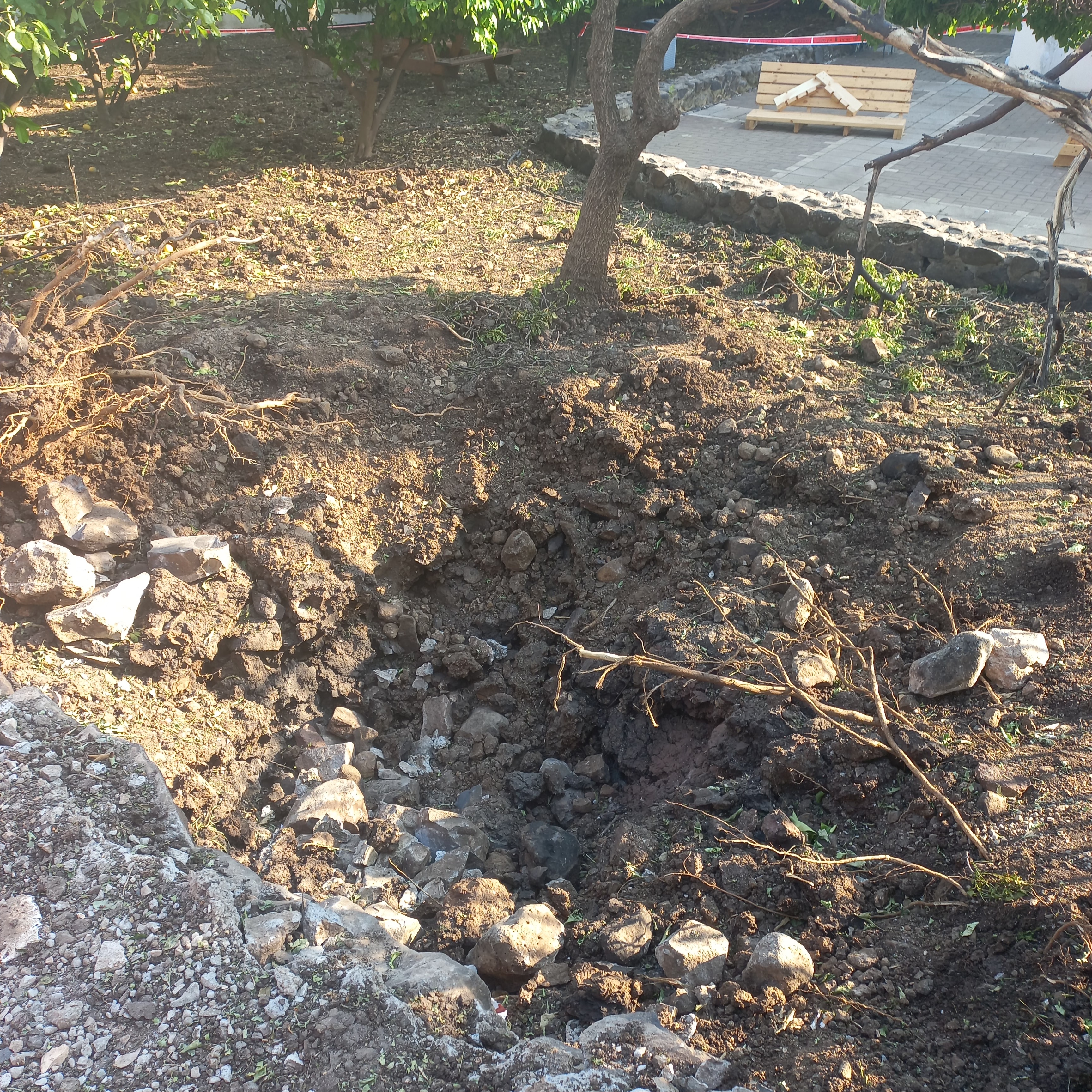
The rocket that had landed in the town had impacted about two meters from a concrete and rock wall topped by an iron fence into the only patch of soft dirt in the vicinity. The rock wall directed the blast away from the houses across the street and threw small clods of dirt and small stones some two blocks away. There were several fruit trees on the piece of ground and it was easy to see how the roots of the trees also helped to contain the blast and direct it away from the houses some ten to fifteen meters away. All around the point of impact there were multi story dwellings that could easily have been hit and destroyed. Had the rocket landed on the other side of the brick wall it would have buried itself into a cobblestone road made with three kilo bricks. Each one of those bricks could have become missiles themselves and the damage they would have caused is not hard to imagine. However, the only damage and it was slight, was to a nearby car, the railing on top of the wall and several solar panels damaged by clods of dirt thrown into the air by the impact.
Since that night, it has been confirmed that some three hundred projectiles were fired at Israel on that occasion. The vast majority were either shot down by the armed forces of Israel and the Iron Dome and possibly some of our so-called allies, while others were allowed to fall into open areas.
Thanks to the Creator only one major injury occurred that night and we pray that she recovers to full health speedily.

All in all the attack was a complete and miserable failure as far as Iran is concerned. With the largest missile attack in history being launched against us, our defenses stood up to the test and humiliated the aggressor.
In the ensuing days the aircraft have resumed their patrols and attacks on targets inside Lebanon, but the noise of their passage still grates on my nerves.
Even though I know the commitment of our brave soldiers and pilots, their skill, dedication and commitment continually amaze me but above all I give thanks to the Eternal for his mercy and guidance.
I am also grateful to my wife, Ariella and dear friends for their encouragement and support. Lastly, my sweet puppy Simcha, I know it’s time to play–Again!
Josephus and the Pharisees
By Hakham Meir Yosef Rekhavi
One should always bear in mind that history is written by the victors, and in this case, the victors were the Pharisees who collaborated with the Romans. Many people labour under the assumption that the Pharisees were the “Party of the People”, attracting the masses. This is simply not true. Such information as this is drawn from the Talmud and the works of Josephus, who himself was a Pharisee. However, if we comb through Josephus’ works we will notice that he has not been consistent in his white washing of the Pharisees. First, Josephus confesses as a Pharisee that the Pharisees added to the Tora laws that had not been handed down by YHWH to Moshe and the Children of Yisrael. What I would now explain is this, that the Pharisees have delivered to the people a great many observances by succession from their fathers, which are not written in the laws of Moses; and for that reason it is that the Sadducees reject them, and say that we are to esteem those observances to be obligatory which are in the written word, but are not to observe what are derived from the tradition of our forefathers. (Josephus Ant. 13 Ch. 10 Par. 6) The following passages taken from the works of Josephus clearly illustrate that the people did not adhere to the ways of the Pharisees but to those of the Sadducees. It will also become clear, against popular misconception, that it was the Pharisees who allied themselves and collaborated with the Roman Empire and not the Sadducees. “So she (Alexandra) made Hyrcanus high priest, because he was the elder, but much more because he cared not to meddle with politics, and permitted the Pharisees to do every thing; to whom also she ordered the multitude to be obedient. She also restored again those practices which the Pharisees had introduced, according to the traditions of their forefathers, and which her father-in-law, Hyrcanus, had abrogated. So she had indeed the name of the regent, but the Pharisees had the authority; for it was they who restored such as had been banished, and set such as were prisoners at liberty, and, to say all at once, they differed in nothing from lords.” (Josephus Ant. 13 Ch. 16 Par. 2) In the above passage, we notice several things; i) Queen Alexandra (76-67 b.c.e.), who succeeded her husband Alexander Yannai (103-76 b.c.e.) to the throne, was a sympathizer of the Pharisees. Alexander Yannai was a Sadducees. ii) We also notice that John Hyrkanos (134-104 b.c.e.) the second Hasmonean king and father of Alexander Yannai was also a Sadducee. iii) Queen Alexandra made the Pharisees her advisors and gave them a free hand in the affairs of State. iv) Queen Alexandra’s elder son Hyrkanos was weak and turned a blind eye to the Pharisaic coup d’etat. v) The people were ordered to follow the Pharisees, in other words a totalitarian dictatorial government of “do what we say or else” came about, the people therefore followed the Pharisees not because they loved the Pharisees nor because they agreed with them, but out of fear. vi) The Pharisaic way was installed by the power of the crown and not by the will of the people. vii) The Pharisees now had the power of government and not the Sadducees. Seventy two years later we notice that not much had changed; “HOW Sosius and Herod took Jerusalem by force; and besides that, how they took Antigonus captive, has been related by us in the foregoing book. We will now proceed in the narration. And since Herod had now the government of all Judea put into his hands, he promoted such of the private men in the city as had been of his party, but never left off avenging and punishing every day those that had chosen to be of the party of his enemies. But Pollio the Pharisee, and Sameas, a disciple of his, were honored by him above all the rest; for when Jerusalem was besieged, they advised the citizens to receive Herod, for which advice they were well requited.” (Josephus Ant. 15 Ch. 1 Par. 1) Herod was placed in power by Rome and therefore owed his allegiance to Rome. We notice in the above passage that the Pharisees supported Herod. Therefore, with Herod being a Roman proxy and the Pharisees being supporters of Herod, the Pharisees were also lackeys of the Roman Empire. During Herod’s rule the Kohen Haggadhol (High Priest) was appointed by Herod and seeing that the Pharisees were supporters of Herod it is only natural that he would appoint a Pharisee to the position of Kohen Haggadhol and not a Sadducee who would have been loyal to the Hasmonean dynasty. Therefore, during the Roman occupation the Kohen Haggadhol would have been a pro-Herodian Roman lackey, in other words a Pharisee, and not a pro-Hasmonean anti-Roman nationalist, i.e. a Sadducee. The victors, i.e. the Pharisees, after the Great Revolt and at the time of Emperor Hadrian rewrote history making themselves into anti-Roman nationalist and changing the Sadducees into collaborators when in truth, it was the other way around. Further proof can be found in the works of Josephus that the people supported the Sadducees and not the Pharisees. The words in brackets are my notes. “NOW Hyrcanus (a Pharisee) was heir to the kingdom, and to him did his mother (Alexandra) commit it before she died; but Aristobulus (a Sadducee like his father and grandfather before him) was superior to him in power and magnanimity; and when there was a battle between them, to decide the dispute about the kingdom, near Jericho, the greatest part deserted Hyrcanus, and went over to Aristobulus; but Hyrcanus, with those of his party who staid with him, fled to Antonia, and got into his power the hostages that might he for his preservation (which were Aristobulus’s wife, with her children); but they came to an agreement before things should come to extremities, that Aristobulus should be king, and Hyrcanus should resign that up, but retain all the rest of his dignities, as being the king’s brother. Hereupon they were reconciled to each other in the temple, and embraced one another in a very kind manner, while the people stood round about them; they also changed their houses, while Aristobulus went to the royal palace, and Hyrcanus retired to the house of Aristobulus.” (Josephus War. 1 Ch. 6 Par. 1) We can clearly see from the above passage that the people went over to Aristobulus who was a Sadducee. In fact there were only two Hasmonean rulers who were Pharisees, Alexandra and her weak son Hyrcanus, the rest were Sadducees and the Hasmoneans held the support of the people. It would seem a little strange, if indeed the masses did follow the Pharisees, why they would support a Sadducean dynasty. Josephus further furnishes us with evidence that the people supported the Sadducees and that the Pharisees were pro-Roman and not the other way round as we are led to believe. “At this treatment Pompey was very angry, and took Aristobulus into custody. And when he was come to the city, he looked about where he might make his attack; for he saw the walls were so firm, that it would be hard to overcome them; and that the valley before the walls was terrible; and that the temple, which was within that valley, was itself encompassed with a very strong wall, insomuch that if the city were taken, that temple would be a second place of refuge for the enemy to retire to.” “Now as be was long in deliberating about this matter, a sedition arose among the people within the city; Aristobulus’s (a Sadducee) party being willing to fight, and to set their king at liberty, while the party of Hyrcanus (a Pharisee) were for opening the gates to Pompey… So Aristobulus’s party was worsted, and retired into the temple, and cut off the communication between the temple and the city, by breaking down the bridge that joined them together, and prepared to make an opposition to the utmost; but as the others (the party of Hyrcanus, in other words the Pharisees) had received the Romans into the city, and had delivered up the palace to him (Pompey)… he then disposed all things that were round about them so as might favor their attacks, as having Hyrcanus’s party very ready to afford them both counsel and assistance.” “Now here it was that, upon the many hardships which the Romans underwent, Pompey could not but admire not only at the other instances of the Jews’ fortitude, but especially that they did not at all intermit their religious services, even when they were encompassed with darts on all sides; for, as if the city were in full peace, their daily sacrifices and purifications, and every branch of their religious worship, was still performed to God with the utmost exactness. Nor indeed when the temple was actually taken, and they were every day slain about the altar, did they leave off the instances of their Divine worship that were appointed by their law; for it was in the third month of the siege before the Romans could even with great difficulty overthrow one of the towers, and get into the temple.” “And now did many of the priests, even when they saw their enemies assailing them with swords in their hands, without any disturbance, go on with their Divine worship, and were slain while they were offering their drink-offerings, and burning their incense, as preferring the duties about their worship to God before their own preservation. The greatest part of them were slain by their own countrymen (the party of Hyrcanus, in other words the Pharisees), of the adverse faction, and an innumerable multitude threw themselves down precipices; nay, some there were who were so distracted among the insuperable difficulties they were under, that they set fire to the buildings that were near to the wall, and were burnt together with them. Now of the Jews were slain twelve thousand; but of the Romans very few were slain, but a greater number was wounded.” “But there was nothing that affected the nation so much, in the calamities they were then under, as that their holy place, which had been hitherto seen by none, should be laid open to strangers; for Pompey, and those that were about him, went into the temple itself whither it was not lawful for any to enter but the high priest,… Moreover, he made Hyrcanus high priest, as one that not only in other respects had showed great alacrity, on his side, during the siege, but as he had been the means of hindering the multitude that was in the country from fighting for Aristobulus, which they were otherwise very ready to have done.” (Josephus War. 1 Ch. 7 Par. 1-2,4-6) In the above passages, we notice several things; i) The Sadducees offered resistance to the Romans. ii) The Pharisees sided with the Romans and opened the gates of Yerushalem to let them in, thus betraying the nation to Rome. iii) The Pharisees not only opened the gates of Yerushalem to the Romans but were “very ready to afford them both counsel and assistance” in other words they fought alongside the Romans against the people. iv) The majority of the Jews fought against Rome and supported Aristobulus, they thus supported the Sadducees. v) The defenders of Yerushalem, i.e. the Sadducees, were meticulous in keeping the Shabbath and the Torah. vi) 12,000 Jews were massacred when Yerushalem was taken. vii) This massacre of the people was carried out by the Pharisees and not by the Romans. I find it rather difficult to believe that the people would then wilfully accept the ways of those who were responsible for such a massacre. viii) The people were greatly affected by these events, i.e. the massacre and desecration of the Temple, which were carried out by the Pharisees. Again it seems hardly likely that after such acts as these carried out by the Pharisees that the people would wilfully accept the ways of the Pharisees. ix) Hyrcanus a Pharisee is made Kohen Haggadhol by Pompey and not his brother Aristobulus who was a Sadducee. x) Pompey made sure that the Nation of Yisrael, which sided with Aristobulus a Sadducee, were unable to support him, “but as he had been the means of hindering the multitude that was in the country from fighting for Aristobulus, which they were otherwise very ready to have done.” When it came to the time of the Great Revolt against Rome we see again that little had changed. “Hereupon the men of power got together, and conferred with the high priests, as did also the principal of the Pharisees; and thinking all was at stake, and that their calamities were becoming incurable, took counsel on what was to be done. Accordingly, they determined to try what they could do with the seditious by (their) words, and assembled the people before the brazen gate, which was that gate of the inner temple [court of the priests] which looked toward the sun-rising. And, in the first place, they showed the great indignation they had at this attempt for a revolt, and for their bringing so great a war upon their country; after which they conflated their pretense as unjustifiable.” “So the men of power perceiving that the sedition was too hard for them to subdue, and that the danger which would arise from the Romans would come upon them first of all, endeavored to save themselves, and sent ambassadors, some to Florus, the chief of which was Simon the son of Ananias; and others to Agrippa, among whom the most eminent were Saul, and Antipas, and Costobarus, who were of the king’s kindred; and they desired of them both that they would come with an army to the city, and cut off the seditious before it should be too hard to be subdued.” “Upon this the men of power, with the high priests, as also all the part of the multitude that were desirous of peace, took courage, and seized upon the upper city [Mount Sion;] for the seditious part had the lower city and the temple in their power; so they made use of stones and slings perpetually against one another, and threw darts continually on both sides; and sometimes it happened that they made incursions by troops, and fought it out hand to hand, while the seditious were superior in boldness, but the king’s soldiers in skill. These last strove chiefly to gain the temple, and to drive those out of it who profaned it; as did the seditious, with Eleazar, besides what they had already, labor to gain the upper city. Thus were there perpetual slaughters on both sides for seven days’ time; but neither side would yield up the parts they had seized on.” (Josephus War. 2 Ch. 17 Par. 3-5) i) The Pharisees were in allegiance with the men of power. ii) The Pharisees through seditious words tried to persuade the people to surrender to Rome. iii) The Pharisees did not support the revolt. iv) The Pharisees went over to the Romans and desired that the Romans should conquer Yerushalem. v) The Pharisees helped the Romans and fought against the people. Conclusion: Just as the Pharisees were divided into various schools, the main two being Beth (House) of Hillel and Beth Shammai, the Sadducees were also divided into various schools. However, none of them were Hellenists, but were rather ardent upholders of the Torah. The Rabbanites in the early medieval period tried (to ruin) the name of the Sadducees by claiming they were Hellenists and assimilationists. This lie became entrenched in Rabbanite Judaism and was later taken on by Christian and secular historians of the Second Temple period. The raison d’etre of both the Pharisees and Sadducees can be seen in the meanings of their names. The name Pharisee in Hebrew is Perushi (singular) Perushim (plural), which actually means Separatists and not Interpreters as the Rabbis of the late medieval period liked to claim in order to white-wash themselves. In other words they were Separatists from the pure way of the Torah. The name Sadducee is usually pronounced in Hebrew as Sedhoqi (singular) Sedhoqim (plural). However, this is a misnomer and is a label applied to them by the Pharisees/Rabbanites in order to besmirch them by claiming that the Sadducees were founded by a man named Sadhoq (Zadok). The proper pronunciation was probably Sidduqi (singular) Sidduqim (plural), which is a Second Temple period Hebrew word meaning; justification/righteousness derived from the word Sedheq meaning justice, righteousness, correctness; hence the Hebrew sedhaqa meaning charity/righteous act; and Sadhiq (Zadik) a righteous person. In conclusion, it was the Sadducees who were anti-Roman, pro-Hasmonean, nationalistic, and had the support of the people. While the Pharisees were proRoman, fought against the people, were in control under the Roman occupation, invited the Romans into Yerushalem, aided the Romans during the Great Revolt and thus brought about the destruction of the Temple.
