Mourning for Tammuz? The Three weeks and the 9th of AV.

Rabbinic Holy Days and the Observance of Times (Astrology):

In the world of astrology the position of the stars and constellations on certain dates are connected to good and bad karma. Though a widely accepted practice throughout the world, the Bible forbids this approach which is the basis of astrology. Is it possible that the attention to special worship, mourning, abstaining, finding a mate, etc. on days that coincide with pagan holy days is actually observing that forbidden custom? Let us look a little closer.

Why was it necessary to gather and compile several historical happenings that happened around the same time of year to confirm the observance of the 17th of Tammuz, the following three weeks, the 9th and the 15th of Av (Tu Bishvat)? What is there about the low time that occurs during these 3 weeks?

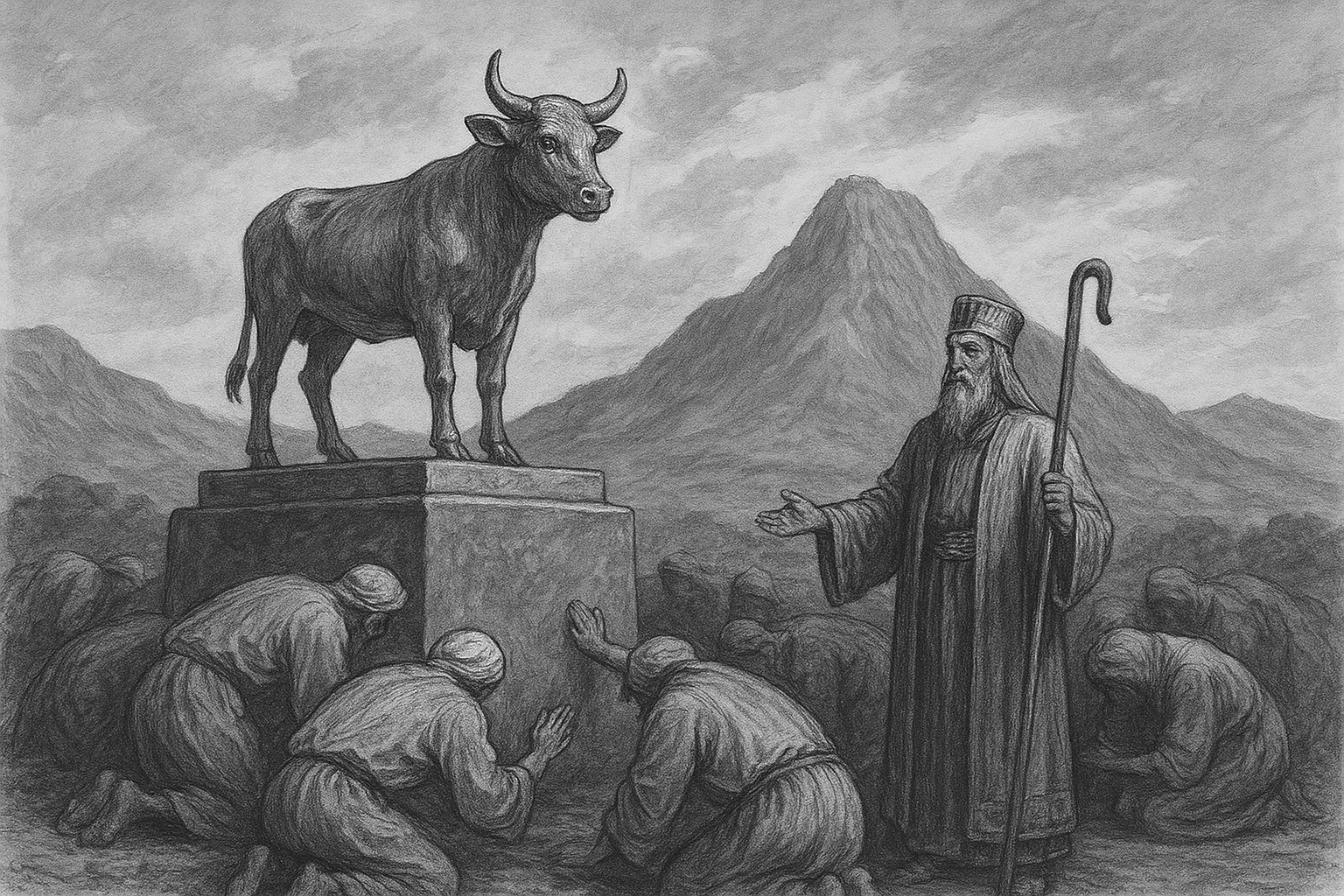
This time of mourning in Jewish tradition, though basically unknown today, corresponds to the ancient death customs of the Babylonians for Tammuz (a fertility god) condemned by the Creator through the prophet Ezekiel (8:6-15).1

See my last article here.2

Tisha b’Av: The Day God Cursed, The Day Jews Cry…”Starting at sundown …is the Jewish fast day of Tisha B’Av (the name literally means the 9th of the Jewish month of Av). Since the time of Moses led the children of Israel out of Egypt, through modern times, horrible things have happened to the Jewish people on or around the 9th day of Av.” lidblog.com3

During the 3 weeks prior the the fast of the 9th of Av (5th Jewish month) — the day of mourning for the destruction of Herod’s Temple (CE 70) and the claimed destruction of Solomon’s Temple, abstinence from several things is required of Orthodox Jews:

Chabad in reference to the three weeks: “During this period, we lessen the extent of our rejoicing. We don’t: Conduct weddings. Play musical instruments or listen to music. Recite the Shehecheyanu blessing. Thus, we do not wear new clothing or eat fruit which we have not yet eaten this season so that we will not be required to recite Shehecheyanu. Take a haircut or shave…”4

The following is a list of events that purportedly took place on the 9th of Av: (perhaps a good fact checking is needed.)

  • The evil report of 10 of 12 spies is claimed to have taken place on the 9th of Av 1313 BCE and as a result the Israelites wandered 40 years. (Now try to make this add up for the 9th of AV using Numbers where the story is told. Start with chapter 10 and add all the details until chapter 14, I count no earlier than the 12th day of the 5th month–12th of AV).
  • Solomon’s Temple, claimed to be destroyed 9th of Av 587 BC after which Judah was exiled to Babylon for 70 years. But if we take the Bible as a credible source, we find: “The Book of Jeremiah (39:2, 52:6–7) states that the walls of Jerusalem during the First Temple were breached on the 9th of Tammuz. “the Babylonian Talmud dates the third tragedy (breach of Jerusalem’s walls) to the Second Temple period. However, the Jerusalem Talmud (Taanit IV, 5) states that in both eras the walls were breached on 17th Tammuz, and that the text in Jeremiah 39 is explained by stating that the Biblical record was “distorted”, apparently due to the troubled times.5” So what source do we believe? Is there an apparent agenda to make it fit the picture? Is it possible that the 9th was chosen to commemorate several Jewish disasters over the millennia? But is there something about that date that ties to anything that might have been believed by the nations at that time?
  • What about the second temple? According to the Jewish Virtual Library:6 “The Second Temple was destroyed by the Romans in 70 C.E, on the 10th of Av, according to the historian Josephus (Wars, 6:249–50). This day is still observed as a day of mourning by the Karaites. The Talmud (Ta’an. 29a), however, gives the date as the 9th of Av, which became accepted as the anniversary of both destructions.” Why move the day? Josephus says one thing and the Talmud says another? Why?
  • Defeat at the Kochba Rebellion 9th of Av 133 CE when the Jewish rebellion was finally put down, some 100,000 to 500,000 died. Since the dates for this revolt stretch CE 132 to CE 136, it is difficult to find a particular day when it ended. According to the Jewish Encyclopedia:7 “the actual struggle for Bethar; after the fall of that city, which, according to the tradition, took place on the Ninth of Ab, 135.” Again we see the hand of tradition playing a role. Again, why was it so important to attach this event to the 9th of AV?
  • Herod’s Temple destroyed 9th of Av 70 CE when the final dispersion of the Jews began on a global scale for the next 2000 years.
  • Jews expelled from England 18 July 1290 CE, claimed to be 9th of Av 1290 CE. Jews lose land & property and are forced into exile. (According to the Hebrew Date Converter, the actual day may be the 2nd of AV, However, owing to the change of the calendar in by Pope Gregory XIII in 1582 which corrected the Calendar by 10 days, it is difficult to know the actual date other than to follow rabbinic sources.
  • Jews expelled from Spain 9th of Av 1492 CE lose land & property, forced exile, Columbus sails next day. 26th of Tamuz according to Hebrew Calendar Converter. Adjusts up to 10 days (even adding 10 days, it does not come to the 9th of Av)
  • Jews expelled from France 9th of Av 1306 CE when they were also forced into exile. July 22, 1306 converts to 2 Av 5066 (In this case the Gregorian Calendar adjustment of up to 10 days could fit).
  • Jews expelled from Germany 9th of Av 1933 CE forced exile, Jewish Holocaust – 6 million Jews killed (The restrictions and expulsion of Jews in Germany started April 8,1933 and over the years during the Holocaust continued, nothing of great import happened on the 9th of Av).
  • Kristalnacht, often stated as having occurred the 9th of Av actually took place on November 9-10,1938.
  • Jews expelled from Gaza Strip 9th of Av 2005 CE forced exile from land (The Jewish settlers were driven out of Gaza by their own government during the period of August 2005-September 2005). This can hardly be blamed on the persecution of the nations if indeed it was an act of self sabotage!

“…What do you make of all this? Jews see this as another confirmation of the deeply held conviction that history isn’t haphazard; events – even terrible ones – are part of a Divine plan and have spiritual meaning. The message of time is that everything has a rational purpose, even though we don’t understand it.” From Chabad in reference to the ninth of AV.8

Jewish Virtual Library:9 “The Talmud justifies the 9th of Av as the major day of mourning because a series of calamities occurred on this day throughout Jewish history. The Mishnah (Ta’an. 4:6) enumerates five disasters: (1) on the 9th of Av it was decreed that the Children of Israel, after the Exodus from Egypt, should not enter the Promised Land; (2) the First and (3) the Second Temples were destroyed; (4) Bethar, the last stronghold of the leaders of the *Bar Kokhba war, was captured in 135 C.E.; and (5) one year later, in 136, the Roman emperor Hadrian established a heathen temple on the site of the Temple and rebuilt Jerusalem as a pagan city which was renamed Aelia Capitolina and which the Jews were forbidden to enter.

The expulsion of the Jews from Spain in 1492 is said also to have occurred on the 9th of Av.

The 9th of Av thus became a symbol for all the persecutions and misfortunes of the Jewish people, for the loss of national independence and the sufferings in exile. The massacres of whole communities during the Crusades intensified this association.”

We see that at least some of the events that are claimed for the 9th of AV are not correctly dated. Why the effort to accumulate tragedies to fit a certain day? Does this have anything to do with the belief in Astrological dates (times of high and low energy related to the lining up of the constellations in the universe) a soul choosing to be born at that time with all the related challenges and tendencies from which one can elevate himself through the use of the methods of rectification suggested in the Kabbalah?

Is it possible that the real reason the temple was destroyed was because of idolatrous practices including the use of Astrology which had so permeated the thinking of the Jewish people that they did not know what they were observing nor whom they were worshiping?

From Jothishi:10 “According to the Jewish views on astrology, the Rabbis of the Second Temple taught that astrology does not apply to Jewish People. This doctrine is based on spiritual law. This law states that each person chooses the most appropriate time and place of birth so that they can achieve their Tikune (Correction) in this lifetime. The astrological influences affect each and every human being and help them to attain situations and conditions that can be used to achieve his or her Tikune. But when astrological judgments are pessimistic and are not supportive of our potentials, then you can use the Kabbalistic tool called Restriction and rise above the influence of these Astrological influences.

Judaism claims that by rising above the Astrological influence you can challenge your constellations and you have the ability to change the movie of your Life’s Karma.”

If this is true, is there not a heavenly voice telling us to leave these things and come away and cleanse ourselves from all of this idolatry which has even the names of those idols mentioned on the traditional Jewish calendar and in our prayer services? Whom are we worshiping and how did we get mixed up in defining our life’s agenda by astrological times?

Regardless of historical world events that appear to have happened at a certain time that may coincide with the pagan dates of Astrology, we are called to recognize Hashem’s Holy days and these days were established from time immemorial. When we look at traditional designated “holy” days, we must ask ourselves why we do what we do, especially when these happen to fall on days that coincide with ancient pagan observance, or rituals of remembering the dead! The Bible has a lot to say about Hashem’s Holy Days:

Leviticus 23:2, 4:

Speak to the children of Yisra᾽el, and say to them, The feasts of the Lord, which you shall proclaim to be holy gatherings, these are My feasts. (That chapter defines those feasts).

These are the feasts of the Lord, holy gatherings, which you shall proclaim in their seasons.”

What about the command that we not observe times (astrology)? The practice of remembering historic events and commemorating them, especially during times of pagan observance, be something that is outside the boundaries of what Hashem commanded? Would making a day have a certain good or bad karma such as TU B’AV (a day when special powers for romance are available) actually be observance of times? Am I taking this too far afield? Perhaps a close look at ancient practices and how they came to be attached to our religious observance would be in order.

Many customs have come from a long tradition in Judaism—Astrology, which Hashem strictly forbade is much in use. Though most deny it, communication with holy rabbis long since passed from this life is a practice among many observant Jews.

And back to the first statement about 17th of Tammuz and the 3 weeks period following up until the 9th of AV—why do they fall during the exact time of the ancient pagan festival, mourning the death of Tammuz? (And why do we keep calling the month by that name?) There is clearly an influence that led Israel to adopt this time of mourning and compile its own events to make it of import to the Jewish people!

Deuteronomy 18:10;14: “For these nations, which thou shalt possess, hearkened unto observers of times, and unto diviners: but as for thee, the LORD thy God hath not suffered thee so to do.”

Joshua 1:7: “But you must be very strong and resolute to observe faithfully all the Teaching that My servant Moses enjoined upon you. Do not deviate from it to the right or to the left, that you may be successful wherever you go.

Deuteronomy 13:1: “Be careful to observe only that which I enjoin upon you: neither add to it nor take away from it.”

Deuteronomy 28:13-14: “The LORD will make you the head, not the tail; you will always be at the top and never at the bottom—if only you obey and faithfully observe the commandments of the LORD your God that I enjoin upon you this day, and do not deviate to the right or to the left from any of the commandments that I enjoin upon you this day and turn to (go after) the worship of other gods.”

So it seems that after all, we have allowed the names of pagan gods to be mentioned in our tradition. We have celebrated or mourned during the times of pagan tradition things that we brought with us out of exile, remodeling them to form a part of our own religious observance. Time to wake up, arise, oh daughter of Zion! Shake off the dust of paganism from these traditions and seek true teshuva. Then we can expect to pray and have our prayers answered. Too many bad things have happened to Jews over the centuries! If only we would turn from our sins and realize the desire of the Creator to gather us back to His original plan and to recognize us as His People!

2 Chronicles 7:14 Tells us what we must do so that Hashem will be open to our prayers once again:

If I shut up the heaven so that there is no rain, or if I command the grasshopper to devour the land, or if I send pestilence among my people; if my people, who are called by my name, shall humble themselves, and pray, and seek my face, and turn from their wicked ways; then I will hear from heaven, and I will forgive their sin, and I will heal their land. Now my eyes shall be open and my ears be attentive to the prayer that is made in this place.”

_______________________________________________

1https://www.sefaria.org/Ezekiel.8.6?lang=en&p2=Ezekiel.8.6-15&ven2=The_Koren_Jerusalem_Bible&lang2=en

2https://wordpress.com/post/ariellat.wordpress.com/142

3https://lidblog.com/tisha-bav-cursed/

4https://www.chabad.org/library/article_cdo/aid/144573/jewish/The-Three-Weeks.htm

5https://en.wikipedia.org/wiki/Seventeenth_of_Tammuz

6https://www.jewishvirtuallibrary.org/the-ninth-of-av

7https://www.jewishencyclopedia.com/articles/2471-bar-kokba-and-bar-kokba-war

8https://www.chabad.org/library/article_cdo/aid/946703/jewish/What-Happened-on-the-Ninth-of-Av.htm

9https://www.jewishvirtuallibrary.org/the-ninth-of-av

10https://jothishi.com/jewish-views-on-astrology/

A Selfie-Yacht to Save Gaza? 

Subscribe to continue reading

Subscribe to get access to the rest of this post and other subscriber-only content.

Religious Woke-ism


I was reminded in an email today that Jews are about community. We must stick together in pain, success, loss, religion, even politics, be they right or left, right or wrong for the health of Israel. It’s about doing what we do together or, as I call it, going along to get along. But that seems rather lame. Especially in the light of so many Jews who do not support Zion at all. And in the light of those who have never read the Tanakh but swear that they are keeping the commandments given by God to Moses, when really what they call Torah is that which has been handed down by “holy men” and sages, perhaps modernized to fit the needs of society today. But that seems rather woke, and pardon me for saying so!

I mean, how can I enjoy a Shabbat meal keeping my mouth shut at the table with 10 other people who believe the government of Israel needs to be done away with and don’t mind saying so? When I hear friends spouting socialist ideas that they think are best for Israel, shall I keep quiet and let them carry on with their dangerous ideals? Shall I pretend to agree? So is this what it means to be a good Jew? So inside I am boiling over and I daren’t do anything about it! And I ask myself, since when was keeping peace with people who declare war against everything you believe in, the right thing to do? I say let there be a flaming argument, let there be war amongst friends before we head off as a mixed multitude to fight a real war!

I took a short class in Gemara about 15 years ago. It was definitely interesting, but I remember Tuesday night discussions at our synagogue in Tacoma, Washington where we looked at topics like stealing, lying, etc. The night we read about finding an item of value, lost by its owner, we read several rabbinic opinions. One stated that if the item was found on a beach with sand, there was no need to return it, even if you saw it fall from the hand of the one who lost it. There were at least two other opinions, but, this stuck in my mind as finding a loophole to be dishonest. The explanation was that since the person would never return to look for it, knowing full well that the tide would bury it, then it was right to keep it. Finders keepers, even if you knew who lost it!  And that didn’t set well with me.

Many of us believe that we came into this world with a sense of right and wrong instilled in our souls! Innocence often disappears when we justify things. And yet there is a promise that the Eternal will place His Covenant in our hearts someday.

“But this is the covenant that I will make with the house of Israel after those days, saith YHVH: I will put my law in their inward parts, and in their heart will I write it; and I will be their God, and they shall be my people.” – Jer 31:33

What I said in my introduction about going along to get along, about people becoming more and more woke in this generation…how can this work out for a holy life? I think not!–unless if we all have the laws of the Torah written in our hearts? And clearly humanity is not there yet.

Can going along to get along ever lead to righteousness? It doesn’t, not when the heart is full of self-justification. Today’s world is full of this.
How about the narcissistic birthday party where a Jewish woman works all day Shabbat preparing the house and getting things ready for a several course meal with 30 + guests to come in the evening to celebrate her birthday? Where did the blessing of the Sabbath go? How can anyone know what is right, and what is wrong if self is in the center of the picture? If what is important is what is good for me?

The prophet Jeremiah is pointing to a time after a nationwide repentance when hearts are filled with the love of the Eternal and love for mankind. It may have to start on an individual basis.

But how do we get there? Some say: “that is why we have rabbis.” “To keep us on the derech.” Yes, that is what has been and will be for humanity until something happens to make it otherwise. In Bible times, there were priests and Levites who had officials who decided on cases and later there was a Sanhedrin set up to judge the people. Today there are rabbis for Jews and ministers for Christians, and of course, other religions have their methods for keeping their congregants in line.

But frankly, Jeremiah, we are not on course yet! And I wonder if we will ever be. How many years of trying to fit in are we going to see before the world self-detonates or something happens so that we will get it right? When will we seek our Creator with all our hearts, admitting that we have been off the derech for too long? As a people, we have followed many things that seem to be traditions at best. What is the will of the Almighty God of the Universe? How do we find it? Will we all die thinking that we are serving Him when we don’t even know His name nor what He originally said? What a surprise it would be to wake up in the hereafter and find that most of what we were taught stemmed from the sick imagination of mystics and self-proclaimed leaders!

Can we know YHVH for ourselves? I believe with all my heart that when we seek Him, we will find Him, and we will be attuned to His desires for us.

“For I know the thoughts that I think toward you, saith YHVH, thoughts of peace, and not of evil, to give you hope in your latter end. 12 And ye shall call upon me, and ye shall go and pray unto me, and I will hearken unto you. 13 And ye shall seek me, and find me, when ye shall search for me with all your heart. 14 And I will be found of you, saith YHVH, and I will turn again your captivity, and I will gather you from all the nations, and from all the places whither I have driven you, saith YHVH; and I will bring you again unto the place whence I caused you to be carried away captive.” – Jer 29:11-14


But the first step? Maybe go read the Bible through for the first time. Without commentaries.


Ariella Golani

Footprints from the Shadows of Idolatry

A Hard Look at Women’s Mitzvot

Earth’s ancient history tells that there were feminine and masculine gods worshiped by many different peoples. Mythology cites the stories of the wars and affairs of these powerful gods, or at least the beliefs that held their worshipers spellbound or shaking in fear. These deities were so revered that parents would sacrifice their own children to them to assure them favor with these gods. In the Bible, the prophets warned Israel about these gods and those who followed them. These people were to be eradicated from the land of Israel. It was Divinely mandated ethnic cleansing, if you will. Of course, none in the liberal “free world” today support ethnic cleansing especially not if you are speaking of the Jewish right to possess the land of Israel.  In many Middle Eastern and North African countries, parents train and send out their children to die as martyrs as they cleanse the world of Jews and Christians. These religions are death cults, just as in the ancient past when babies were burned in the arms of their gods, Astarte and Molech.  

What I want to examine today is a subject that has bothered me for some time–the worship of the Queen of Heaven mentioned by the prophet Jeremiah. Who was she, and what customs were common in those who worshiped her? And are there roots of these customs in today’s major religions? The Israelites were originally exiled because of their worship of false gods. Can there be any evidence that has survived from these pagan practices today? 

Of course, there is Mary worship (often called the Queen of Heaven by dedicated Catholics), which is just an extension of the ancient pagan worship of female fertility goddesses such as Ashtoreth, Isis, Ishtar, or Semiramis, just to mention a few. 

But what about the customs of the Chosen People–the practices of Judaism? Is there anything that would suggest that we have remnants of pagan worship practices relating to the female goddess (Ashtoreth), mentioned in 1 Kings and Jeremiah? 

1Ki 11:5, 33: “5 For Solomon went after Ashtoreth the goddess of the Zidonians, and after Milcom the abomination of the Ammonites. … 33 Because that they have forsaken me, and have worshiped Ashtoreth the goddess of the Zidonians, Chemosh the god of the Moabites, and Milcom the god of the children of Ammon, and have not walked in my ways, to do that which is right in mine eyes, and to keep my statutes and my judgments, as did David his father.”   

Jer. 44:”17 But we will certainly perform every word that is gone forth out of our mouth, to burn incense unto the queen of heaven, and to pour out drink-offerings unto her, as we have done, we and our fathers, our kings and our princes, in the cities of Judah, and in the streets of Jerusalem; for then had we plenty of victuals, and were well, and saw no evil. 18 But since we left off burning incense to the queen of heaven, and pouring out drink-offerings unto her, we have wanted all things, and have been consumed by the sword and by the famine. … 21 The incense that ye burned in the cities of Judah, and in the streets of Jerusalem, ye and your fathers, your kings and your princes, and the people of the land, did not YHVH remember them, and came it not into his mind?”

So, without further ado! Where does the lighting of candles for many things in Jewish practice come from? What about lighting Shabbat candles? Many of us question the claim that the Eternal commanded this mitzvah. Here is the English version of the candle blessing:.

“Blessed are You, oh Lord our God, who has sanctified us by His commandments and has commanded us to kindle the light of Shabbat.”

This is blessing is not found anywhere in Tanakh. Nor in the written Torah. It is clearly a command created by the rabbis. What else is wrong here? The sages claimed there was a curse that would come upon women who didn’t fulfill it. The following quote is From Mishna Shabbat 2:6

“On [account of] three transgressions women die in childbirth: because they are not careful with nidda, with challah, or with candle-lighting.” Below is the Hebrew from Sefaria

“על שלש עברות נשים מתות בשעת לדתן. על שאינן זהירות בנדה ובחלה ובהדלקת הנר:”

So the making of Challah, observance of Nidda (the separation from the husband during menstruation), and the lighting of the Shabbat Candles are what compose women’s most important mitzvot? I think anyone would agree that the making of Challah and Shabbat Candles, though pleasant in themselves, are rabbinic mitzvot. So how is it that God is going to punish us for not following the rabbinic commandments? Is the Creator somehow now subject to the decisions of the leadership? Who is in charge anyway?

Here are some more modern quotes, embracing the idea of punishment for women who do not follow the three mitzvot:


1. “For three transgressions woman die during childbirth: for being careless regarding (the laws of) menstruation, the tithe from dough, and kindling the (Sabbath) light.” The Complete Art Scroll Siddur. Second edition, Page 327.
2. “For three transgressions do women die in childbirth: because they have not been heedful in regard to their menstruation, in the separation of the priest’s share of the dough, and in the kindling of the lamp.” Mishnayoth Volume 2 page 30 Second Edition Judaica Press, Ltd. Gateshead 1983.
Page3. “Because of three sins women die in childbirth; for not being careful with niddah, with hallah, and with lighting the lamp.” Sephardic Siddur with Linear Translation and English translation for Shabbat page 79 Congregation Shaare Rahamim Publication Series 5766.
4. Rabbi Jonathan Sacks translates the Hebrew into English slightly different “For three transgressions woman may die in childbirth: for being careless in observing the laws of menstruation, separating challah (dough – offering), and lighting the Sabbath light “The Koren Siddur page 374. 2010 Edition. I would like you to notice that the word may, that is in this translation, casts a doubt on whether this will happen.
In this discussion I will evaluate only the kindling of the Sabbath light (maybe later we might consider the other two sins).  Let us look at the prayer that is said when the Sabbath lights are lit: “Blessed are you, HASHEM, our God, King of the universe, Who sanctified us with His commandments, and has commanded us to kindle the light of the Sabbath.” The Complete Artscroll Siddur, (second edition 1989) page 297. 

History tells us that the formal practice of lighting Shabbat Candles was an attempt by the rabbis to overthrow the Karaites ( 9th century CE) and to direct their followers to place their esteem upon the Oral Torah, thus assuring Rabbinic control over the Jewish people. (https://pathoftorah.com/2014/01/26/mitzvah-that-wasnt/)

“The great Sa’adia Gaon (882-942) worked tirelessly to counter Karaite Judaism, and the Rambam even credits him with saving Rabbinic Judaism at the time. Not surprisingly, then, it is in the 9th century Siddur of Rav Amram Gaon (d. 875) where we first see the text of a Shabbat candle-lighting berakhah.  To reaffirm and strengthen the Oral Torah at a time when it was under attack, the sages and rabbis of the 9th century instituted a formal blessing—modelled on the Chanukah blessing—to be recited when lighting Shabbat candles. This made it clear that it was God who kideshanu v’tzivanu, sanctified us and commanded us, to do so. People needed to know that this ancient practice was no rabbinic invention! Indeed, when we look into more mystical sources, we find that lighting Shabbat candles goes way back—all the way to the Garden of Eden.” Link

But those who know their Bibles realize that Shabbat Candle lighting was never commanded by the Torah and history shows us that it never gained true importance in Rabbinic Judaism until the 9th century, CE. 

And by the way, the use of modern candles in the form we have today, began to be developed in the 5th century when Rome began to dip wicks in animal fat called tallow,  (Link).
Anciently, however, there were wicks that burned in oil pots as far back as early Egypt. Many religions have used them in the worship of their gods and as a means to communicate with Heaven and even to send their dead loved ones on their way to the afterlife. (Link )

What actually does the lighting of Shabbat candles symbolize? Could it stem from the practice of burning of incense? Do Jews use candles in their service for the dead? Clearly they do. Every Yahrzeit is accompanied by candle burning. What does it mean?

What about the baking of Challah and cutting off the portion which is supposed to be burned? Jeremiah cries out against the women who baked bread for the Queen of Heaven:

 “The children gather wood, and the fathers kindle the fire, and the women knead the dough, to make cakes for the queen of heaven, and to pour out drink-offerings unto other gods, that they may provoke me to anger.” – Jer 7:18  

I wonder about the part requiring the cutting off a portion of the dough, even though it stems from the biblical command to separate (Challa) a part of a sacrifice or meal offering, for YHVH. Numbers 15:18-21. But how does burning it have anything to do with separating a part for YHVH? Actually this sacrifice was not a weekly offering and it was only to be done in the Land of Israel:

“18 Speak unto the children of Israel, and say unto them, When ye come into the land whither I bring you, 19 then it shall be, that, when ye eat of the bread of the land, ye shall offer up a heave-offering unto Jehovah. 20 Of the first of your dough ye shall offer up a cake for a heave-offering: as the heave-offering of the threshing-floor, so shall ye heave it. 21 Of the first of your dough ye shall give unto Jehovah a heave-offering throughout your generations.” – Num 15:18-21.

Perhaps it is a little far-fetched to associate the making of Challah and the lighting of Shabbat Candles with service to the Queen of Heaven so loudly renounced by the prophet Jeremiah, or is it? And why is there a curse on women who do not perform these Mitzvot?

Paganism aside, how have practices taken from the priestly service in the Temple come to establish a new type of service where every family has their own home temple with strange symbolic services that somehow connect us to the Torah? Can it be an attempt to justify living in the diaspora? The thought seems to be everywhere that, “isn’t the service at the home table and the Synagogue enough?”So why do we need a temple if we can do it all at home?

How about the custom of opening the door to the Shabbat Queen during Kabbalat Shabbat? The song Lecha Dodi (come my beloved) is sung on Friday nights in the synagogue, and when the final stanza is sung, the door to the synagogue is opened and the entire congregation turns around and bows to the left and right welcoming the Shabbat Queen which brings the divine presence to the assembly. 

Were we ever commanded to worship the Sabbath itself? And what is this mystical presence that is being worshiped, if it is a queen? Much is said about the Shekinah being the feminine presence of God. Yet the word Shekinah is not in the Scriptures. 

“The word comes from a transliteration of the Hebrew word, shākan. It means ‘the one who dwells’ or “‘that which dwells.’ The term “Shekinah” was first used in rabbinic targums.” (Link)

So the justification of worshiping the female presence of God is established, fully trusted because almost everyone believes the Bible supports it. It doesn’t and though we could get into great and lengthy discussions of the male vs female nature of the Eternal, we must abstain. This is forbidden ground. God is not a man, see Number’s 23:19. And even Moses was not allowed to fully view the Creator. He must remain a mystery to humankind. If we could see Him, we might try to make an image of Him, right? 

I know that I have only touched the tip of the iceberg showing the roots of things that have accompanied the Jewish religion for thousands of years. Dear friends, we must come clean! We must repent of that which blindly accepted as God’s commands, many times brainwashed into us as little children. It is not going to be easy. 

Ariella Golani

Understanding the Fallacy of Grave Worship

Defilement and Grave Worship–Who hears our Prayers?

Most popular religions believe in an ongoing life of some form after death. This belief in an immortal soul has been around at least since Ancient Egypt. Wikipedia. People seem to forget what the Bible says about death and strange as it seems, there is something about it that makes people cling to it even now. Is it more comforting to think a relative is somehow relaxing in Paradise? Perhaps he is somewhere else, God forbid! But what can we find that shows this to be a fallacy? Common logic seems to look at it as lunacy. Perhaps that is why many atheists believe that when it is over, it is over. If we look to the Bible as an unerring source of wisdom there are some strong statements, some in the Psalms, others in the writings of the prophets and some even in the Torah. There is an example of a King of Israel who sought wisdom from the dead and what happened to him. But we will come back to that later. 

To show what one branch of Judaism embraces, look at the following quote from the Breslov site. There are many Jews who make the trip to Rebbe Nachman’s grave in Uman each year on Rosh Hashana. There is a belief that no matter how the person has lived, the Rebbe will rescue them from Hell when they die if they come and recite Psalms at his grave. See following quotes:

“Rebbe Nachman once declared: “Gohr mein zach is Rosh Hashanah . . . My entire mission is Rosh Hashanah.” He was particularly emphatic about his followers coming to him for Rosh Hashanah, and indicated on his last Rosh Hashanah in Uman that we should continue to do so even after his death (Chayei Moharan 403-406; Likkutei Moharan I, 211; ibid. II, 94; Kuntres “Ha-Rosh Hashanah Sheli,” 

“This Chassidic luminary, great-grandson of the Baal Shem Tov, known in his lifetime as a masterful storyteller and source of inspiration, wisdom and comfort, promised before his death that if even the worst sinner would come to his grave and there recite 10 Psalms and give a penny to charity, he would span the length and breadth of the universe to save him from Hell.  Reb Nachman’s unique promise seemed to justify the risks.” From Jewish Action.
So, this sounds as if “holy” rabbis, once dead, can forgive sins or at least mediate to save a sinner from hell! Where else do we find this?

Once a year on lag baomer which is the 33rd day of counting the omer before Shavuot, many thousands of Jews make a pilgrimage journey to Mt. Meron, located a few miles from us here in Northern Israel. Why is this important? And why do they do it?

“The tomb of Shimon bar Yochai (Hebrew: קבר רבי שמעון בר יוחאי), or Kever Rashbi (קבר רשב״י), on Mount Meron is the traditional burial place of the 2nd-century Mishnaic rabbi Shimon bar Yochai. A place of pilgrimage since the late 15th century,[2] it is today the second-most-visited Jewish site in the world after the Western Wall[3] with as many as two million annual visitors.”[4] Wikipedia Link here.

Why do people go to Meron? Basically for the same reason they go to Uman, to visit a dead rabbi and make a place for themselves in the hereafter. Shimon Bar Yochai (known also as the Rashbi) was famous for his writing of the Zohar which is composed of foundational teachings of the mystical Kabbalah. For many of us Kabbalah is witchcraft and strictly forbidden by the Torah.
Please subscribe to my site for upcoming discussions about this and other topics. (You can subscribe at the end of the article, like and comment).

Those who are familiar with Catholicism know about indulgences. These, at least in the past, paid for crimes in advance, crimes which were absolved by the Church. So the above quote infers that a Sage can absolve a sinner and save him from hell. How is this different? The Bible never affirms that any man can forgive sin. Note again what is quoted about Rebbe Nachman: “ even (if) the worst sinner would come to his grave and there recite 10 Psalms and give a penny to charity, he would span the length and breadth of the universe to save him from Hell.”  Only God forgives sin. Or are we becoming like religions that believe in an intercessor, once died and now living in Heaven, to intercede with YHVH for us? How is this idea different from Christianity?

“30 “But every one shall die for his own iniquity; every man who eats the sour grapes, his teeth shall be set on edge.” – Jer 31:30 

When we lived in Tzfat, my husband did a lot of carpentry work for a senior Chabad rabbi who had been a Shaliach for Rebbe Shneerson who had passed away over 30 years ago. He told him that the Rebbe had an office in Heaven and that he had frequent email communication with the Rebbe which guided him. We were shocked about this communication. It was obvious to us that the inference was that the Eternal doesn’t bother to communicate with us so we need a dead rabbi to do so!

Is it natural to think that life goes on even when the body is dead? So if I lose my eyesight, can I still see? If I lose my hearing, becoming deaf, can I still hear?  If we admit that those organs are what make life functional, then how will we use them to function if the body is dead? Is there some kind of soul organ that helps the dead to function? But even when all the body’s organs no longer function, the belief is that those who die, if they are worthy, are able to go to Paradise and talk to God, feel joy, hear angel choirs, and see outstanding beauty. Some even will work to intercede with God for those remaining alive on Earth. And of course there is also the belief that some go to Purgatory until their fate is decided whether Heaven or Hell. 

Worshiping at graves is rampant, and especially where prophets and Sages are buried is this practice common. But, if we were forbidden to consult with the dead (see Bible verses following), then how does it even enter our minds to pray at tombs? 

Why was it forbidden for the Cohenim to go to a burial or even be near a grave? These priests of the Most High were set apart with the Holy anointing oil made specifically for the holy things of the Temple and the priests themselves. Their work is holy, and they are not to be defiled by the dead. Ok, so if those who are set apart (the Priests) become defiled by being near the dead, then what is it that is defiling about tombs? And how can the common person think they are receiving a good spirit by praying at graves? There is something there and it is not holy. We must think beyond this logically. If a simple common person believes that they can access some of the spirit of Holy dead sages by worshiping at their tombs,or make requests of them,  then wouldn’t it make sense for a priest to receive even more holiness by being there? But it is forbidden:

“1 And YHVH said to Moses, “Speak to the priests, the sons of Aaron, and say to them: ‘None shall defile himself for the dead among his people, … 4 ‘Otherwise he shall not defile himself, being a chief man among his people, to profane himself. … 6 ‘They shall be holy to their God and not profane the name of their God, for they offer the offerings of YHVH made by fire, and the bread of their God; therefore they shall be holy. … 8 ‘Therefore you shall consecrate him, for he offers the bread of your God. He shall be holy to you, for I, YHVH, who sanctify you, am holy.” – Lev 21:1, 4, 6, 8

So if the priest is made Holy by YHVH only, how can any dead body or corrupted spirit bring him any additional Holiness? Are men Holy and can men transfer holiness, especially after they die? 

When my husband and I first made Aliyah, we lived in Tzfat, Israel, The apartment next to ours had a picture of the Lubavitcher Rebbe (Of Chabad fame) outside our neighbor’s door. She could often be seen pausing to pray by the picture. When asked why she did this, she said she always felt his presence and sometimes the Rebbe would reach out his hands from the picture and bless her.

When she told us this, I shuddered! How can anyone justify this practice when the Bible is so clear about the dead and strongly forbids it? 

I still stand on the principle that the Bible is the foundation of truth, so here are some of the  verses that address this subject. Let’s go to Genesis:

The Creator told Adam:

“16 And YHVH God commanded the man, saying, Of every tree of the garden thou mayest freely eat: 17 but of the tree of the knowledge of good and evil, thou shalt not eat of it: for in the day that thou eatest thereof thou shalt surely die.” – Gen 2:16-17 

The result of eating of the fruit was to be mortality, not immortality and to show this more clearly look at Genesis 3:

“17 And unto Adam he said, Because thou hast hearkened unto the voice of thy wife, and hast eaten of the tree, of which I commanded thee, saying, Thou shalt not eat of it: cursed is the ground for thy sake; in toil shalt thou eat of it all the days of thy life; 18 thorns also and thistles shall it bring forth to thee; and thou shalt eat the herb of the field; 19 in the sweat of thy face shalt thou eat bread, till thou return unto the ground; for out of it wast thou taken: for dust thou art, and unto dust shalt thou return.” – Gen 3:17-19

The Serpent’s Lie

The Serpent in the garden presented a masterful deception to Eve. In this deception, we see the very basis of what many religions believe today–that we really don’t die when we are buried, that some part of us goes on living, sometimes in the presence of God and sometimes in Purgatory or suffering in Hell. 

Are we still letting ourselves be deceived? Look at the lie again as presented in Genesis 3:

“1 Now the serpent was more subtle than any beast of the field which YHVH God had made. And he said unto the woman, Yea, hath God said, Ye shall not eat of any tree of the garden? 2 And the woman said unto the serpent, Of the fruit of the trees of the garden we may eat: 3 but of the fruit of the tree which is in the midst of the garden, God hath said, Ye shall not eat of it, neither shall ye touch it, lest ye die. 4 And the serpent said unto the woman, Ye shall not surely die: 5 for God doth know that in the day ye eat thereof, then your eyes shall be opened, and ye shall be as God, knowing good and evil.” – Gen 3:1-5 

From the quotes above regarding certain leading Rabbis who are dead and buried, we see the same lie. But what does the prophet Isaiah say about intercession before the Eternal Judge of the Earth?  

“15 Yea, truth is lacking; and he that departs from evil makes himself a prey. And YHVH saw it, and it displeased him that there was no justice. 16 And he saw that there was no man, and wondered that there was no intercessor: therefore his own arm brought salvation unto him; and his righteousness, it upheld him. 17 And he put on righteousness as a breastplate, and a helmet of salvation upon his head; and he put on garments of vengeance for clothing, and was clad with zeal as a mantle.” – Isa 59:15-17 

And what about the soul, does it have a thinking, reasoning capacity? Check out these verses:

“5 For in death there is no remembrance of thee: In Sheol who shall give thee thanks? ” – Psa 6:5.

“17 The dead praise not YHVH, Neither any that go down into silence;” Psa 115:17 

“10 Wilt thou show wonders to the dead? Shall they that are deceased arise and praise thee? Selah 11 Shall thy loving-kindness be declared in the grave? Or thy faithfulness in Destruction? ”  Psa 88:10-11

“18 For Sheol cannot praise thee, death cannot celebrate thee: They that go down into the pit cannot hope for thy truth.  19 The living, the living, he shall praise thee, as I do this day: The father to the children shall make known thy truth. “ – Isa 38:18-19

“5 For the living know that they shall die: but the dead know not anything, neither have they any more a reward; for the memory of them is forgotten. 6 As well their love, as their hatred and their envy, is perished long ago; neither have they any more a portion for ever in anything that is done under the sun.” – Ecc 9:5-6 

“10 But man dieth, and is laid low: Yea, man giveth up the ghost, and where is he?  11  As the waters fail from the sea, And the river wasteth and drieth up;  12 So man lieth down and riseth not: Till the heavens be no more, they shall not awake, Nor be roused out of their sleep.  13 Oh that thou wouldest hide me in Sheol, That thou wouldest keep me secret, until thy wrath be past, That thou wouldest appoint me a set time, and remember me!  14 If a man die, shall he live again? All the days of my warfare would I wait, Till my release should come.  … 20 Thou prevailest for ever against him, and he passes; Thou changest his countenance, and sendest him away.  21 His sons come to honor, and he knoweth it not; And they are brought low, but he perceives it not of them. “ – Job 14:10-14, 20-21 

“2 I praise YHVH during my life, I sing praise to my God while I exist. 3 Trust not in princes — in a son of man, For he hath no deliverance. 4 His spirit goes forth, he returns to his earth, In that day have his thoughts perished.” – Psa 146:2-4 

“9 As the cloud is consumed and vanisheth away, So he that goeth down to Sheol shall come up no more.  10 He shall return no more to his house, Neither shall his place know him any more. ” – Job 7:9-10 ASV

“10 There shall not be found among you any one that makes his son or his daughter to pass through the fire, or that uses divination, or an observer of times, or an enchanter, or a witch, 11 Or a charmer, or a consulter with familiar spirits, or a wizard, or a necromancer.” – Deu 18:10-11.

Necromancer in verse 11 means “to consult with the dead.” See below:

 וְחֹבֵר חָבֶר וְשֹׁאֵל אוֹב וְיִדְּעֹנִי וְדֹרֵשׁ אֶל־הַמֵּתִים׃

King Saul goes to a Witch in Endor:

After the prophet Samuel died, King Saul, who already had rejected the truth of Torah found himself without God and without hope, so he went to see a medium who did necromancy. The result was that he was killed on the battlefield the next day. See 1 Samuel 28:3-25.

“19 And when they say to you, “Inquire of the mediums and the necromancers who chirp and mutter,” should not a people inquire of their God? Should they inquire of the dead on behalf of the living?” – Isa 8:19 

What happens when a righteous person dies?

“1 The righteous man perishes, and no one lays it to heart; devout men are taken away, while no one understands. For the righteous man is taken away from calamity; 2 he enters into peace; they rest in their beds who walk in their uprightness.” – Isa 57:1-2 

So, taking the Bible for what it says and avoiding what it condemns, we can stay away from the defilement that comes from communication with the dead. People tell us that they really are not communicating, just praying to God in their merit, but honestly, then why go to a graveside to do it? 

People tell me they feel a presence at the graveside. But is this presence Holy (Tahor or pure) or is it Tamei (impure)? If we receive an unclean spirit by praying near a corpse, how will we know it except to embrace what the Bible says about it and flee from every vestige of this?

Get away from there as soon as possible, renounce the dead spirits and repent and return to YHVH, the only ONE who imparts holiness!

Ariella