Parsha Shelach

Shabbat 30 June 2024

Numbers 13:1-15:41

Parsha Shelach starts with a command from YHWH to Moses to send out leaders of the tribes to spy out the land of Canaan. We note that these are leaders of the people of Israel. The names of these tribal leaders are given. These include Caleb, son of Jephunah and Hosea son of Nun. I mention these two because of their importance in what happens in the story after the 40 days in Canaan. Before they leave on their journey, Moses changes the name of Hosea to Yehoshua. 

This detail is important. With the new name, the meaning changes from “salvation” to “YHWH saves”.

Why was Hosea’s name changed at this time? 

*Hosea had been a lad under Moses care, and it was time for him to grow up. 

*The significance of the change of name clearly put the responsibility for salvation on YHWH, and not on Yehoshua.

*It appears that Yehoshua was Moses personal emissary, YHWH wanted to single him out as leader and to use his name as a message to Israel.

After 40 days, the spies returned, carrying a huge Eshcol (Cluster) of grapes that was so heavy it had to be carried on a pole between two of the men. But all is not as expected. Ten of the 12 carry an alarming report. Their report stirs up the people about the giants in the land. They claim that they appeared as “grasshoppers” to themselves and to those who lived in the land. This declaration shows their lack of faith in the One who sent them. It shows their idea that they themselves were in charge and that God was not a part of this trip. If their leader was named Yehoshua (YHWH saves), then what were they afraid of? 

At this point Yehoshua and Caleb stood up, trying to stop the madness.

“And Yehoshua the son of Nun and Caleb the son of Jephunneh, who were of them that spied out the land, rent their clothes: and they spake unto all the congregation of the children of Israel, saying, The land, which we passed through to spy it out, is an exceeding good land. If YHWH delight in us, then he will bring us into this land, and give it unto us; a land which flows with milk and honey. Only rebel not against YHWH, neither fear ye the people of the land; for they are bread for us: their defense is removed from over them, and YHWH is with us: fear them not.” (Num 14:6-9).

Notice that Yehoshua declared that the defense (protection) of those enemies, (the Canaanites, the Anakim, the Nephilim, etc), had been removed from them.

In fact, why are we afraid today when descendants of these same people try to destroy us? Where is Yehoshua? Do we not have a promise that will keep us safe? Are we the Covenant People or not? When we see fires that come but do not touch us, when we see bombs that land in open fields and so few have actually been killed, why can we not believe that the Defense of Hamas and Hezbollah has been removed from them?

We know that the people believed the 10 spies evil report and were ready to stone Yehoshua and Caleb. Suddenly, the presence of God descended upon the Mishkan to show His disapproval of their lack of faith and the people’s desire to kill those who stood in faith for the mission which their God had ordained! And the ten ringleaders of the rebellion, the spies who carried an evil report, were smitten by a plague from YHWH. Let’s remember that these were the esteemed leaders of the tribes. Only Yehoshua and Caleb were spared. As to the rest of the people who murmured and complained, they were destined to die in the wilderness, only their young children under 20 years of age would go up to possess the land. 

And again, after Moses told them it was futile, a group of them rebelled and headed off to the land of Canaan and were summarily wiped out by the Amalakites.

The Parsha continues with offerings for different things, which we will not discuss here, but then speaks of blasphemy and rebellion (chapter15:30-31) which is punishable by death, and then presents the example of the man who gathered sticks on the Sabbath. If it is seen in context, the reason for the stoning was not an accidental work that someone did, it has to do with rebellion against what the man knew was forbidden. He was taken out and stoned according to the word of YHWH. Many times Bible students do not look at context. In this case it was clearly an act of rebellion, for it follows the command to put to death those who blaspheme and rebel. 

The last few verses of the Parsha end with the command to wear Tzitzit, a strand of blue on the corners of the garment. They have to do with learning to follow YHWH and not the intentions of the heart:

“Speak unto the children of Israel, and bid them that they make them fringes in the borders of their garments throughout their generations, and that they put upon the fringe of each border a cord of blue: and it shall be unto you for a fringe, that ye may look upon it, and remember all the commandments of YHWH, and do them; and that ye follow not after your own heart and your own eyes, after which ye use to play the harlot; that ye may remember and do all my commandments, and be holy unto your God.” (Num 15:38-40)

¿Un Nombre Pagano para El Eterno Dios de Israel?

YHWH o Adonai?

Por Ariella Casey

Muchos judíos rezan al ETERNO en los servicios religiosos dirigiéndose a Él como Adonai. Este es el reemplazo hebreo del Santo NOMBRE en el Tetragrámaton YHVH. ¿De dónde viene esta práctica y tiene algo que ver con el nombre Adonis que fue utilizado por los fenicios, griegos, romanos, etc.? Si es así, ¿cómo llegó a ser un título respetuoso para el Di-s hebreo? Quiero aclarar que hay una advertencia y es cuando la palabra para “mi maestro” אדוני se usa realmente en el texto hebreo, pero a menudo también se refiere a gobernantes y profetas y es un título de posición más que un nombre. Lo mismo se aplica a la palabra SEÑOR, que los cristianos utilizan abundantemente para referirse a Jesús. Lo escriben como “SEÑOR” en su “Antiguo Testamento” dondequiera que el hebreo use el Tetragrámaton, y “Señor” en su Nuevo Testamento para referirse a Jesús.

“Etimología. Del hebreo אֲדֹנָי‎ (ādônay, “Mi Señor”); usado en lugar del Tetragrámaton YHWH como nombre del Dios de los hebreos durante la recitación de la oración.”(https://en.wiktionary.org/wiki/ Adonai -,Etimología,los hebreos durante la recitación de la oración.)
Entonces, según Wikcionario, Adonai es un reemplazo de YHVH. ¿Por qué elegiríamos reemplazar el Santo nombre con algo que suena parecido a la forma en que los antiguos paganos se dirigían a sus deidades? ¿Qué dice la Torá sobre el uso de los nombres de otros dioses como sustitutos?
Éxodo 23:13:
“Estad atentos a todo lo que os he dicho. No menciones los nombres de otros dioses; no se oirán en vuestros labios”.

Adonis proviene de la antigua mitología fenicia, griega y romana y se adaptó a la religión judía y otras religiones. Es una forma de decir “Maestro” o “Señor”.

“En la Biblia, al Dios israelita, Yahvé, a veces se le llama Adón, aunque el término se usa como un título, no como el nombre personal de Yahvé. Con el tiempo, la denominación “Adonai” (mi Señor) se convirtió en un nombre de sustitución para pronunciar en oración el nombre indecible Yahweh, que en el período rabínico temprano (siglos I y II d.C.) se había vuelto demasiado sagrado para pronunciarlo. Hasta el día de hoy, cuando los judíos encuentran las consonantes de “Yahweh” (YHWH) en la oración, la pronuncian “Adonai”. Quizás se sorprendan al saber que esta palabra de sustitución está relacionada con el fenicio “Adon” y el grecochipriota “Adonis”. .’” https://phoenicia.org/adonis.html

Continue reading

Mystical Moments in Time and Space

When and where was Sinai?

By Ariella Casey

Someone asked during a Parsha Bmidbar discussion: “Why did Hashem choose to give the commandments on Sinai and not in the land of Israel?”

I have a couple of thoughts on this.

YHWH chose Sinai because Israel had to leave idolatrous Egypt before they could have an atmosphere where they could hear the Voice of God. 

Israel needed to receive the commandments before they entered the land and learned to obey. If they had entered the land in their idolatrous state they would not have followed the instruction to wipe out the inhabitants of the land–they would not have had discernment to understand what was so bad about their practices and might have chosen to join them.

Israel needed to be a Holy Nation, they needed to learn to walk with God in the wilderness before they could walk with God in the Land. Unfortunately, there is no desert in the transition from the Diaspora today. And yes, there has been a lot of learned nonsense from the nations–nonsense that comes with the baggage of Aliya to Israel.

The desert of Sinai, a place completely desolate, was a place for learning. No distractions or false teachings. Only the voice of the Eternal could be heard. 

The wilderness represents the idea that these commandments are not location bound. They are for the entire world and, no, I don’t embrace Noahide laws.

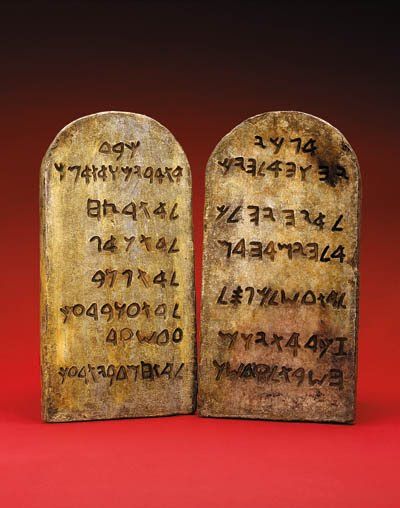
Sinai, where the Eternal Covenant was made, was a place beyond time and space. Thus the Eternal Covenant is a Mystical Covenant. The 10 commandments are not limited to several thousand years for a certain people in a certain land. They are Eternal. 

The Covenant people had to be separate from those who were not willing to embrace the covenant. This took 40 years. The Covenant was not to be trusted to those who would not follow it–notwithstanding their Jewish (Hebrew) blood. The same thing goes for today. The idea of being a descendant of the Chosen People has nothing to do with obligational entitlement to blessings. It is mandatory that we spend time at Sinai and “become” the Chosen People. 

Lev 20:26 – “And ye shall be holy unto me; for I YHWH am holy, and have separated you from the peoples to be mine.”

So the Covenant of YHWH is given in a Place outside any nation and in a time that is not time-bound. No one knows the date of the giving of the commandments, other than an approximation.  

The Shavuot holiday also is a little bit mysterious. Each year in Israel we count the Omer rather than basing the Holy Day of Shavuot upon a set calendar. The Holy Days of Pesach and then Shavuot are determined each year after the Barley is seen and the New Moon of the first month opens the door to Pesach. From the day after the Sabbath of Pesach, we count day by day to determine Shavuot. It is a personal counting. And Shavuot occurs only around the time the 10 commandments were given, which are even more mysterious as to time relativity. Shavuot requires us to follow the real signs of the Heavens plus Torah specified math calculation to determine when it falls. There can be no preset calendar. The counting is an individual application, that without it, you would miss some of the mitzvoth of Shavuot. 

Then the day of commandments, which was never specified, happens a few days or weeks later. And that is why! Because it is for all time.

Follow Take Hold the Tzitzit on WordPress.com

Who’s in Heaven Anyway?

Death and Immortality of the Soul

Recently I heard a friend comment about all the souls in Heaven that are watching the events on this earth–cheering for the progress in restoring the land of Israel and crying over all the mistakes made by our Government. I was shocked because the Bible, Tanakh, Old Testament if you will, do not say these things. It is clear that those who are dead take no part in what happens under the sun, nor do they even know when their sons come to honor or disgrace. There is no way any human that we know of other than Enoch and Elijah are out there watching us and the events that happen to us. Remember, this is based on the Hebrew Scriptures only. 

So let’s begin with a perusal of texts that relate to this topic. 

Genesis 2:7:: “Then the LORD God formed man of dust from the ground, and breathed into his nostrils the breath (soul) of life; and man became a living being.”

 וַיִּיצֶר יְהוָה אֱלֹהִים אֶת־הָאָדָם עָפָר מִן־הָאֲדָמָה וַיִּפַּח בְּאַפָּיו נִשְׁמַת חַיִּים וַיְהִי הָאָדָם לְנֶפֶשׁ חַיָּה׃

Gen 2:17””But of the tree of the knowledge of good and evil you shall not eat, for in the day that you eat of it you shall surely die.” ( or dying you shall die), 

וּמֵעֵץ הַדַּעַת טוֹב וָרָע לֹא תֹאכַל מִמֶּנּוּ כִּי בְּיוֹם אֲכָלְךָ מִמֶּנּוּ מוֹת תָּמוּת׃

The idea of dying “that same day” is something a lot of students of scripture have tried to wrap their heads around. The verse uses two words for death ( מוֹת תָּמוּת). This is found elsewhere in scripture. When the children of Israel were in the desert and had been complaining about many things, YHVH told Moses that many would die in the wilderness. 

Num 26:65 ”For the LORD had said of them, “They shall surely die in the wilderness.” There was not left a man of them, except Caleb the son of Jephunneh and Joshua the son of Nun.”

This passage also uses the two words that are translated “surely die” in some Bibles (מוֹת תָּמוּת). From both stories we see that physical death happened sometime later. But could it also mean that Adam and Eve, on that day became mortal, no longer having eternal life within them? At that point the element of eternal life had left them. 

But what actually happens when someone dies physically? This is really an important question and one that many religions state that only the body dies and stops breathing but the soul goes on living as an eternal element whether in Heaven or the other Place. But what does the Bible say? 

Is there evidence that the theory of the eternality of the soul is something that comes from paganism? When did this belief begin? I know that in Ancient Egypt, the mummified remains of rulers were buried with treasures and food for them to enter the afterlife. Not only Egypt, but Babylon, the cult of Osiris/Isis and the Greeks held this belief. See here.  It seems all pagan religions clung to this belief–the idea of an eternal life of the soul which elevated the senses to bliss or destined to them to hell and torment. But is this what the Bible says? Let’s look at all of this as we open this up for scrutiny.  The following verses deal with death and the grave:

Job 7:9-10 “[As] the cloud is consumed and vanisheth away: so he that goeth down to the grave shall come up no [more]. He shall return no more to his house, neither shall his place know him any more.”

Job 14:10, 14,15, 21, “But man dieth, and wasteth away: yea, man giveth up the ghost, and where [is] he? If a man die, shall he live [again]? all the days of my appointed time will I wait, till my change come. Thou shalt call, and I will answer thee: thou wilt have a desire to the work of thine hands. His sons come to honor, and he knoweth [it] not; and they are brought low, but he perceiveth [it] not of them.”

Sometimes people tell me that these verses are speaking of the wicked, not the righteous, but I don’t see any surrounding verses that suggest this. Notice in the verse above, Job is waiting for an appointed time. Trusting that God will remember him.  And mind you, Job is listed as one of the three most righteous men.

Eze 14:14: “even if these three men, Noah, Daniel, and Job, were in it, they would deliver but their own lives by their righteousness, says the Lord GOD.”

Psa 6:5 “For in death there is no remembrance of thee; in Sheol who can give thee praise?”

Again, no mention that there are two types of people with different conditions in death. In fact, the wicked would not be praising Yah anyway. 

Psalm 115:17: “The dead do not praise the LORD, nor do any that go down into silence.”

Psa 13:3 “Consider and answer me, O LORD my God; lighten my eyes, lest I sleep the sleep of death.” So here the Psalmist calls death a sleep. 

Once King Saul sought out a Spirit Medium (one who practices Necromancy) which had been forbidden by YHVH in the Torah (see here). He wanted to know the outcome of the battle with the Philistines.Deut 18:9-11 See Here.

Saul asked to have Samuel brought up for him to tell the future of the battle. Samuel said the following:

1Sam 28:15: “Then Samuel said to Saul, “Why have you disturbed me by bringing me up?” Saul answered, “I am in great distress; for the Philistines are warring against me, and God has turned away from me and answers me no more, either by prophets or by dreams; therefore I have summoned you to tell me what I shall do.”

Note that Samuel demanded, “Why have you disturbed me?” As we are seeing, Samuel was dead and no, he did not come down from heaven, he was awakened to speak to Saul and was not happy about it. YHVH clearly forbade communication with the dead. They are not to be woken up, disturbed. Saul paid dearly for his disobedience. Read the whole passage in the link above.

Psa 16:10 “For thou dost not give me up to Sheol, or let thy godly one see the Pit.”

Here it seems that maybe this verse, if taken alone, means that the righteous do not go down to Sheol, but notice that it says that the Eternal will not “give me up to Sheol.” Other versions, us the word “abandon my soul.” If the soul has the possibility of being abandoned to Sheol (the grave), then David is saying that he trusts that his soul will not remain there permanently. And how long is that? Until the resurrection according to Daniel 12 and other passages.

Psa 49:15 “But God will ransom my soul from the power of Sheol, for he will receive me.” [Selah]

What about the resurrection?

Why would YHVH even need a resurrection if He already has the souls of the good people with Him? The resurrection is a principle of faith for both Jews, see here,  as well as most Christian organizations, see here

In Job 19:25-27, Job speaks of waiting for the resurrection: “For I know that my Redeemer lives, and at last he will stand upon the earth; – and after my skin has been thus destroyed, then from my flesh I shall see God, – whom I shall see on my side, and my eyes shall behold, and not another. My heart faints within me!” See verse 25 in Hebrew below:

 וַאֲנִי יָדַעְתִּי גֹּאֲלִי חָי וְאַחֲרוֹן עַל־עָפָר יָקוּם׃

Again, what would be the purpose for Job to claim with faith that the Great Redeemer of souls would remember him in the final day upon the earth if there were no resurrection of the dead?

Daniel 12:1-2 “At that time shall arise Michael, the great prince who has charge of your people. And there shall be a time of trouble, such as never has been since there was a nation till that time; but at that time your people shall be delivered, every one whose name shall be found written in the book.- And many of those who sleep in the dust of the earth shall awake, some to everlasting life, and some to shame and everlasting contempt.”

Did you notice the words,” Sleep in the Dust”? Again we see that the dead are asleep, not wandering around either in Hell or in Heaven. But what returns to Hashem anyway?

And what about Isaiah?
Isa 26:19 “Your dead shall live; together with my dead body they shall arise. Awake and sing, you who dwell in dust; for your dew is like the dew of herbs, and the earth shall cast out the dead”

So, again, what returns to the Creator when one dies?
Eccl 12:6-7: “before the silver cord is snapped, or the golden bowl is broken, or the pitcher is broken at the fountain, or the wheel broken at the cistern, and the dust returns to the earth as it was, and the spirit (ruach) returns to God who gave it.” 

Notice the spirit (breath or ruach)  returns, not the soul.

 וְיָשֹׁב הֶעָפָר עַל־הָאָרֶץ כְּשֶׁהָיָה וְהָרוּחַ תָּשׁוּב אֶל־הָאֱלֹהִים אֲשֶׁר נְתָנָהּ׃

Psa 146:4 “When his breath departs he returns to his earth; on that very day his thoughts perish.” 

 תֵּצֵא רוּחוֹ יָשֻׁב לְאַדְמָתוֹ בַּיּוֹם הַהוּא אָבְדוּ עֶשְׁתֹּנֹתָיו׃

If his thoughts perish, he will not even know he is buried, nor would he know if he is in Heaven. 

Ecclesiastes 9:5-6, 10 “For the living know that they will die, but the dead know nothing, and they have no more reward; but the memory of them is lost. Their love and their hate and their envy have already perished, and they have no more for ever any share in all that is done under the sun. Whatever your hand finds to do, do it with your might; for there is no work or thought or knowledge or wisdom in Sheol, to which you are going.”

The following shows that souls are not ever existing and here even the souls of those who sin (which is all of us), die along with the body. Nobody is in hell suffering damnation, nor in Heaven enjoying paradise except for those such as Enoch, and Elijah whose stories of translation are written for us in the Tanakh. And they did not die first but were taken by the Creator. What was their purpose? I could speculate that they were taken as judges for the generation in which they lived. Are there others? There are no others written of in the Tanakh.  

Ezek 18:4, 20: “Behold, all souls are mine; the soul of the father as well as the soul of the son is mine: the soul that sins shall die.”

“The soul that sins shall die. The son shall not suffer for the iniquity of the father, nor the father suffer for the iniquity of the son; the righteousness of the righteous shall be upon himself, and the wickedness of the wicked shall be upon himself.”

Nefesh and Neshama: The body and the soul–(breath of YHVH) made a living being

Gen 2:7: “Then the LORD God formed man of dust from the ground, and breathed into his nostrils the breath (Neshama or soul) of life; and man became a living being.”

וַיִּיצֶר יְהוָה אֱלֹהִים אֶת־הָאָדָם עָפָר מִן־הָאֲדָמָה וַיִּפַּח בְּאַפָּיו נִשְׁמַת חַיִּים וַיְהִי הָאָדָם לְנֶפֶשׁ חַיָּה׃

Again we see this verse, but for the purpose of identifying the body and the soul as one unit once the breath of his Creator has been placed in his nostrils. 

Many take this to mean that the breath of G-d was actually the soul and it appears to so in this verse. But then why later when man dies, does only the Ruach (breath) return to God? Let me explain again. In Genesis 2:7, the Hebrew is clear that the Creator breathed a soul into Adam and he then became a living creature (Nefesh). So as we have seen above, when man dies only the breath (no not neshama–soul, but ruach–wind or breath) returns to the Eternal. However, and watch this train of thought closely, Adam was created with the potential of eternal life–He was an eternally existent soul. Then something changed when he and Eve ate from the tree of the Knowledge of Good and Evil. 

Gen 2:17 ”But of the tree of the knowledge of good and evil you shall not eat, for in the day that you eat of it you shall surely die.” 

We know that they ate of the tree and something happened to them at that time. My best research reveals that the first pair became mortal on that day. That means there was a change in the soul. No longer was the soul immortal. And so the question arises: If Adam and Eve were no longer immortal and this seems to be the death that was foretold as “in the day that ye eat thereof,” then this describes the change of the soul from immortal  to mortal. Immortality was lost. So then it would follow that the soul now was not able to return to the Creator in its defiled form. The body now was bound up with the soul and this combination (body and soul) would have to wait for the resurrection of the dead. It also suggests that there must be a judgment day which we must study at another time.

If we see again the verse in Ezekiel 18 above that says “the soul that sinneth, it shall die”, it is clear that not only the body dies, but that the soul that is chained to it dies also. After all it is now a mortal soul, not an immortal one. 

I hope this study comes across clearly. If not, please leave a question or comment in the comments section.

For another study, the subject of judgment and eternal reward and punishment must be saved for later. 

Blessings as we dig deeply into the mine of truth!

Ariella

Please share your comments with me, like and share with others and click on the link below to follow my studies. Thanks for your support!

Follow Take Hold the Tzitzit on WordPress.com

Strong as a Dead Lion–Then What?

Painting by a Highschooler named Uri in Katzrin, Israel

At the time before there was a king in Israel, Samson arose as a judge and spent his life wiping out the Philistines, one episode after another. After having killed a lion with his bare hands, he later came upon the carcass and it was full of bees which had made honeycomb and was dripping with the sweet honey. From this experience he thought of a riddle with which to trick the Philistines that should attend his wedding to a beautiful Philistine woman.

“…Out of the eater came forth meat, and out of the strong came forth sweetness…” Judges 14:14

Do we remember that the Philistines occupied in part what today is called Gaza? The town of Timnah, where the wedding was to take place, was located a few miles east of what today is Gaza.  

It comes to mind that Judah was called a lion in the blessing given to him by his father, Jacob. Judah was to hold the kingship of Israel and rule like a lion. But what we see today is appearing to be an almost dead lion. What will happen if the lion is killed? What then? Will sweetness come from the carcass? Let’s look a little deeper. 

What we see in modern Israel is a political government that is not concerned with its mandates from its covenant the God of Heaven. This is the lion we see trying to fight with all the worldly power it can muster, trying to satisfy the different nations that supply weapons and yet subjugate themselves to the foreign policy of nations who care nothing for Israel–those who wield world power at the touch of a switch, and we see our nation “going along to get along.” Perhaps this lion will die. Then what?

Could we even imagine that something could happen then to help Israel in its most trying time? Is there Anyone watching this struggle? Anyone in the Heavens who might just be ready to take the reins when all seems lost? Will there yet be a sweetness that exudes from this dead lion? Wouldn’t it be better if we were not looking to might and power but to something else?

“Then he answered and spoke unto me, saying, This is the word of the LORD unto Zerubbabel, saying, Not by might, nor by power, but by my spirit, saith the LORD of hosts.” – Zec 4:6

Few know what it means to depend on El Shaddai, and even those may wring their hands in fear of what is coming upon the world and especially what will happen to those in this land given and  promised to God’s people. It is mandatory that we take heart at this time. 

It will get very ugly before it gets over. Maybe it should get over, the sooner the better. We need to stop being led by those who think like the world thinks, however wise that may seem. What if we had pure faith (Emunah if you will) in YHVH and His great power? Will He let us down? Where are we in the line up of what is happening to bring about the Divine plan for this world? How does Israel play a part in this? Do we fight like the nations, or do we march out with trumpets blowing when we hear a sound in the mulberry trees? 

“And it shall be, when you hear the sound of marching in the tops of the mulberry trees, then you shall advance quickly. For then the LORD will go out before you to strike the camp of the Philistines.” – 2Sa 5:24.

But we are a long way from that type of trust. Why do we tremble? Is it because we have never seen the Hand of Providence guiding our lives? Is it because we remember pogroms, Holocaust, and the Kristanacht? Where was God during those times? Maybe somehow we were in the wrong places or worse yet, that we were not listening to Him? 

Maybe these terrible tragedies should tell us something. Maybe we need to step back and ask who we are following in our religion? Who wrote the instructions? When did we deny our Creator to go after a strange doctrine? 

The way I see it is that we follow the nations because we believe there is more wisdom and skill than that offered by the ONE who made a Covenant with us about land and protection and about raising us up to be a Holy Nation. 

What would happen if we really knew the God of Israel? Would He come alongside and win the war for us so that we could go out with tambourines and march (dance perhaps) to the sound in the myrtle trees?

Judah, “you’ve come a long way, Baby” but maybe in the wrong direction. 

In hopes of a new day after the storm…

Ariella

Please like, share, comment to help promote my efforts.

Follow Take Hold the Tzitzit on WordPress.com